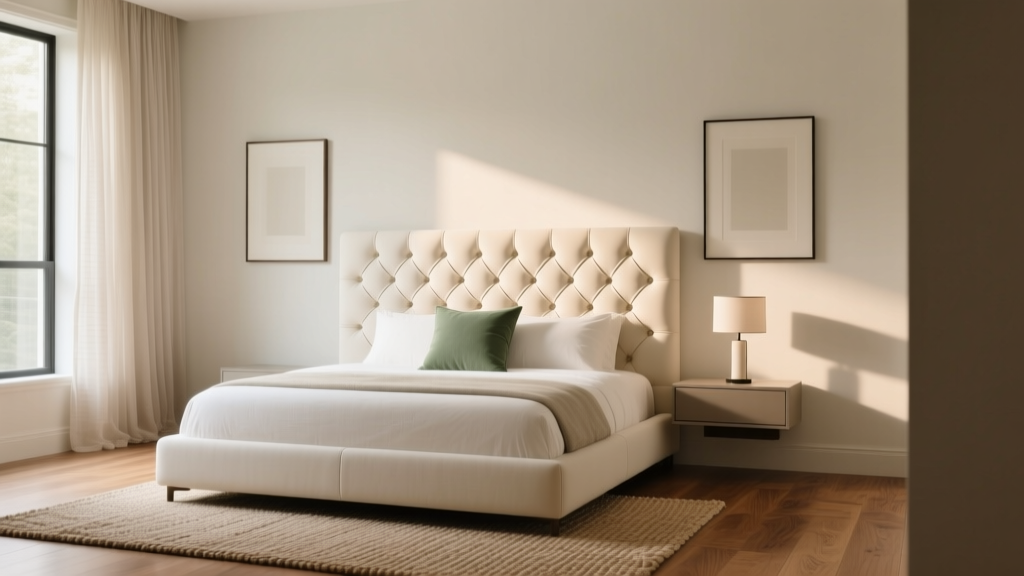
Bedroom Tufted Headboard Trends - The Decor Mag
A tufted headboard can do more than “finish” a bed. It changes how a bedroom feels at the end of the day—softer, quieter, more sheltered. When the space around your bed looks intentional and comfortable, your nervous system often gets the message that it’s safe to downshift. That shift matters: the bedroom design choices you make—texture, light, color, and layout—can support a calmer sleep environment and more consistent rest.
Tufting is also having a moment because it answers a very practical need in modern homes and rentals. Many people want bedrooms that look polished without relying on lots of extra furniture, and they want comfort that doesn’t require a full renovation. A well-chosen tufted headboard can provide visual structure, back support for reading, and sound-softening texture, all while anchoring your overall bedroom decor.
Below, you’ll find the tufted headboard trends homeowners and renters are leaning into—plus sleep-friendly tips, realistic budget ranges, and common mistakes to avoid.
Why Tufted Headboards Work So Well for Restful Bedrooms
They add softness (visually and acoustically)
Upholstered, tufted surfaces absorb and diffuse a bit of sound compared to bare walls or wood panels. In echo-prone rooms with hardwood floors or minimal textiles, adding a tufted headboard can subtly reduce “sharp” acoustics, which helps the room feel calmer at night.
They create a comforting boundary around the bed
Sleep quality is closely tied to how secure and relaxed you feel. A headboard acts like a gentle frame for your sleep zone. Tufting adds depth and tactile warmth—helpful for bedrooms that otherwise feel sparse, overly bright, or “temporary,” especially in rentals.
They’re function-forward for real life
Many people use the bed as a reading or wind-down spot. A padded, tufted headboard supports sitting up comfortably (especially when paired with the right pillows) so your pre-sleep routine feels soothing rather than strained.
Top Tufted Headboard Trends (and How to Choose One)
1) Channel tufting for a modern, calming look
Channel tufting (clean vertical or horizontal padded channels) is trending because it looks tailored and serene. It’s a strong choice if you like modern bedroom design, minimal decor, or hotel-inspired bedrooms.
- Best for: Modern, contemporary, Scandinavian, and “quiet luxury” styles
- Sleep-friendly tip: Choose a matte fabric (like performance linen or velvet) to reduce glare from lamps and morning light.
- Height guide: 48–60 inches tall creates a cozy backdrop, especially with 8–9 ft ceilings.
2) Deep diamond tufting for classic elegance
Diamond tufting with buttons brings traditional character and a plush, layered feel. It pairs beautifully with warm neutrals, soft lighting, and curved bedside lamps.
- Best for: Traditional, transitional, Parisian, vintage-inspired bedrooms
- Consideration: Buttons can collect dust; plan for occasional vacuuming with an upholstery attachment.
- Style tip: Balance ornate tufting with simpler bedding (solid duvet cover, minimal pattern) for a restful look.
3) Buttonless tufting for a smoother, cleaner surface
Buttonless tufting offers the plush look without the visual “punctuation” of buttons. It feels modern and calming, and it’s often easier to keep clean.
- Best for: Minimalist spaces, renters who want a versatile piece, allergy-aware households
- Wellness angle: Fewer crevices can make weekly dusting quicker, supporting a fresher sleep environment.
4) Wingback tufted headboards for cocoon-like comfort
Wingback headboards (with side “wings”) are trending for good reason: they create a tucked-in, private feel—great for bedrooms that open into living areas or have lots of visual noise.
- Best for: Studio apartments, shared homes, bedrooms with high ceilings
- Sleep-friendly benefit: Wings can visually block peripheral clutter and soften the feel of drafty corners.
- Layout tip: Leave at least 24 inches of clearance on each side for easy bed-making and less nightly bumping.
5) Oversized, wall-leaning or panel-style tufted headboards
Large panel headboards (sometimes used without a full bed frame) are popular in design-forward bedrooms. They can make a small room feel more intentional by creating a single, upholstered focal wall behind the bed.
- Best for: Creating a “boutique hotel” bedroom feel
- Renter-friendly idea: Some panel headboards can be secured with minimal wall hardware or used with a platform bed that clamps/attaches.
- Color tip: Choose a mid-tone neutral (oatmeal, taupe, warm gray) to hide everyday wear while staying calming.
Materials and Fabrics: What’s Trending (and What Sleeps Best)
Performance fabrics (practical luxury)
Performance upholstery (often stain-resistant and durable) is a favorite for busy households. It’s especially helpful if you drink tea in bed, have pets, or want a headboard that stays fresh with minimal stress.
- Look for: Crypton-like or “performance linen” options, tight weaves, removable/cleanable panels when available
- Budget range: $250–$900 for headboard-only; $700–$2,000 for an upholstered bed frame
Velvet (soft, light-absorbing, cozy)
Velvet remains a tufted headboard staple because it adds depth and warmth. It also absorbs light rather than reflecting it, which can make the bedroom feel less stimulating at night.
- Best colors: Olive, ink navy, warm taupe, cocoa, dusty rose, soft charcoal
- Sleep-friendly tip: Choose a low-sheen velvet for a calmer effect under bedside lighting.
Linen and linen-blends (airy, relaxed)
Linen-blend tufted headboards look effortless and breathable, pairing well with layered bedding and natural materials.
- Watch for: Looser weaves that can snag; consider a blend for durability
- Best for: Coastal, organic modern, Scandinavian bedroom decor
Leather and faux leather (sleek, easy to wipe)
Leather adds structure and wipes clean easily, which can be appealing for allergy management. Faux leather options can look convincing but vary widely in longevity.
- Sleep-friendly consideration: Leather can feel cooler to the touch; balance with warm bedding textures (brushed cotton, washed linen, matelassé).
- Budget range: $300–$1,200 depending on real vs. faux and frame quality
Color Trends for Tufted Headboards (with Sleep in Mind)
Color shapes mood. For a more restful sleep environment, prioritize hues that lower visual intensity at night and feel steady in morning light.
- Warm neutrals: Oat, sand, biscuit, mushroom, camel (calming and timeless; works with most bedding)
- Earthy greens: Sage, olive, eucalyptus (often read as restorative and nature-linked)
- Moody blues: Ink, slate, deep denim (can feel grounding; pairs well with warm lamps)
- Soft, dusty tones: Dusty rose, clay, muted mauve (adds warmth without overstimulation)
- Charcoal and soft black: Best in rooms with ample natural light; keep bedding lighter for balance
Quick rule for renters: If you can’t paint, use the headboard as your “color anchor,” then echo it with two or three small elements (a throw, one pillow cover, a framed print) to make the room feel cohesive.
Sleep-Friendly Styling: Bedding, Lighting, and Layout
Bedding that complements tufting (and supports better sleep)
Tufted headboards already bring texture, so bedding can either simplify the scene or add gentle layering. Choose fabrics that feel good against skin and regulate temperature.
- For hot sleepers: Percale sheets (crisp, breathable), lightweight cotton quilts, linen duvet covers
- For cold sleepers: Brushed cotton or cotton sateen sheets, wool or down-alternative duvet inserts, a soft throw at the foot
- For a calmer look: Solid or low-contrast patterns; limit bold prints near the head of the bed
Pillow setup for comfort:
- Two supportive sleeping pillows (matched to your sleep position)
- Two pillows for sitting up (or one long lumbar)
- One accent pillow only if it doesn’t become nightly clutter
Lighting trends: softer, lower, warmer
A tufted headboard looks best under warm, diffused light—and your circadian rhythm prefers it, too. Bright, cool lighting can make it harder to wind down.
- Use warm bulbs: 2200K–2700K in bedside lamps for evening calm
- Add dimmers: Plug-in dimmers work well in rentals
- Choose gentle shades: Linen or parchment shades reduce glare against upholstered surfaces
- Consider wall-mounted sconces: Great for small bedrooms; frees nightstand space and reduces visual clutter
Layout tips that make tufted headboards feel intentional
- Center the bed on the strongest wall when possible, leaving balanced space on both sides for ease and symmetry.
- Rug sizing: For a queen bed, a 8' x 10' rug often creates the most grounded feel; in tighter rooms, try 6' x 9' or runners on both sides.
- Nightstand height: Aim for the top of the nightstand to be within 2–4 inches of the top of your mattress for comfort and reach.
- Visual calm: Keep surfaces near the headboard simple—one lamp, one small tray, one book—so the sleep zone feels uncluttered.
Budget Ranges and What to Expect
Tufted headboards span a wide range. Your best value usually comes from paying for a sturdy frame and quality upholstery rather than extra ornamentation.
- Budget ($150–$350): Basic tufted headboard, often polyester or faux linen; best for low-traffic rooms or short-term rentals
- Mid-range ($350–$900): Better foam density, more durable fabrics, cleaner construction; ideal for most primary bedrooms
- Upper mid-range ($900–$2,000): Performance fabric options, taller profiles, stronger frames; better longevity
- High-end ($2,000+): Custom sizing, premium upholstery, artisan tufting; best if you’re building a long-term “forever bedroom”
What to look for when shopping:
- Solid wood or reinforced frame
- High-density foam (more supportive for sitting up)
- Durable fabric rating (ask about abrasion resistance if available)
- Stable attachment system (especially for adjustable bases)
Wellness Considerations: Keeping Your Sleep Environment Cleaner and Calmer
- Dust management: Vacuum the headboard monthly using an upholstery brush attachment; spot-clean according to fabric care instructions.
- Allergy-friendly steps: Use washable pillow protectors, launder bedding weekly, and consider a HEPA air purifier if you’re sensitive.
- Noise softening: Pair a tufted headboard with curtains and a rug to reduce echo; add felt pads under nightstands to prevent scraping sounds.
- Bedtime cue: Keep the headboard area visually consistent—your brain responds well to stable cues that signal rest.
Common Mistakes to Avoid with Tufted Headboards
- Choosing style over scale: A tiny headboard on a wide bed can feel off-balance; a towering headboard in a low-ceiling room can feel imposing.
- Ignoring fabric practicality: Delicate weaves and light colors can show oils and wear quickly—especially if you sit up in bed often.
- Overcrowding the bed wall: Too many frames, shelves, or high-contrast art above a tufted headboard can create visual stimulation at night.
- Pairing with harsh lighting: Cool (4000K+) bulbs and exposed glare can make upholstered bedrooms feel less soothing.
- Skipping support for real use: If you read in bed, choose a headboard with enough padding and height; add a lumbar pillow so your shoulders can relax.
FAQ: Bedroom Tufted Headboards
Are tufted headboards comfortable for sitting up in bed?
Yes—especially upholstered styles with thicker foam. For the best support, add a firm back pillow or lumbar cushion and keep your reading light warm and directional to reduce eye strain.
What’s the easiest tufted headboard fabric to maintain?
Performance fabrics and tightly woven polyester blends are typically easiest. They resist stains and clean up well with gentle spot cleaning. If allergies are a concern, buttonless tufting can be simpler to dust.
Do tufted headboards work in small bedrooms?
They can, as long as the scale is right. A channel-tufted or buttonless design in a light-to-mid neutral keeps the room feeling open. Consider wall-mounted sconces to save nightstand space.
How tall should a tufted headboard be?
For a balanced look, many bedrooms do well with a headboard that’s 48–60 inches tall. If you have very high ceilings or want a statement, 60–70 inches can look dramatic—just keep the rest of the wall decor minimal for a calmer sleep environment.
Can renters install a tufted headboard without damaging walls?
Often, yes. Look for a headboard that attaches to a bed frame or a freestanding upholstered bed. If wall mounting is required, use minimal hardware where allowed, or choose a panel headboard designed to secure to the frame rather than the wall.
Will a tufted headboard make my bedroom feel warmer?
Visually, yes—upholstery adds softness and reduces the starkness of flat walls. If you want actual warmth, pair it with layered bedding (quilt plus duvet) and warm, dimmable lighting.
Next Steps: A Calmer Bedroom Starts at the Head of the Bed
If your bedroom doesn’t feel as restful as you’d like, start with one upgrade that affects both comfort and atmosphere: a tufted headboard in a soothing fabric and color. Then support it with sleep-friendly lighting (warm, dimmable), breathable bedding, and a simpler layout around the bed to reduce visual noise.
Choose one trend that fits your lifestyle—channel tufting for modern calm, wingback for a cocooned feel, or performance upholstery for everyday durability—and build your bedroom decor around that quiet anchor.
For more calming bedroom design ideas, sleep environment tips, and practical decor guides, explore the latest articles on thedecormag.com.
More Articles
 Beyond the Accent Lamp: 7 Thoughtful, Functional Bedside Alternatives for Modern Bedrooms
 How to Create a Bedroom That Promotes Rest - The Decor Mag
 Sustainable Bedroom FAQs Answered: Materials, Certifications, and Real Impact
 Best Bedroom Sleep Journal Prompts - The Decor Mag
 Three-Layer Bedroom Lighting: Calm & Functional (2026)
 Best Bedroom Lavender Pillow Spray - The Decor Mag
 How to Choose Bedroom Mattress Firmness - The Decor Mag
 Best Bedroom Sleep Mask and Pillow Spray - The Decor Mag
 How to Choose Bedroom Art for Relaxation - The Decor Mag
 Bedroom Warm Limewash Bedroom Walls - The Decor Mag