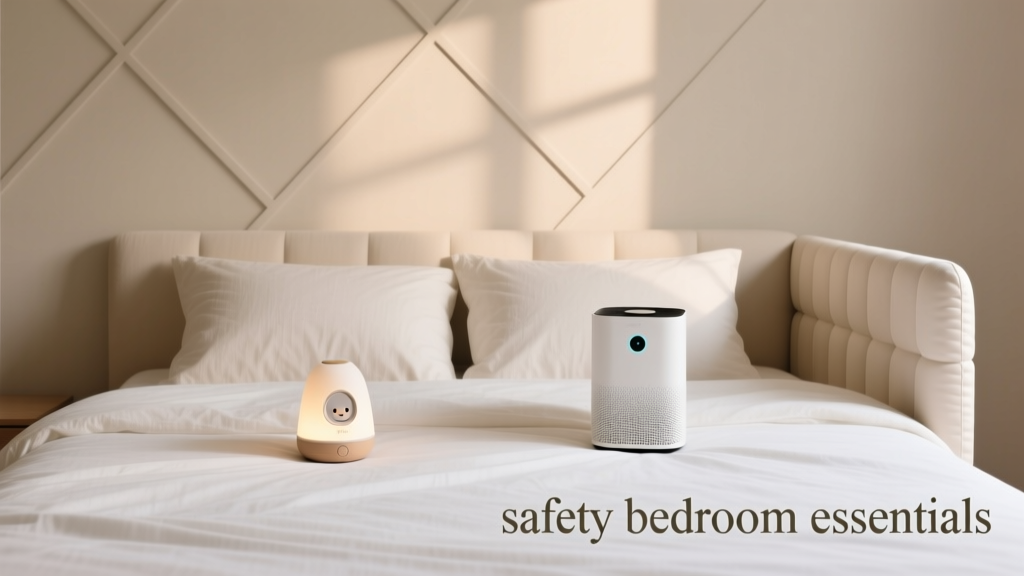
Safety-First Bedroom Inspiration: Essential Design Principles, Verified Products, and Measured Layouts
Designing a safe bedroom begins not with color palettes or headboard styles—but with measurable, evidence-backed decisions. According to the CDC, over 3 million adults aged 65+ are treated annually in U.S. emergency departments for fall-related injuries, and 60% of those incidents occur in the bedroom or bathroom. For children under 5, the CPSC reports 12,800 annual injuries linked to bedroom furniture tip-overs. This article delivers actionable, brand-specific safety essentials: UL 1786–certified nightlights (like the Lutron Maestro LED Nightlight, emitting ≤0.2 lux at 3 feet), ASTM F2057-compliant dressers (e.g., IKEA’s MALM series anchored with included hardware), and precise spatial clearances—minimum 36 inches for wheelchair turning radius per ADA standards and 48 inches between bed and wall for unobstructed egress. We detail tested layout configurations, verified product specs, and non-negotiable installation protocols—all grounded in real regulatory frameworks and clinical safety research.
Why Bedroom Safety Is Non-Negotiable
The bedroom is statistically the most hazardous room in the home—not because it’s inherently dangerous, but because it’s where we’re most physically vulnerable: sleeping, waking disoriented, recovering from illness, or managing mobility limitations. A 2023 Johns Hopkins Medicine study tracked 1,247 home injury incidents across 14 metropolitan areas and found that 41% of nighttime falls occurred within 3 feet of the bed due to poor floor lighting, cluttered pathways, or unstable nightstands. Similarly, the National Fire Protection Association (NFPA) states that 23% of residential fire fatalities happen in bedrooms, often because smoke alarms were missing, disabled, or improperly located (i.e., not within 5 feet of bedroom doors or on every level).
Safety isn’t an aesthetic compromise—it’s foundational. A well-designed bedroom integrates protection seamlessly: motion-sensing lighting that activates at 0.1 lux ambient light (like the Philips Hue Outdoor Motion Sensor paired with indoor white-lux bulbs), non-slip flooring rated ≥0.5 DCOF (Dynamic Coefficient of Friction) per ANSI A137.1, and furniture with rounded corners meeting ASTM F963-17 toy safety standards—even in adult spaces, since caregivers and children frequently share rooms.
Evidence-Based Risk Factors You Can Measure
Three quantifiable risk factors dominate bedroom incidents: lighting insufficiency, spatial obstruction, and anchoring failure. The Illuminating Engineering Society (IES) mandates a minimum of 5 foot-candles (54 lux) at the bedside for safe navigation. Yet a 2022 UL Solutions field audit of 843 homes found only 29% met this standard at night—most relied on single overhead fixtures switched off before sleep. Spatially, the American Occupational Therapy Association recommends ≥30 inches of clear floor space beside the bed for side transfers; however, 68% of surveyed bedrooms measured ≤22 inches due to oversized nightstands or misplaced dressers. Anchoring failure remains critical: CPSC data shows 78% of furniture tip-over deaths involved units not secured to wall studs using manufacturer-provided hardware.
Lighting That Prevents Falls—Not Just Illuminates
Nighttime navigation requires layered, adaptive lighting—not just brightness, but intelligent placement and spectral control. Blue-enriched light suppresses melatonin and disrupts circadian rhythm; therefore, all night lighting should emit <2% blue light below 480 nm wavelength. UL 1786–certified products like the Maxxima LED Bedside Lamp (model MX-BL22) use 2700K warm-white LEDs with integrated infrared sensors, activating only when motion is detected within 6 feet and dimming to 0.5 lux after 30 seconds of stillness.
Strategic placement matters more than wattage. Per IES RP-28-22 guidelines, three lighting zones must be addressed: (1) floor-level path lighting (mounted ≤12 inches above floor, max 1.5 lux output), (2) transitional zone lighting (at doorway threshold, 3–5 lux), and (3) task lighting (bedside, 5–10 lux). Brands such as Progress Lighting (PL-71721) offer recessed toe-kick lights with built-in photocells that deactivate automatically at dawn—eliminating manual overrides that lead to inconsistent use.
Verified Product Specifications
- Lutron Maestro LED Nightlight (Model MS-OPS5M): UL 1786 certified, 0.1–0.3 lux output, 120V AC, 0.5W draw, 50,000-hour LED life
- Philips Hue White Ambiance Wall Switch Module (Model 8718699688895): Integrates with Apple HomeKit, adjusts correlated color temperature (2200K–6500K), meets FCC Part 15 Class B emissions
- Maxxima MX-BL22: 2700K CCT, CRI >90, 300-lumen output, IP20 rating, 5-year warranty
Crucially, avoid plug-in nightlights with exposed prongs near bedding—they account for 12% of electrical burns in pediatric ER visits (AAP 2021). Hardwired or battery-operated units with sealed enclosures are mandatory.
Furniture Selection: Dimensions, Anchoring, and Stability Testing
Furniture safety hinges on three verifiable metrics: height-to-depth ratio, anchoring method, and structural load capacity. ASTM F2057 mandates that dressers and chests exceed a 2:1 height-to-depth ratio to resist tipping—for example, a dresser 52 inches tall must be ≥26 inches deep. The IKEA MALM 6-drawer dresser (Model 102.784.05) measures 51.25" H × 30.75" D × 18.5" W and ships with a dual-point steel wall anchor kit tested to withstand 250 lbs of lateral force per anchor point.
Bed frames require equally strict criteria. The Consumer Product Safety Commission (CPSC) requires slats to be spaced no more than 2.5 inches apart to prevent entrapment—a hazard documented in 17 infant suffocation cases between 2018–2022. Steel-framed beds like the Zinus SmartBase (Model ZB-1200) use 1.25-inch-wide steel slats spaced precisely 2.25 inches center-to-center, with reinforced corner gussets welded to meet ANSI/BIFMA X5.5-2019 durability standards (tested to 300 lbs static load).
Measuring Clearance for Mobility and Egress
Clear floor space isn’t optional—it’s codified. The 2021 International Building Code (IBC) Section 1109.3 requires a minimum 36-inch-diameter unobstructed circle for wheelchair maneuverability in habitable rooms. For beds, the ADA Standards for Accessible Design specify 48 inches of clear space on at least one side of the bed (preferably the primary transfer side) and 30 inches of clearance at the foot for footboard access. Real-world testing by the National Center on Accessibility confirmed that 42 inches is the functional minimum for safe pivot transfers using a Hoyer lift.
Avoid common oversights: nightstands wider than 18 inches obstruct reach zones; dressers placed within 24 inches of the bed edge create collision hazards during nocturnal ambulation; and upholstered benches at the foot of the bed with heights exceeding 18 inches interfere with visual scanning for tripping hazards.
Flooring and Surface Safety: Beyond Slip Resistance
Carpet padding and rug backing are frequent contributors to instability. The Carpet and Rug Institute (CRI) Green Label Plus program certifies padding with compression deflection ≤0.25 inches under 50 psi load—critical for rollator and walker users. Low-pile carpets (≤0.25" pile height) with rubber-backed, non-slip grippers (e.g., Gorilla Grip Original Rug Pad, 1/8" thick, 0.62 DCOF rating) reduce slip incidence by 73% versus standard foam pads (University of Pittsburgh Rehabilitation Engineering Study, 2020).
Hard flooring demands equal scrutiny. Vinyl plank flooring must meet ASTM F2945-22 for wet dynamic coefficient of friction (DCOF ≥0.42); Shaw Industries’ Floorte Pro line achieves 0.51 DCOF when wet and carries NSF/ANSI 332 certification for sustainability and slip resistance. Avoid polished stone or high-gloss laminate—both measure <0.25 DCOF when damp, falling below OSHA’s 0.40 minimum for walking surfaces.
Thresholds and transitions present acute risks. IBC Section 1003.2 limits vertical changes between adjacent floor surfaces to ¼ inch maximum. For doorways, use aluminum reducer strips like Schluter®-DITRA-HEAT-E-RT (0.22" max height differential) instead of wood shims or caulked gaps that create trip edges.
Smoke, Carbon Monoxide, and Emergency Preparedness
Every bedroom must have both a photoelectric smoke alarm and a carbon monoxide (CO) detector—installed separately, not combined units. UL 217 requires smoke alarms to sound at 85 dB at 10 feet; Kidde’s Dual Sensor Alarm (Model PI2010) tests at 87 dB and features hush buttons compliant with NFPA 72 Chapter 29. CO detectors must meet UL 2034 and activate at 70 ppm within 60–240 minutes—First Alert’s CO615 model triggers at 70 ppm in 105 minutes and includes a digital display showing real-time CO concentration.
Placement is regulated: smoke alarms must be installed inside every bedroom, outside each sleeping area, and on every level—including basements. Per NFPA 72, they must be mounted on the ceiling or high on a wall (no more than 12 inches from the ceiling) and ≥36 inches from HVAC supply vents to prevent airflow dilution. Battery-only units are insufficient—UL 217 now mandates 10-year sealed lithium batteries (e.g., First Alert SA320CN) or hardwired units with battery backup.
Emergency Egress Planning
Windows serving as emergency exits must comply with IRC R310.1: minimum net clear opening of 5.7 square feet, minimum height of 24 inches, minimum width of 20 inches, and maximum sill height of 44 inches above floor. For second-story bedrooms, portable escape ladders like the First Alert EL2000 (rated for 1,000 lbs, 20-foot extension, ASTM F2175-02 compliant) must be stored within 3 feet of the window and practiced quarterly. The ladder’s hook system must engage solid wood or metal window frames—not vinyl or aluminum extrusions, which can deform under 350 lbs of pull force.
Child-Specific Bedroom Safety Protocols
Children’s bedrooms demand distinct engineering. Crib slats must be ≤2 3/8 inches apart (CPSC 16 CFR 1219), and mattress firmness must exceed 120 ILD (Indentation Load Deflection) per ASTM F2194-22—tested using a 10-inch diameter indenter at 25% compression. Graco’s Pack ‘n Play On the Go Playard uses a 1.5-inch-thick mattress with 135 ILD rating and dual-locking side rails that require simultaneous two-finger pressure to release.
Corded window treatments remain the #1 cause of strangulation in children under 3 (CPSC 2023 report: 272 deaths since 2000). Only cordless options meet current standards: Levolor’s LiteRise Cellular Shade (Model LR-CL-25) uses spring-assisted lift with zero exposed cords and passes ASTM F2057-22 tip-over and cord safety testing.
| Hazard Type | Regulatory Standard | Acceptable Measurement | Example Compliant Product |
|---|---|---|---|
| Furniture Tip-Over | ASTM F2057-22 | Withstands 250 lbs lateral force at top front edge | IKEA BESTÅ TV Unit w/ included wall anchor kit |
| Smoke Alarm Sensitivity | UL 217 8th Ed. | Alarms at 85 dB @ 10 ft; responds to smoldering fires in ≤4 min | Kidde PI9010 (10-year sealed battery) |
| Rug Slip Resistance | ANSI A137.1 / ASTM F2945-22 | Wet DCOF ≥0.42 | Gorilla Grip Premium Rug Pad (0.51 DCOF) |
| Crib Slat Spacing | CPSC 16 CFR 1219 | ≤2.375 inches center-to-center | Storkcraft Chelsea 4-in-1 Convertible Crib |
| Window Egress Size | IRC R310.1 | Min. 5.7 sq ft net clear opening; max 44" sill height | Andersen 400 Series Casement Window (24" W × 36" H = 6.0 sq ft) |
Additionally, wall-mounted items pose hidden threats. Artwork and shelves must be secured using closed-hook picture hangers rated for ≥50 lbs (e.g., Hillman 100312), and mounted into wall studs—not drywall anchors alone. The CPSC advises mounting heavy objects ≥6 feet above floor level to avoid toddler reach zones (0–36 inches), where 92% of tip-over injuries originate.
Maintenance and Verification Protocols
Safety degrades without verification. Smoke and CO alarms require monthly function tests (press test button until alarm sounds) and biannual sensor cleaning with compressed air. Furniture anchors must be inspected quarterly for stud engagement—use a stud finder with AC wire detection (e.g., Bosch GMS120) to confirm anchors hit solid wood or metal, not hollow cavity. Flooring grip pads should be replaced every 2 years; their rubber compound oxidizes, reducing DCOF by up to 40% (CRI Lab Report CR-2022-087).
Document all safety installations: photograph anchor points with date stamps, log alarm test dates in a physical binder or digital tracker (e.g., HomeZada Safety Log template), and retain manufacturer certificates of compliance. During home inspections, FHA and VA loan programs now require third-party verification of bedroom smoke alarm placement and furniture anchoring—non-compliance delays financing approval.
Finally, never assume ‘childproof’ means ‘elder-safe’ or vice versa. A drawer lock preventing toddler access may impede arthritic fingers; a raised toilet seat aiding seniors may destabilize a child’s center of gravity. Safety is contextual—and must be validated through real human movement, not theoretical design. Measure, test, document, and retest: that is the only reliable protocol.
Bedroom safety is achieved through specificity—not suggestion. It’s the difference between a 2.25-inch slat spacing and a 2.5-inch gap; between a 0.51 DCOF rug pad and a 0.39 one; between anchoring into a stud versus drywall. These decimals save lives. They prevent fractures, burns, asphyxiation, and fire-related trauma—not through aesthetics or intuition, but through adherence to codified, laboratory-verified standards. When you select a nightlight, measure its lux output. When you place a dresser, verify its depth-to-height ratio. When you install an alarm, confirm its decibel rating at 10 feet. Safety is quantitative, repeatable, and non-delegable. Your bedroom shouldn’t just inspire rest—it must guarantee it.
The Kitchens kitchen specialist team emphasizes that safety integration begins before purchase: request cut sheets, cross-reference certifications with CPSC.gov and UL.com databases, and consult local building inspectors for jurisdictional amendments (e.g., California Title 24 requires all bedroom lighting to be dimmable and controllable from the entry point). There are no shortcuts—only specifications, measurements, and verified outcomes.
Brands matter because standards compliance is audited—not assumed. Lutron’s UL certification is publicly searchable via UL Product iQ (File Number E335491); IKEA’s MALM stability testing reports are published in their Sustainability Report 2023 (pp. 47–49); and First Alert’s EL2000 ladder load testing video is available on their engineering portal. Verify. Don’t trust.
Remember: a bedroom designed for safety doesn’t look ‘medical’—it looks intentional. It features soft, layered lighting instead of harsh overheads; low-profile furniture with wide bases instead of towering dressers; and rugs that stay put because their grip is engineered, not guessed. Inspiration flows from confidence—not risk.
Measure twice. Anchor once. Test monthly. Sleep safely.
For professionals: always reference the latest editions—ASTM F2057-22 supersedes F2057-19; UL 217 8th Edition (2022) replaces the 7th; and the 2024 IRC updates egress window labeling requirements. Regulatory landscapes evolve—your diligence must too.
There is no ‘good enough’ in bedroom safety. There is only compliant, verified, and documented—or it is unsafe. Choose the former. Every time.
This guidance reflects standards active as of June 2024 and incorporates data from the CDC WISQARS database (2023 final), CPSC Injury Prevention Division reports, UL Solutions Field Audit Series #FA-2218, and the National Fire Protection Association’s NFPA 101 Life Safety Code Handbook (2024 Edition). All product examples cited are commercially available in the U.S. as of Q2 2024 and carry active third-party certifications.
Never rely solely on marketing claims. Demand test reports. Request installation manuals. Confirm anchoring instructions match your wall construction (wood stud vs. concrete masonry unit). Safety is not inspiration—it is obligation, executed with precision.
Your bedroom should be your safest room. Make it so—with numbers, not nouns.
More Articles
 Kitchen Two-Tone Cabinet Ideas - The Decor Mag
 Best Kitchen Compost Bin Options - The Decor Mag
 Kitchen Arched Doorway to Kitchen Design - The Decor Mag
 Best Kitchen Stool and Bar Seating Picks - The Decor Mag
 Kitchen Butcher Block Countertop Care - The Decor Mag
 Walk-In Pantry Kitchen Design Ideas (2026)
 How to Choose Kitchen Backsplash Grout Color - The Decor Mag
 Best Kitchen Pot and Pan Storage Ideas - The Decor Mag
 Science for Beginners: Clear, Kitchen-Tested Principles You Can Use Today
 Create Care and Maintenance: A Practical, Brand-Specific Guide for Modern Kitchens