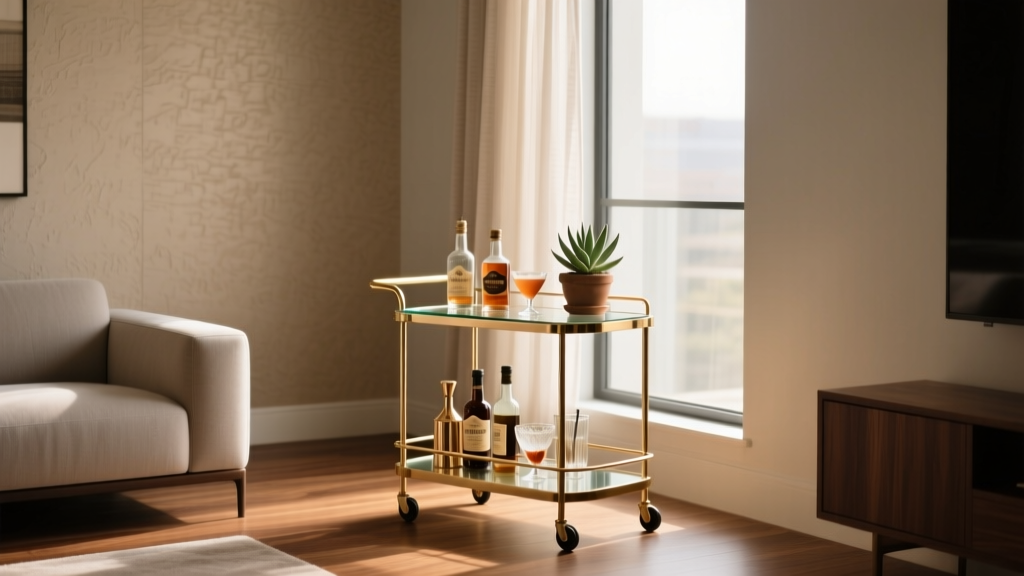
Best Bar Cart Placement in Living Rooms - The Decor Mag
A bar cart can be one of the hardest-working pieces in a living room. It adds function (hello, easy entertaining), style (a moment for glassware and finishes), and a sense of intention—especially in open-plan spaces where rooms can feel like they’re floating without purpose.
But the magic isn’t just in what you put on the cart; it’s where you place it. A beautiful bar cart shoved into a cramped corner becomes clutter. Set it too close to seating and it turns into an obstacle course. Place it thoughtfully, and it becomes a polished “zone” that makes your living room design feel curated, spacious, and welcoming.
This guide breaks down the best bar cart placement ideas for living rooms—whether you’re working with a small apartment, a family-friendly layout, or a formal entertaining space. You’ll learn practical spacing rules, real-world layout examples, styling tips, and the common mistakes that make even a high-end cart look accidental.
Before You Place It: A Quick Bar Cart Checklist
Use this short checklist to choose a spot that looks intentional and works day-to-day.
- Measure your cart: Most bar carts are 24–36 inches wide, 14–18 inches deep, and 30–36 inches tall. Write down yours.
- Plan clearance: Leave at least 30–36 inches for walking paths around it (more if it’s near a main hallway).
- Check reach zones: You want easy access to glassware and bottles without bumping art, lamps, or the TV console.
- Think about spills: Avoid placing it directly above delicate rugs or near upholstered seating unless you’re using trays and coasters.
- Consider who lives there: If you have kids or pets, prioritize stability, lockable bottles, and corners away from high-energy play zones.
The Best Bar Cart Placements in a Living Room (That Designers Rely On)
1) Beside the Sofa: The “Host’s Helper” Placement
Placing a bar cart near the sofa creates a natural entertaining zone. It’s ideal for people who love to host because guests tend to gather around seating, and you’re not running back and forth to the kitchen.
Best for: Medium to large living rooms, open-plan living rooms, frequent entertaining.
Placement tips:
- Keep it 8–12 inches away from the sofa’s arm to prevent dings and fabric scuffs.
- Maintain a minimum 30-inch walkway behind the cart if it sits along a traffic path.
- If it’s near a side table, consider swapping the side table for the cart to avoid crowding.
Real-world scenario: In a long, rectangular living room, a cart placed at the far end of the sofa (not the middle) helps “cap” the seating arrangement and makes the layout feel finished. Add a floor lamp behind it for height and glow.
2) Near the Dining Area in an Open-Concept Layout
In open-concept living room design, the bar cart can act as a visual bridge between living and dining. This is one of the smartest placements because it supports both zones—cocktails in the living area, wine at dinner—without duplicating storage.
Best for: Apartments and homes with combined living/dining spaces.
Placement tips:
- Position it along the “seam” between zones, ideally where a console table might go.
- Keep it 36 inches away from dining chair pull-out space so guests can sit comfortably.
- Anchor it with a rug edge or a wall to prevent it from looking like it’s floating.
Trend alert: Warm metallics like brushed brass and aged bronze are trending, but pairing them with timeless materials—like wood trays or stone coasters—keeps the look from feeling too “of the moment.”
3) Against a Wall Under Art: The “Mini Bar Moment”
If you want your cart to feel like decor (not just storage), give it a wall. Hanging art above a bar cart instantly creates a styled vignette that reads intentional, even in a rental.
Best for: Small living rooms, rentals, minimalist spaces.
Measurements that work:
- Hang artwork so the bottom of the frame sits about 6–10 inches above the cart’s top shelf.
- If you’re hanging a gallery wall, keep the overall cluster width roughly 2/3 the cart width for balanced proportions.
Material recommendation: If your walls are white or light neutral, a cart in walnut or black metal adds contrast and depth—two things that make living room decor look more layered.
4) In a Corner (The Right Way)
Corners can be perfect for bar carts—if the cart doesn’t disappear. The goal is to use a corner to save space while still creating a deliberate destination.
Best for: Small apartments, studio living rooms, awkward layouts.
How to keep a corner cart from looking like clutter:
- Add a tall element behind it: a floor lamp, tall plant, or vertical art.
- Use a cart with a strong silhouette (rounded corners, sculptural frame, or cane panels).
- Limit items on the top shelf so it reads airy, not jammed.
Real-world scenario: In a 450–700 sq ft apartment, a cart tucked into the corner near a window keeps it accessible without interrupting the main walkway. Choose a cart with locking wheels to roll it closer to seating when guests arrive.
5) Behind the Sofa (When You Have the Depth)
Placing a bar cart behind a floating sofa can be a clever space-planning move. It fills dead space, adds function, and helps define the living room zone in an open floor plan.
Best for: Large rooms, open layouts with a sofa not against a wall.
Spacing guidelines:
- You’ll want at least 18–24 inches between the back of the sofa and the cart so it doesn’t feel crowded.
- Keep a clear 36-inch main walkway if people pass behind the sofa frequently.
Design tip: If the cart is visible from behind the sofa, style it with 360-degree appeal—no messy packaging, and no cluttered tools on the top shelf.
6) Near the Fireplace or Built-Ins (A Classic, Timeless Choice)
A fireplace wall often becomes the living room’s focal point. A bar cart placed to one side can feel like part of the architecture—especially if you echo the finishes nearby (black firebox + black metal cart, or warm wood mantel + wood cart).
Best for: Traditional, transitional, and modern-classic living room design.
Placement tips:
- Keep it at least 24 inches from the fireplace opening and away from direct heat.
- Use a heat-safe tray (stone, metal) if you’re concerned about warmth affecting bottles.
- If you have built-ins, align the cart with the shelf edge for a clean line.
Choosing the Right Cart for Your Living Room Layout
The best placement depends on the cart’s footprint and material. Here’s a quick guide to choosing well.
Size and shape
- Small living rooms: Look for a cart around 24–28 inches wide and 14–16 inches deep.
- Large living rooms: A cart up to 36 inches wide can look proportional, especially near sectionals.
- Tight corners: Rounded or oval carts reduce bruised hips and visual bulk.
Materials that hold up (and look great)
- Metal + glass: Airy and modern; best for lighter-looking living room decor. Use coasters to prevent clinks and scratches.
- Wood: Warm, timeless, and forgiving. Walnut, oak, and ash work across many styles.
- Marble/stone tops: Luxurious and trend-forward; great for stain resistance, but heavier and often pricier.
- Rattan/cane: Perfect for coastal, boho, and relaxed modern looks; keep liquids on trays for easy cleaning.
Budget ranges to expect
- $60–$150: Basic metal carts, compact sizes; check wheel quality and shelf stability.
- $150–$400: Best value tier—better finishes, sturdier frames, smoother casters.
- $400–$1,000+: Designer-level pieces, stone tops, solid wood, statement silhouettes.
Step-by-Step: How to Place Your Bar Cart Like a Designer
- Identify your entertaining path. Where do guests naturally stand—near the sofa, by the window, close to the dining table?
- Mark walking lanes. Keep primary routes at 36 inches wide whenever possible.
- Choose an anchor. A wall, a rug edge, built-ins, or the end of a sofa gives the cart a “home base.”
- Test reach and clearance. Can you open bottles, pick up a tray, and roll the cart without hitting furniture?
- Adjust lighting. Add a nearby lamp or picture light. A softly lit cart looks intentional at night.
- Lock the styling. Use trays and repeat finishes already in your living room (black, brass, wood tones).
Styling Tips That Make Any Bar Cart Look Pulled Together
Once placement is right, styling is what elevates the cart into living room decor.
- Use a tray on the top shelf to corral bottles and prevent visual clutter (wood, marble, or mirrored depending on your style).
- Keep it to 3–5 “hero” bottles and store extras elsewhere. Too many labels look messy fast.
- Add one fresh element: a small plant, citrus bowl, or vase with greenery for softness.
- Mix heights: tall bottle + medium carafe + low bowl creates balance.
- Include textiles subtly: folded linen napkins or coasters add warmth and reduce noise.
Product recommendations (easy upgrades):
- Non-slip bar mat for the shelf (great for glass carts).
- Felt pads under trays and decor to prevent scratching.
- Unbreakable glassware (Tritan) for family rooms or pet-friendly homes.
- LED rechargeable picture light if the cart sits under art and you want a high-end glow.
Real-World Placement Examples
Example 1: Small rental living room (no dining room)
- Layout: Sofa against wall, TV opposite, one open corner near a window.
- Best placement: Corner by the window, angled slightly toward the sofa.
- Why it works: Uses dead space, keeps walkway clear, and the window light makes glassware sparkle.
- Extra tip: Choose a 24-inch cart and hang a 20x30 art print above it for a finished vignette.
Example 2: Family-friendly living room with a sectional
- Layout: Sectional + large rug + kid traffic between hallway and kitchen.
- Best placement: Against a wall near the dining area, not next to the main play zone.
- Why it works: Reduces tipping risk and keeps sharp corners away from running lanes.
- Extra tip: Pick a cart with locking wheels and use a lidded box on the lower shelf for tools.
Example 3: Open-concept entertaining space
- Layout: Floating sofa defines living zone; dining table nearby.
- Best placement: Behind the sofa or along the boundary between living and dining.
- Why it works: Acts like a stylish “service station” and helps define zones without adding walls.
- Extra tip: Use a cart with a stone top and add a lamp for a layered, lounge-like feel.
Common Bar Cart Placement Mistakes (and How to Fix Them)
- Mistake: Blocking the main walkway.
Fix: Reposition so you maintain at least 36 inches for busy paths and 30 inches for secondary paths. - Mistake: Placing it too close to the TV.
Fix: Keep reflective glassware away from screens to avoid glare; aim for 3–5 feet of separation if possible. - Mistake: Treating the cart like storage.
Fix: Limit the display to essentials and decant mixers into attractive bottles. Store bulk items in a cabinet. - Mistake: No visual anchor.
Fix: Add art, a mirror, or a lamp above/near it so it reads as a styled moment, not an afterthought. - Mistake: Unstable setup (especially with kids/pets).
Fix: Choose a wider-base cart, use non-slip liners, keep heavy bottles low, and lock wheels.
FAQ: Bar Cart Placement in Living Rooms
Where should a bar cart go in a small living room?
A corner near a window or an unused wall section usually works best. Choose a compact cart around 24–28 inches wide and keep at least 30 inches of clearance for walking paths.
How much space do you need around a bar cart?
Plan for 30–36 inches of clearance for comfortable movement. If the cart sits near dining chairs or a main hallway, aim for the full 36 inches.
Should a bar cart be in the living room or dining room?
If you entertain mostly in the living room, place it there—near seating and conversation. In open-concept spaces, positioning it between living and dining is often the most functional and visually balanced solution.
Can you put a bar cart next to a sofa?
Yes, as long as it doesn’t crowd the seating. Leave about 8–12 inches from the sofa arm and make sure it doesn’t pinch a walkway.
How do I keep a bar cart from looking cluttered?
Use a tray, limit visible bottles to a small curated set, and add one decorative element (like greenery). Store backups elsewhere and avoid leaving packaging or mismatched tools on display.
What’s the best bar cart style for modern living room decor?
Look for slim metal frames (black or warm brass), glass or stone shelves, and clean lines. Pair with timeless accents—wood coasters, a simple vase, and neutral linens—so it feels current without chasing trends too hard.
Next Steps: Make Your Bar Cart Feel Like It Belongs
Start by choosing a placement that respects traffic flow and gives your cart a clear “home base”—beside the sofa, under art on a wall, at the living/dining boundary, or tucked into a styled corner. Then refine with smart spacing (30–36 inches for walkways), a strong anchor (art, lighting, or a plant), and a simple styling formula that highlights a few beautiful essentials.
Want more layout ideas, living room design tips, and decor trends that actually work in real homes? Explore more living room inspiration on thedecormag.com.
More Articles
 How to Choose the Right Sofa Depth - The Decor Mag
 Living Room Built-In Shelving Ideas - The Decor Mag
 Best Pendant Lighting for Living Rooms - The Decor Mag
 Living Room Foundations: Support, Ergonomics, Comfort
 Best Wall Art Sizes for Over the Sofa - The Decor Mag
 How to Choose the Perfect Side Table - The Decor Mag
 2026 Living Room Bathroom Ideas: Smart & Stylish Hybrids
 Living Room Tray Ceiling Design Ideas - The Decor Mag
 Living Room Sustainable Decor Choices - The Decor Mag
 Warm, Sustainable Wood Living Spaces for 2026