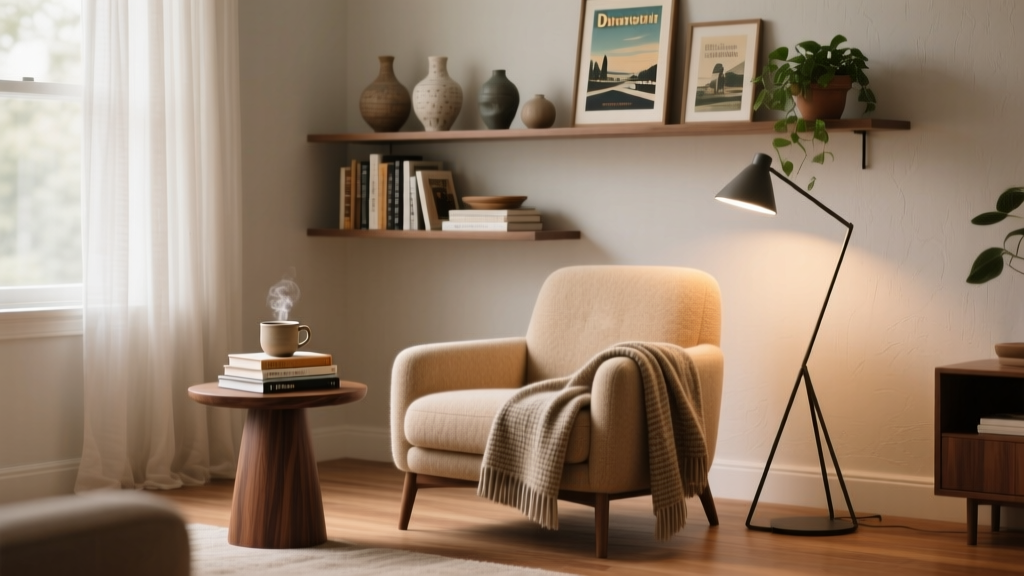
Living Room Cozy Reading Corner Inspiration - The Decor Mag
A living room reading corner is one of those upgrades that changes how your home feels day to day. It’s not just a pretty nook for photos—it's a practical spot that invites you to slow down, unplug, and actually use your living room in a more personal way. Whether you’re renting a small apartment or styling a spacious family room, a cozy reading corner can bring warmth, function, and a sense of intention to the space.
The best part: you don’t need a full renovation or a huge budget. With the right seating, lighting, and a few well-chosen decor elements, you can create a comfortable corner that looks designed (not accidental) and works for your routines—morning coffee, bedtime stories with kids, weekend novels, or simply a quiet place to scroll and recharge.
This guide will walk you through layout options, measurements to get right, lighting choices, textures and materials that feel inviting, and real-world examples for different living room sizes and lifestyles. You’ll also find common mistakes to avoid, budget ranges, and a quick FAQ to help you finish your reading nook with confidence.
What Makes a Reading Corner Feel Truly Cozy?
A cozy reading corner blends comfort and usability with the visual softness that makes a living room feel welcoming. It should feel “pulled together” like a mini-room, not a lonely chair pushed into a corner.
The Cozy Formula: Comfort + Light + Layers
- Comfort: Supportive seating, a place to rest a drink, and a footrest or leg support.
- Light: Targeted task lighting (not just overhead lighting) so you can read without eye strain.
- Layers: Textiles and decor—rug, throw, pillow, and a small shelf or basket—to visually anchor the nook.
Quick Measurements That Make or Break It
- Side table height: Aim for within 1–2 inches of your chair arm height (typically 22–26 inches).
- Clear walking path: Keep at least 30–36 inches for comfortable circulation in a living room.
- Distance from chair to side table: 2–4 inches away so it’s easy to reach without feeling cramped.
- Reading lamp height: For floor lamps, the bottom of the shade is often best around 42–48 inches from the floor, adjusted so the bulb is not in your direct line of sight.
- Rug sizing: A 4' x 6' rug can define a nook; for larger corners, a 5' x 8' often anchors chair + table more naturally.
Choosing the Best Spot in Your Living Room
The right location depends on light, traffic patterns, and what you want the corner to do. A reading corner should feel slightly tucked away, but not isolated.
Best Placement Options
- Near a window: Ideal for daytime reading and an instant cozy vibe. Add a light-filtering curtain to reduce glare.
- By the fireplace (if you have one): Classic and timeless. Keep seating at a safe distance—generally 36 inches or more, depending on your fireplace type.
- In an underused corner: Perfect for turning “dead space” into function. Add a plant or art to help the corner feel intentional.
- At the end of a sofa: Great for small living rooms where corners are limited. Use a slim table and compact chair silhouette.
Renters: Make It Feel Built-In Without Permanent Changes
- Use a tall bookcase or étagère to visually “frame” the corner.
- Add plug-in wall sconces (many use adhesive mounting) for a more elevated lighting look.
- Layer a rug over existing flooring to define the reading nook as its own zone.
Seating That You’ll Actually Want to Use
The chair is your anchor piece, and comfort matters more than trend. That said, today’s design trends make it easy to find seating that’s both stylish and supportive: sculptural curves, warm neutrals, performance fabrics, and compact swivel chairs are everywhere right now.
Best Chair Styles for a Cozy Reading Corner
- Upholstered accent chair: The most versatile. Look for a seat depth of 20–23 inches for relaxed reading.
- Wingback chair: Great for drafty rooms and a traditional-meets-modern look.
- Swivel chair: Ideal for open-plan living rooms—turn toward the view, the conversation, or the TV.
- Chaise lounge: A statement piece for larger living rooms, especially if you read for long stretches.
- Armless slipper chair: Helpful in tight spaces; pair with an ottoman for leg support.
Material Recommendations: Cozy Meets Practical
- Performance fabric (poly blends): Great for pets, kids, and spills; budget-friendly and durable.
- Bouclé: Trend-forward and tactile; best in low-mess households or in a performance bouclé option.
- Leather or faux leather: Timeless, easy to wipe clean, and ages well; add a throw to soften the feel.
- Linen blends: Airy and elevated; choose a tighter weave for better durability.
Budget Range for Seating
- Under $250: Compact accent chairs, secondhand finds, basic slipper chairs.
- $250–$700: Better cushioning, stronger frames, more fabric choices; sweet spot for most households.
- $700–$1,500+: Premium comfort, designer silhouettes, top-tier upholstery and long-term durability.
Lighting: The Make-or-Break Element for a Reading Nook
A cozy living room needs layered lighting, and a reading corner needs dedicated task light. If you’ve ever tried reading under overhead lighting alone, you already know it’s not the vibe.
Lighting Options (and When to Use Them)
- Floor lamp with a shade: Soft glow plus practical task light. Choose an adjustable arm for flexibility.
- Arc floor lamp: Good when you don’t have space for a side table lamp; it can “reach” over the chair.
- Table lamp: Works best with a wider side table; creates a classic, layered look.
- Plug-in sconce: A renter-friendly way to get a built-in look. Great for tight corners.
Bulb and Color Temperature Tips
- Color temperature: 2700K–3000K feels warm and cozy for a living room.
- Brightness: Aim for 800–1100 lumens in the reading area (often a 60–75W equivalent LED), depending on shade and distance.
- Use dimmers: Plug-in dimmers are an easy upgrade for renters and homeowners alike.
Layering Textiles for Instant Warmth
Textiles are where the “cozy” really shows up. Even a simple chair and lamp can look finished with the right rug, throw, and pillow combination. Current trends favor warm neutrals, earthy browns, muted greens, and tactile fabrics—but the timeless principle remains the same: mix textures, not just colors.
Reading Corner Textile Checklist
- Rug: Adds warmth and defines the zone. Wool or wool blends are durable; washable rugs are great for high-traffic living rooms.
- Throw blanket: Choose cotton for breathability, wool for warmth, or faux fur for extra softness.
- Pillow: A lumbar pillow (around 12" x 20") often supports reading posture better than a huge square pillow.
- Window treatments: Light-filtering curtains soften daylight; add blackout lining if the corner doubles as a nap spot.
Color and Pattern Tips That Don’t Get Overwhelming
- Keep the chair solid and add pattern through pillows or a rug for flexibility.
- Use one “grounding” neutral (cream, warm gray, camel, taupe) and one accent color (olive, terracotta, navy, or soft black) to keep it cohesive.
- Mix textures in similar tones—bouclé pillow + knit throw + woven basket—so the nook feels layered without looking busy.
Functional Add-Ons: Storage, Surfaces, and Styling
A reading corner becomes part of your routine when it supports real life: a place for your book, your tea, your glasses, and maybe a small stack of “next reads.”
Must-Have Pieces
- Side table: Round tables (18–22 inches diameter) are great for tight spaces; square tables offer more surface area.
- Ottoman or pouf: A cozy upgrade that also works as extra seating. Aim for 16–18 inches tall for most chairs.
- Basket: Stores throws, magazines, or toys; woven seagrass and rattan add texture to living room decor.
Optional, But Worth It
- Small bookcase or wall shelf: Keep favorites within reach. For narrow spaces, try picture ledges (4–6 inches deep).
- Plant: A medium plant (like a rubber plant or snake plant) softens corners and adds life.
- Artwork: One larger piece (around 24" x 36") or a tight pair of smaller frames makes the nook feel curated.
Step-by-Step: Set Up a Cozy Reading Corner in One Afternoon
- Choose the location: Pick a corner with the least foot traffic, ideally near natural light.
- Place the chair: Angle it slightly toward the room (about 10–15 degrees) so it feels inviting, not “stuck.”
- Add a rug: Position the front legs of the chair on the rug to visually anchor the zone.
- Bring in lighting: Place the lamp on the side of your non-dominant hand (so your arm doesn’t cast shadows while reading).
- Add a table and styling essentials: Coaster, small tray, and one personal touch (candle, small vase, framed photo).
- Finish with textiles: Drape a throw where it’s easy to grab; add a lumbar pillow for comfort.
Real-World Reading Corner Scenarios
Small Apartment Living Room (Under 200 sq. ft.)
You’re working with limited square footage and likely need the corner to multitask. A compact slipper chair or small swivel chair paired with a 12–16 inch diameter drink table is ideal. Use a plug-in sconce instead of a floor lamp if the footprint is tight.
- Best layout: Chair at the end of the sofa + wall-mounted/plug-in sconce.
- Budget range: $200–$600 (chair + small table + lamp + textiles).
Family Living Room (Kid- and Pet-Friendly)
Durability is the priority, but you can still make it cozy. Choose performance upholstery, a washable rug, and a lidded basket for quick cleanup. A chunky knit throw hides wear better than delicate weaves.
- Best materials: Performance fabric, leather, washable rug, sturdy wood or metal table.
- Smart add-on: A small bookshelf with lower shelves reserved for kids’ books.
Open-Concept Living Room (Needs Zoning)
In open-plan spaces, a reading corner can help define the living room area. A swivel chair, a tall plant, and a distinct rug create a “room within a room.” Consider a floor lamp with an arc to visually frame the nook.
- Zoning tip: Use a rug that contrasts slightly with the main living room rug (texture or tone) while staying in the same color family.
Common Mistakes to Avoid
- Relying on overhead lighting only: Your nook will feel flat and won’t function well for reading.
- Choosing style over comfort: A stunning chair that isn’t supportive becomes a décor placeholder, not a real reading spot.
- Ignoring scale: A tiny side table next to a bulky chair (or vice versa) looks off. Match visual weight.
- Not defining the space: Without a rug, lighting, or art, the corner can look like leftover furniture placement.
- Over-accessorizing: A reading corner needs breathing room. Keep surfaces useful, not cluttered.
FAQ: Living Room Reading Corner Design
How do I make a reading corner in a small living room?
Choose a compact chair (or even an armless accent chair) and a slim drink table. Use vertical space—plug-in sconces, wall shelves, and tall bookcases—to keep the floor area open. A 4' x 6' rug often works well to define the nook without overwhelming the room.
What’s the best lighting for a cozy reading corner?
A floor lamp with an adjustable arm or a plug-in wall sconce gives the most comfortable task lighting. Use a warm bulb (2700K–3000K) and aim for about 800–1100 lumens in the reading area, depending on shade and distance.
Where should I place a reading chair in the living room?
Aim for a low-traffic corner near a window or beside the sofa. Keep 30–36 inches of clearance for walkways, and angle the chair slightly toward the room so it feels intentional and inviting.
What are the best fabrics for a reading nook chair?
Performance fabric is the most practical for everyday living rooms. Leather is also durable and easy to clean. Bouclé is cozy and on-trend, but it’s best in low-mess homes or when chosen in a performance version.
How much does it cost to create a cozy reading corner?
A basic setup can cost $150–$400 (secondhand chair, affordable lamp, simple rug). A more polished look often lands in the $500–$1,200 range (quality chair, layered lighting, better textiles). High-end or designer versions can exceed $1,500+.
How do I make a reading corner feel “designed” instead of random?
Use at least three anchoring elements: a defined base (rug), a dedicated light source (floor lamp or sconce), and a functional surface (side table). Finish with one piece of vertical interest like art, a plant, or a shelf to visually complete the corner.
Your Next Steps: Build a Reading Corner You’ll Use Every Day
Start with the basics: pick the right spot, choose comfortable seating, and commit to proper lighting. Then add layers—rug, throw, pillow, and a small table—to bring that cozy living room feel to life. If you’re working with a tight budget, prioritize the chair and lighting first; you can always upgrade accessories over time.
Looking for more living room design and decor ideas, from layout tips to trend-forward styling? Explore more inspiration and practical guides on thedecormag.com.
More Articles
 Eclectic Living Room Decor Tips - The Decor Mag
 Living Room Understated Luxury Feel - The Decor Mag
 Designing a Workspace That Fuels Creativity
 Living Room Curtains: How to Choose (2026)
 Living Room French Provincial Inspiration - The Decor Mag
 Antique Living Room Decor: Modern Mix Ideas (2026)
 Bay Window Living Room Decor Ideas (2026)
 Living Room Bright Airy Design Tips - The Decor Mag
 2026 Bedroom Design Toolkit: Practical Planner
 Gallery Wall Ideas for Living Rooms (2026)