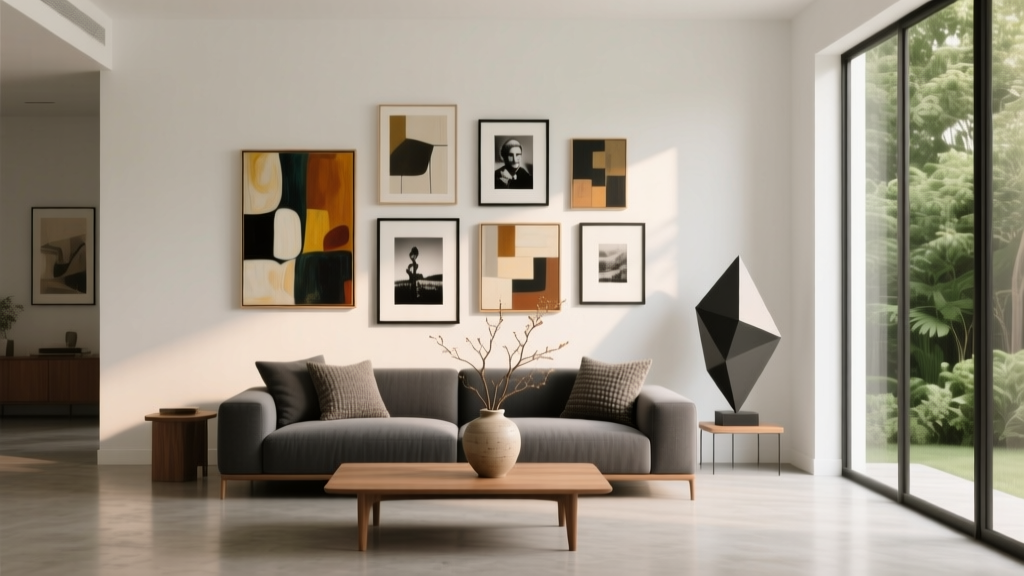
Art in Living Room Design: Ideas & Tips (2026)
Art is one of the fastest ways to make a living room feel finished—whether you’re styling a brand-new space or trying to breathe life into a room that feels a little flat. The right piece can set the mood, anchor a color palette, and add personality in a way no throw pillow ever could. And unlike many home upgrades, incorporating art into living room design doesn’t require a renovation budget or a perfectly coordinated furniture set.
Still, decorating with art can feel intimidating. How big should your wall art be? Should you match the sofa color? Can you mix frames? What if you rent and can’t put holes in the wall? This guide breaks it down with practical measurements, approachable styling rules, and real-world examples—so you can choose, place, and light artwork with confidence.
You’ll learn how to pick the right art for your room’s scale, build a gallery wall, layer art on shelves and consoles, use mirrors and sculptural pieces, and avoid common mistakes that make living rooms look cluttered or unfinished. Whether your style leans modern, traditional, minimalist, or eclectic, there’s a smart way to make art feel at home.
Start with the Room: What Do You Want Art to Do?
Before you buy anything, decide what role art should play in your living room design. This keeps you from ending up with pieces you like individually but don’t support the room as a whole.
Common “jobs” for art in a living room
- Create a focal point: A bold statement piece over the sofa or fireplace draws the eye and sets the tone.
- Define your color palette: Pull 2–4 colors from an artwork to guide pillows, rugs, and accessories.
- Add warmth and texture: Textile art, vintage prints, and wood frames soften modern rooms.
- Balance architecture: Large blank walls, tall ceilings, and awkward corners can look intentional with the right placement.
- Show personality: Art is storytelling—travel photography, local artists, family heirlooms, or graphic posters can all work when styled thoughtfully.
Quick exercise: Stand in your living room doorway and notice where your eyes land first. That spot is your natural focal point. If it’s a blank wall, art can fix that instantly.
Choosing Art That Fits Your Space (Not Just Your Taste)
Great living room decor is about scale, proportion, and cohesion. You don’t need museum-level knowledge—you need a few reliable guidelines.
Use these sizing rules for wall art
- Over a sofa: Aim for artwork that’s about 2/3 to 3/4 the width of the sofa. For an 84-inch sofa, your art grouping should be roughly 56–63 inches wide.
- Above a console table: Similar rule—art should be 2/3 the width of the console for a balanced look.
- Eye-level height: Hang the center of the artwork at 57–60 inches from the floor (a classic gallery standard). Adjust slightly higher if you have tall ceilings, but don’t float art near the ceiling unless it’s part of a planned floor-to-ceiling arrangement.
- Gap above furniture: Leave 6–10 inches between the top of the sofa/console and the bottom of the frame.
Pick a style approach that matches your living room design
- Modern living rooms: Large-scale abstract art, black-and-white photography, or clean-lined frames (black, white, natural oak).
- Traditional living rooms: Landscapes, portraits, botanicals, antique maps, gilded or wood frames.
- Scandi and minimalist spaces: One oversized piece, quiet palettes, lots of negative space, light wood frames.
- Eclectic living rooms: Mix mediums (prints + textiles + sculptural objects), varied frames, and layered color—just keep one element consistent (like a repeating color or frame finish).
Budget ranges that make sense
- Under $100: Digital downloads printed locally, poster frames, thrifted art, DIY abstract canvas.
- $100–$500: Limited-edition prints, framed photography, artisan textiles, small originals at local markets.
- $500–$2,000+: Original paintings, large-scale framed works, custom framing, collector editions.
Pro tip: If you’re working with a modest budget, spend more on one anchor piece and fill in around it with affordable supporting art.
Placement Strategies That Always Look Intentional
1) The statement piece (simple, high impact)
One large artwork is the easiest way to elevate a living room. It reduces visual clutter and works beautifully in open-concept spaces.
- Best above: sofa, fireplace mantel, or a large blank wall
- Recommended size: at least 30 x 40 inches for medium rooms; 40 x 60 inches (or larger) for large walls
- Frame tip: choose a frame that echoes your room’s finishes—black for modern, brass for warm glam, oak for organic modern
2) The classic pair or trio (balanced and versatile)
Two or three coordinated pieces can feel polished without the commitment of a gallery wall.
- Diptych (two pieces): great for wide walls and long sofas
- Triptych (three pieces): ideal if you want movement across a wall
- Spacing: keep 2–3 inches between frames for a tight, modern look; 3–5 inches for a more relaxed feel
3) The gallery wall (personal, layered, trend-forward)
Gallery walls remain a favorite in living room design—especially in eclectic, transitional, and modern spaces. The trend right now leans “curated but not too matchy”: mixed frame finishes, varied mediums, and a blend of photography, abstract, and line art.
Step-by-step gallery wall plan:
- Choose your layout style:
- Grid: clean and modern; best for same-size frames
- Organic cluster: relaxed; best for mixed sizes
- Linear: frames aligned along the top or bottom edge; great above a sofa
- Pick a unifying element: consistent mat color, a repeated frame finish, or a limited color palette.
- Mock it up first: trace frames on kraft paper, tape to the wall, adjust until it feels balanced.
- Use the right spacing: aim for 2–3 inches between pieces, and keep the overall shape roughly rectangular or intentionally asymmetrical.
- Anchor with one larger piece: place it slightly off-center for a modern look, or centered for symmetry.
Renter-friendly option: Use removable picture-hanging strips rated for the frame weight and add felt bumpers to protect the wall. For heavier frames, consider leaning pieces on a shelf ledge instead of hanging.
Beyond Frames: Other Ways to Decorate with Art
Lean art on shelves and consoles (no holes needed)
Leaning art looks relaxed and designer-approved, and it’s perfect for renters or anyone who likes to swap decor often.
- Best places: on a mantel, media console, sideboard, or built-in shelves
- Layering rule: place larger pieces in the back and smaller in front, leaving 1–2 inches between layers so it doesn’t look cramped
- Add balance: pair art with a vase, small lamp, or sculptural object on the opposite side
Use textile art for softness and texture
Woven wall hangings, framed textiles, and tapestries add warmth—especially in living rooms with lots of hard surfaces (wood floors, glass, metal, stone).
- Materials to look for: linen, wool, cotton canvas
- Style tip: keep the palette simple if your room already has patterned rugs or pillows
Bring in sculptural and 3D art
Living room decor doesn’t have to be flat. Ceramic wall pieces, small sculptures, and even artisan baskets can act as art.
- Great for: organic modern, coastal, and eclectic rooms
- Placement tip: group sculptural pieces in odd numbers (3 or 5) for a natural rhythm
Don’t forget mirrors (art’s hardworking cousin)
A mirror functions like art while also reflecting light and visually expanding the room—ideal for small living rooms or darker spaces.
- Hang mirrors like art: center at 57–60 inches
- For a focal point: choose an oversized mirror (think 30–40 inches wide minimum)
- Trend watch: warm metals (brushed brass) and soft, organic shapes continue to be popular
Color, Lighting, and Framing: The Details That Make Art Look Expensive
Pull a cohesive palette from your art
If your living room design feels disconnected, let the artwork lead. Choose 2–4 colors from your favorite piece and repeat them throughout the room:
- One color in pillows or throws
- One in a rug detail or curtain
- One in accents (books, vases, candles)
Frame and mat like a pro
- Matting: A 2–4 inch mat gives smaller prints breathing room and a more elevated feel.
- Glazing: Choose anti-reflective acrylic (lighter and safer than glass) for high-traffic living rooms.
- Frame finishes: Limit to 1–2 finishes in one area (for example, black + natural oak) to avoid visual noise.
Light your art properly
Good lighting can turn basic wall decor into a focal feature. Options:
- Picture lights: A plug-in picture light is renter-friendly and adds a high-end look. Budget: $50–$250.
- Directional recessed or track lighting: Aim at a 30-degree angle to reduce glare.
- Floor lamps: Place a spotlight-style floor lamp near a gallery wall for drama and depth.
Real-World Living Room Scenarios (And What Actually Works)
Scenario 1: Small apartment living room with a tight budget
You have a 72-inch sofa, white walls, and minimal storage. The room feels plain.
- Solution: One oversized poster-style print (around 24 x 36 inches or 30 x 40 inches) centered above the sofa, with a simple black frame.
- Budget plan:
- Digital download + local printing: $20–$60
- Frame: $40–$120
- Total: $60–$180
- Extra polish: Pull one color from the art into two throw pillows and a small vase on the coffee table.
Scenario 2: Open-concept living room that feels echo-y and cold
You have modern furniture, hard flooring, and tall ceilings. The space lacks warmth.
- Solution: Add textile art or a large abstract piece with warm tones, plus a pair of smaller works on the adjacent wall for continuity.
- Materials to prioritize: wood frames, linen textures, wool wall hanging.
- Placement: Keep the main piece center at 60 inches, and scale up (think 40 x 60 inches) so it doesn’t get lost.
Scenario 3: Family-friendly living room with kids and pets
You want art, but you’re worried about damage.
- Solution: Use acrylic glazing, choose washable frames, and hang art slightly higher if needed (while keeping it visually connected to the furniture).
- Best choices: framed prints, photography, or canvas wraps (no glass).
- Smart placement: Avoid low leaning art near play zones; use picture ledges higher up instead.
Product and Material Recommendations (Practical, Not Precious)
- Frames: Simple gallery frames in black, white, walnut, or oak. Look for solid wood or sturdy MDF with clean corners. Budget: $25–$200+ depending on size.
- Picture ledges: A 36–48 inch ledge above a sofa or console lets you rotate art easily. Budget: $30–$150.
- Mat board: Acid-free mats help prints look crisp and prevent yellowing over time. Budget: $10–$40 (or custom framing for more).
- Anti-reflective acrylic: Ideal for bright living rooms with lots of windows. Budget: $40–$150 depending on size.
- Hanging hardware: For heavier frames, use wall anchors rated above the artwork’s weight, or a French cleat for very large pieces. Budget: $10–$40.
Common Mistakes to Avoid When Decorating with Art
- Hanging art too high: If it feels like it’s “floating,” it probably is. Stick to the 57–60 inch center rule and keep 6–10 inches above furniture.
- Choosing art that’s too small: Tiny pieces on big walls look lost. When in doubt, go larger—or group multiple pieces.
- Overmatching everything: Your art doesn’t need to match your rug perfectly. Aim for harmony, not a carbon copy.
- Ignoring glare: Bright windows + glass frames can make art unreadable. Use anti-reflective acrylic or reposition the piece.
- Too many frame finishes in one zone: Keep it to 1–2 finishes for a calmer, more cohesive living room.
- Forgetting negative space: Every wall doesn’t need art. A well-placed focal point looks stronger when it has room to breathe.
FAQ: Incorporating Art into Living Room Design
How do I choose art for my living room color scheme?
Start with one piece you genuinely love, then pull 2–4 colors from it to repeat in your pillows, throws, rug accents, or decor objects. If your room is neutral, art can be the color moment that makes everything feel intentional.
What size artwork should I hang over a sofa?
Aim for art (or an art grouping) that’s about 2/3 to 3/4 the width of the sofa. For an 84-inch sofa, that means roughly 56–63 inches wide total.
How high should I hang pictures in a living room?
Hang so the center of the artwork is around 57–60 inches from the floor. If it’s above furniture, leave 6–10 inches between the furniture top and the bottom of the frame.
Can I mix different frame styles in the same gallery wall?
Yes—mixed frames are a current design trend and can look collected and personal. Keep one consistent element (mat color, repeated frame finish, or a tight color palette) so the arrangement still feels cohesive.
What are renter-friendly ways to hang or display art?
Use removable hanging strips rated for the frame’s weight, or display art on picture ledges, mantels, and console tables. Leaning art layered with decor is stylish and requires no wall damage.
Is it okay to use inexpensive prints instead of original art?
Absolutely. A well-framed print with a mat can look polished and elevated. If you want a more custom feel, mix prints with one or two unique pieces—like a small original, textile art, or a vintage find.
Your Next Steps: Make Art Part of Your Living Room’s Story
If your living room feels unfinished, art is often the missing layer. Start by choosing one anchor piece for your main wall (usually above the sofa), hang it at the right height, and build outward—either with a pair/trio, a gallery wall, or layered art on ledges and consoles. Keep scale in mind, repeat a few colors for cohesion, and don’t underestimate the power of good framing and lighting.
Want more ideas for living room design, wall decor styling, and trend-forward layouts that still feel timeless? Explore more living room inspiration on thedecormag.com.
More Articles
 Living Room Soft Glam Decor Tips - The Decor Mag
 Paint Safety Tips for Health & Environment in 2026
 Modern Minimalist Living Room Ideas for 2026 - The Decor Mag
 Best Small Precision Tools for Modern Living Spaces 2026
 Smart Studio Storage Ideas for 2026
 Living Room Indoor-Outdoor Flow: Summer 2026
 How to Layer Textiles in a Living Room - The Decor Mag
 Cozy Reading Nook Ideas: Soul-Warming Spaces (2026)
 Living Room Serene Zen Space Ideas - The Decor Mag
 Living Room Polished Bohemian Style - The Decor Mag