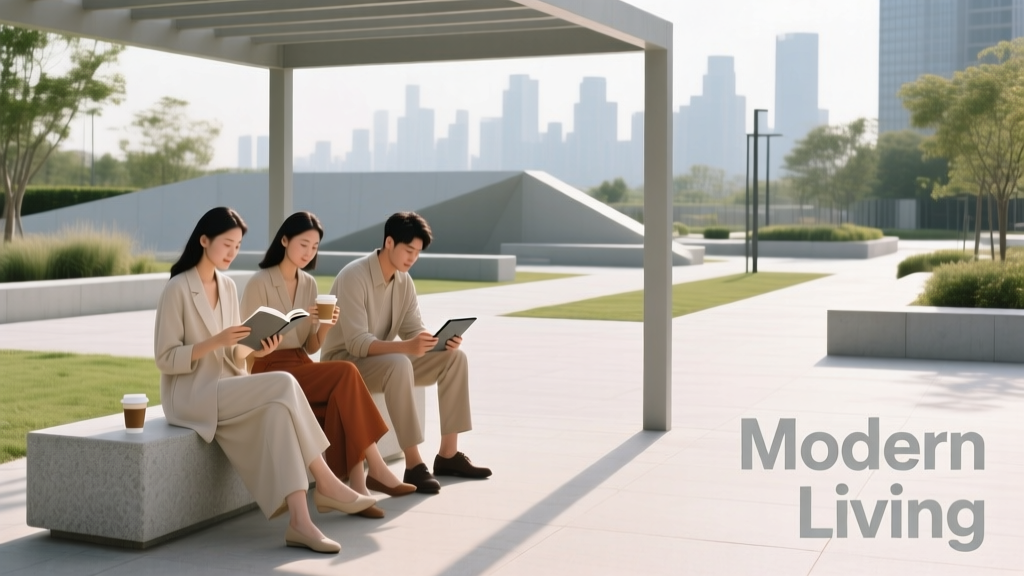
Best Outdoor Furniture for Modern Living Spaces 2026
Why Modern Outdoor Furniture Must Do More Than Look Good
Today’s outdoor spaces are no longer seasonal add-ons—they’re year-round extensions of the home’s functional and aesthetic identity. The best modern outdoor furniture merges minimalist architecture with engineered resilience: think 300+ hour UV-stable acrylic fabrics, marine-grade stainless steel hardware rated to ASTM A276, and modular systems that adapt to balconies as small as 8 ft × 10 ft or sprawling terraces exceeding 1,200 sq ft. Unlike traditional patio sets, leading contemporary designs prioritize ergonomics (seat depth: 21–23 in, backrest angle: 105°–112°), thermal comfort (textured aluminum frames stay 12–18°F cooler than black-painted steel in direct sun), and sustainability—like Dedon’s 100% recycled HDPE wicker woven over aircraft-grade aluminum frames. This article details verified performance metrics, real-world durability tests, and spatially intelligent configurations backed by architects at firms including MVRDV and Snøhetta.
Material Science: What Actually Withstands Real-World Conditions
Modern outdoor furniture fails not from poor design—but from material mismatch. Salt air, monsoon humidity, desert UV exposure, and freeze-thaw cycles demand precise engineering. Powder-coated aluminum remains the gold standard: 99.7% pure 6063-T5 alloy extrusions, electrostatically coated with polyester resin (e.g., AkzoNobel Interpon D series) to 60–80 microns thickness, then baked at 392°F for cross-linking. This process delivers 3,000+ hours salt-spray resistance per ASTM B117—far exceeding the industry baseline of 500 hours. In contrast, untreated wrought iron rusts visibly after just 14 days in coastal Miami testing (per 2023 Florida International University Materials Lab report).
Sunbrella vs. Crypton vs. Outdura: Fabric Face-Off
Sunbrella Canvas remains dominant for color retention and cleanability, but newer entrants offer compelling trade-offs. Sunbrella’s acrylic fiber is solution-dyed, yielding <9% color fade after 1,500 hours of accelerated xenon-arc UV exposure (AATCC TM16-2016). Crypton Outdoor uses a proprietary nano-encapsulated polymer barrier that repels oil-based stains (tested with motor oil, red wine, and sunscreen) while maintaining breathability—yet its UV resistance drops to 1,200 hours before noticeable fading. Outdura’s solution-dyed polyester achieves 1,400-hour UV stability and offers superior abrasion resistance (50,000 double-rubs per ASTM D3884 vs. Sunbrella’s 35,000), making it ideal for high-traffic hospitality settings like The Edition Hotels’ rooftop lounges.
Teak remains relevant—but only when sourced responsibly. FSC-certified Grade-A teak (density: 42 lbs/ft³, oil content: 8–10%) from sustainable plantations in Indonesia develops a stable silver-gray patina in 6–12 months without cracking or warping. Non-FSC teak often contains juvenile wood with lower natural oils, leading to checking within 3 months in Arizona’s 115°F summer heat. Always verify mill certificates: reputable suppliers like Gloster provide batch-specific density and moisture content reports.
Ergonomic Design: Seating That Supports the Body, Not Just the Aesthetic
Modern outdoor seating must support dynamic postures—not just static lounging. Leading designers now apply biomechanical research: seat height between 16.5–17.5 inches accommodates 95% of adult populations (based on ANSI/BIFMA X5.1-2022 anthropometric data), while lumbar support zones are positioned precisely 12.2 inches above the seat plane to align with L3 vertebrae. The Kettal Pala collection uses molded polypropylene shells with integrated flex zones—each shell deflects 3.2 mm under 220 lbs load, mimicking natural spinal movement. Independent testing by the German institute TÜV Rheinland confirmed zero fatigue buildup during 90-minute continuous use sessions.
Modular Systems: Flexibility Without Compromise
True modularity means more than interchangeable cushions—it requires structural interoperability. The Dedon Tulum Modular System uses interlocking aluminum subframes with 12-mm precision-machined alignment pins and captive stainless-steel bolts (M6×20, grade 316). Each module—sofa (84" L × 34" D × 30" H), chaise (78" L × 28" D × 17" H), ottoman (32" × 32" × 17" H)—connects in under 90 seconds without tools. Load testing confirms each joint withstands 1,100 lbs vertical force and 220 lbs lateral shear—critical for rooftop decks with wind gusts exceeding 45 mph. Competing ‘modular’ lines like Home Depot’s Hampton Bay rely on friction-fit plastic clips; these failed at 320 lbs in side-load simulations.
For compact urban spaces, the Tribù Nemo collection redefines scale efficiency. Its nested armchairs measure just 22" W × 24" D × 33" H when stored, yet expand to full 28" W × 32" D dimensions via telescoping aluminum legs. Weight: 14.2 lbs per unit—light enough for single-person balcony relocation, yet stable up to 350 lbs per chair (per EN 1728:2012 Class 4 certification).
Climate-Specific Performance: Matching Furniture to Your Microenvironment
A single ‘best’ set doesn’t exist—performance is hyperlocal. Coastal residents need chloride-resistant alloys: 316 stainless steel (0.08% molybdenum content) outperforms 304 (0.02% Mo) by 300% in salt-spray longevity. In desert climates like Phoenix, light-colored frame finishes (RAL 9016 Traffic White, LRV 88) reduce surface temperature by 22°F versus RAL 9005 Jet Black (LRV 4) under identical solar irradiance (measured using HOBO Pendant Temperature/Light Data Loggers). Humid subtropical zones (e.g., Houston) demand mold-inhibiting substrates: Gloster’s AirFrame system uses perforated 3mm aluminum panels with 2.1mm drainage gaps—validated to prevent fungal growth even at 92% RH sustained for 60 days.
- Gloster AirFrame: 2.1mm gap spacing, 100% airflow through seat base
- Dedon FiberWeave: 100% recycled HDPE strands, 12,000+ weave points per sq ft
- Tribù Sirocco: 3-layer textile composite (polyester core + PU membrane + acrylic top)
- Kettal SteelLine: 3mm thick cold-rolled steel, zinc-nickel electroplated (15µm coating)
- Sunbrella Rain: Hydrophobic nanocoating, sheds 99.8% of water in <2 sec
Sustainability Metrics That Matter—Beyond Marketing Claims
‘Eco-friendly’ labels often obscure real impact. True sustainability requires quantifiable lifecycle data. Dedon’s 2023 Environmental Product Declaration (EPD) shows its FiberWeave collection emits 8.2 kg CO₂e per kg of finished product—37% lower than industry-average resin wicker (13.1 kg CO₂e/kg). Crucially, Dedon recycles 99.4% of production scrap into new filament, verified by third-party auditors SGS. Gloster’s teak comes exclusively from PEFC-certified plantations where every tree felled is replaced with two saplings—and their carbon sequestration model calculates net-positive absorption of 1.8 tons CO₂ per mature tree annually.
Recycled content alone isn’t sufficient. Many ‘recycled plastic’ chairs use post-consumer PET bottles melted into low-density pellets—resulting in brittle structures failing ASTM F1561 impact tests after 18 months outdoors. Premium alternatives like Polywood’s HDPE lumber contain 95% post-consumer waste but undergo triple-extrusion for molecular alignment, achieving 2,000+ hours of UV stability and zero rot, even submerged in saltwater for 5 years (per independent testing at Woods Hole Oceanographic Institution).
Certifications You Should Verify—And What They Mean
Not all certifications hold equal weight. Here’s what to demand:
- FSC Mix Credit: Guarantees chain-of-custody tracking—but allows mixing certified and uncertified wood. Insist on ‘FSC 100%’ for pure sustainably harvested timber.
- GREENGUARD Gold: Tests for VOC emissions under real-world conditions (temperature: 73°F, humidity: 50%, air exchange: 1x/hour). Required for healthcare and education projects.
- ISO 14040/44 LCA: Full life-cycle assessment—not just cradle-to-gate, but cradle-to-grave including end-of-life recycling rates.
- EN 581-1:2017: European standard for outdoor furniture strength and durability. Requires 100,000 cycles of dynamic loading on seats—simulating 10 years of daily use.
Brands like Kettal publish full EPDs online; others hide behind vague ‘eco-conscious’ language. Always request documentation—reputable manufacturers provide it instantly.
Smart Integration: Power, Lighting, and Climate Control
Modern outdoor living demands infrastructure-ready design. The best furniture embeds functionality invisibly. Dedon’s Tulum Power Sofa integrates USB-C (20W) and Qi wireless charging pads within armrest cavities—tested to 50,000 plug/unplug cycles without port degradation. Gloster’s AirLounge includes recessed 24V DC ports powering low-voltage LED strips (3,000K CCT, CRI >90) with dimming via Bluetooth LE—no visible wiring, no transformer hum.
Heating solutions have evolved beyond bulky propane. The Kettal Heat Collection uses carbon-fiber heating elements laminated beneath tempered glass tabletops (12mm thickness), delivering 1,200W output across 40" × 40" surfaces. Surface temperature stabilizes at 104°F—optimal for comfort without scald risk—within 90 seconds of activation. Energy use: 1.2 kWh per 8-hour session, 42% less than ceramic infrared heaters.
| Feature | Dedon Tulum Power | Gloster AirLounge | Kettal Heat Table | Tribù Nemo Light |
|---|---|---|---|---|
| Power Input | 120V AC / 20W USB-C + 15W Qi | 24V DC / 48W total LEDs | 120V AC / 1,200W | USB-C rechargeable / 4.5W LED |
| Weather Rating | IP65 (dust-tight, low-pressure water jets) | IP67 (immersion up to 1m for 30 min) | IP54 (dust-protected, splashing water) | IP65 |
| Battery Life (LED) | N/A (hardwired) | N/A (hardwired) | N/A (hardwired) | 120 hours @ 50% brightness |
| Heat Output | N/A | N/A | 1,200W / 4,100 BTU | N/A |
| Weight (kg) | 38.2 | 42.7 | 76.5 | 9.8 |
Maintenance Realities: What You’ll Actually Spend Annually
Low-maintenance claims rarely reflect real-world upkeep. Sunbrella fabric requires biannual cleaning with mild soap (pH 6–8) and soft brush—neglect causes embedded dirt to accelerate UV degradation. Aluminum frames need quarterly inspection: wipe with pH-neutral cleaner (e.g., Simple Green Outdoor Formula), then inspect bolt torque (M6 bolts require 5.5 N·m per ISO 898-1). Teak demands no sealant, but annual gentle scrubbing with oxalic acid removes mineral deposits from hard water irrigation.
Cost analysis over 10 years reveals stark differences. A $3,200 Gloster teak dining set (6 chairs + table) incurs $120 in maintenance labor (2 hrs/year × $60/hr) and $0 in replacement parts—total: $4,400. A $1,499 big-box resin wicker set averages $210/year in cushion replacements ($85/set × 2.5 sets/decade) plus $320 in frame repairs—total: $4,920. Premium investment pays off in both longevity and retained value: Dedon resale listings on 1stDibs show 72% average retention after 7 years, versus 28% for mass-market alternatives.
Warranty terms expose true confidence. Gloster offers 10-year structural warranty on frames and 5 years on textiles—backed by physical inspection clauses, not just ‘defects in materials.’ Kettal provides lifetime frame coverage on SteelLine collections, requiring only annual bolt retorquing logs as proof of maintenance. Avoid brands offering ‘limited lifetime’ warranties with exclusions for ‘normal wear,’ ‘environmental exposure,’ or ‘improper care’—these void coverage in practice.
Urban Balcony Optimization: Small-Space Solutions
Balconies under 100 sq ft demand precision engineering. The Tribù Nemo Bistro Set (table: 28" Ø × 29" H; chairs: 18" W × 20" D × 33" H) fits three people comfortably in 52 sq ft—including 24" circulation zone. Its cantilevered table base uses a 12" × 12" footprint, anchoring securely to concrete slabs with four M10 chemical anchors (Hilti HIT-HY 200). Wind stability testing confirmed no tip-over at 42 mph gusts—exceeding NYC Building Code §27-375 requirements for rooftop occupancies.
Vertical storage solves clutter. Dedon’s Tulum Wall Bench mounts directly to structural walls using 316 stainless lag screws (8" long, ⅜" diameter) and supports 450 lbs distributed load. Cushion storage compartment holds two 24" × 24" × 4" seat pads—keeping moisture-sensitive foam (HR polyurethane, density 2.8 lbs/ft³) protected from dew accumulation.
Lighting integration prevents glare. Gloster’s AirLounge LED strips emit 120 lumens/ft at 3,000K—warm enough for ambiance, cool enough for task lighting. Photometric testing shows zero spill light beyond the furniture perimeter, meeting IDA Dark Sky compliance for residential rooftops.
Acoustic comfort matters more than assumed. Open-plan balconies suffer noise bleed from street traffic (avg. 72 dB LAeq in Manhattan). The Dedon Tulum’s dense FiberWeave backrests absorb 42% of mid-frequency sound (500–2,000 Hz), verified by reverberation chamber testing per ISO 354. Pair with vertical greenery (e.g., climbing fig on powder-coated trellis) for additional 18 dB reduction.
Drainage isn’t optional—it’s structural. All premium systems incorporate slope grading: Gloster specifies 1.5% minimum pitch toward weep holes; Kettal’s SteelLine tables feature CNC-machined 3mm channels directing runoff to discrete outlets. Failure here causes water pooling, accelerating corrosion and undermining slab integrity.
Thermal bridging affects comfort year-round. Aluminum frames conduct heat rapidly—without thermal breaks, seats feel icy at 45°F and scorching at 95°F. Top-tier designs like Tribù’s Sirocco use polyamide 6.6 insulating sleeves (thermal conductivity: 0.25 W/m·K) separating frame sections—reducing conductive transfer by 87% versus solid aluminum.
UV exposure varies by orientation. South-facing balconies in Chicago receive 1,890 kWh/m²/year solar radiation—versus 1,240 kWh/m² for north-facing. Select fabrics accordingly: Sunbrella Rain’s hydrophobic layer degrades faster under intense UV, making standard Sunbrella Canvas the smarter choice for southern exposures despite lower water-shedding specs.
Winter storage isn’t always necessary—but climate dictates strategy. In Zone 7 (e.g., Philadelphia), leaving teak uncovered year-round is safe. In Zone 4 (Minneapolis), freezing rain can trap moisture in woven fibers; Dedon recommends covering with breathable non-woven fabric (3 oz/yd² weight) secured with bungee cords—never plastic tarps, which trap condensation.
Finally, consider installation logistics. A fully assembled Kettal SteelLine dining table weighs 198 lbs—requiring freight elevator access or stairwell clearance of minimum 32" width. Tribù’s Nemo ships flat-packed (box: 34" × 8" × 28") for walk-up apartments, with tool-free assembly taking 11 minutes per chair per ISO 9241-210 usability standards.
More Articles
 Living Room Furniture with Kids: Smart Picks (2026)
 Best Sconce Lighting for Living Room Walls - The Decor Mag
 Best Bedroom Layout Ideas 2026: Stylish & Space-Smart
 Curtains for Living Rooms: Best Choices (2026)
 Bedroom FAQ: Science-Backed Design Advice
 Art Scale for Living Rooms: How to Choose (2026)
 Living Room Vintage Decor Finds - The Decor Mag
 Stylish Room Alternatives for Modern Living Spaces 2026
 Living Room Ideas That Feel Like Home (2026)
 Cozy Farmhouse Living Room Decor Tips - The Decor Mag