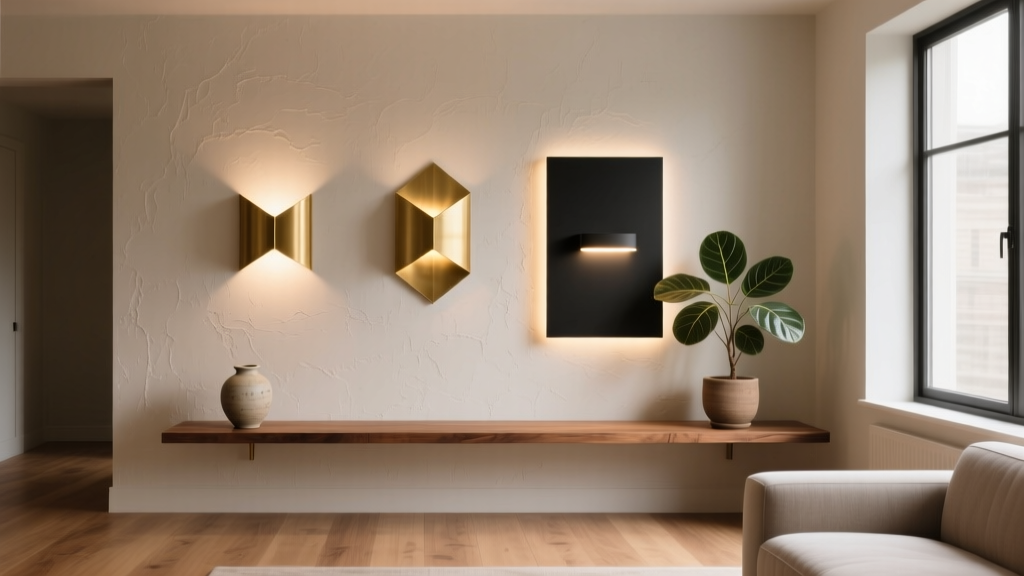
Best Sconce Lighting for Living Room Walls - The Decor Mag
Wall sconces can change the entire feel of a living room—sometimes more dramatically than a new rug or paint color. They add layered light, draw attention to architectural details, and free up valuable surface space on side tables (especially helpful in smaller apartments). When chosen well, sconces make a living room feel intentional: cozy for movie nights, bright enough for conversation, and polished enough for entertaining.
This guide breaks down the best sconce lighting for living room walls, including which styles work for your layout, what sizes and heights look right, and how to get the best glow without glare. You’ll also find real-world scenarios, common mistakes to avoid, and practical recommendations—whether you’re renting and need plug-in options or you’re ready to hardwire for a built-in look.
Why Wall Sconces Work So Well in Living Rooms
Great living room lighting relies on layers: ambient (overall), task (for activities), and accent (to highlight and add drama). Sconces can do all three, depending on the style and bulb choice. They’re also one of the easiest ways to make a room look more “designed,” because they introduce vertical interest and rhythm along the walls.
- They create atmosphere: Soft pools of light make a living room feel warm and welcoming.
- They save space: Perfect for tight layouts where floor lamps crowd walkways.
- They highlight decor: Frame artwork, emphasize a fireplace, or visually “anchor” a sofa wall.
- They balance overhead lighting: A single ceiling fixture can feel harsh; sconces soften it.
Best Types of Sconces for Living Room Walls (and Where They Shine)
1) Uplight Sconces: Soft, Flattering Ambient Light
Uplight sconces bounce light toward the ceiling, which then diffuses across the room. This is one of the most forgiving lighting effects—great for living rooms where you want warmth without harsh shadows.
Best for:
- Low-ceiling rooms (they visually lift the ceiling)
- Traditional, transitional, and contemporary spaces
- Creating an evening “glow” layer
Pro tip: Choose a warm color temperature, around 2700K, for a cozy living room vibe.
2) Downlight Sconces: Focused Light for Reading Corners
Downlight sconces send light downward, making them excellent for task lighting beside a sofa or reading chair. They can also spotlight textures like wood paneling, limewash paint, or a stone fireplace surround.
Best for:
- Reading nooks and seating areas
- Textured feature walls
- Narrow living rooms that need guided pools of light
Measurement to know: Aim for the bottom of a downlight sconce to sit about 60–66 inches from the floor in most living rooms, adjusting slightly for ceiling height and furniture placement.
3) Swing-Arm Sconces: Flexible Task Lighting with a Designer Look
Swing-arm sconces are a favorite in both classic and current living room design trends because they blend style with function. You can pull them closer for reading and push them back when you want a cleaner silhouette.
Best for:
- Beside sofas in place of table lamps
- Small living rooms where surface space is limited
- Renters who can’t add floor outlets where they want them
Placement tip: Install them so the light source lands roughly 40–50 inches above the seat cushion and slightly behind your shoulder line to reduce glare.
4) Picture Light Sconces: Gallery-Style Polish
If your living room has a statement art piece, a picture light creates an instantly elevated, curated look. Warm brass and aged bronze finishes are especially popular right now, and they read as timeless.
Best for:
- Highlighting artwork, framed prints, or a large mirror
- Traditional, Parisian, and modern classic interiors
- Adding “museum lighting” without a full renovation
Measurement to know: Choose a picture light that’s about 1/2 to 2/3 the width of the art frame for balanced coverage.
5) Up/Down Cylinder Sconces: Modern and Architectural
These sleek fixtures cast light both up and down for clean, graphic beams. They’re trending in modern, Scandinavian, and minimalist living room decor—and they work beautifully on plain walls that need structure.
Best for:
- Modern living rooms and open-plan spaces
- Creating symmetry on a fireplace wall
- Highlighting plaster, microcement, or smooth painted walls
Material recommendation: Look for powder-coated metal or solid brass for a durable, premium feel.
How to Choose the Right Sconce Style for Your Living Room
Start with the room’s lighting job
- Ambient layer: Uplights, fabric-shade sconces, diffusers
- Task lighting: Swing-arm sconces, adjustable head sconces, downlights
- Accent lighting: Up/down cylinders, picture lights, sculptural statement sconces
Match the finish to your existing metals (but don’t over-match)
Mixing metals is a current design trend that also holds up as a timeless principle. Aim for a “primary finish” (about 70%) and a “secondary finish” (about 30%).
- Warm metals: Aged brass, champagne bronze, antique gold—cozy and classic
- Cool metals: Polished nickel, chrome—crisp and more contemporary
- Dark metals: Matte black, oil-rubbed bronze—great for contrast and definition
Pick shades and materials that support the mood
- Linen or fabric shades: Softer, more living-room-friendly light
- Opal glass: Gentle diffusion; great for everyday use
- Clear glass: Brighter and more decorative—best when paired with an attractive bulb
- Stone or ceramic bases: Adds texture and a high-end, artisanal feel
Placement and Height: The Measurements That Make Sconces Look “Right”
Even a beautiful sconce can look off if it’s installed too high, too low, or too far from what it’s meant to illuminate. Use these guidelines as a starting point, then adjust for your ceiling height and furniture scale.
General height guidelines
- Standard installation height: Mount the sconce so the center sits about 60–66 inches from the floor.
- With 9-foot ceilings: You can push closer to 66–70 inches for better proportions.
- Beside a sofa: Keep the sconce visually connected to the seating—typically 6–10 inches above the top of the sofa back, depending on the fixture size.
Spacing guidelines
- Pairing sconces on a wall: Space them about 6–8 feet apart for balanced rhythm (adjust for wall length).
- Beside a fireplace: Mount so they align with the firebox opening or mantel proportions; often 8–12 inches outside the mantel edge.
- Flanking art or a mirror: Keep sconces 3–6 inches away from the frame edge to avoid crowding.
Glare check
Sit where you’ll actually relax. If you can see the bulb directly from the sofa, you’ll likely experience glare. Choose a shaded or frosted option—or reposition slightly higher or outward.
Product Recommendations by Style, Function, and Budget
Rather than listing brand-specific models that come and go, here are reliable “shopping targets” and what you should expect to pay. These ranges reflect typical retail pricing for quality sconces used in living room design projects.
Best plug-in sconces for renters
- Style: Swing-arm plug-in with a fabric shade or metal dome
- Look for: A cord cover kit, on/off switch on the fixture, and a sturdy mounting plate
- Budget: $60–$200 each (good), $200–$450 each (designer)
Best hardwired sconces for a built-in look
- Style: Opal glass globe or shaded sconce in aged brass or matte black
- Look for: Dimmable rating, UL/ETL listing, and a quality finish (no “spray paint” look)
- Budget: $120–$350 each (solid), $350–$900+ each (premium)
Best statement sconces (when the fixture is the art)
- Style: Sculptural ceramic, fluted glass, or alabaster-inspired forms
- Look for: Integrated LED with warm dimming or replaceable LED bulbs for long-term flexibility
- Budget: $250–$700 each (impactful), $700–$1,500+ each (collector/designer)
Best LED choices for living rooms
- Color temperature: 2700K (warm) or 3000K (slightly brighter but still cozy)
- Color rendering: 90+ CRI so skin tones and decor look natural
- Dimming: Use dimmable LEDs and confirm compatibility with your dimmer switch
Step-by-Step: Planning Sconce Lighting Like a Designer
- Map your seating. Mark the sofa, chairs, and main sightlines. Identify where you read, chat, or watch TV.
- Choose your layers. Plan for at least two: (1) ambient (sconces + ceiling), (2) task (swing-arm/reading).
- Decide plug-in vs hardwired. Renters often do best with plug-in sconces and cord covers. Homeowners may prefer hardwired for clean walls.
- Mock the height. Use painter’s tape to outline fixture size on the wall. Sit down and check glare.
- Pick bulbs intentionally. Warm, high-CRI LEDs change everything. Add a dimmer when possible.
- Repeat finishes thoughtfully. Tie sconces to at least one other element: coffee table base, curtain rod, or hardware.
Real-World Living Room Scenarios (What Works and Why)
Scenario 1: Small apartment living room with no side table space
A couple in a 600–800 sq ft apartment wants a cozy living room but their sofa barely fits, leaving no room for lamps.
- Best solution: Two plug-in swing-arm sconces mounted behind the sofa ends
- Why it works: Clears floor space and creates targeted reading light
- Finish suggestion: Matte black for contrast on white walls, or aged brass for warmth
- Budget: $150–$400 total including cord covers
Scenario 2: Open-plan living room that feels flat at night
An open living/dining space has one ceiling fixture and recessed lights, but it feels harsh and “office-like” after sunset.
- Best solution: Add two uplight sconces on a long wall, plus one accent sconce near a console
- Why it works: Sconces create soft, perimeter light that makes the room feel layered
- Bulb tip: 2700K dimmable LEDs to control mood
Scenario 3: Fireplace wall that needs symmetry and height
The mantel looks great during the day but disappears at night.
- Best solution: Pair of up/down sconces flanking the fireplace
- Why it works: Adds architectural structure and balanced vertical lines
- Material suggestion: Aged brass or dark bronze for a classic, grounded look
Common Mistakes to Avoid with Living Room Wall Sconces
- Installing too high. Sconces that float near the ceiling feel disconnected. Use the 60–66 inch guideline, then adjust.
- Choosing clear glass with a harsh bulb. Clear glass can glare. If you love it, use a warm, decorative bulb and a dimmer.
- Skipping the dimmer. Living room lighting should shift from bright to cozy. Dimmers make sconces far more versatile.
- Not considering cord management (renters). Exposed cords can look messy. Use paintable cord covers for a cleaner finish.
- Ignoring scale. Tiny sconces on a large wall look underwhelming. For bigger walls, choose larger fixtures or use pairs.
- Mixing color temperatures. A 5000K bulb next to a 2700K lamp will feel off. Keep bulbs consistent across the room.
FAQ: Living Room Sconce Lighting
Are wall sconces enough to light a living room?
They can be, but most living rooms look best with layered lighting. Use sconces for ambient and accent, then add at least one other source (a floor lamp, table lamp, or ceiling fixture) for flexibility.
What height should sconces be mounted in a living room?
A reliable starting point is 60–66 inches from the floor to the center of the fixture. For reading sconces near seating, also check comfort and glare while seated.
Which bulb is best for living room sconces?
Choose LED bulbs at 2700K (warm) with 90+ CRI for flattering, natural color. If you entertain often, a dimmable bulb is worth it.
Can renters install sconces without hardwiring?
Yes—look for plug-in wall sconces. Use a paintable cord cover to keep the wall looking tidy. Many renters also mount with proper anchors (and patch later) if allowed.
Should sconces match the ceiling light in the living room?
They don’t need to match exactly, but they should coordinate. Keep either the finish, shape language, or design era consistent—then repeat that choice elsewhere (hardware, frames, furniture legs) for a cohesive look.
What’s the best sconce finish for a timeless living room?
Aged brass, matte black, and oil-rubbed bronze are all strong, enduring options. Choose based on your room’s undertones: warmer palettes love brass; high-contrast schemes love black.
Actionable Next Steps for Choosing Your Living Room Sconces
- Take a quick inventory: note your ceiling height, wall space beside the sofa, and where you need light most.
- Pick one “job” per sconce: ambient glow, reading/task light, or accent/statement.
- Measure before you buy: aim for 60–66 inches to center, and check spacing so fixtures don’t feel cramped.
- Choose warm, high-quality bulbs: 2700K, 90+ CRI, dimmable when possible.
- Decide plug-in vs hardwired: renters typically do best with plug-ins; homeowners often prefer hardwired for a seamless look.
If you’re ready to keep upgrading your space, explore more living room lighting ideas, wall decor inspiration, and layout tips on thedecormag.com.
More Articles
 Practical vs Wood Flooring: 2026 Living Room Showdown
 Best Coffee Table Books for Styling - The Decor Mag
 Best Small Precision Tools for Modern Living Spaces 2026
 Leather Furniture for Living Rooms (2026)
 Best Recliner Chairs That Look Stylish - The Decor Mag
 Best Conversation Pit Ideas - The Decor Mag
 Cheap vs Premium Decor: What’s Worth It in 2026?
 Best Slipcover Sofa Picks - The Decor Mag
 Best Seating Options for Entertaining - The Decor Mag
 Global Living Room Decor: Stylish Ideas (2026)