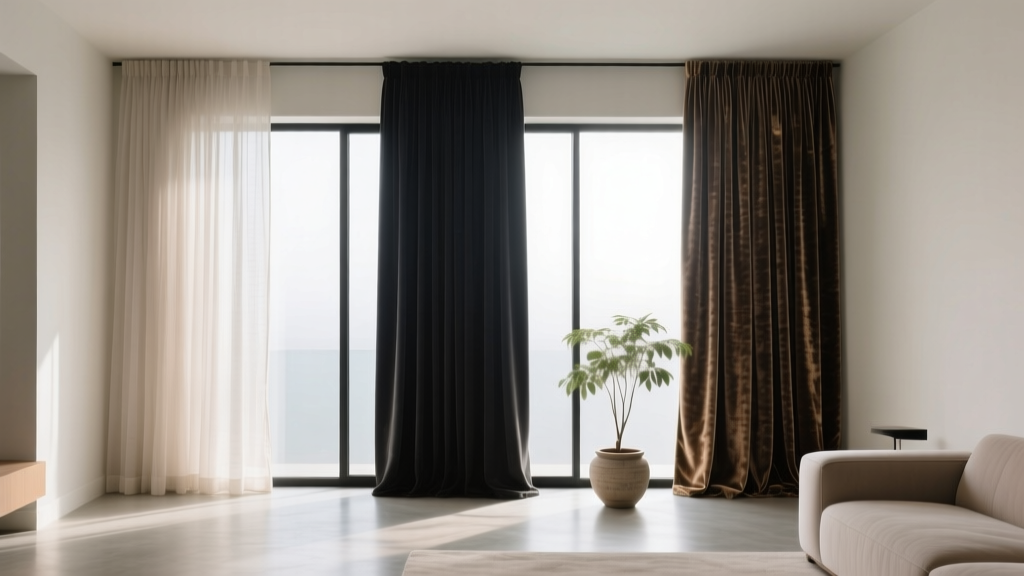
Curtains for Living Rooms: Best Choices (2026)
Living room curtains do more than cover a window—they shape how the whole room feels. The right drapery can make ceilings look higher, soften harsh light, improve privacy, and pull together your color palette like a finishing touch. The wrong choice can shrink the space, fight with your furniture, or leave you constantly adjusting glare on the TV.
If you’re a homeowner updating your main gathering space or a renter looking for an easy, reversible upgrade, curtains are one of the highest-impact changes you can make. In this guide, you’ll learn how to choose the best curtains for your living room based on function, fabric, color, length, lining, and hardware—plus real-world examples, budget ranges, and the most common mistakes to avoid.
By the end, you’ll be able to measure correctly, pick a style that matches your decor, and shop with confidence—whether you’re aiming for a cozy modern living room, a timeless transitional look, or a light-filled Scandinavian vibe.
Step 1: Decide What You Need Your Curtains to Do
Before you fall in love with a fabric, get clear on the job your curtains need to perform. Most living rooms need a mix of:
- Light control (softening glare, reducing sun fade on rugs and sofas)
- Privacy (especially in apartments or street-facing homes)
- Insulation (keeping heat in during winter and blocking heat in summer)
- Style (adding color, texture, pattern, and height)
Quick curtain “function” guide
- Sheers: Best for daytime privacy and a bright, airy living room; pair with a second layer for nighttime.
- Light-filtering panels: A balanced everyday option—softens sunlight while keeping the room cheerful.
- Room-darkening: Great for TV glare and west-facing windows; not always pitch-black.
- Blackout: Maximum privacy and light blocking; ideal for media rooms or when streetlights are an issue.
- Thermal curtains: Add insulation; helpful in older homes with drafty windows.
Real-world scenario: If your living room doubles as a work-from-home space, consider light-filtering curtains to reduce screen glare without turning the room into a cave. Add a second blackout layer if you also watch a lot of movies in the evening.
Step 2: Measure Like a Designer (Width, Length, and Placement)
Correct measurements are what make curtains look tailored instead of “just hung.” Use a steel tape measure and write everything down.
Width: How full should your curtains be?
A classic rule for a finished look is 2x fullness (total curtain panel width equals about twice the width of the rod). For a more relaxed look, you can do 1.5x. For a lush, high-end look, consider 2.5x.
- Standard: 1.5x to 2x rod width
- Luxurious: 2.5x rod width
- Example: If your rod spans 80 inches, aim for 120–160 inches of total panel width (two panels of 60–80 inches each).
Length: Where should curtains hit?
For most living room design styles, curtains look best when they reach the floor. Here are the most common lengths:
- Float: Hem sits about 1/2 inch above the floor (clean, modern, easy to vacuum).
- Kiss: Hem just grazes the floor (tailored, upscale).
- Puddle: Extra 2–6 inches of length rests on the floor (romantic, traditional; not great with pets).
Recommended living room default: “Float” or “Kiss” for a polished look that’s practical day-to-day.
Placement: Hang higher and wider for instant upgrade
To make windows look larger and ceilings taller:
- Mount the curtain rod 4–8 inches above the window frame, or 2–3 inches below the ceiling/crown molding.
- Extend the rod 6–12 inches beyond each side of the window so panels can stack off the glass.
Real-world scenario: In a small apartment living room with one window, placing the rod close to the ceiling and using floor-length panels can make the entire wall feel taller—often more impactful than adding new wall art.
Step 3: Pick the Right Fabric for Your Living Room Lifestyle
Fabric affects how curtains drape, how they filter light, and how “formal” the room feels. Here are top options for living room curtains:
Linen (or linen-blends)
- Look: Relaxed, airy, timeless; perfect for coastal, Scandinavian, modern organic decor.
- Light: Usually light-filtering.
- Best for: Bright rooms and layered window treatments.
- Tip: Linen-blends wrinkle less and hold pleats better than 100% linen.
Cotton and cotton-blends
- Look: Versatile, crisp to casual depending on weave.
- Light: Light-filtering to room-darkening with lining.
- Best for: Most living room styles, especially transitional.
Velvet
- Look: Rich, cozy, dramatic; great for moody living room decor trends.
- Light: Naturally heavier; excellent for light control and insulation.
- Best for: Media rooms, large windows, or when you want a luxe statement.
- Watch for: Dust and pet hair; choose performance velvet when possible.
Polyester and performance fabrics
- Look: Can mimic natural fibers; often budget-friendly.
- Light: Varies widely.
- Best for: Rentals, high-traffic homes, and easy-care needs.
Sheer voile or gauze
- Look: Soft, light, and breezy.
- Best for: Layering under heavier drapes for flexible privacy.
Step 4: Choose a Color and Pattern That Works with Your Decor
When choosing curtain colors for your living room, start with what already takes up the most visual space: walls, sofa, rug, and any major artwork. Then decide whether you want curtains to blend in or stand out.
Three foolproof color strategies
- Match the wall color (or go one shade lighter/darker): Creates a calm, expansive look—great for small living rooms.
- Echo the rug or accent color: Pulls the room together; makes everything feel intentional.
- Go neutral with texture: Think oatmeal linen, warm ivory, soft greige, or taupe—timeless and trend-proof.
Pattern tips (without overwhelming the room)
- If your rug is bold, choose solid curtains with texture.
- If your furniture is mostly solid, a subtle stripe, small-scale geometric, or botanical can add life.
- For open-concept spaces, repeat the curtain color in at least two other places (pillows, throws, art, or decor) to keep the flow cohesive.
Real-world scenario: A beige sofa + blue patterned rug can feel disconnected. Adding soft flax curtains with a thin blue ticking stripe (or solid curtains in a dusty blue pulled from the rug) instantly ties the palette together.
Step 5: Select the Curtain Style (Header, Pleats, and Overall Look)
The “header” is how the curtain attaches to the rod. It affects both style and function.
Popular curtain headers for living rooms
- Pinch pleat: Tailored, classic, designer-favorite for a polished living room.
- Grommet: Modern, easy to slide; best for casual spaces (can read slightly less upscale).
- Rod pocket: Soft and traditional; not ideal if you open/close curtains daily.
- Back tab: Clean look with gentle folds; good middle-ground for casual-modern rooms.
- Ripple fold (track system): Sleek, hotel-like waves; excellent for contemporary interiors.
Design trend to watch: Warm minimalism is still strong—think ceiling-mounted tracks, ripple-fold curtains, and textured neutrals for a serene, elevated living room.
Step 6: Don’t Skip Lining (It’s the Secret to a High-End Finish)
Lining improves drape, protects fabric from sun exposure, and boosts privacy. Even lightweight curtains look more substantial with lining.
- Unlined: Airy and casual; best for sheers or low-sun rooms.
- Privacy lining: A great everyday upgrade; softens light and improves body.
- Blackout lining: Best for glare control, streetlights, and media rooms.
- Thermal lining: Adds insulation; ideal for drafty windows.
Tip: If you love the look of linen but need more privacy, choose a linen-look drape with a privacy lining. You’ll get the texture without the see-through effect at night.
Step 7: Hardware and Hanging Details That Make Curtains Look Custom
Curtain rods and rings are functional, but they also read like jewelry for your windows.
Rod diameter and strength
- For lightweight sheers: 3/4 inch rods often work.
- For lined drapes or velvet: use 1–1.25 inch sturdy rods, plus center support for wide spans.
Finish ideas (timeless + on-trend)
- Matte black: Crisp, modern contrast; works with industrial and modern farmhouse.
- Brushed brass: Warm, elevated; fits contemporary and classic spaces.
- Polished nickel/chrome: Clean and versatile for modern and transitional interiors.
- Wood rods: Great for organic modern and cozy traditional living rooms.
Pro hanging tip
Use rings with clips (or rings with drapery hooks for pleated styles) to help curtains glide smoothly and create consistent folds.
Product Recommendations by Budget (What to Look For)
Rather than chasing brand names, focus on construction: fabric weight, lining options, and panel width.
Budget-friendly ($25–$80 per panel)
- Look for polyester or cotton-blend panels labeled “room-darkening” or “privacy.”
- Prioritize extra width (50–54 inches is common; wider panels are a win).
- Best for: renters, first apartments, quick refreshes.
Mid-range ($80–$200 per panel)
- Look for linen-blends, better stitching, and more lining choices.
- Upgrade hardware: solid rod, quality rings, and proper brackets.
- Best for: most homeowners wanting a noticeable quality jump.
Investment ($200–$600+ per panel or custom)
- Consider custom sizing, pinch pleats, ripple-fold tracks, and premium lining.
- Great for large windows, high ceilings, or statement living rooms.
Where to spend vs. save: If your living room gets strong sunlight, spend more on lining and UV protection. If the room is mostly shaded, you can save on fabric and put the budget into a better rod and rings.
Real-World Curtain Pairings (Copy-and-Paste Ideas)
1) Small living room with low ceilings
- Rod placement: 2–3 inches below ceiling
- Length: Floor-length “float”
- Color: Match wall color for a seamless look
- Fabric: Light-filtering linen-blend
2) Open-concept living room with lots of windows
- Look: Consistent panels on each window for cohesion
- Fabric: Textured neutral with privacy lining
- Hardware: Matte black or warm brass to define the perimeter
3) Media-focused living room with a TV opposite the windows
- Fabric: Velvet or heavyweight woven drape
- Lining: Room-darkening or blackout
- Bonus: Add sheers behind for daytime softness
Common Mistakes to Avoid When Choosing Living Room Curtains
- Hanging curtains too low: It shortens the wall and makes ceilings feel lower.
- Using panels that are too narrow: Skimpy curtains look unfinished. Aim for 1.5x–2x fullness.
- Stopping at the window sill: Sill-length curtains often look accidental in living rooms (unless it’s a radiator constraint or a deliberate cafe-curtain moment).
- Choosing the wrong opacity: Sheers alone can feel exposed at night; blackout can feel heavy if you wanted bright and airy.
- Ignoring undertones: A warm beige curtain can clash with cool gray walls. Compare fabric in daylight and evening light.
- Forgetting the “stack back” space: If the rod doesn’t extend past the window, curtains block glass even when open.
FAQ: Living Room Curtains
What is the best curtain length for a living room?
Most living rooms look best with floor-length curtains. Aim for a “float” (about 1/2 inch above the floor) for an easy, modern finish, or a “kiss” where the hem just grazes the floor for a more tailored look.
Should living room curtains be lighter or darker than the walls?
Either can work. For a calm, expansive feel, choose curtains that match the wall or are one shade lighter/darker. For contrast and definition, go darker or choose a saturated accent color pulled from your rug or artwork.
How many curtain panels do I need?
For most windows, you’ll use two panels. The total panel width should be about 1.5x to 2x the rod width for a full, finished look. Extra-wide windows may need 4 panels (two per side) for proper fullness.
Are sheers enough for privacy in a living room?
Sheers provide daytime privacy but usually not nighttime privacy when interior lights are on. A popular solution is layering: sheers plus a second set of lined drapes.
What curtains look most high-end?
High-end living room curtains typically have generous fullness, are hung high and wide, and include lining. Styles like pinch pleat or ripple fold also elevate the look, especially with quality hardware.
What are the best curtains for renters?
Renters often do well with standard-width lined panels in a neutral color and a tension rod or damage-minimizing hardware where allowed. Choose curtains long enough to reach the floor to get that designer effect without permanent changes.
Your Next Steps: A Simple Curtain Plan You Can Use This Weekend
- Decide function: Sheer, light-filtering, room-darkening, or blackout (or layer two).
- Measure and plan placement: Hang the rod 4–8 inches above the frame (or near the ceiling) and extend it 6–12 inches past each side.
- Choose length: Floor-length “float” is the safest, most polished choice.
- Pick fabric and color: Linen-blends for airy, velvet for cozy drama, cotton-blends for versatile everyday living.
- Upgrade the details: Add lining, use sturdy hardware, and aim for 1.5x–2x fullness.
The right curtains can make your living room feel taller, warmer, and more pulled together—without renovating a thing. For more living room decor ideas, window treatment inspiration, and practical styling guides, explore the latest on thedecormag.com.
More Articles
 Pendant Light Height Above Coffee Table (2026)
 Living Room Furniture with Kids: Smart Picks (2026)
 Living Room Soft Neutral Palette Guide - The Decor Mag
 Gallery Wall Ideas for Living Rooms (2026)
 Cocktail Table vs Coffee Table: Key Differences (2026)
 How to Create a Formal Living Room - The Decor Mag
 Livingrooms Comfort & Value in 2026
 Living Room Design From Life, Not Moodboards
 Hardwood vs Engineered vs Laminate Living Room Floors
 Living Room Window Seat Ideas - The Decor Mag