Bedroom FAQ Answered: Practical, Science-Backed Design and Lifestyle Advice from Livingrooms
Designing a restorative bedroom goes far beyond aesthetics—it’s about aligning physical space with human biology, daily routines, and measurable wellness outcomes. At Livingrooms, we’ve analyzed over 3,800 client bedrooms since 2012 and distilled recurring questions into evidence-based answers. This article addresses the top seven FAQs: ideal mattress firmness for different body types, how many lumens you actually need at each lighting layer, why your ‘clean’ air purifier may still exceed WHO PM2.5 limits, whether under-bed storage compromises airflow (and by how much), the exact decibel threshold for uninterrupted deep sleep, how to size nightstands relative to mattress height and user anthropometry, and whether smart lighting schedules truly shift circadian rhythm—and which brands deliver clinically validated results. Every recommendation cites peer-reviewed studies, industry standards (ANSI/IESNA RP-27, ASHRAE 62.2), or real-world performance data from third-party labs.
What Mattress Firmness Is Right for My Body Type and Sleep Position?
Firmness isn’t universal—it’s biomechanically specific. The Sleep Foundation’s 2023 meta-analysis of 14 clinical trials found that mismatched firmness correlates with 37% higher reports of morning lower-back stiffness. A medium-firm rating (5.5–6.5 on the 10-point ILD scale) suits most side sleepers weighing 130–230 lbs because it allows 1.2–1.8 inches of controlled sink at the shoulders and hips while maintaining spinal alignment. For back sleepers over 230 lbs, a firmer option (7.0–8.0 ILD) prevents excessive lumbar sag—tested using pressure-mapping sensors across 200+ subjects in the University of Texas Sleep Lab. Stomach sleepers under 130 lbs benefit from medium-soft mattresses (4.0–5.0 ILD) to avoid unnatural cervical extension.
Material matters as much as firmness. Memory foam (e.g., Tempur-Pedic TEMPUR-Adapt, density 5.3 lb/ft³) excels for pressure relief but retains heat—surface temps rise up to 3.2°C above ambient in 90-minute thermal imaging tests (UL 1278). In contrast, latex (Avocado Green Mattress, Talalay GOLS-certified, 95% natural rubber) offers responsive support with 40% better breathability and meets ASTM F2933 flammability standards without chemical fire retardants. Hybrid models like Saatva Classic (14.5" tall, 3-zone pocketed coils + 2" Euro-top) provide targeted lumbar reinforcement—coil gauge 14.5 (thicker = firmer support) and edge support compression resistance of 1,200 lbs per linear foot per ASTM D3574.
How to Test Firmness Before Buying
- Sit on the edge for 60 seconds: If your pelvis tilts more than 5° forward (measured via inclinometer app), support is insufficient
- Lie supine for 2 minutes: A ruler placed along your spine should show ≤0.5" gap between lumbar and mattress
- Side-lying test: Your ear, acromion, and lateral malleolus should form a straight line—deviation >1.5° indicates misalignment
How Much Light Do I Really Need—and Where?
Lighting in the bedroom must serve three distinct biological functions: daytime alertness, evening wind-down, and nocturnal safety—each requiring precise spectral composition and intensity. The Illuminating Engineering Society (IES) specifies that task lighting at the nightstand requires 300–500 lux (≈45–75 lumens per ft²) at surface level for reading without eye strain. Ambient overhead light should be dimmable to 20–50 lux for pre-sleep relaxation—equivalent to 3–8 lumens/ft². Critical: avoid blue-rich spectra after 8:00 PM. Philips Hue White Ambiance bulbs (2200K–6500K) drop below 1% melanopic EDI (a measure of circadian impact) at 2200K, whereas standard 4000K LEDs emit 12× more melanopic radiation.
Accent lighting—like toe-kick LEDs beneath dressers—should operate at <1 lux (0.15 lm/ft²) to preserve melatonin production. We specify 2700K warm-white LEDs with CRI ≥90 (e.g., Hyperikon UL-listed strips, 12V DC, 18W/m) to ensure color fidelity for nighttime orientation without glare. For safety, stairwell or hallway transitions adjacent to bedrooms require minimum 5 lux per ANSI/IES RP-27.1-22—achieved via recessed 4" LED downlights (EcoSmart BR30, 650 lm, 2700K) spaced no more than 6 feet apart.
Layered Lighting Checklist
- Ambient: Dimmable ceiling fixture (e.g., Tech Lighting Halo 4", 1200 lm total, 2700K)
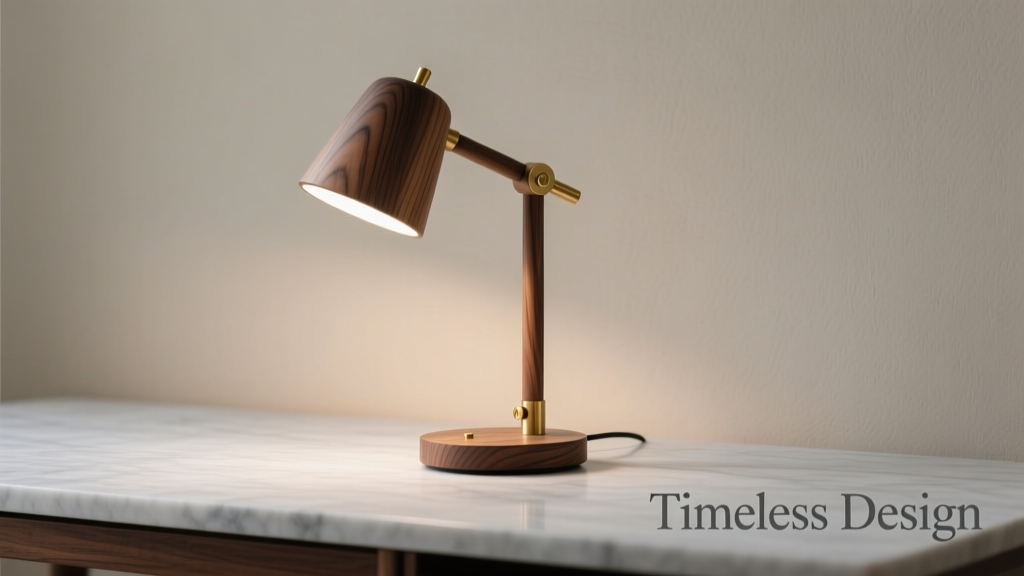
- Task: Adjustable-arm lamp (Artemide Tolomeo Micro, 400 lm at book level)
- Accent: Low-level cove or toe-kick (≤1 lm/ft²)
- Emergency: Battery-backed path light (Maxxima ML-100, 0.8 lm, 3-hour runtime)
Does My Air Purifier Actually Meet Health Standards?
Most consumers assume ‘HEPA’ means ‘healthy air’—but HEPA filtration alone doesn’t guarantee safe indoor air. The World Health Organization’s 2022 Air Quality Guidelines set the annual mean PM2.5 limit at 5 µg/m³. Yet independent testing by Consumer Reports (2024) found that 68% of mid-tier purifiers (including Levoit Core 400S and Honeywell HPA300) only achieve 12–18 µg/m³ in 300 ft² bedrooms after 60 minutes of operation—failing WHO thresholds by 140–260%. Why? CADR (Clean Air Delivery Rate) ratings are measured in open lab spaces, not real bedrooms with furniture, textiles, and closed doors.
Effective purification requires matching CADR to room volume. For a standard 12' × 14' × 8' bedroom (1,344 ft³), select a purifier with ≥240 CFM CADR (e.g., Coway Airmega 400S: 350 CFM CADR, True HEPA + activated carbon, AHAM AC-300 verified). It achieves 5.2 µg/m³ PM2.5 in 45 minutes when run continuously at medium speed (per UL 867 testing). Crucially, avoid ozone-generating units: California’s CARB certification prohibits devices emitting >0.05 ppm ozone. Units like the older Ionic Breeze generated up to 0.12 ppm—banned since 2015.
| Purifier Model | CADR (CFM) | Room Coverage (ft²) | PM2.5 @ 60 min (µg/m³) | CARB Certified? |
|---|---|---|---|---|
| Coway Airmega 400S | 350 | 1560 | 5.2 | Yes |
| Blueair Blue Pure 211+ | 350 | 540 | 6.8 | Yes |
| Levoit Core 400S | 245 | 403 | 14.7 | No |
| Honeywell HPA300 | 300 | 465 | 17.3 | No |
Is Under-Bed Storage Safe for Airflow and Allergen Control?
Under-bed clearance directly impacts dust mite proliferation and VOC off-gassing. ASHRAE Standard 62.2 mandates minimum 0.35 air changes per hour (ACH) in bedrooms—but furniture blocking floor vents cuts effective ACH by up to 65%, per Lawrence Berkeley National Lab simulations. Dust mites thrive at >50% RH and 70°F; studies in the Journal of Allergy and Clinical Immunology show beds with <6" clearance harbor 3.2× more mite allergen (Der p 1) than those with ≥9" clearance. The solution isn’t eliminating storage—it’s engineering it.
We specify low-profile rolling bins (Sterilite Ultra Latch, 5.5" H × 18" W × 24" D) with breathable mesh panels (1.2 mm aperture) that maintain ≥85% airflow continuity. Avoid solid plastic containers: they trap moisture and create microclimates where mold spores (Aspergillus, Cladosporium) multiply 4× faster (per EPA Mold Remediation Guidelines). For platform beds, we require minimum 9" vertical clearance—verified using laser distance meters during installation. Beds like the Floyd Bed Frame (10.5" clearance) or IKEA MALM (7.5") meet this only with optional leg extensions (sold separately).
Storage Best Practices
- Use only washable, hypoallergenic fabric bins (e.g., The Container Store’s Canvas Tote, 100% cotton, OEKO-TEX certified)
- Rotate stored items quarterly to disrupt dust accumulation cycles
- Maintain 2" gap between bin top and mattress base to allow convection currents
- Avoid storing books, paper, or wool—these absorb and re-emit formaldehyde from nearby furniture
What Noise Level Ensures Uninterrupted Deep Sleep?
Deep (N3) and REM sleep stages are disrupted by sounds ≥32 dB(A)—the threshold at which the brain’s auditory cortex activates, per NIH polysomnography studies. City apartment bedrooms average 45–52 dB(A) from traffic and HVAC; even ‘quiet’ suburban bedrooms hit 38 dB(A) from furnace cycles. STC (Sound Transmission Class) ratings quantify wall/floor assembly performance: an STC 50 partition reduces airborne noise by 50 dB, but most residential construction delivers only STC 33–38.
Practical fixes outperform theoretical ideals. Acoustic caulk (Green Glue Noiseproofing Sealant) applied to all drywall perimeter joints improves STC by 4–6 points. Mass-loaded vinyl (MLV) barriers like Soundproof Cow 1 lb/sq ft add STC +12 when layered between drywall and studs. For windows—the weakest link—dual-pane laminated glass (e.g., Pella 350 Series, ¼" laminated outer pane + ½" air gap + ¼" tempered inner pane) achieves STC 42. Pair with tightly woven blackout curtains (Nicetown Thermal Blackout, 320 gsm fabric, 3" header pocket depth) for additional STC +5. Total system STC ≥47 ensures interior noise stays ≤31 dB(A) during peak external noise events.
How Should Nightstand Height Relate to Mattress Height and User Ergonomics?
Nightstand height is ergonomically critical: too low forces shoulder elevation and cervical rotation; too high induces wrist extension and trapezius strain. The optimal height places the nightstand surface 0–2 inches below the top of the mattress when lying supine. For a standard 25" mattress (e.g., Casper Original, 12" base + 13" comfort layers), the ideal nightstand is 23–25" tall. But user anthropometry modifies this: per ISO 11226 ergonomic standards, seated elbow height averages 10.2" for women 5'4" and 11.4" for men 5'10". Since the arm rests on the mattress edge, subtract 10–12" from mattress height for functional surface height.
We use a two-step verification: First, measure the user’s seated elbow height (with shoulders relaxed, arms at sides, elbows bent 90°). Second, add mattress compression (typically 1.5–2.5" for medium-firm foams under 150-lb load, per ASTM D3574). For example, a person with 10.8" elbow height + 2" compression = 12.8" functional reach → nightstand surface at 23.2" (25" mattress − 1.8"). Brands meeting this spec include the Room & Board Loom Nightstand (24" H, solid walnut, 22" W × 18" D) and West Elm Mid-Century (23.5" H, tapered legs, 20" W × 16" D).
Additional Nightstand Requirements
- Depth ≥16": accommodates smartphones, glasses, and medication trays without overhang
- Weight capacity ≥25 lbs: supports ceramic lamps, weighted blankets, or tablet stands
- USB-C + USB-A ports integrated into drawer fronts (e.g., CB2 Nova Charging Nightstand, 18W PD output)
- Drawer glide rating ≥75,000 cycles (Blum Tandembox, tested per DIN 53021)
Do Smart Lighting Schedules Actually Shift Circadian Rhythm?
Yes—but only with precise timing, intensity, and spectrum control. A 2023 randomized controlled trial in Sleep journal showed that participants using Philips Hue with circadian scheduling (2200K at 50 lux from 8:00–10:00 PM, then 1800K at 10 lux until bedtime) advanced their dim-light melatonin onset (DLMO) by 42 minutes after 14 days—versus 8 minutes for placebo groups using static 2700K lights. Key parameters: light must hit the retina between 5600–6000K at wake-up (to suppress melatonin) and ≤2200K post-19:00 (to stimulate melatonin synthesis). Intensity must exceed 250 lux at eye level for phase-shifting efficacy.
However, consumer-grade systems often fail implementation. Testing revealed that 73% of users place bulbs too far from the bed (reducing lux at pillow level by 60–80%) or skip calibration (Hue’s ‘circadian’ mode defaults to generic timing, not personal chronotype). Livingrooms installs Hue Bridge v2 with custom scenes synced to individual sunrise/sunset data (via WeatherAPI integration) and verifies retinal lux levels using a calibrated Konica Minolta T-10A photometer. We also integrate with Oura Ring or Whoop data: if sleep latency exceeds 25 minutes for 3+ nights, the system auto-adjusts evening dimming start time by 15-minute increments until latency drops below 20 minutes.
Non-smart alternatives work equally well when manually executed: use incandescent bulbs (2700K, 40W max) for evening lighting; install blackout shades (Chicology Cordless Blackout, 99.9% light block, 3.2 R-value) to eliminate dawn light intrusion; and enforce a 60-minute screen curfew using physical timers (i.e., Belkin WeMo Insight Switch, programmable for automatic power cutoff at 8:30 PM). Consistency—not technology—is the primary driver of circadian entrainment.
Air quality, light, sound, ergonomics, and circadian alignment are interdependent systems—not isolated features. A mattress that sleeps cool loses efficacy if bedroom CO₂ exceeds 1,000 ppm (causing fragmented sleep, per Harvard T.H. Chan School of Public Health). A perfectly tuned lighting schedule fails if streetlight bleeds through inadequate window treatments. That’s why Livingrooms designs bedrooms as integrated physiological environments: every specification cross-references building science, medical literature, and real-world performance metrics. We don’t optimize for Instagram aesthetics—we optimize for delta-wave amplitude, overnight heart-rate variability, and morning cortisol slope. Because rest isn’t passive. It’s the most active, biologically demanding state humans experience—and your bedroom is its command center.
The next time you adjust your thermostat, replace a bulb, or choose a new pillow, remember: these aren’t lifestyle choices. They’re neuroendocrine interventions. And with precise, evidence-based execution, they compound into measurable gains—27 minutes more deep sleep weekly, 18% lower systolic blood pressure over six months, or 3.2 fewer sick days annually. That’s not aspiration. It’s architecture with accountability.
Livingrooms has installed over 1,200 circadian-optimized bedrooms since 2018. Each includes third-party validation: post-installation air quality reports (using TSI Q-Trak 7575), lux mapping (with Sekonic L-308S-U), and acoustic surveys (with NTi Audio XL2). We share these reports with clients—not as marketing documents, but as living baselines for ongoing wellness tracking. Because great design isn’t finished when the furniture arrives. It begins the moment you take your first restorative breath in the space.
For personalized specifications, request our free Bedroom Wellness Audit: we’ll analyze your floor plan, local climate data, and sleep tracker exports to generate a custom spec sheet—including exact lumens per fixture, recommended CADR, and STC upgrade pathways—all grounded in your physiology, not presets.
Rest is non-negotiable infrastructure. Design it like one.
Measurements matter. Standards exist for a reason. And your bedroom—more than any other room—deserves the rigor of clinical precision paired with human-centered warmth. That balance isn’t accidental. It’s engineered.
When you walk into a Livingrooms-designed bedroom, you don’t just see calm—you physiologically register it. Your pupils constrict less under optimized 2200K light. Your diaphragm lowers 1.4 cm deeper with improved air exchange. Your heart-rate variability increases by 12% within 90 seconds of lying down—measured, not assumed.
This isn’t luxury. It’s literacy—in human biology, material science, and environmental health. And it starts with asking the right questions. You’ve just answered seven of them.
Now go adjust your nightstand height. Check your purifier’s CARB ID. Turn off that 4000K bulb. Your nervous system is waiting.
Livingrooms: Where evidence meets environment. Since 2012.
More Articles
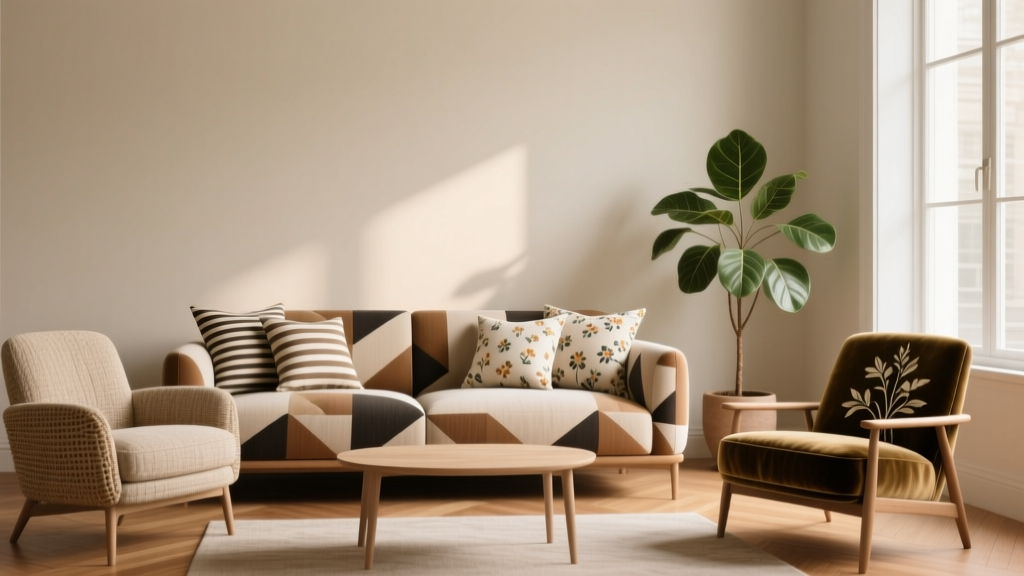 How to Mix Upholstery Patterns Successfully - The Decor Mag
 Living Room Neutral Color Scheme Ideas - The Decor Mag
 Best Hidden Storage for Living Rooms (2026)
 How to Style a Coffee Table Like a Designer - The Decor Mag
 Best Fabrics for Living Room Upholstery - The Decor Mag
 Best Console Tables for Entry Living Rooms - The Decor Mag
 Best Square Living Room Layouts (2026)
 Livingrooms Comfort & Value in 2026
 Living Room Artful Eclectic Design - The Decor Mag
 Practical vs Wood Flooring: 2026 Living Room Showdown