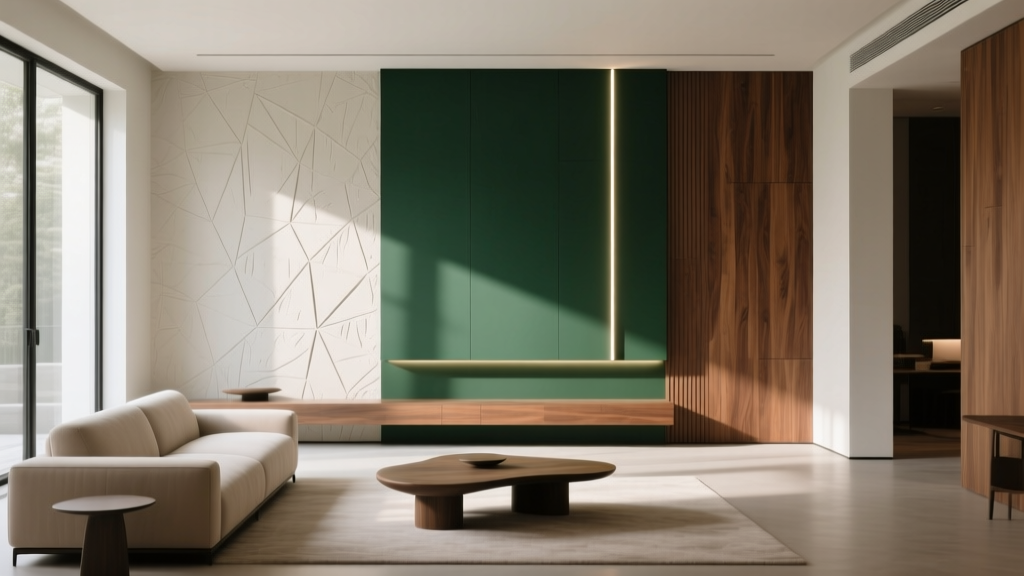
Best Wall Treatments for Living Rooms - The Decor Mag
Your living room walls do more than “hold up art.” They set the mood, control how light moves around the space, and quietly signal your style—before anyone even sits down. Whether you’re working with a compact rental, an open-concept family room, or a formal living area, the right wall treatment can make the room feel taller, warmer, brighter, calmer, or more dramatic.
The good news: you don’t need a full renovation to get a high-end look. From paint and wallpaper to paneling, millwork, limewash, and textured finishes, there are options for every budget, every skill level, and every lease agreement. This guide breaks down the best wall treatments for living rooms, with practical measurements, material recommendations, real-world scenarios, and common mistakes to avoid—so you can choose a finish that looks great and lives well.
You’ll also find step-by-step tips to plan an accent wall, budget ranges, and a FAQ that answers what homeowners and renters ask most when upgrading living room walls.
How to Choose the Right Wall Treatment (Before You Buy Anything)
Start with three questions. Your answers will narrow the best wall treatments for your living room quickly.
- What’s the goal? Add warmth, hide imperfections, create a focal point, improve acoustics, or introduce color/pattern?
- How permanent can it be? Owner-friendly (paint, paneling, skim coat) vs. renter-friendly (removable wallpaper, temporary molding, textiles).
- What’s your lighting like? North-facing rooms often want warmer tones; bright south-facing rooms can handle deeper colors and stronger contrast.
Quick measurement tips:
- Paint coverage: 1 gallon typically covers 350–400 sq ft per coat. Most living rooms need 2 coats.
- Wallpaper rolls: Check the roll coverage (often 25–60 sq ft depending on brand). Measure wall height and width; subtract large windows/doors only if you want to be precise.
- Board and batten spacing: Common spacing is 12–18 inches between battens, depending on wall width and ceiling height.
1) Paint: The Most Powerful (and Flexible) Wall Treatment
Paint remains the top wall treatment for living rooms because it’s affordable, DIY-friendly, and instantly transformative. Current living room color trends lean toward earthy neutrals (warm whites, greige, sand), muted greens, deep blues, and softened terracottas—paired with timeless principles like balanced contrast and consistent undertones.
Best Paint Finishes for Living Rooms
- Matte/Flat: Velvety and modern, hides minor wall texture. Best for adult spaces with minimal scuffing.
- Eggshell: The go-to for most living rooms—soft sheen, easier to clean.
- Satin: More durable, slightly shinier; good for high-traffic family rooms (but can highlight wall imperfections).
Design Tips That Look Designer (Not “Just Painted”)
- Color drench for impact: Paint walls, trim, and even the ceiling the same color for a cozy, enveloping look—especially effective in small living rooms.
- Use trim contrast strategically: Warm white walls with bright white trim feels crisp; soft white trim with greige walls feels calmer.
- Get the sheen right: If your walls are bumpy, avoid satin. Choose matte/eggshell instead.
Budget range: DIY paint refresh typically runs $80–$300 (paint, rollers, tape, patch) for an average living room. Hiring a pro often lands around $400–$1,200+ depending on region, prep needs, and ceiling height.
Real-World Scenario
Rental with beige walls and low light: Choose a renter-approved repaint if allowed (or negotiate with your landlord), using a warm off-white with an eggshell finish. Add contrast via curtains and art. If repainting isn’t allowed, consider a single removable wallpaper panel behind the sofa to break up the beige.
2) Wallpaper: Pattern, Texture, and Personality in One Step
Wallpaper is having a major moment in living room design, especially in large-scale botanicals, subtle geometrics, and textured grasscloth looks. It’s also a smart way to add depth when your furniture palette is neutral.
Types of Wallpaper to Consider
- Peel-and-stick (removable): Best for renters and commitment-phobes; choose higher-quality brands to avoid lifting.
- Traditional paste wallpaper: More durable and often easier to align cleanly for long-term installations.
- Textured vinyl: Great for durability, kid-friendly spaces, and hiding imperfect walls.
- Grasscloth: Beautiful, organic texture; best in lower-touch areas (it can stain and is harder to clean).
Step-by-Step: Planning a Living Room Wallpaper Accent Wall
- Pick the right wall: Usually the wall behind the sofa, a fireplace wall, or the first wall you see when entering.
- Measure accurately: Measure wall width and height. Add 10–15% extra for pattern matching and trimming.
- Order a sample: Tape it to the wall and view it morning, afternoon, and evening.
- Prep matters: Fill holes, sand bumps, clean walls. Wallpaper highlights imperfections more than paint.
- Style the wall simply: Let the paper shine—use fewer, larger decor pieces instead of many small frames.
Budget range: Peel-and-stick wallpaper often runs $2–$7 per sq ft. Traditional wallpaper can run $3–$15+ per sq ft. Pro installation varies widely but commonly $300–$1,000+ for a feature wall, depending on complexity.
Real-World Scenario
Open-concept living room that feels bland: Use a bold wallpaper on the living room zone wall (often behind the sofa) to visually “anchor” the space without adding walls. Pair with solid upholstery and repeat one wallpaper color in throw pillows or a rug.
3) Wood Paneling, Slat Walls, and Wainscoting: Instant Architecture
If you want a living room that feels custom and elevated, architectural wall treatments are hard to beat. Wall paneling adds rhythm, shadow, and structure—especially helpful in new builds or rentals that lack character (with renter-safe versions available).
Popular Paneling Styles for Living Rooms
- Vertical slat walls: A current trend that adds height and modern warmth. Looks great behind a media console or sofa.
- Board and batten: Works in transitional, modern farmhouse, and classic homes. Paint it the same color as the wall for subtle texture.
- Picture frame molding: Timeless, elegant, and perfect for formal or traditional spaces.
- Beadboard or tongue-and-groove: Cozy and classic—ideal for cottage, coastal, and casual living rooms.
Measurements That Keep It Looking Pro
- Wainscoting height: A reliable range is 32–42 inches in most living rooms. For taller ceilings (9–10 ft), you can go 42–54 inches for better proportion.
- Slat spacing: Many DIY slat walls use 1x2 or 1x3 slats with 1/2 inch to 1 inch gaps for a clean look.
- Symmetry matters: Center panels around focal points (fireplace, TV, large art) to avoid awkward skinny sections.
Material recommendations: For budget-friendly paneling, look for MDF (paint-grade) or pine/poplar for stain-grade projects. Use a quality paintable caulk to hide seams and elevate the finish.
Budget range: DIY picture-frame molding or board-and-batten can cost $150–$600 for a feature wall depending on material and tools. Custom millwork or pro installs commonly run $1,000–$5,000+.
Real-World Scenario
Living room with a large TV that dominates the wall: A painted slat wall or paneling behind the media area frames the TV and makes it feel intentional. Keep the color a shade darker than surrounding walls to reduce glare and visual “screen pop.”
4) Limewash, Roman Clay, and Plaster-Style Finishes: Soft, Organic Texture
For homeowners craving warmth and dimension without busy patterns, mineral-based finishes are a standout. Limewash and Roman clay create a cloudy, velvety variation that feels both on-trend and timeless—especially in modern Mediterranean, organic modern, and relaxed contemporary living rooms.
Where These Finishes Work Best
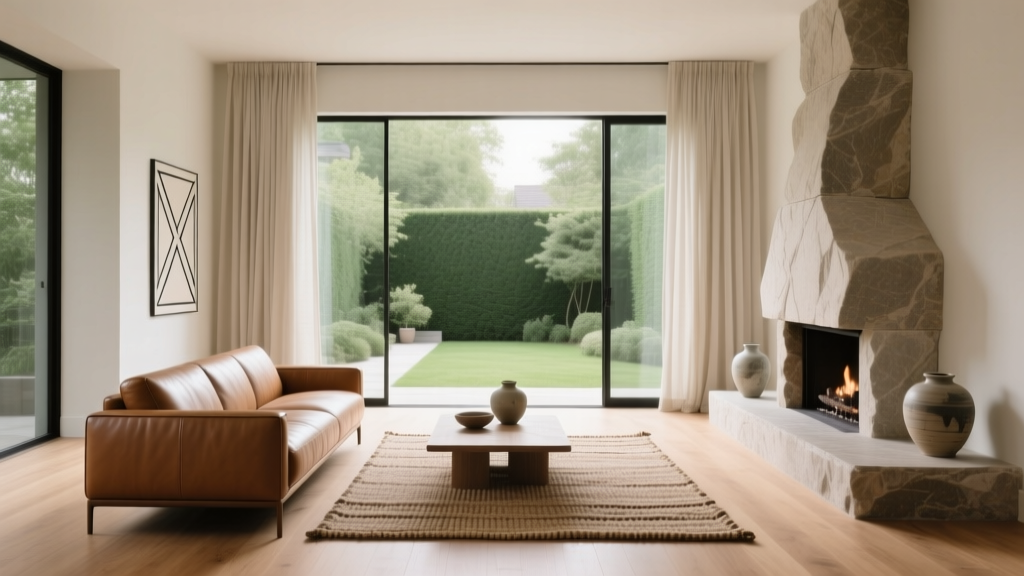
- Fireplace walls for a natural focal point
- Large uninterrupted walls where the movement can shine
- Rooms with warm wood and natural textiles (linen, jute, boucle)
Application Tips
- Expect variation: The beauty is in the movement; it won’t look perfectly uniform.
- Prep is everything: Patch and sand thoroughly. These finishes can emphasize bumps and ridges.
- Test your technique: Practice on a foam board before tackling the full wall.
Budget range: DIY kits and specialty paints often land around $150–$600 for a feature wall; professional plaster application may run $1,500–$6,000+ depending on wall size and product.
5) Tile, Stone Veneer, and Brick: High-Impact Texture for Feature Walls
Hard-surface wall treatments aren’t just for kitchens. A tiled fireplace surround, thin brick, or stone veneer can anchor a living room and add a tactile, high-end finish. Current trends favor thin brick in warm neutrals, large-format porcelain, and textural stone with softer, less busy veining.
Best Places to Use Hard Materials
- Fireplace wall: A natural fit—durable and heat-friendly (verify clearances and codes).
- Reading nook wall: Adds cozy texture if the room lacks architectural interest.
- Entry-facing wall: Creates a strong first impression in open layouts.
Material tips: For lighter weight and easier installs, consider thin brick veneer or stone veneer panels. For a sleek modern look, explore large-format porcelain slabs or 24x48-inch tiles (less grout, more polish).
Budget range: DIY peel-and-stick stone/brick panels can run $5–$15 per sq ft (quality varies). Real veneer installed professionally often ranges $25–$60+ per sq ft.
6) Fabric, Upholstered Panels, and Acoustic Treatments: Cozy and Sound-Smart
If your living room echoes (common with hardwood floors, tall ceilings, and open layouts), soft wall treatments solve two issues at once: they add warmth and improve acoustics. This is especially useful in TV rooms or homes with lots of glass.
Options to Consider
- Upholstered wall panels: Great behind a sofa or in a conversation area—adds softness and a boutique-hotel vibe.
- Acoustic felt panels: Modern, sleek, and functional; available in tile formats and sculptural shapes.
- Tapestry or textile art: Renter-friendly and budget-friendly; easy to swap seasonally.
Budget range: Textile wall decor can be $50–$300. Acoustic panel kits and upholstered panels often run $200–$1,500+ depending on coverage and quality.
7) Gallery Walls and Oversized Art: A “Treatment” You Can Change Anytime
Not every wall needs texture or pattern. Sometimes the best wall treatment for a living room is a thoughtful art plan. A gallery wall can add color and personality, while oversized art can make a small space feel more intentional and less cluttered.
Hanging Guidelines That Prevent “Floating Art”
- Art height: Center artwork at about 57–60 inches from the floor (gallery standard).
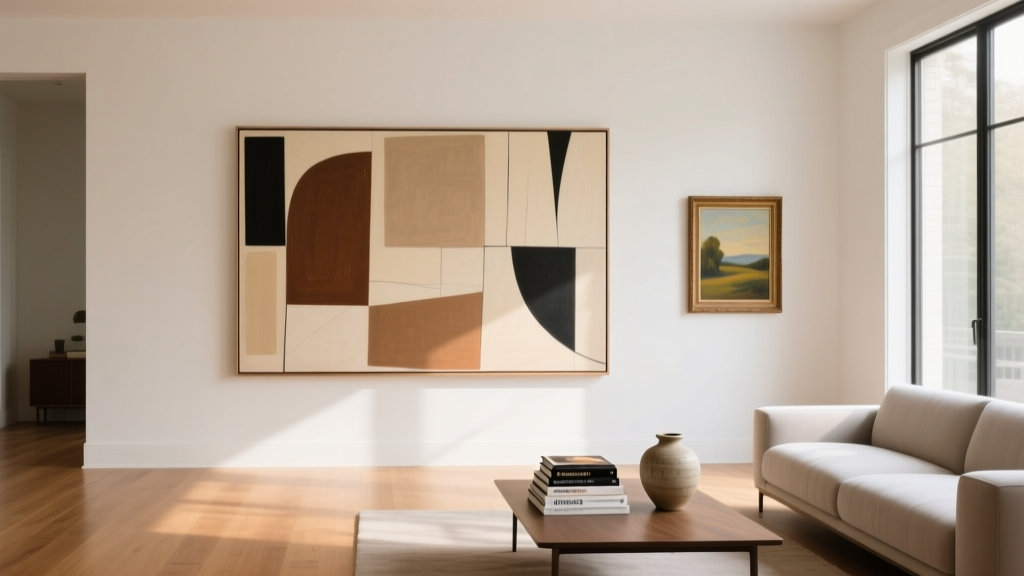
- Over a sofa: Choose art that’s about 2/3 the width of the sofa. Hang it 6–8 inches above the sofa back.
- Gallery spacing: Keep frames 2–3 inches apart for a cohesive look.
Real-World Scenario: If you’re renting and can’t paint, a large-scale art piece plus a pair of plug-in sconces can create a focal point that feels custom—with minimal wall impact.
Common Mistakes to Avoid (So Your Walls Look Intentional)
- Choosing paint color without testing: Always sample. A color can shift dramatically between morning and evening light.
- Accent wall overload: One strong wall treatment per room is usually enough. Let it be the star.
- Ignoring scale: Tiny patterns on a huge wall can feel busy; oversized patterns in a very small room can overwhelm (unless you keep everything else quiet).
- Skipping wall prep: Texture, wallpaper, and satin paint all reveal bumps. Patch, sand, and clean first.
- Forgetting the “rest of the room”: Match undertones between walls, flooring, and major upholstery so the space feels cohesive.
- Misplaced TV walls: Highly reflective finishes (glossy paint, glass tile) can create glare. Choose matte finishes around screens.
FAQ: Living Room Wall Treatments
What is the most affordable wall treatment for a living room?
Paint is usually the most budget-friendly, especially if you DIY. A basic refresh often falls between $80–$300 for supplies, depending on room size and paint quality.
What wall treatment adds the most value?
Architectural upgrades like wainscoting, picture-frame molding, and well-executed paneling tend to read as “built-in” value. A tasteful, professionally installed wallpaper or a refined plaster finish can also elevate perceived value, especially in higher-end homes.
Are peel-and-stick wallpapers safe for rentals?
Many are, but results depend on your wall paint and the product quality. Peel-and-stick performs best on smooth walls with a satin or eggshell finish that’s fully cured (often 3–4 weeks after painting). Always test a small area first.
How do I choose the best accent wall in my living room?
Pick a wall with a natural focal point: behind the sofa, around a fireplace, or the wall you see first when entering. Avoid walls with lots of doors or small broken-up sections unless you’re using a subtle treatment.
What’s best for covering imperfect walls?
For minor imperfections, choose matte paint or textured wallpaper. For bigger issues, consider paneling (like board and batten) which can visually straighten and simplify a wall.
How can I make living room walls look taller?
Use vertical elements like slat walls, vertically hung drapes mounted close to the ceiling, or tall paneling details. Painting the ceiling a lighter shade than the walls can also create a sense of height.
Your Next Steps: A Simple Plan for Upgrading Living Room Walls
- Choose one primary wall treatment (paint, wallpaper, paneling, plaster, or a hard-surface feature) based on your budget and how permanent it can be.
- Measure and sample before purchasing—paint swatches, wallpaper samples, or a small test board for plaster finishes.
- Prep the wall properly (patch, sand, clean) to get a finish that looks professional.
- Style with intention: balance your wall treatment with simpler decor if the wall is bold, or add stronger accents if the wall is subtle.
The best wall treatments for living rooms aren’t just about what looks good on day one—they’re the choices that make your home feel more “you” every time you walk in. For more living room design and decor ideas, browse the latest inspiration and how-tos on thedecormag.com.
More Articles
 Living Room Understated Luxury Feel - The Decor Mag
 Leather Furniture for Living Rooms (2026)
 Best Color Palettes for Contemporary Living Rooms (2026)
 Living Room Timeless Design Elements - The Decor Mag
 Art Scale for Living Rooms: How to Choose (2026)
 Livingrooms Comfort & Value in 2026
 Smart Space Allocation for Real Homes in 2026
 Industrial Chic Living Room Inspiration - The Decor Mag
 How to Choose the Right Coffee Table Height - The Decor Mag
 Kid-Proof Living Room Ideas That Still Look Stylish