How to Style Bookshelves in Your Living Room - The Decor Mag
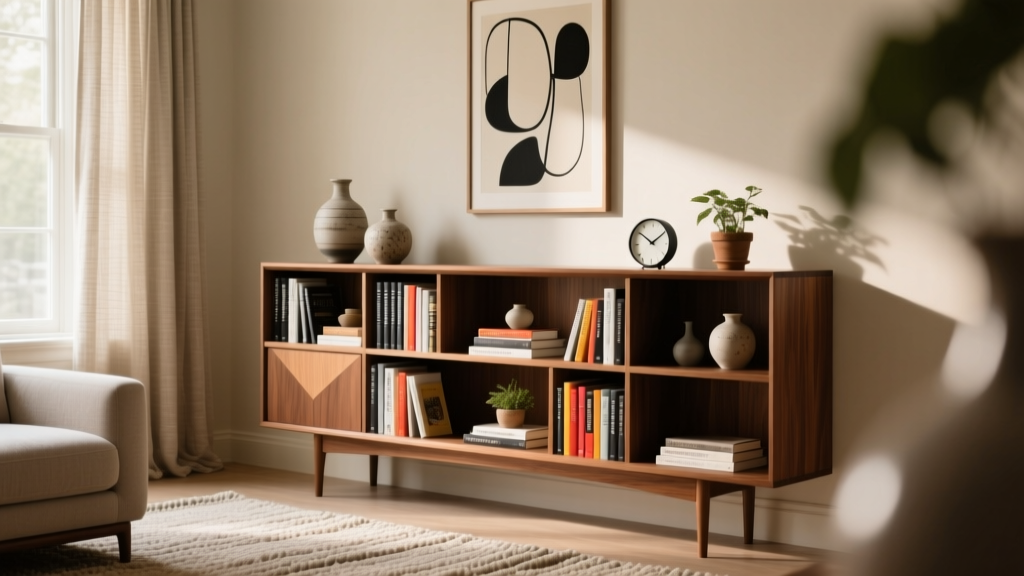
Bookshelves are one of the most powerful design tools in a living room. They’re practical storage, yes—but they’re also vertical real estate that can anchor a wall, balance a fireplace, frame a TV, or create a built-in look without a full remodel. A well-styled shelf adds personality quickly: it tells guests what you love, what you collect, and how you live.
If your shelves currently feel cluttered, sparse, or strangely “off,” you’re not alone. Styling shelves is a mix of proportion, color, texture, and editing—and a few small changes can make a dramatic difference. This guide breaks down exactly how to style bookshelves in your living room, from measurements and spacing to product ideas, budget ranges, and real-world styling scenarios (renter-friendly included).
By the end, you’ll have a repeatable method to create shelves that look intentional, elevated, and still livable—whether you’re working with a single bookcase or a full wall of built-ins.
Start With a Plan: Function First, Then Decor
Ask two questions before you touch anything
- What do I need these shelves to do? (Store books, hide clutter, display art, hold toys, house a record player, etc.)
- What do I want them to feel like? (Calm and minimal, colorful and eclectic, warm and collected, modern and sculptural.)
Design trends right now lean toward “curated comfort”: shelves that look layered and personal, not overly staged. Timeless principles still apply—balance, negative space, and cohesion—so you can embrace trends without your living room feeling dated in a year.
Measure once: the shelf-styling basics
Even simple measurements help you choose pieces that actually fit and look proportional:
- Leave breathing room: Aim for 20–30% open space per shelf so the arrangement doesn’t feel crowded.
- Book height clearance: Most coffee-table books are 10–13 inches tall. Standard novels are 7–9 inches. Plan vertical stacks accordingly.
- Object-to-shelf clearance: Leave 1–3 inches above taller items so they don’t look jammed in.
- Safe depth: If your shelves are shallow (8–10 inches), prioritize smaller frames, slim vases, and forward-facing book stacks.
Prep Work: Declutter, Clean, and Create Zones
Step-by-step shelf reset (works for built-ins and bookcases)
- Empty everything. You’ll make faster, better decisions with a blank canvas.
- Dust and wipe down. Use a microfiber cloth; for wood, a gentle cleaner without heavy shine keeps things looking modern.
- Sort into categories: books, art/frames, baskets, vases, candles, plants, sentimental items, electronics.
- Create zones: Decide which shelves are for books, which are for display, and which will hide “real life” (remotes, cords, games, kids’ items).
Pro tip: If you want shelves that look high-end, commit to at least one “hidden storage” shelf per section using baskets, lidded boxes, or cabinet inserts.
The Styling Formula Designers Use (and You Can Repeat)
1) Anchor each shelf with a strong starting point
Anchors keep shelves from looking like random objects placed in a row. Choose one per shelf:
- A horizontal stack of books (3–7 books)
- A larger vase or sculptural object
- A framed photo or art piece (leaning, not hung)
- A basket or lidded box
Anchor pieces tend to look best at 8–14 inches tall on standard shelves, adjusted for your shelf height.
2) Build “triangles” with height variation
One of the simplest ways to make bookshelves look styled is to create visual triangles—tall, medium, and short items grouped together.
- Tall: vase, candlestick, leaning frame
- Medium: bowl, planter, medium sculpture
- Short: small object, candle, bead garland, coaster stack
Keep triangles loose and organic—think clustered, not lined up.
3) Mix vertical and horizontal books for rhythm
All vertical books can look like a library (great if that’s your goal). For a living room bookshelf, mixing orientations creates rhythm and breaks up long lines.
Try this ratio as a starting point:
- 60% vertical books
- 40% horizontal stacks (with decor placed on top)
Topper ideas for horizontal book stacks:
- A small ceramic bowl for matches or jewelry
- A candle (preferably 3–4 inches diameter for stability)
- A small framed photo
- A natural object (stone, shell, driftwood)
4) Add texture and “life” with natural materials
Current living room design trends favor warm, tactile finishes—especially in modern spaces that risk feeling flat. Mixing materials gives dimension even in a neutral color palette.
Materials that style well on shelves:
- Wood: trays, frames, small bowls (oak and walnut feel timeless)
- Ceramic/stoneware: matte vases, catchalls
- Glass: a single translucent vase to lighten a heavy arrangement
- Metal: small brass or black accents for contrast
- Woven textures: rattan baskets, seagrass boxes (especially renter-friendly)
Color Strategy: Cohesive Doesn’t Mean Boring
Choose one of these three approaches
Option A: Neutral and layered (timeless)
Great for Scandinavian, modern, coastal, and minimalist living rooms.
- Use whites, creams, warm woods, black accents
- Vary texture: matte ceramics + woven baskets + linen-bound books
Option B: Two to three accent colors (balanced and current)
Pick a small palette that already exists in your living room decor (pillows, rug, artwork).
- Example palette: terracotta + olive + brass
- Repeat each accent at least 3 times across the shelves for a cohesive look
Option C: Full color with book spines (playful and bold)
Color-blocking books is trending again, but it works best when it still feels curated.
- Group by color in 2–4 sections, not the entire shelf
- Break up color with neutrals and objects so it doesn’t feel like a retail display
Product Recommendations That Actually Make Shelves Easier to Style
You don’t need a full shopping spree—just a few “workhorse” pieces that create structure.
Core shelf-styling pieces (with budget ranges)
- Woven baskets or lidded boxes (2–4): $15–$60 each (Target, IKEA, H&M Home, The Container Store)
- Ceramic vases (2–3 in varying heights): $20–$120 (West Elm, CB2, HomeGoods, Etsy)
- Picture frames (3–6): $10–$50 (Amazon, IKEA, Framebridge for splurge)
- Battery picture lights or puck lights: $20–$80 (adds “built-in” polish without wiring)
- Small tray (wood, marble, or metal): $15–$70 (helps corral small items)
- Bookends (1–2 sets): $20–$100 (choose a simple shape for a modern look)
Styling-friendly plants (low-maintenance)
- Pothos: drapes beautifully from higher shelves; tolerates low light
- Snake plant (small pot): sculptural, clean lines
- ZZ plant: glossy leaves, slow-growing
- Faux stems: if your shelves get no light, a quality faux can still look elevated
Pot sizing tip: For most shelves, a planter in the 4–6 inch diameter range sits comfortably without eating up too much surface area.
Real-World Styling Scenarios (So You Can Picture It)
Scenario 1: A renter with a basic IKEA bookcase
Goal: Make it look built-in and intentional without drilling or painting.
- Add two matching baskets on the bottom shelf to hide clutter and visually “ground” the unit.
- Use a consistent frame finish (all black or all light wood) to create cohesion.
- Place one larger piece (12–16 inches tall vase or sculpture) on an upper shelf so the unit feels styled from top to bottom.
- Attach battery puck lights under shelves for a warm glow and a more custom look.
Budget range: $60–$200 for baskets, frames, and lighting upgrades.
Scenario 2: A family living room with toys and “stuff”
Goal: Keep it adult-looking while staying functional.
- Dedicate one entire lower shelf to kid items in matching bins (label inside, not outside, to keep the look clean).
- Use closed storage for the messiest category: games, controllers, cords.
- Keep breakables on the top two shelves.
- Choose decor that’s durable: wood, woven, and matte ceramics over delicate glass.
Budget range: $80–$250 depending on bins and baskets.
Scenario 3: Built-ins around a TV (the tricky one)
Goal: Soften the “black box” and balance visual weight.
- Put heavier visual items (baskets, larger book clusters) on lower shelves.
- Use matching pairs on both sides for symmetry, but keep the smaller objects varied so it doesn’t feel stiff.
- Incorporate one warm light source (picture light, small lamp if space allows) to make the TV wall feel like part of the living room decor.
Common Bookshelf Styling Mistakes (and the Fix)
- Mistake: Filling every inch.
Fix: Remove 20% of items, then reassess. Negative space is what makes shelves look designed. - Mistake: Everything is the same size.
Fix: Add one taller object (12–16 inches) and one wider anchor (tray or large book stack). - Mistake: Too many tiny trinkets.
Fix: Corral small items on a tray or in a bowl; keep only 1–2 small objects per shelf. - Mistake: Books only, no texture.
Fix: Introduce woven, ceramic, wood, and a plant for contrast. - Mistake: Perfect symmetry everywhere.
Fix: Use symmetry at the “macro” level (balance left/right), but style each shelf with natural variation. - Mistake: Ignoring lighting.
Fix: Add a small lamp near the shelves or battery lighting inside them for a warm, layered living room feel.
A Simple Step-by-Step Styling Method (Do This in One Afternoon)
- Place the biggest items first: baskets, large vases, larger frames.
- Add books next: mix vertical and horizontal stacks.
- Layer art: lean a frame behind a shorter object for depth.
- Add one “life” element: plant or branches in a vase.
- Edit: remove one item from each shelf, then look again.
- Step back and photograph: your camera will spot imbalance faster than your eyes.
Spacing cheat: If two objects look awkward next to each other, separate them by 2–4 inches or group them closer so they read as a single cluster. The in-between spacing is what often looks accidental.
FAQ: Styling Living Room Bookshelves
How many items should be on each bookshelf shelf?
There isn’t a perfect number, but a reliable guideline is to keep 20–30% of the shelf empty. On a 30-inch-wide shelf, that might mean 2–4 clusters (books + object + frame) with breathing room between them.
Should I decorate with books turned backward?
Reverse-styling books (pages out) is trendy for a soft, neutral look, but it can feel impractical. If you like it, do it in a small section—say one shelf—and keep the rest readable.
What’s the best way to style shelves around a TV?
Use shelves to add warmth and balance: baskets on lower shelves, art and plants on upper shelves, and a consistent color palette that ties into the rest of your living room decor. A warm light (picture light or lamp) makes the whole TV wall feel more intentional.
How do I make mismatched decor look cohesive?
Repeat a few elements across the shelves: one metal finish (brass or black), one wood tone, and a tight color palette (2–3 accents). Also, group items by material (ceramics together, books together) so it feels curated.
What are the best bookshelf decor pieces if I’m on a budget?
Start with baskets, frames, and a couple of ceramic vases. You can often refresh shelves for $50–$150 by mixing thrifted finds with affordable basics from IKEA, Target, or HomeGoods.
How do I keep shelves from looking cluttered in a small living room?
Limit your palette, choose a few larger statement pieces instead of many small ones, and use closed storage (baskets or boxes). Keeping consistent finishes—like matching frames—also reduces visual noise.
Your Next Steps: A Quick Checklist
- Pick a color approach (neutral layered, 2–3 accents, or partial color-blocking).
- Add 2–4 baskets or boxes to hide everyday clutter.
- Use the anchor + triangle method on each shelf.
- Mix vertical and horizontal books for rhythm.
- Edit until you have 20–30% open space.
- Snap a photo, adjust spacing, and enjoy the upgrade.
Bookshelves can be the heart of your living room design—functional enough for real life, but styled enough to feel elevated. For more shelf decor ideas, living room layout tips, and trend-forward (but timeless) inspiration, explore the latest guides on thedecormag.com.
More Articles
 Living Room Understated Luxury Feel - The Decor Mag
 Living Room Neutral Color Scheme Ideas - The Decor Mag
 Living Room Elevated Casual Design - The Decor Mag
 Best Wall Art Sizes for Over the Sofa - The Decor Mag
 Non-Toxic, Low-VOC Paints for Every Room (2026)
 Bay Window Living Room Decor Ideas (2026)
 Stylish Room Alternatives for Modern Living Spaces 2026
 Island Bedroom Ideas 2026: Coastal Calm & Smart Layouts
 Best Accent Wall Treatments Under $500 - The Decor Mag
 Living Room Entertaining: Design Tips (2026)