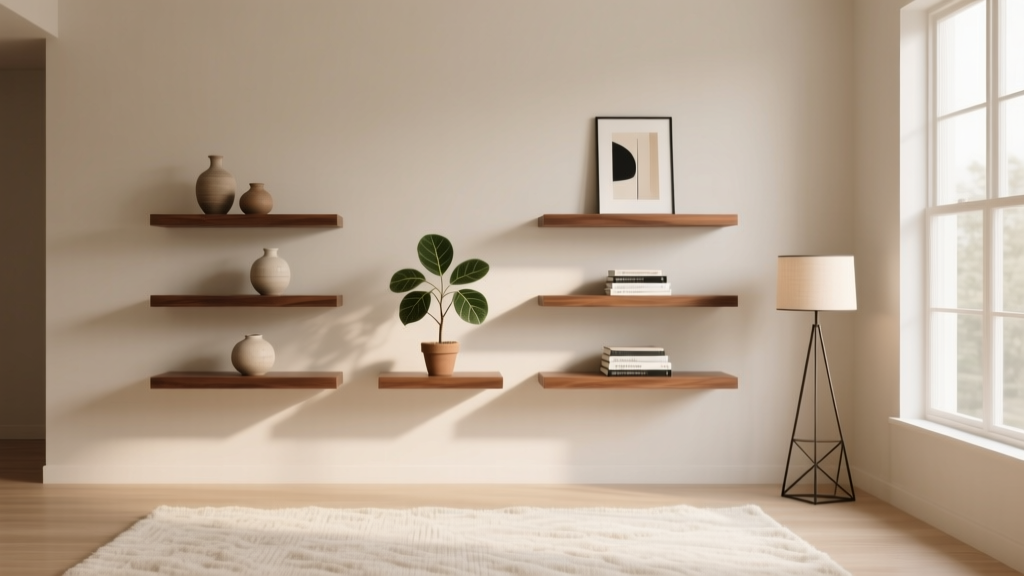
Floating Shelves Living Room Styling (2026)
Floating shelves can do what few living room upgrades can: add storage, display space, and architectural interest without taking up precious floor area. Whether you’re working with a compact apartment or a sprawling family room, they help you put blank walls to work—while making the space feel more intentional and finished.
But styling floating shelves is where many living rooms go from “nice idea” to “why does this look messy?” The secret isn’t buying more decor; it’s choosing the right shelf placement, balancing proportions, and using a repeatable styling formula that looks curated (not cluttered) and still feels like real life.
This guide walks you through shelf placement, sizing, materials, and step-by-step styling—plus real-world scenarios, current trends, timeless principles, common mistakes to avoid, and a FAQ to help you get it right the first time.
Why Floating Shelves Work So Well in Living Room Design
In living room decor, floating shelves are a rare win-win: they’re practical and decorative. They can:
- Make a small living room feel larger by keeping the floor visually open
- Add layered wall decor without committing to a full built-in
- Create a focal point near the TV, fireplace, or sofa wall
- Show personality through books, art, plants, and collected objects
- Provide light storage where a console or cabinet won’t fit
They also play well with current design trends—warm woods, mixed metals, handmade ceramics, and “collected over curated”—while staying timeless when you stick to classic proportions and quality materials.
Planning First: Placement, Height, and Spacing That Looks “Designer”
Where Floating Shelves Look Best in a Living Room
Consider these high-impact, low-regret zones:
- Above a sofa: Great for rentals and minimalist homes—adds height and interest without crowding.
- Flanking a fireplace: Creates symmetry and room for styling while keeping the mantel less busy.
- On a TV wall: Softens the “black rectangle” and adds balance—especially if you don’t want a full media built-in.
- In an awkward nook: Turns dead space into functional storage for books, baskets, or a mini bar moment.
- Above a console table: A classic layered look that works in modern, transitional, and farmhouse living rooms.
Measurements: Shelf Height and Spacing Guidelines
Use these practical measurements as your baseline, then adjust to your ceiling height and furniture scale:
- Above a sofa: Mount the bottom shelf 8–10 inches above the sofa back (or 10–12 inches if you have tall pillows). If you’re doing two shelves, keep 12–15 inches between them.
- Above a console: Bottom shelf typically 10–12 inches above the console surface.
- Between shelves (vertical spacing): 10–14 inches works for most decor; go to 14–16 inches if you’re styling taller vases or framed art.
- Shelf depth: 8–10 inches is ideal for living room styling. 6 inches can feel tight; 12 inches is great for larger objects but can feel heavy visually on thin walls.
- Shelf thickness: 1.5–2 inches looks substantial and high-end; slimmer shelves read more modern but may look less grounded above large furniture.
How Long Should Your Shelves Be?
To keep your floating shelves proportional:
- Above a sofa or console: Aim for shelves that are 2/3 to 3/4 the width of the furniture below.
- Single statement shelf: Choose a longer shelf (often 48–72 inches) to anchor the wall.
- Two to three shelves stacked: Use equal lengths for a clean look, or stagger slightly (modern and casual) if the rest of the room is simple.
Choosing the Right Shelf Material and Hardware (Looks + Longevity)
Styling only works if the shelves themselves feel intentional. Here’s how to choose materials that suit your living room design and your budget.
Best Materials for Floating Shelves
- Solid wood (oak, walnut, maple): The most durable and timeless. Beautiful grain; can be stained to match floors or furniture.
- Veneer over plywood/MDF: Budget-friendly with a clean look, but avoid overloading and keep away from high moisture.
- Painted wood/MDF: Great for minimalist or coastal living rooms. White shelves blend into walls; darker paint adds drama.
- Metal: Modern and industrial; best as brackets with wood shelves or slim metal ledges for art.
- Stone/stone-look: Trending for luxe interiors, but needs strong hardware and careful installation—often best as a custom project.
Budget Ranges You Can Expect
- Budget: $25–$80 per shelf (laminated/veneer shelves, smaller sizes, basic brackets)
- Mid-range: $80–$200 per shelf (better finishes, thicker profiles, hidden bracket systems)
- High-end/custom: $200–$600+ per shelf (solid wood, extra-long spans, custom stain/size, pro installation)
Hardware and Weight Capacity: What Actually Matters
Floating shelves look “unsupported,” but the hardware does the heavy lifting. For living rooms, plan for:
- Stud-mounted installation whenever possible (especially for shelves longer than 36 inches)
- Hidden bracket systems for a clean look
- Weight limits: many quality shelves hold 20–50 lbs when installed correctly; heavy decor (books, speakers, large planters) requires stronger brackets and studs
If you’re a renter, use shelves designed for drywall anchors and keep styling lightweight (frames, small plants, candles). If your lease doesn’t allow holes, consider leaning picture ledges on a media console instead.
A Simple Styling Formula: The “Anchor, Stack, Organic” Method
If you want floating shelves that look styled but not stiff, use this repeatable approach. It works across modern, transitional, and eclectic living room decor.
Step 1: Start with Anchors (Tall + Visual Weight)
Anchors are pieces that give structure—think tall vases, framed art, or sculptural objects. Place one anchor near each end or one strong anchor on one side to create asymmetry.
- Choose 2–3 anchors per shelf set (not per shelf), so the overall look stays calm.
- Aim for anchors that are about 1/2 to 2/3 the height of the space between shelves.
Step 2: Add Stacks (Books + Boxes + Trays)
Stacks create “platforms” for smaller decor and add the lived-in layer that makes shelves feel real.
- Mix horizontal and vertical book groupings.
- Use a decorative box or lidded basket to hide small items (remotes, matches, cords).
- Top stacks with a small object: a candle, a small sculpture, a bud vase.
Step 3: Bring in Organic Shapes (Plants + Textures)
Organic elements soften hard lines and make shelves feel warm and inviting—key for cozy living room design.
- Try a trailing plant (pothos, heartleaf philodendron) to break up the “straight line” look.
- Use natural textures: rattan, ceramic, linen, travertine, wood.
- Keep it low-maintenance: a realistic faux stem in a vase can look elevated if the vessel is high quality.
Quick Styling Ratios That Keep Things Balanced
- Rule of three: group objects in 3s (or 5s) for a natural rhythm.
- 60/30/10 color balance: 60% neutrals, 30% secondary tone (wood, black, brass), 10% accent color (a muted blue, olive, rust).
- Negative space: leave 20–30% of the shelf empty so the styling can “breathe.”
What to Put on Floating Shelves: Specific Pieces That Always Work
Here are living room shelf decor staples that look good in almost any home:
Decor Items to Mix and Match
- Books: art, travel, architecture, cookbooks (choose 5–15 that match your palette)
- Framed art or photos: lean frames for a relaxed, layered look
- Ceramics: matte or speckled vases, handmade bowls, sculptural vessels
- Candles and holders: pillar candles, hurricane glass, or a simple ceramic candle
- Small sculptures: abstract forms, stone objects, or vintage finds
- Plants: a mix of upright and trailing greenery
- Baskets/boxes: for hidden storage and texture
Product Recommendations by Style (Easy to Shop For)
- Modern living room: thin black frames, monochrome books, matte ceramic vases, minimal objects, one bold art piece
- Warm contemporary: white oak shelves, travertine bookends, linen-wrapped boxes, soft neutral pottery
- Transitional: classic frames, brass accents, balanced pairs, a mix of curves and straight lines
- Eclectic: vintage books, collected ceramics, mixed frame finishes, one unexpected color accent repeated twice
Real-World Styling Scenarios (So You Can Picture It at Home)
Scenario 1: Small Apartment Living Room with One Blank Wall
Goal: add storage and style without crowding.
- Install two shelves, each 36–48 inches long and 8 inches deep.
- Mount the bottom shelf 8–10 inches above the sofa back.
- Style with one tall vase, 6–10 books, two frames, and a small trailing plant.
Budget range: $80–$250 total depending on shelf material and hardware.
Scenario 2: Living Room TV Wall That Feels Flat
Goal: soften the TV and add balance.
- Add two asymmetrical shelves to one side of the TV (or one shelf on each side if you prefer symmetry).
- Keep decor simpler: a few books, one sculptural object, and one plant—avoid tiny clutter that competes with the screen.
- Repeat finishes already in the room (black from the TV frame, wood from the console, brass from lighting).
Tip: avoid reflective glass frames directly adjacent to the TV to reduce glare.
Scenario 3: Family-Friendly Living Room That Still Looks Styled
Goal: durable, tidy, and not precious.
- Choose thicker shelves (around 2 inches) with sturdy hardware.
- Use lidded boxes and upright bookends to keep items in place.
- Skip fragile collectibles on lower shelves; keep breakables on the top shelf.
Budget range: $150–$400 for higher-capacity shelves and better hardware.
Current Design Trends (That Still Age Well)
- Warm wood tones: white oak and walnut shelves are leading the way in modern living room decor.
- Organic modern styling: curved ceramics, textured neutrals, and subtle contrast (cream + black + wood).
- Statement stone accents: travertine bookends, marble trays, or stone-like objects for a quiet luxury feel.
- Layered art: leaning frames and overlapping pieces for a relaxed, collected look.
- Less symmetry, more balance: asymmetrical arrangements that still feel intentional through repeated colors and shapes.
Common Floating Shelf Styling Mistakes to Avoid
- Overcrowding the shelf: if everything is a “maybe,” nothing stands out. Leave open space.
- Too many tiny items: lots of small decor reads as clutter. Mix in a few larger anchors.
- Ignoring scale: short shelves over a large sofa look underwhelming; deep shelves in a narrow room feel heavy.
- Mounting too high: shelves should relate to furniture. If you have to crane your neck, lower them.
- All the same height objects: vary height and shape to create rhythm.
- Mismatch with room finishes: shelves that clash with your flooring, hardware, or furniture can feel random. Repeat at least one finish already present.
- Not planning for cords and tech: if shelves are near a TV wall, plan where devices, speakers, or frames will sit so you’re not stuck with visible wires.
Easy Refresh Ideas: Update Your Shelves Without Buying Much
If your shelves feel stale, try one of these quick resets:
- Edit by half: remove 50% of the items, then add back only what you love.
- Swap in something living: add a plant or fresh stems—instant warmth.
- Turn books around: remove dust jackets or flip a few spines for a calmer palette.
- Add one new texture: a woven box, a stone object, or a matte ceramic vase changes the whole story.
- Repeat an accent color twice: one accent color can look accidental; repeating it makes it feel designed.
FAQ: Styling Floating Shelves in a Living Room
How far apart should floating shelves be spaced?
For most living room decor, space shelves 10–14 inches apart. If you plan to display taller vases or framed art, go 14–16 inches. Keep the spacing consistent for a clean, built-in feel.
What’s the best depth for floating shelves in a living room?
8–10 inches is the sweet spot: deep enough for frames, books, and decor, but not so deep that it feels bulky. Use 12 inches if you want to include larger objects or baskets.
How do I style floating shelves without making them look cluttered?
Use fewer, larger pieces and build around them. A simple rule: anchors + stacks + one organic element per shelf, then leave 20–30% empty space. Group items in 3s and vary height.
Should floating shelves match the floor or the furniture?
They don’t have to match exactly, but they should relate. If your floors are warm oak, shelves in a similar warmth (oak, walnut, or a warm stain) will feel cohesive. If your room is already wood-heavy, painted shelves can add balance.
Are floating shelves a good idea for renters?
Yes—if your lease allows small wall holes. Choose lighter shelves, use appropriate drywall anchors, and keep decor lightweight. If you can’t drill, consider a leaning shelf unit or style picture ledges on top of a console instead.
How much weight can floating shelves hold?
It depends on the bracket system and installation. Many quality shelves hold 20–50 lbs when installed into studs. If you want to store lots of books or heavy objects, choose stronger hardware and anchor into studs whenever possible.
Next Steps: Get the Look in Your Own Living Room
Start by deciding what you want your floating shelves to do: add storage, create a focal point, or soften a blank wall. Measure your wall and furniture, choose a shelf depth that fits your room (usually 8–10 inches), and use the anchor-stack-organic method to style with confidence. If your shelves already exist, edit them down and rebuild the display with larger statement pieces and more breathing room.
For more approachable, design-forward living room ideas—from wall decor to furniture layouts and styling guides—explore the latest inspiration on thedecormag.com.
More Articles
 Maximalist Living Room Decor Done Right - The Decor Mag
 Best Fabrics for Living Room Upholstery - The Decor Mag
 Living Room Warm Minimalist Approach - The Decor Mag
 Non-Toxic, Low-VOC Paints for Every Room (2026)
 Living Room Ideas That Feel Like Home (2026)
 Practical vs Wood Flooring: 2026 Living Room Showdown
 Coastal Living Room Decor Inspiration - The Decor Mag
 Living Room Sectional Sofa Configurations - The Decor Mag
 Living Room Refined Rustic Charm - The Decor Mag
 Living Room Cozy Fall Decorating Ideas - The Decor Mag