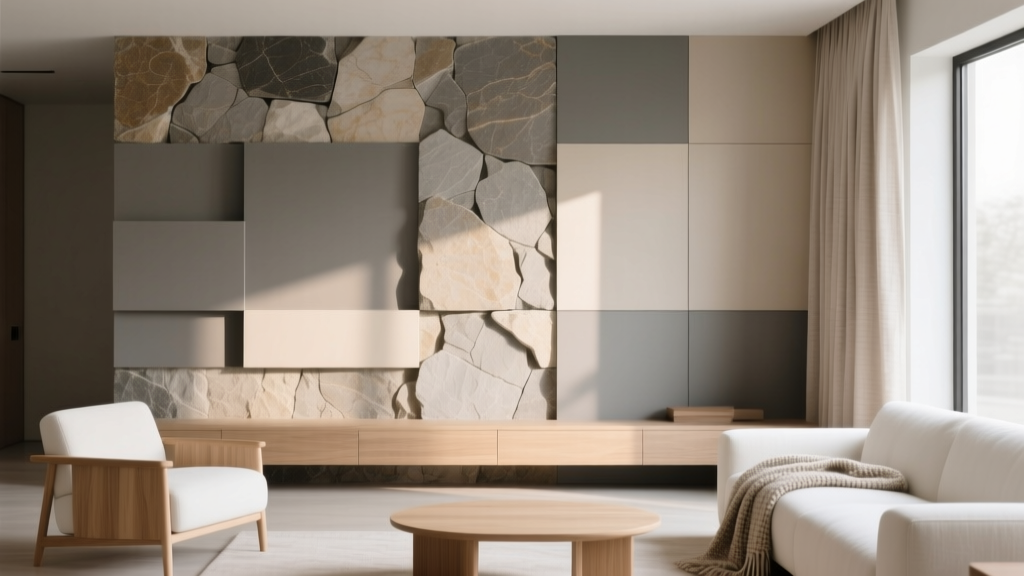
Living Room Textured Wall Ideas - The Decor Mag
A living room can have beautiful furniture and the right rug, yet still feel a little flat. Often, the missing ingredient is the wall surface itself. Texture adds depth, shadow, and that layered “designer” feeling you usually see in styled homes and boutique hotels. It’s also one of the smartest ways to make a room feel finished without buying more decor.
The best part: textured wall treatments work for homeowners and renters alike. Some options are permanent and high-impact (like plaster or wood slats), while others are peel-and-stick or removable (like textured wallpaper and fabric hangings). In this guide, you’ll find practical living room textured wall ideas, realistic budget ranges, measurements to plan around, and step-by-step tips to help you choose a finish that fits your space, style, and comfort level.
Expect real-world scenarios (small apartments, open-plan homes, kid-friendly spaces), plus common mistakes to avoid so your living room wall decor looks intentional—not accidental.
How to Choose the Right Texture for Your Living Room
Before you fall in love with a photo online, make sure the texture makes sense for your room’s light, scale, and daily life. Texture that looks subtle in a bright studio can feel heavy in a dim living room—while a bold 3D panel can be stunning in a large space but overwhelming in a nook.
Start with these three questions
- How much natural light do you get? Low light loves lighter colors and finer textures (limewash, subtle grasscloth). Bright rooms can handle deeper relief (slats, panels).
- Is this a feature wall or all walls? Many textured wall ideas work best as a single accent wall behind a sofa or TV to avoid visual clutter.
- Do you need renter-friendly options? If you can’t drill or paint freely, focus on removable wallpaper, large-scale art with texture, or freestanding panels.
Measurements that help you plan
- Feature wall proportion: Aim for 60–80% of the wall width behind your sofa to look balanced (especially if you have side tables and lamps).
- Slat spacing (if using wood slats): 1/2"–1" gaps read modern and clean; tighter spacing feels more tailored, wider spacing feels more dramatic.
- TV wall clearance: Keep textured materials at least 2"–4" away from TV edges (or frame the TV with trim) to avoid looking crowded.
Paint-Based Texture: Big Impact, Low Fuss
1) Limewash Paint for Soft, Cloudy Movement
Limewash is a top trend in living room design because it brings quiet movement without screaming “accent wall.” It’s timeless, forgiving, and pairs beautifully with warm neutrals, curved furniture, and natural materials.
Best for: Cozy minimalism, Mediterranean-inspired spaces, modern organic decor.
Budget range: $60–$150 per gallon (varies by brand). Many living rooms need 1–2 gallons for a feature wall, depending on coverage and texture depth.
Design tip: Choose warm whites, greiges, and muted clay tones if your living room decor leans earthy. For a modern look, try a soft stone gray with black accents.
2) Color Washing or Rag Rolling for Vintage Character
If you want a little old-world depth without specialty products, color washing (a glaze-like technique) can add nuanced texture. Rag rolling is another classic approach that’s having a small comeback in updated, more subtle palettes.
Step-by-step (simplified):
- Paint a base coat in satin or eggshell and let it cure.
- Mix a glaze (or glaze medium) with a slightly darker or lighter paint tone.
- Work in 3’ x 3’ sections, applying with a brush and softening with a rag or sponge.
- Feather edges as you go to avoid harsh seams.
Real-world scenario: In a rental where you’re allowed to paint but want something more elevated than a flat accent color, a gentle color wash in warm beige can make budget furniture look more expensive.
Wallpaper and Wallcoverings: Texture Without Construction
3) Grasscloth Wallpaper (and Smart Alternatives)
Grasscloth is a classic textured wallcovering that instantly reads high-end. It adds warmth, a natural weave, and subtle variation—perfect behind a sofa, bookcase wall, or conversation area.
Considerations:
- Traditional grasscloth can stain and may not love humid climates.
- Many brands offer vinyl grasscloth or faux options that look similar but wipe clean.
Budget range: $150–$600+ per roll for true grasscloth; $40–$120 per roll for vinyl or faux textured wallpaper.
Pro styling tip: Pair grasscloth with matte black picture frames, a linen sofa, and a chunky knit throw for layered living room wall decor that feels calm, not busy.
4) Peel-and-Stick Textured Wallpaper for Renters
Renters: this is your moment. Peel-and-stick wallpapers now come in linen looks, subtle plaster looks, and even faux tile or wood textures.
Best practices for peel-and-stick:
- Clean walls with mild soap and water; let dry fully.
- Avoid heavily textured “orange peel” walls—adhesion can fail.
- Buy 1 extra roll for pattern matching and future repairs.
Budget range: $35–$90 per roll, typically covering around 20–30 sq ft.
Architectural Texture: Slats, Panels, and Molding
5) Vertical Wood Slat Walls (Modern and Warm)
Wood slat walls are everywhere in current interior design trends, and for good reason: they add rhythm, height, and warmth. They look great behind a media console, framing a fireplace, or anchoring a large sectional.
Material recommendations:
- MDF slats (budget-friendly, paintable)
- Oak veneer slats (mid-range, natural look)
- Acoustic felt-backed slat panels (premium, helps reduce echo in open-plan living rooms)
Budget range: $8–$25 per sq ft depending on material and whether you DIY or hire out.
Spacing tip: For a sleek look, keep slats consistent—common slat widths are 1"–2", with 1/2"–1" gaps. Paint the backing wall a deep charcoal for drama or match it to your slat tone for subtlety.
Real-world scenario: In an open-plan living room where sound bounces, felt-backed slat panels behind the TV can cut down on harsh echo while doubling as a statement wall.
6) Picture Frame Molding for Traditional-Modern Charm
Love a timeless look? Picture frame molding (also called box trim) adds architectural texture with paint as the “finish.” It’s a classic approach that works with modern furniture, too.
Ideal placements:
- Behind a sofa for a tailored backdrop
- On a long blank wall to add structure
- As a full-room treatment in formal living rooms
Measurements to keep it proportional:
- Keep molding frames 4"–8" away from corners and baseboards.
- For 8' ceilings, frame heights often look best around 30"–45" (depending on how many rows you do).
Budget range: $150–$600 DIY for a feature wall (trim + paint); more if hiring carpentry.
7) 3D Wall Panels for Quick Drama
3D panels (PVC, MDF, or plant fiber) add instant texture and can be painted to match your wall for a subtle sculptural effect. They’re especially effective on a living room accent wall where you want a focal point without relying on art.
Best uses: TV wall, behind a console, or a niche wall in a small living room.
Budget range: $5–$15 per sq ft for panels, plus adhesive and paint.
Design tip: Paint panels the same color as the wall in a matte finish to highlight shadows. Gloss can look plastic and emphasizes seams.
Plaster and Compound Finishes: High-End, Textural Luxury
8) Venetian Plaster or Microcement Looks
Plaster finishes are having a major moment because they feel both modern and timeless. They create a hand-troweled surface that shifts in the light—beautiful behind minimalist furniture, warm wood tones, and oversized art.
Where it shines: Fireplace walls, large feature walls, high-ceiling living rooms.
Budget range:
- DIY plaster kits: $150–$400 per wall (varies by product)
- Professional application: often $8–$25+ per sq ft depending on finish complexity
Practical tip: If you want the look without the commitment, choose a plaster-look wallpaper or a limewash finish in a similar tone.
Natural and Textile Texture: Warmth You Can Swap Anytime
9) Large-Scale Textile Art and Woven Hangings
Textured walls don’t always require paint or construction. A large woven wall hanging, framed textile, or tapestry can soften acoustics and add cozy depth—ideal for renters and anyone who likes to redecorate seasonally.
How big should it be? As a guideline, aim for wall art that’s two-thirds the width of the sofa. For an 84" sofa, look for a piece around 56" wide (or create a grouping).
Budget range: $80–$500 depending on size and materials.
Real-world scenario: If your living room has lots of hard surfaces (wood floors, large windows), a woven wall piece above the sofa can visually soften the space and reduce echo.
10) Wood, Cork, and Leather Tiles (Unexpected but Stylish)
Cork is quietly returning—especially in modern organic and Scandinavian living room decor. It’s warm, tactile, and sound-absorbing. Leather tiles are more niche, but stunning in small doses.
Best for: Reading corners, behind shelving, or a small accent zone rather than a full wall.
Budget range: $6–$20 per sq ft.
Maintenance tip: Use in lower-touch areas and avoid direct sunlight if the material is prone to fading.
Room-by-Room Scenarios: What Works Where
Small living room (under 200 sq ft)
- Choose fine texture (limewash, subtle grasscloth, plaster-look wallpaper).
- Keep the texture on one wall—usually behind the sofa—to avoid visual crowding.
- Stick to lighter tones: warm white, oatmeal, pale greige.
Open-plan living room
- Use texture to zone the living area (slat wall behind TV, molding behind sofa).
- Consider acoustic-friendly materials like felt-backed slats, cork, or textile art.
- Repeat a finish elsewhere (a smaller matching panel or similar tone) to make the space cohesive.
Family-friendly living room with kids/pets
- Skip delicate grasscloth in high-touch zones unless it’s vinyl-coated.
- Choose wipeable wallcoverings, durable paint, or mid-height molding with washable paint.
- Place heavily textured features behind furniture to reduce scuff risks.
Common Mistakes to Avoid
- Going too bold on every wall: One textured accent wall often looks more expensive than four competing surfaces.
- Ignoring lighting: Texture needs light to look intentional. Add a floor lamp, wall sconces, or picture lights to graze the surface.
- Choosing the wrong sheen: High gloss can make seams and imperfections obvious. Matte or eggshell usually flatters texture.
- Skipping samples: Always test a 12" x 12" wallpaper sample or a small painted board. Texture changes dramatically from day to night.
- Forgetting edge details: Terminations matter—use trim, clean corners, or intentional borders so your textured wall looks finished.
Quick Product and Material Recommendations (By Budget)
Under $200
- Peel-and-stick textured wallpaper for a small accent wall
- DIY color wash supplies (paint + glaze medium + tools)
- Large woven wall hanging to add instant softness
$200–$800
- Box molding feature wall (DIY trim + paint)
- Higher-quality removable wallpaper for a full wall
- MDF slat wall section behind a TV console
$800–$3,000+
- Professional plaster finish (Venetian plaster, microcement look)
- Felt-backed acoustic slat panels across a large wall
- Custom millwork or built-ins with textured backing panels
FAQ: Living Room Textured Wall Ideas
What’s the easiest textured wall idea for renters?
Peel-and-stick textured wallpaper (linen, grasscloth-look, or plaster-look) is typically the easiest. If your walls are too textured for good adhesion, go with a large textile wall hanging or oversized framed art with dimension.
Which textured wall finishes are easiest to clean?
Vinyl wallpapers, painted 3D panels, and satin/eggshell painted molding are generally wipeable. True grasscloth and raw plaster finishes can be more delicate, depending on the sealer used.
Should a textured accent wall go behind the sofa or the TV?
Either works. Behind the sofa feels more “decor-forward” and cozy, while a TV wall can make the screen look more integrated. If cables and outlets are messy, do the sofa wall first for a cleaner payoff.
Will texture make my living room look smaller?
Heavy, high-contrast texture across multiple walls can feel busy in small rooms. A single accent wall in a light or mid-tone, with subtle texture (limewash, fine weave wallpaper), usually adds depth without shrinking the space.
How do I light a textured wall so it looks intentional?
Add lighting that grazes the surface: wall sconces, picture lights, or adjustable spots. Position lights 12"–24" away from the wall to emphasize shadows and bring out the texture.
What’s a timeless textured wall look that won’t date quickly?
Picture frame molding painted the same color as the wall (a “monochrome trim” look) is a classic. Limewash in a warm neutral is also long-lasting because it reads like an elevated paint finish rather than a bold pattern trend.
Next Steps: Make Texture Work in Your Space
Choose one wall to elevate—typically the wall behind your sofa, a fireplace wall, or the TV wall—then decide whether you want subtle movement (limewash, plaster-look wallpaper), structured architecture (molding, slats), or cozy softness (textiles, cork). Order samples, test them in morning and evening light, and plan edge details so the finish looks clean and intentional.
If you’re ready to keep refining your space, explore more living room ideas, wall decor inspiration, and layout tips on thedecormag.com.
More Articles
 Budget-Friendly Living Room Makeover Ideas - The Decor Mag
 Modern Rustic Living Room Design - The Decor Mag
 Patterned Wallpaper Living Room Styling (2026)
 Best Modular Furniture for Living Rooms (2026)
 How to Style a Living Room for the Holidays - The Decor Mag
 Best Ottoman Sizing for Coffee Table Replacement (2026)
 Best Paint Colors for North-Facing Living Rooms (2026)
 Family Living Room Layouts for Movie Night
 Mid-Century Modern Living Room Must-Haves - The Decor Mag
 Best Wall Sconce Wiring Options - The Decor Mag