The Best Throw Pillows for Every Season - The Decor Mag
Throw pillows are one of the fastest (and most budget-friendly) ways to refresh a living room. They can warm up a neutral sofa, make a tired armchair feel intentional, and shift the whole mood of a space without repainting, replacing furniture, or committing to a new rug.
Even better: pillows are inherently seasonal. What feels cozy in January can look heavy in July, and the colors that sing in autumn can feel too saturated once spring light starts streaming in. With a smart rotation—plus a few timeless “anchor” pillows you keep year-round—you can keep your living room looking current, comfortable, and pulled together.
Below you’ll find a season-by-season guide to the best throw pillows for living room design, including ideal fabrics, practical sizes, styling formulas, and real-world examples. You’ll also get common mistakes to avoid, a quick-care checklist, and FAQs renters and homeowners ask all the time.
Before You Buy: A Quick Throw Pillow Strategy That Works Year-Round
Start with a “core set,” then swap seasonal accents
If you want a living room that feels styled (not cluttered), build a base you can keep out all year, then rotate 1–3 pillows per season.
- Core set (year-round): 2–4 pillows in durable, versatile fabrics (cotton-linen blends, performance fabric, subtle texture).
- Seasonal accents: 1–3 pillows that change color, pattern, or material (bouclé for winter, linen for summer, velvet for fall).
Best pillow sizes for living room sofas (practical measurements)
Use these as a starting point for most standard sofas (78–90 inches wide). Adjust up for sectionals and down for loveseats.
- 22" x 22" (standard “sofa pillow” size): great for depth and a plush look.
- 20" x 20": slightly neater; ideal for smaller spaces and apartment living rooms.
- 24" x 24": best on deep sofas or oversized sectionals (use sparingly—these can overwhelm).
- 12" x 20" lumbar: perfect for layering and lower-back support.
The insert rule that makes pillows look expensive
To avoid flat, “store shelf” pillows, use inserts that are 2 inches larger than the cover. Example: a 20" cover gets a 22" insert. Choose:
- Down/feather blend: best loft and “karate chop” look; more luxe.
- Down alternative: allergy-friendly and usually less expensive.
Budget ranges that feel realistic
- Budget: $15–$35 per cover (great for seasonal swaps)
- Mid-range: $40–$90 per cover (better zippers, thicker textiles, elevated trims)
- Investment: $100–$250+ per cover (designer textiles, artisan details, high-end embroidery)
- Insert costs: $12–$25 (poly), $25–$60 (down/feather blend) depending on size
Spring Throw Pillows: Light, Fresh, and Pattern-Friendly
Spring is about clarity and lift. Think breathable textures, gentle contrast, and patterns that echo nature—florals, thin stripes, and painterly abstracts. This is the season to brighten a living room without making it feel “themed.”
Best materials for spring pillows
- Cotton: crisp and easy to clean; works with almost any style.
- Linen or linen-blend: relaxed texture that reads airy and casual.
- Lightweight weaves: slub cotton, matelassé, or thin jacquards for subtle dimension.
Spring color palette ideas (current trends + timeless options)
- Timeless: soft ivory, warm beige, misty blue, sage green
- Trend-forward: butter yellow, dusty lilac, watercolor pastels, muted apricot
Product recommendations (what to look for)
- Block-print cotton covers in a small-scale floral (easy to mix with solids)
- Thin stripe pillows (blue/cream, green/ivory) to add structure and “tailored” energy
- Textured neutral pillows (nubby cotton-linen) to balance any pattern
Real-world scenario: Renting with a gray sofa
Gray sofas can feel chilly. For spring, try this simple formula:
- Two 22" x 22" linen-blend pillows in warm ivory.
- Two 20" x 20" patterned cotton pillows with hints of sage and pale blue.
- One 12" x 20" lumbar in a thin stripe to add definition.
This keeps the sofa light and welcoming while still looking intentional—especially if you repeat one pillow color in a throw blanket or a coffee table book.
Summer Throw Pillows: Breezy Texture and Sun-Washed Color
Summer living room decor should feel breathable. Prioritize cool-to-the-touch fabrics and a palette that looks good in strong daylight. This is also the season when “coastal” influence shows up—think stripes, sand tones, and organic texture—without needing seashells or themed prints.
Best materials for summer pillows
- Washed linen: effortlessly relaxed and cool.
- Cotton canvas: sturdy and great for high-traffic homes.
- Raffia-look or woven textures: use as accents (they add summer energy fast).
- Performance fabric: ideal for kids, pets, and indoor-outdoor living rooms.
Summer color palette ideas
- Timeless: white, sand, camel, ocean blue
- Trend-forward: sun-bleached terracotta, pale aqua, warm clay pink
A reliable summer pillow mix (easy formula)
For a standard 84" sofa:
- 2 x 22" x 22" solids in washed linen (ivory, sand, or soft white)
- 2 x 20" x 20" stripes (navy/cream or sky/ivory)
- 1 x 12" x 20" lumbar with texture (woven, subtle embroidery, or a small geometric)
Real-world scenario: Open-concept living room that needs “calm”
If your living room blends into a kitchen or dining area, summer is a great time to simplify. Choose lower-contrast pillows (tone-on-tone stripes, soft neutrals) so the seating area reads calm and cohesive from every angle. Add interest through texture rather than loud pattern.
Fall Throw Pillows: Warmth, Rich Color, and Cozy Contrast
Fall is where throw pillows really shine. You can shift the entire room by leaning into rich color and tactile fabrics—without touching the big-ticket items like the sofa or rug.
Best materials for fall pillows
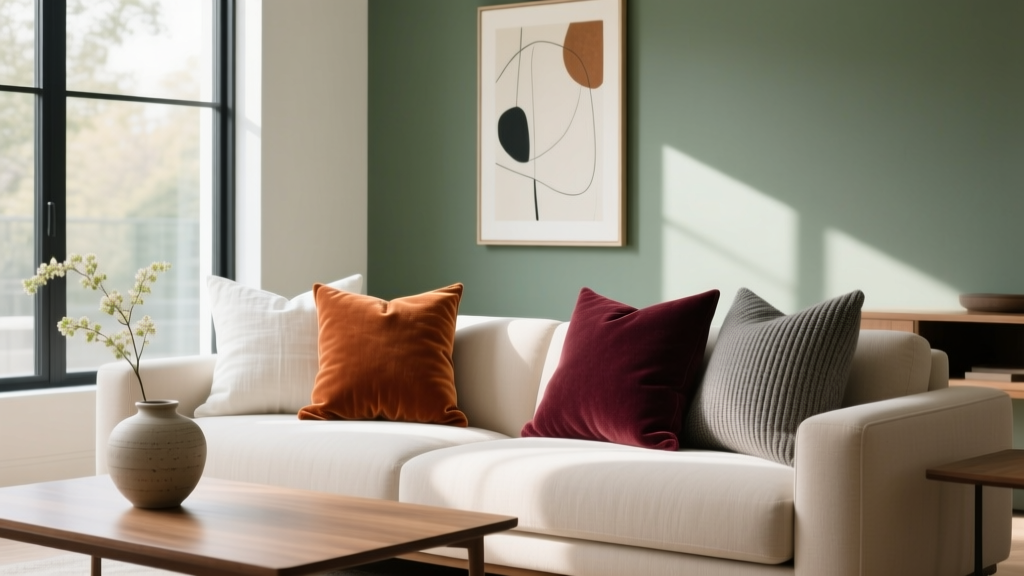
- Velvet: adds depth instantly; looks especially good in jewel tones.
- Wool blends: cozy, structured, and naturally textured.
- Heavier weaves: tweed-like textures, thick cotton, or boucle-adjacent knits.
Fall color palette ideas
- Timeless: rust, cognac, olive, warm cream
- Trend-forward: aubergine, ink blue, deep teal, spiced saffron
Product recommendations (high-impact choices)
- Solid velvet pillows (22" x 22") in rust, olive, or deep teal
- Warm geometric patterns (20" x 20") in caramel/cream/black for modern living rooms
- Woven lumbar pillow (12" x 20") with subtle fringe for softness (use fringe sparingly for a polished look)
Real-world scenario: Family room with a beige sectional
A beige sectional is the perfect fall backdrop. Try this layered approach:
- Add two 24" x 24" pillows in a chunky wool blend at the corners (cream or oatmeal).
- Layer two 22" x 22" velvets in rust and olive in front.
- Finish with a 12" x 20" lumbar in a small geometric that includes both rust and olive.
Result: cozy, elevated, and still neutral-friendly—great for a living room that needs to work from September through Thanksgiving.
Winter Throw Pillows: Plush Layers and High-Comfort Fabrics
Winter living room design is all about comfort you can see. This is the season for plush texture, darker contrast, and materials that make you want to settle in.
Best materials for winter pillows
- Bouclé: a continuing trend that adds instant softness and visual warmth.
- Faux fur: best as an accent (one or two pillows max, depending on sofa size).
- Velvet and corduroy: both look rich and feel cozy.
- Wool and cashmere blends: warm and timeless for classic or Scandinavian-style rooms.
Winter color palette ideas
- Timeless: cream, charcoal, camel, deep forest green
- Trend-forward: chocolate brown, moody burgundy, smoky navy
Step-by-step: A winter pillow “upgrade” in 10 minutes
- Keep your two most neutral pillows (your core set) on the sofa.
- Swap in two plush pillows (bouclé or velvet) in a deeper winter shade.
- Add one lumbar pillow with texture (corduroy, ribbed velvet, or a knit).
- If you want extra cozy: drape a throw blanket in a similar tone on the arm of the sofa.
Real-world scenario: Small apartment living room that can’t handle clutter
When square footage is tight, fewer pillows look more elevated. For a loveseat or apartment sofa, aim for 3 pillows total:
- 2 x 20" x 20" (bouclé in cream + velvet in charcoal)
- 1 x 12" x 20" lumbar (ribbed corduroy in camel)
This adds winter warmth without swallowing up valuable seating space.
Timeless Throw Pillows That Work Every Season
If you don’t want to store a full pillow wardrobe, invest in a few covers that play well across seasons. These are the “quiet heroes” of living room decor.
- Textured neutral (22" x 22"): think ivory nubby weave, oatmeal linen, or subtle herringbone.
- Classic stripe (20" x 20"): works with modern, coastal, farmhouse, and transitional spaces.
- One grounding dark neutral (22" x 22"): charcoal, espresso, or ink blue to add contrast year-round.
- A versatile lumbar (12" x 20"): small-scale pattern or tone-on-tone texture.
Mixing Patterns Like a Designer (Without Overthinking It)
Pattern mixing is what takes a living room from “nice” to layered and intentional. Use this simple structure:
The 3-pattern rule
- One large-scale pattern: bold floral, oversized abstract, wide stripe
- One medium-scale pattern: geometric, check, ikat
- One small-scale pattern: ditsy floral, thin pinstripe, tiny dot
Keep color consistent
Choose 2–3 main colors plus a neutral. If your rug already has movement, pull pillow colors from it for instant cohesion.
Designer trick: repeat one color three times
If you introduce olive green, repeat it in:
- one pillow
- a throw blanket
- a small decor object (vase, book spine, or candle)
Common Mistakes to Avoid
- Buying all the same size: A row of identical 18" pillows often looks flat. Mix squares with one lumbar for dimension.
- Ignoring sofa depth: Deep sofas need larger pillows (22" or 24") to look proportional.
- Choosing scratchy fabrics for “looks”: If it isn’t comfortable, it won’t get used—and the living room will feel less inviting.
- Too many novelty themes: Pumpkins, snowflakes, and literal seasonal graphics can feel dated fast. Aim for seasonal color and texture instead.
- Flat inserts: Underfilled pillows make even expensive covers look cheap. Upgrade inserts before you buy more covers.
- Overcrowding the sofa: If people constantly move pillows to sit down, you have too many. Style should support real life.
Care and Storage: Keep Your Throw Pillows Looking New
- Choose zip covers so you can wash or dry clean as needed.
- Spot-clean quickly (especially on light linen and cotton) to prevent stains from setting.
- Store off-season covers folded in breathable cotton bags; add a cedar block for wool pillows.
- Fluff and rotate inserts weekly to keep their shape, especially in high-use family rooms.
FAQ: Throw Pillows for Living Room Decor
How many throw pillows should be on a sofa?
For a standard 84" sofa, 4–5 pillows looks styled without feeling crowded. For a loveseat, 2–3 is usually enough. For a sectional, aim for 5–7, distributed across corners.
What’s the best pillow size for a standard couch?
22" x 22" is the most versatile for standard sofas. If your sofa is smaller or your style is more tailored, use 20" x 20". Add a 12" x 20" lumbar for layering.
Should throw pillows match the rug or curtains?
They don’t need to “match,” but they should relate. Pull one or two colors from your rug or artwork, then add a neutral and a texture. This keeps the living room cohesive without looking overly coordinated.
Are down inserts worth it?
If you want a fuller, designer look, yes. A down/feather blend tends to hold shape better and looks plusher than basic poly-fill. If allergies are a concern, a high-quality down alternative insert is a great compromise.
How do I make my living room pillows look high-end on a budget?
Prioritize better inserts, stick to 2–3 core colors, and mix in one textured fabric (like linen or velvet). Even budget-friendly covers look elevated when they’re full and well-styled.
What are the most versatile pillow colors year-round?
Ivory, oatmeal, camel, charcoal, and muted blue are dependable across seasons. Add one accent color that works with your room (olive, rust, or deep teal are especially flexible).
Next Steps: Build Your Seasonal Pillow Wardrobe
If you want an easy plan you can follow this week, start here:
- Choose 2–4 core pillows in neutral textures (20"–22" squares plus one lumbar).
- Pick one seasonal color direction per quarter (spring: sage/sky; summer: sand/blue; fall: rust/olive; winter: cream/charcoal).
- Upgrade your inserts using the 2-inch rule for a fuller look.
- Store off-season covers in a labeled bag so swapping takes minutes, not hours.
When your throw pillows are sized right, comfortable, and seasonally tuned, your living room feels refreshed all year—without major spending or major effort.
For more living room design and decor ideas, browse the latest inspiration on thedecormag.com.
More Articles
 Practical vs Wood Flooring: 2026 Living Room Showdown
 Best Conversation Pit Ideas - The Decor Mag
 Living Room Polished Casual Style - The Decor Mag
 Living Room Sustainable Decor Choices - The Decor Mag
 Comfortable Seating for Aging Bodies: Sofas & Chairs (2026)
 Cozy Reading Nook Ideas: Soul-Warming Spaces (2026)
 Best Coffee Table Books for Styling - The Decor Mag
 Living Room Understated Luxury Feel - The Decor Mag
 Living Room Artful Eclectic Design - The Decor Mag
 Smart Function Storage Ideas for Real Living Spaces