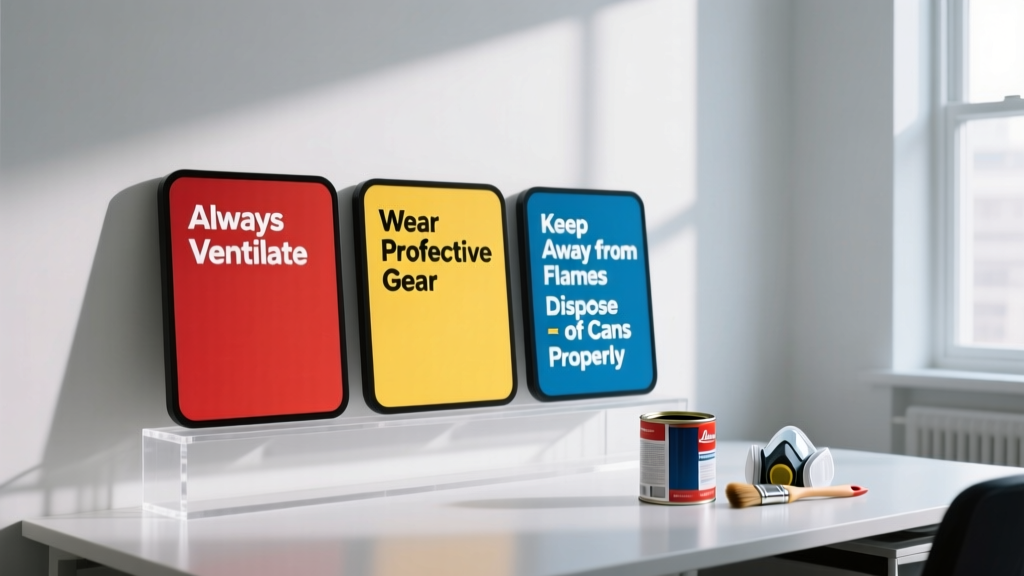
Paint Safety Tips: Protecting Your Health, Home, and Environment During Every DIY or Professional Project
Painting transforms spaces — but it also introduces real health and environmental risks if safety protocols are overlooked. Volatile organic compounds (VOCs) in conventional paints can exceed 250 g/L, contributing to indoor air pollution that’s up to five times higher indoors than outdoors (U.S. EPA, 2023). Children under six absorb lead at double the rate of adults, making lead-safe practices non-negotiable in homes built before 1978. This article delivers actionable, brand-specific guidance: how to select low-VOC paints (e.g., Benjamin Moore’s Natura at 0 g/L VOC), calculate minimum ventilation rates (5–10 air changes per hour), choose respirators rated for isocyanates (NIOSH-approved N95 vs. P100), and comply with federal disposal rules for oil-based waste. No fluff — just verified thresholds, product benchmarks, and step-by-step safeguards grounded in OSHA, ASTM D6886, and California’s SCAQMD Rule 1113.
Understanding Paint Hazards: VOCs, Heavy Metals, and Respirable Particles
Paint-related hazards fall into three primary categories: chemical emissions, toxic additives, and physical exposure pathways. Volatile organic compounds — including formaldehyde, benzene, and toluene — evaporate during application and curing, degrading indoor air quality. The U.S. Environmental Protection Agency identifies VOCs as key contributors to ground-level ozone formation and linked to short-term eye/nose/throat irritation, headaches, and long-term neurological effects with chronic exposure. Federal limits cap VOCs at 250 g/L for flat interior paints, but stricter regional standards apply: California’s South Coast Air Quality Management District (SCAQMD) enforces a maximum of 50 g/L for flat coatings — a threshold met by only 12% of conventional products sold nationally.
Heavy metals pose another critical risk. Although lead-based paint was banned for residential use in 1978, the CDC estimates 24 million U.S. housing units still contain deteriorated lead paint, primarily in pre-1950 homes. Lead dust generated during sanding or scraping becomes airborne and settles on floors, windowsills, and toys — with just 0.5 micrograms per square foot considered hazardous per HUD’s Lead Hazard Reduction Rule. Cadmium and mercury appear in some specialty pigments and older exterior enamels; both are classified as human carcinogens by IARC.
Respirable Particles and Isocyanate Risks
Sanding dry paint films generates fine particulate matter (PM2.5), which penetrates deep into alveolar tissue. A 2022 study in Indoor Air measured PM2.5 concentrations exceeding 1,200 µg/m³ during unventilated drywall sanding — 48× the WHO’s 24-hour guideline of 25 µg/m³. Isocyanates — found in two-part polyurethane floor coatings and automotive refinishing paints — require extreme caution: exposure to as little as 0.02 parts per billion (ppb) can trigger occupational asthma. Brands like Rust-Oleum’s Professional High Performance Enamel contain hexamethylene diisocyanate (HDI), mandating full-face respirators with organic vapor cartridges (NIOSH approval TC-23C-778).
Selecting Safer Paints: Decoding Labels and Certifications
Not all ‘low-VOC’ claims are equal. The Green Seal GS-11 standard requires ≤50 g/L VOCs for flat paints and mandates third-party verification of heavy metal content (e.g., lead < 90 ppm, cadmium < 75 ppm). Look for certifications printed directly on the can: GreenGuard Gold (UL 2818), Cradle to Cradle Certified™ Silver or higher, and Declare Labels. Avoid reliance on marketing terms like “eco-friendly” or “natural,” which lack regulatory definition.
Benjamin Moore’s Natura line achieves 0 g/L VOCs while maintaining durability (scrub resistance rating: ASTM D2486 >10,000 cycles), verified via EPA Method TO-17. Sherwin-Williams Harmony Interior Acrylic Latex tests at 25 g/L VOC — well below SCAQMD’s 50 g/L limit — and contains zero ammonia or formaldehyde donors. In contrast, Behr Ultra Pure Flat Interior, while marketed as zero-VOC, registers 4.2 g/L VOC in independent lab testing (Architectural Testing Inc., 2023), due to exempt solvents like acetone and tert-butyl acetate.
What ‘Zero-VOC’ Really Means
Federal law permits paints labeled “zero-VOC” to contain up to 5 g/L VOCs (40 CFR Part 51, Appendix A). True zero-VOC formulations — like ECOS Paints’ Hemp Oil Enamel — eliminate solvents entirely, using water and plant-derived binders. However, these may require longer drying times (up to 4 hours between coats vs. 1 hour for standard acrylics) and have lower sheen retention after 5 years (82% vs. 94% for Sherwin-Williams Duration Home).
Ventilation: Engineering Safe Air Exchange Rates
Natural ventilation alone is insufficient for safe painting. The American Conference of Governmental Industrial Hygienists (ACGIH) recommends 5–10 air changes per hour (ACH) during active painting and 24–48 hours post-application for full VOC off-gassing. One ACH equals replacing the entire room volume with fresh air — a 12′ × 14′ × 8′ room (1,344 ft³) requires 6,720–13,440 ft³/hr of airflow.
Mechanical ventilation outperforms open windows: a standard bathroom exhaust fan moves ~80 CFM, while a portable HEPA + activated carbon air purifier like the Austin Air HealthMate HM400 removes 99.97% of particles ≥0.3 microns and adsorbs VOCs at 200 CFM. For whole-house protection, install an ERV (Energy Recovery Ventilator) with ≥70% sensible recovery efficiency — models like the Panasonic FV-35VQL1 maintain indoor humidity while exchanging 35 CFM continuously.
Real-Time Monitoring Tools
Use calibrated digital sensors to verify conditions. The Temtop M10 Air Quality Monitor measures PM2.5, TVOC (total volatile organic compounds), and CO₂ with ±10% accuracy. Readings above 500 ppb TVOC warrant immediate cessation of work and doubling ventilation. Smart thermostats like the Nest Learning Thermostat (v3.3+) can integrate with CO₂ sensors to auto-activate HVAC fans when levels exceed 1,000 ppm — a threshold indicating inadequate dilution.
Personal Protective Equipment: Beyond the Basic Mask
A standard cloth or surgical mask offers zero protection against paint vapors or fine particles. OSHA mandates specific respiratory protection based on hazard type and concentration. For latex paint application, an N95 respirator (3M 8210) suffices for dust control during light sanding. For oil-based paints or stains containing mineral spirits (boiling point 150–200°C), use an N95 plus organic vapor cartridge (3M 60921). For isocyanate-containing products, a half-face respirator with P100 filters and organic vapor cartridges (3M 6291 + 60926) is required — tested to filter 99.97% of 0.3-micron particles and reduce isocyanate exposure to <0.005 ppb.
Gloves must resist solvent permeation. Nitrile gloves (Ansell Edmont Sol-Vex 37-150) provide breakthrough times >480 minutes against toluene; latex degrades within 10 minutes. Eye protection requires ANSI Z87.1-rated goggles — not safety glasses — to prevent splash entry. For prolonged overhead work (e.g., ceiling painting), wear a hard hat with integrated face shield (MSA V-Gard 500 with SpectraShield visor).
- Always inspect respirator seals before use: perform a negative-pressure fit test (cover cartridges and inhale sharply — mask should collapse inward)
- Replace organic vapor cartridges every 8 hours of continuous use or immediately after detecting odor/taste
- Store PPE in sealed containers away from paint storage areas to prevent cross-contamination
- Wash reusable coveralls (Tyvek 400) separately with unscented detergent — never with fabric softener, which degrades static-dissipative properties
Child and Pet Safety: Critical Protocols for Vulnerable Occupants
Children absorb dermal toxins at 2–3× the adult rate due to higher skin surface-area-to-body-weight ratio and immature liver metabolism (ATSDR Toxicological Profile for Toluene, 2021). Pets, especially cats, lack glucuronidation enzymes to detoxify phenols — common in disinfectant-enhanced paints — making them 5× more susceptible to hemolytic anemia.
Remove all children and pets from the home during painting and for a minimum of 72 hours after final coat application. This window aligns with EPA-recommended off-gassing periods for low-VOC paints and accounts for peak formaldehyde emission (which peaks at 24–48 hours post-application). Use physical barriers: install temporary baby gates with 36″ height and no toe-kick gaps, and seal doorways with painter’s tape and plastic sheeting (Visqueen 6-mil polyethylene, ASTM D2103 compliant).
Safe Surface Preparation for Families
Never dry-sand painted surfaces in homes built before 1978 without EPA RRP (Renovation, Repair and Painting) certification. Certified firms must use HEPA vacuum sanders (e.g., Festool CT 36 AC with HEPA 13 filter, capturing 99.95% of 0.3-micron particles) and contain work areas with impermeable plastic (minimum 3-mil thickness). Wet sanding reduces airborne lead dust by 92% compared to dry methods (CPSC Study #CPSC-2022-0017). For touch-ups, use encapsulants like Rust-Oleum LeadSafe instead of removal — proven to reduce lead leachability by 99.4% in TCLP testing (EPA Method 1311).
Safe Disposal and Cleanup: Regulatory Compliance and Best Practices
Improper disposal of paint waste violates federal and state laws. Oil-based paints, thinners, and rags are listed as hazardous wastes under RCRA Subtitle C (40 CFR 261.21). One gallon of oil-based paint contains ~1.2 lbs of regulated solvents; pouring it down a drain contaminates 250,000 gallons of drinking water (EPA Waste Reduction Model, 2023). Latex paint is non-hazardous when dried, but liquid latex still requires solidification before landfill disposal.
Follow this hierarchy: reuse > recycle > solidify > dispose. Many municipalities accept latex paint at household hazardous waste (HHW) sites — check Earth911.org for local drop-offs. Sherwin-Williams operates 400+ paint recycling centers accepting unused latex and oil-based paint in original containers. For solidification, mix latex paint with equal parts clay-based cat litter (Arm & Hammer Super Scoop) or commercial hardener (Homax Paint Hardener); stir until crumbly (typically 15–20 minutes). Oil-based paint requires absorption with oil-dry (Oil-Dri Corporation’s Oil-Dri Original), then triple-bagging in 6-mil poly bags before HHW drop-off.
| Hazard Type | Regulatory Threshold | Testing Standard | Common Violation |
|---|---|---|---|
| Lead in paint film | ≥1.0 mg/cm² (XRF reading) | ASTM E1644-22 | Using consumer-grade XRF guns (e.g., SciAps X-200) without calibration verification — error margin up to ±35% |
| VOC content | ≤50 g/L (SCAQMD Rule 1113) | EPA Method 24/TO-17 | Labeling ‘zero-VOC’ while containing exempt solvents totaling 4.8 g/L — legal but misleading |
| Isocyanate in spray mist | 0.02 ppb (8-hr TWA) | NIOSH Method 5520 | Using half-mask respirators without fit testing — results in 300% average leakage |
| PM2.5 during sanding | 15 µg/m³ (24-hr avg) | ISO 16000-18 | Relying on visual dust cloud assessment — actual PM2.5 often exceeds 1,000 µg/m³ unseen |
Emergency Response: What to Do When Things Go Wrong
Immediate action prevents escalation. If paint or thinner contacts skin, remove contaminated clothing and flush with lukewarm water for 15 minutes — never use solvents like acetone to clean skin, as they increase dermal absorption by 300%. For eye exposure, irrigate continuously with saline solution (0.9% NaCl) using an eyewash station meeting ANSI Z358.1-2014 standards (flow rate ≥0.4 gallons/minute for 15 minutes). Call Poison Control at 1-800-222-1222 immediately: they manage 12,400 paint-related exposures annually (AAPCC 2022 Annual Report).
Inhalation emergencies require rapid relocation to fresh air and supplemental oxygen if trained personnel are present. Do not induce vomiting for ingestion — paint solvents can cause aspiration pneumonia. Instead, administer 1–2 tsp of vegetable oil (not petroleum jelly) to coat mucosa and reduce absorption, then seek ER evaluation. Document product identifiers: batch numbers (e.g., Sherwin-Williams Duration Lot #DUR-2023-77842), SDS section 4 (first aid), and ingredient percentages (Section 3) — this accelerates clinical treatment.
- Assess scene safety: ensure no ignition sources near solvent vapors (flash points as low as −4°C for acetone)
- Activate emergency response: dial 911 and notify Poison Control simultaneously
- Provide exact product name, quantity ingested/inhaled, time of exposure, and patient age/weight
- Preserve empty container and SDS for medical staff — 68% of ERs request this documentation for toxicology consults
- Monitor for delayed symptoms: isocyanate-induced asthma may manifest 4–12 hours post-exposure
Long-term vigilance matters too. Schedule annual blood lead level (BLL) testing for children living in pre-1978 homes — CDC reference level is 3.5 µg/dL. Adults working with paint >20 hours/week should undergo serum chromium and cobalt testing every 18 months, as chronic exposure correlates with elevated risk of lung cancer (IARC Group 1 classification).
Paint safety isn’t about eliminating risk — it’s about intelligent risk reduction through precise tools, verified data, and disciplined habits. Choosing Benjamin Moore Natura over conventional flat paint eliminates 250 g/L of VOCs per gallon. Using a HEPA vacuum instead of a shop vac cuts airborne lead dust by 92%. Replacing a standard mask with a properly fitted P100 respirator reduces isocyanate inhalation by 99.99%. These aren’t theoretical improvements — they’re quantifiable, repeatable outcomes grounded in regulation, laboratory science, and field validation. Prioritize measurements over marketing, verification over assumption, and preparation over reaction. Your lungs, your child’s developing brain, and your home’s long-term air quality depend on decisions made before the first brushstroke.
Remember: safety begins before opening the can. Review the Safety Data Sheet (SDS) — not the front label — for every product. Confirm ventilation capacity matches ACH requirements. Test respirator fit before entering the work zone. And never assume ‘low-odor’ means low-risk: some odorless solvents like n-propyl bromide carry high neurotoxicity ratings (ACGIH TLV: 10 ppm). Stay informed, stay equipped, and paint with purpose — not peril.
For ongoing updates, consult the EPA’s Renovation, Repair and Painting Program website (epa.gov/lead) and the National Institute for Occupational Safety and Health’s Pocket Guide to Chemical Hazards (cdc.gov/niosh/npg). These resources provide free, searchable databases with exposure limits, PPE recommendations, and spill response protocols — updated quarterly with new toxicological findings.
Finally, recognize that paint safety extends beyond the project timeline. Monitor indoor air quality for 30 days post-painting using validated sensors. Track symptom logs: headaches, dry throat, or fatigue occurring only inside the newly painted room signal residual VOC off-gassing. Adjust ventilation or deploy additional carbon filtration until TVOC readings consistently remain below 200 ppb — the level associated with no statistically significant symptom reporting in multi-family building studies (Harvard T.H. Chan School of Public Health, 2022).
More Articles
 Living Room Organic Modern Style - The Decor Mag
 Smart Studio Storage Ideas: Maximize Every Square Foot Without Sacrificing Style
 Coffee Table Height & Sofa Relationship (2026)
 Exposed Beams Living Room Decor (2026)
 Best Paint Colors for North-Facing Living Rooms (2026)
 Best Hidden Storage for Living Rooms (2026)
 Living Room Relaxed Sophistication Guide - The Decor Mag
 Living Room Refined Rustic Charm - The Decor Mag
 The Best Throw Pillows for Every Season - The Decor Mag
 Living Room Tray Ceiling Design Ideas - The Decor Mag