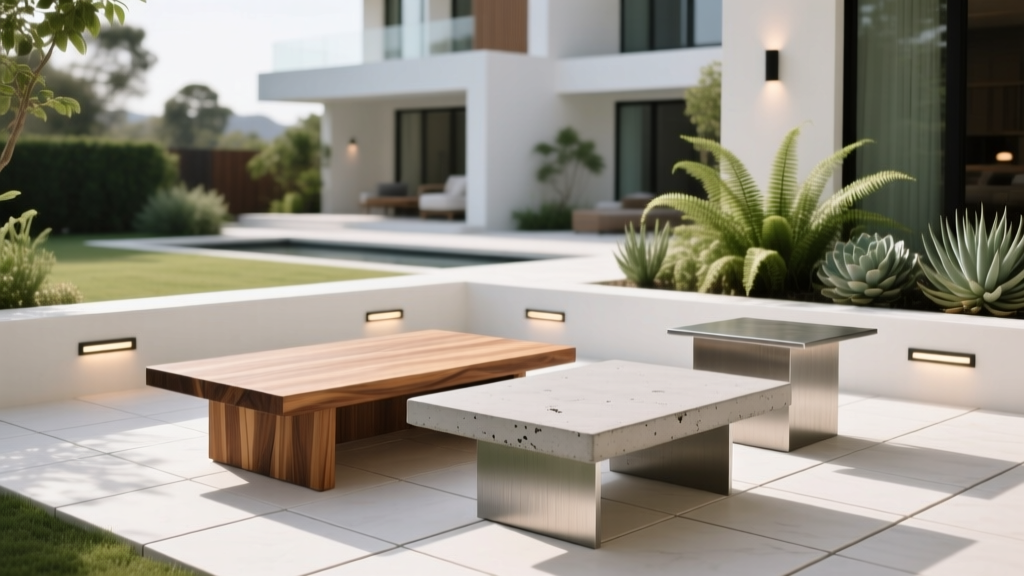
Best Outdoor Coffee Table Materials - The Decor Mag
An outdoor coffee table does more than hold drinks. It anchors your seating zone, sets the style for your patio or deck, and affects how effortlessly you’ll actually use your outdoor living space day to day. Choose the right material, and your table becomes a year-round workhorse for morning coffee, summer entertaining, and cozy fall evenings. Choose the wrong one, and you’ll be chasing rust spots, warped tops, or stains after every storm.
Outdoor conditions are demanding: UV rays fade finishes, rain tests joints and sealants, temperature swings cause expansion and contraction, and wind-driven grit scratches surfaces. Add pool chemicals, sunscreen, sticky popsicles, and the occasional dropped platter, and it’s clear why “pretty” isn’t enough. The best outdoor coffee table materials balance durability, maintenance, comfort, and design—so your patio living feels effortless and elevated.
Below, you’ll find the top outdoor table materials, who they’re best for, what they cost, how they perform in different climates, and how to style them with landscaping and plants for a pulled-together, outdoor-room look.
How to Choose the Right Outdoor Coffee Table Material
Start with your outdoor lifestyle
- Entertain often: Prioritize spacious tops, stain resistance, and easy wipe-down surfaces.
- Kids/pets: Choose rounded edges, shatter-resistant materials, and forgiving finishes.
- Small patios/balconies: Lightweight, movable materials (aluminum, resin, compact concrete).
- Year-round outdoor living: Look for UV stability, moisture resistance, and minimal seasonal upkeep.
Match the material to your climate
- Coastal/salt air: Aluminum, teak, marine-grade stainless hardware, high-quality resin; avoid untreated steel.
- Hot sun/desert: UV-stable resin, powder-coated aluminum, sealed concrete; avoid dark metals that get scorching.
- Humid/rainy: Teak, HDPE lumber, sealed stone/concrete; be cautious with porous ceramics and softwoods.
- Freeze-thaw winters: Aluminum, HDPE, and properly sealed concrete/stone; store or cover porous tops.
Quick budget guide (typical ranges)
- Budget: $80–$250 (resin/wicker-look, basic steel, small acacia tables)
- Mid-range: $250–$700 (powder-coated aluminum, higher-quality HDPE, mixed-material tables)
- Premium: $700–$2,500+ (teak, high-end concrete, natural stone, designer aluminum)
Top Outdoor Coffee Table Materials (Pros, Cons, and Best Uses)
1) Teak: The gold standard for outdoor wood
Teak is prized in outdoor furniture because its natural oils resist moisture, decay, and insects. It’s a favorite for patio living because it feels warm and comfortable, even in cooler seasons, and it pairs beautifully with both modern and traditional landscaping.
- Best for: Homeowners who want long-term durability with a timeless look
- Pros: Naturally weather-resistant; ages gracefully; easy to style; comfortable to touch
- Cons: Higher cost; requires cleaning; will gray over time unless maintained
- Budget range: $500–$2,000+
Maintenance: Clean 2–4 times per year with mild soap and a soft brush. If you want the golden tone, apply a teak sealer 1–2 times per year. Prefer the silvery patina? Skip the sealer and embrace the weathered look.
Design tip: Teak looks especially polished when you repeat warm tones in your landscape—think terra-cotta pots, decomposed granite pathways, and golden ornamental grasses.
2) Powder-Coated Aluminum: Lightweight, rust-resistant, and modern
Powder-coated aluminum is one of the most practical outdoor coffee table materials. It won’t rust, it’s easy to move around a deck, and it holds up well to rain and sun.
- Best for: Windy decks, coastal patios, and modern outdoor lounge setups
- Pros: Rust-resistant; lightweight; minimal maintenance; many color options
- Cons: Can dent; darker colors can heat up in full sun; cheaper coatings can chip
- Budget range: $200–$1,200
Maintenance: Rinse pollen and salt spray monthly in coastal areas. Touch up chips quickly to prevent corrosion at exposed fasteners.
Design tip: For a crisp outdoor-room feel, pair a matte black aluminum table with structured greenery like boxwood (in suitable climates), dwarf yaupon holly, or clipped rosemary hedges in pots.
3) Concrete: Sculptural, durable, and made for statement patios
Concrete coffee tables bring a grounded, architectural look—perfect for contemporary patios, desert landscaping, and fire pit lounges. When properly sealed, concrete handles weather well and feels substantial in breezy yards.
- Best for: Modern landscapes, large patios, and high-wind areas
- Pros: Heavy and stable; design-forward; holds up to sun; pairs well with natural materials
- Cons: Heavy to move; can stain if unsealed; may crack with freeze-thaw cycles if poorly made
- Budget range: $350–$2,500+
Maintenance: Use a penetrating sealer and reapply as recommended (often every 1–3 years). Wipe spills quickly—especially red wine, citrus, and oils.
Climate note: In freezing climates, choose fiber-reinforced concrete rated for outdoor use and keep it off constantly wet surfaces. A breathable cover in winter helps.
Design tip: Soften concrete with lush planting nearby: hydrangeas (cooler climates), rosemary and lavender (dry climates), or cascading sweet potato vine in a planter to drape over the edge of your seating zone.
4) Natural Stone (Granite, Travertine, Slate): Elevated and timeless
Stone tops (often on metal bases) feel luxurious and coordinate beautifully with hardscaping like pavers, stone retaining walls, and outdoor kitchens. Each stone type performs differently outdoors.
- Best for: High-end patio design, outdoor kitchens, and cohesive landscape hardscape plans
- Pros: Beautiful natural variation; heat and UV resistant; long-lasting
- Cons: Heavy; can chip; porous stones can stain; some stones dislike freeze-thaw
- Budget range: $600–$3,000+
Stone picks by performance:
- Granite: Very durable, lower porosity; excellent for sun and spills.
- Slate: Great texture and slip resistance; can delaminate if low quality.
- Travertine/limestone: Softer and more porous; best in mild climates with sealing.
Maintenance: Seal porous stone as recommended and use coasters for acidic drinks. Avoid harsh degreasers that can etch.
5) Wicker/Resin (All-Weather): Casual comfort with smart practicality
Most “wicker” outdoor coffee tables are actually synthetic resin woven over an aluminum frame. This is a strong choice for homeowners who want a relaxed, resort-like patio without constant upkeep.
- Best for: Family patios, pool areas, and covered porches
- Pros: Lightweight; budget-friendly; UV-resistant options available; easy to clean
- Cons: Lower-quality resin can become brittle; woven texture can trap crumbs; glass toppers can be windy
- Budget range: $100–$600
Maintenance: Vacuum debris from the weave and wash with gentle soap. If you’re near a pool, rinse regularly to reduce chemical buildup.
Design tip: Layer texture by adding a weatherproof tray, a low bowl of succulents, and lanterns. Nearby, use tropical-feel plants like dwarf palms (climate permitting) or hardy alternatives like cordyline and canna in warm zones.
6) HDPE Lumber (Polywood-style): The low-maintenance champion
HDPE lumber (often made from recycled plastics) looks like painted wood but behaves like a tough, weatherproof material. It’s a favorite for year-round outdoor living because it doesn’t rot, splinter, or need staining.
- Best for: Four-season climates, busy households, and low-maintenance patio furniture plans
- Pros: Extremely durable; fade-resistant options; no sealing required; great in coastal climates
- Cons: Heavier than it looks; can feel less “natural” than real wood; quality varies
- Budget range: $250–$900
Maintenance: Soap-and-water cleaning is usually enough. For pollen seasons, a quick rinse keeps it looking fresh.
7) Steel & Iron: Classic, sturdy, but needs the right finish
Steel and wrought iron coffee tables can be gorgeous—especially for traditional gardens, Mediterranean courtyards, and vintage-inspired patios. The key is rust protection.
- Best for: Covered patios, dry climates, and classic outdoor design styles
- Pros: Strong; often more affordable than teak or stone; classic silhouettes
- Cons: Can rust if coating fails; heavy; may get hot in direct sun
- Budget range: $120–$800
Maintenance: Choose powder-coated steel, and inspect seams and welds annually. Touch up chips immediately. In rainy climates, use furniture covers during stormy seasons.
8) Ceramic/Porcelain Tops: Colorful and easy to style (with caveats)
Ceramic tile or porcelain slab tops bring pattern and personality to patio design. They’re easy to wipe clean and can look stunning with garden planting schemes.
- Best for: Covered porches, mild climates, and style-forward outdoor rooms
- Pros: Easy cleanup; lots of colors; UV stable; doesn’t rust
- Cons: Can chip; grout lines can stain; ceramic may crack in freeze-thaw conditions
- Budget range: $150–$900
Maintenance: Seal grout (if applicable) and avoid leaving standing water on porous tile. In cold climates, store or cover in winter.
Best Material Picks by Patio Type (Fast Recommendations)
For sunny, uncovered patios
- Top picks: Powder-coated aluminum, sealed concrete, granite
- Plant pairing: Lavender, salvia, ornamental grasses, agave (warm zones)
For covered porches and screened rooms
- Top picks: Teak, ceramic/porcelain tops, wicker/resin
- Plant pairing: Ferns, hostas (shade), climbing jasmine on a trellis nearby (warm zones)
For poolside patios
- Top picks: Aluminum, HDPE lumber, resin wicker with aluminum frame
- Plant pairing: Phormium (New Zealand flax), fountain grass, rosemary (tolerates splash and heat)
For small balconies and compact courtyards
- Top picks: Aluminum, compact concrete (if weight limits allow), resin
- Layout tip: Choose a round table (24–30 inches) to improve circulation and reduce shin bumps.
Styling & Layout Ideas That Make a Patio Feel Designed
Use the “reach zone” rule
Aim for 14–18 inches between the coffee table edge and seating. This keeps drinks within reach without crowding legroom.
Choose a shape that fits your traffic flow
- Rectangular: Best for long sofas and conversation sets.
- Round/Oval: Great for tight patios and family-friendly layouts.
- Square: Works well with sectional seating and symmetrical patio designs.
Build a simple tabletop “landscape”
- One tray (weatherproof resin, teak, or powder-coated metal)
- One low centerpiece (succulents, a shallow bowl, or a lantern cluster)
- One soft element (outdoor-safe candle, textured coaster set, or a small stack of outdoor entertaining plates)
Planting ideas to frame the seating area
Outdoor coffee tables look best when the seating zone is visually “contained” by plants—like a living wall for your patio.
- Two large planters behind the sofa with evergreen structure (dwarf holly, boxwood alternatives, or podocarpus in warm climates)
- One fragrant plant nearby (rosemary, jasmine, lavender, mint in pots to control spread)
- Seasonal color in a smaller pot (spring pansies, summer petunias, fall mums, winter hellebores where viable)
Seasonal & Year-Round Outdoor Living: What to Expect
- Spring: Pollen and rain favor easy-clean materials like aluminum, HDPE, sealed concrete, and granite.
- Summer: UV and heat reward light-colored finishes and materials that won’t scorch to the touch. Add shade with umbrellas or pergolas to protect wood and woven resin.
- Fall: Leaf tannins can stain porous surfaces—use trays and wipe down quickly. Teak and sealed stone shine this season.
- Winter: Freeze-thaw is hardest on porous stone, ceramic, and unsealed concrete. Use breathable covers and avoid plastic tarps that trap moisture.
Common Mistakes to Avoid
- Choosing untreated wood for full exposure: Softwoods and some hardwoods warp or split without regular sealing.
- Assuming all “wicker” is the same: Look for UV-stable resin over an aluminum frame, not steel.
- Ignoring weight and wind: Glass toppers can be risky in gusty areas; very light tables may slide on pavers.
- Skipping protection for porous surfaces: Concrete, travertine, and grout need sealing to resist stains from food and drinks.
- Buying the wrong scale: A tiny table in front of a large sectional feels awkward; aim for a table that’s about 1/2 to 2/3 the sofa length.
- Forgetting heat and touch comfort: Dark metal can become uncomfortably hot in direct sun—especially in desert climates.
FAQ: Outdoor Coffee Table Materials
What is the most weather-resistant outdoor coffee table material?
Powder-coated aluminum and HDPE lumber are among the most weather-resistant, especially for homeowners who want low maintenance. For a heavier, premium option, sealed concrete and granite perform extremely well.
Is teak really worth the price for outdoor furniture?
If you want a natural wood look with excellent outdoor durability, teak is one of the best investments. It lasts for years, feels warm and inviting, and fits beautifully into high-quality patio design. To keep it golden, plan on periodic sealing; otherwise it will weather to gray.
What outdoor coffee table material is best for coastal climates?
Choose aluminum, HDPE, or high-quality resin wicker with an aluminum frame. Salt air accelerates corrosion, so avoid bargain steel and watch for stainless hardware quality (marine-grade is ideal).
Do concrete outdoor coffee tables crack?
They can, especially if they’re poorly made or left to absorb water in a freeze-thaw climate. Look for outdoor-rated, reinforced concrete and keep it sealed. Using a breathable cover in winter also helps.
What’s the easiest outdoor coffee table to maintain?
HDPE lumber and powder-coated aluminum are the easiest: wash with mild soap and water, and you’re done. They’re excellent for year-round outdoor living and busy households.
How do I protect my outdoor coffee table in winter?
Use a breathable furniture cover, elevate the legs if water pools on your patio, and store lightweight pieces in a shed or garage during severe storms. Avoid plastic tarps that trap moisture and encourage mildew.
Next Steps: Pick a Material, Then Design the Whole Outdoor Moment
Start by matching your table material to your climate and how you actually use your patio—then choose a size and shape that supports easy conversation and smooth traffic flow. Round it out with a simple tabletop styling plan, a pair of planters to frame the seating area, and seasonal accessories (lanterns, outdoor throws, and weatherproof trays) that make the space feel inviting all year.
For more patio living ideas, landscaping inspiration, and outdoor furniture guides, explore the latest outdoor design features on thedecormag.com.
More Articles
 How to Design a Rain Garden - The Decor Mag
 How to Create a Moss Garden - The Decor Mag
 Best Outdoor Bench Options for Entryways - The Decor Mag
 Trends for Height: Elevating Outdoor Living with Smart Vertical Design
 How to Create a Bird Friendly Garden - The Decor Mag
 Outdoor Kitchen Ideas: Budget & Space Solutions
 Outdoor Fireplace and Fire Pit Ideas - The Decor Mag
 Deck vs Patio Design Comparison - The Decor Mag
 How to Design a Coastal Garden - The Decor Mag
 Best Outdoor Bar Charcuterie Station - The Decor Mag