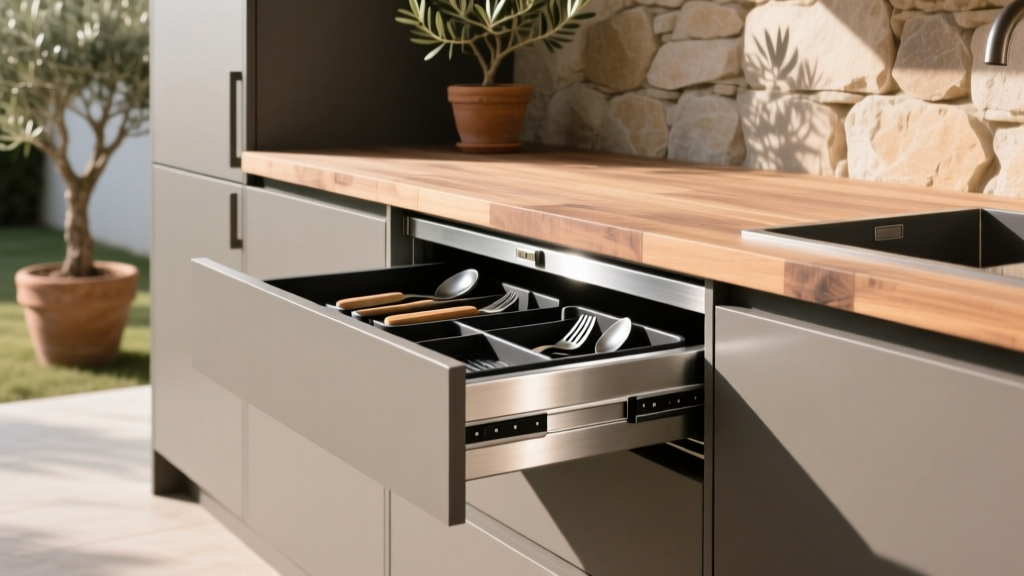
Outdoor Kitchen Drawer Slide Materials - The Decor Mag
An outdoor kitchen is one of the most satisfying upgrades you can make to a patio or backyard—suddenly your deck becomes a dining room, your garden becomes the backdrop, and weeknight grilling feels like a mini getaway. But outdoor living is tougher on materials than any indoor remodel. Heat, humidity, salt air, pollen, rain, and even smoky flare-ups all test the durability of every hinge, handle, and hardware piece.
Drawer slides rarely get the spotlight, yet they’re the hidden workhorses of your outdoor kitchen design. A drawer that sticks, rusts, or wobbles can turn a beautiful built-in grill station into a daily annoyance. Choosing the right outdoor kitchen drawer slide materials makes storage smooth, protects your investment, and keeps your patio living setup feeling high-end through every season.
This guide breaks down the best slide materials for outdoor use, what to pair them with (cabinet construction, countertops, and layout tips), how climate affects performance, and the most common mistakes homeowners make when planning outdoor storage. You’ll also find practical recommendations, plant ideas to soften the look of hardscaping, and budget ranges to help you plan with confidence.
Why Drawer Slide Materials Matter in Outdoor Kitchens
Outdoor kitchens face challenges that indoor cabinetry never sees. Drawer slides sit low in the cabinet box where splashes, hose spray, rain-driven moisture, and grit collect. Even in covered patios, humidity and temperature swings can cause corrosion and gunk buildup.
- Corrosion resistance: The right metal and finish prevent rust and pitting.
- Load performance: Outdoor drawers often hold heavier items (pots, cast iron, propane accessories, grill tools).
- Cleanability: Grease, dust, and salt need to wipe away without damaging finishes.
- Year-round comfort: Smooth, quiet drawers are part of a luxury outdoor living experience—especially when you’re entertaining.
Quick Guide: Common Outdoor Kitchen Drawer Slide Materials
304 Stainless Steel (Best All-Around for Most Climates)
For most homeowners, 304 stainless steel is the sweet spot of durability, availability, and cost. It holds up well in humid climates and rainy seasons, and it’s widely used for outdoor-rated hardware.
- Best for: Covered patios, most backyard kitchens, four-season outdoor living.
- Pros: Strong corrosion resistance, reliable performance, good value.
- Cons: In coastal/salt-air locations it may show surface corrosion over time if not cleaned regularly.
Practical tip: Look for slides labeled “304 stainless” rather than “stainless finish” (which can simply be plated steel).
316 Stainless Steel (Best for Coastal and Salt-Air Environments)
If you’re near the ocean, bay, or a saltwater pool, step up to 316 stainless steel. It includes molybdenum, which improves resistance to chloride corrosion—one of the biggest culprits in coastal patio living.
- Best for: Coastal yards, beachfront homes, homes near saltwater, high-humidity zones with frequent storms.
- Pros: Superior salt and chemical resistance, excellent longevity.
- Cons: Higher cost and fewer product options.
Design approach: If your outdoor kitchen is a “forever” project, 316 stainless slides are a smart insurance policy—especially for wide pot drawers and trash pull-outs that get constant use.
Zinc-Plated Steel (Budget-Friendly, Best for Fully Covered Outdoor Kitchens)
Zinc-plated steel slides can work if your outdoor kitchen is fully protected from weather—think a roofed outdoor room with minimal wind-driven rain. They’re common indoors, but outdoors they require a careful setup.
- Best for: Tight budgets, screened porches, covered lanais, outdoor kitchens with doors that stay closed.
- Pros: Affordable, widely available, smooth travel when new.
- Cons: Can rust if moisture sits on the plating; not ideal for exposed patios.
Maintenance reality: In humid climates, zinc-plated slides often become the first failure point—especially near sinks and ice makers.
Powder-Coated or Epoxy-Coated Slides (Good Protection, Watch the Quality)
Some slides use a powder-coated or epoxy-coated finish over metal to improve corrosion resistance. Quality varies widely: a great coating can last years, while a thin coating can chip and trap rust underneath.
- Best for: Moderate climates, semi-covered patios, homeowners prioritizing a darker hardware look.
- Pros: Better protection than bare steel; can visually blend with dark cabinet interiors.
- Cons: Chips and scratches can become rust spots; avoid abrasive cleaning.
Shopping tip: Prioritize reputable outdoor kitchen brands and read warranty language—coatings matter most at edges and fastener holes.
Polymer/Plastic Components (Helpful as a Feature, Not a Whole System)
Many quality outdoor slides use polymer bearings or spacers, which can help reduce friction and resist corrosion. Fully plastic slides exist but are usually for lighter-duty storage solutions.
- Best for: Auxiliary storage, condiment drawers, lightweight patio cabinetry.
- Pros: Corrosion-resistant components, often quieter.
- Cons: Lower load ratings; heat can affect some plastics; not ideal near high-heat zones.
Choosing the Right Slide Type for Outdoor Living
Side-Mount Ball-Bearing Slides
A common choice for outdoor kitchen storage. Choose stainless steel construction and sealed bearings when possible for grit resistance.
- Great for: Pots and pans drawers, tool drawers, wide storage.
- Look for: Full-extension, stainless bearing races, and a corrosion-rated finish.
Undermount Slides (Sleeker Look, Higher Requirements)
Undermount slides hide beneath the drawer box for a clean, premium look—excellent for high-end patio kitchens. They’re more sensitive to precise drawer construction and can be harder to source in outdoor-grade stainless.
- Great for: Luxury outdoor kitchens, minimalist designs, seamless cabinetry lines.
- Watch for: Exact drawer specs, outdoor-rated model availability, serviceability.
Soft-Close and Self-Close (Nice Upgrade, Consider Heat and Grime)
Soft-close is a comfort upgrade that feels “indoor luxury” outdoors. Choose models designed for temperature swings and keep them clean—grease and dust can reduce performance.
- Best for: Entertainment-focused outdoor living spaces, frequent hosting, family patios.
- Tip: Use soft-close on prep drawers and serving storage, and standard slides near heavy grease zones to reduce maintenance headaches.
Climate-Based Recommendations (What Works Where)
Coastal and Salt-Air Patios
- Best slide material: 316 stainless steel
- Second-best: 304 stainless with consistent cleaning and a well-covered layout
- Avoid: Zinc-plated steel and low-quality coated slides
Design tip: Add a deeper counter overhang and side panels to block wind-driven salt mist, especially on ocean-facing decks.
Humid, Rainy Regions (Gulf Coast, Southeast, Pacific Northwest)
- Best slide material: 304 stainless steel (or 316 if near the coast)
- Layout idea: Keep sink and ice storage in a dedicated “wet zone” with easy-clean access panels.
Seasonal maintenance: Do a quick slide wipe-down at the start of spring and again before winter rains set in.
Hot, Dry, High-Sun Climates (Southwest, Desert)
- Best slide material: 304 stainless steel
- Considerations: Lubricants can dry out faster; dust and grit become the main enemy.
Patio living comfort tip: Plan drawer banks on the shaded side of your outdoor kitchen design (often the north or east side) to reduce heat soak and keep metal from getting scorching hot.
Freeze/Thaw and Four-Season Backyards
- Best slide material: 304 stainless steel with robust load ratings
- Key factor: Water management—keep meltwater from pooling in cabinet bases.
Winter strategy: Choose full-overlay doors and add a toe-kick detail that keeps snow and slush away from slide hardware.
How Drawer Slides Fit Into the Bigger Outdoor Kitchen Design
Pair Slides with the Right Cabinet Materials
Even the best outdoor kitchen drawer slide materials can’t compensate for a cabinet box that swells or racks. For durable patio storage, pair high-grade slides with weather-smart cabinetry:
- Marine-grade polymer (HDPE) cabinets: Excellent for wet climates, poolside outdoor kitchens, and low maintenance.
- Stainless steel cabinet frames: Clean, modern look; best when properly ventilated and kept clean from salt and grease.
- Powder-coated aluminum: Lightweight, corrosion-resistant, great for contemporary outdoor living spaces.
Recommendation: If your goal is a “hose-it-down” backyard kitchen, choose HDPE cabinetry + 304/316 stainless slides and skip budget steel hardware.
Countertop and Layout Choices That Protect Hardware
- Countertop overhang: Aim for 1.5–2 inches to reduce water dripping directly into drawer faces.
- Dedicated wet zone: Sink, trash, and cleaning supplies grouped together make maintenance faster.
- Raised toe-kick or base: Prevents standing water after storms or patio wash-downs.
Furniture and Styling Recommendations for a Cohesive Patio Living Space
Your drawer hardware works behind the scenes; your furniture creates the mood. Tie the outdoor kitchen into the rest of your landscape design:
- Dining set: Powder-coated aluminum frames with quick-dry cushions (best balance of style and weather resistance).
- Lounge zone: Modular outdoor sectional in performance fabric; place 6–10 feet from the grill zone to avoid smoke and grease exposure.
- Shade: Pergola or adjustable louvered roof for year-round outdoor living; it dramatically extends the lifespan of hardware and finishes.
Plants That Make Outdoor Kitchens Feel Lush (Without Creating a Maintenance Mess)
Landscaping around a patio kitchen should soften hard lines while keeping airflow and cleanliness in mind. Avoid placing pollen-heavy or sticky-sap plants directly over cabinetry.
Best Plant Choices Near an Outdoor Kitchen
- Rosemary: Drought-tolerant, fragrant, useful for cooking; great along the edge of a paver patio.
- Lavender: Mediterranean look, pollinator-friendly, low water once established.
- Dwarf fountain grass (sterile varieties where recommended): Movement and texture; keep a bit back from drawers to avoid debris.
- Boxwood alternatives (for warmer climates): Podocarpus or dwarf yaupon holly for tidy structure near outdoor living zones.
- Herb planters: Raised containers with basil, thyme, oregano; moveable for seasonal sun changes.
Placement tip: Keep plants at least 24–36 inches from cabinet fronts to reduce soil splash and make it easy to fully extend drawers.
Budget Ranges: What to Expect
Outdoor drawer slide pricing varies by material, length, load rating, and features like soft-close. Here are realistic planning ranges for a typical outdoor kitchen project.
- Budget slides (zinc-plated steel, basic features): $10–$30 per pair (best only for fully covered spaces)
- Mid-range outdoor-ready (304 stainless, standard/full extension): $35–$90 per pair
- Premium (316 stainless and/or heavy-duty + soft-close): $90–$200+ per pair
Project planning example: A drawer-heavy outdoor kitchen with 8–12 drawers may allocate $300–$1,800 just for slide hardware, depending on climate and feature level. It’s a small slice of the total outdoor kitchen cost, but it has an outsized impact on daily enjoyment.
Maintenance Tips for Smooth, Quiet Drawers Year-Round
- Seasonal wipe-down: Spring and fall, extend drawers fully and wipe slide rails with a damp microfiber cloth.
- Skip greasy lubricants near cooking zones: They attract dust and grit. If lubrication is needed, use a manufacturer-approved dry lubricant.
- Check fasteners: Temperature swings can loosen screws over time; tighten annually.
- Control water: Fix sprinkler overspray and improve drainage around the outdoor kitchen island.
- Use drawer liners: They reduce rattling and keep spills from pooling around hardware.
Common Mistakes to Avoid
- Choosing “stainless finish” instead of true stainless steel: Plated steel can rust quickly outdoors.
- Ignoring your microclimate: A covered patio 2 miles from the ocean still behaves like a coastal environment.
- Undersizing load ratings: Grill tools and cookware are heavier than people expect; wide drawers need heavy-duty slides.
- Poor water management: Standing water in cabinet bases leads to corrosion and warping, even with good slides.
- Placing drawers right next to high heat: Install heat shields and keep drawer banks a safe distance from side burners and kamado grills.
- Skipping ventilation: Enclosed cabinets trap humidity; small vents can extend the life of both slides and cabinet interiors.
FAQ: Outdoor Kitchen Drawer Slide Materials
What is the best material for outdoor kitchen drawer slides?
304 stainless steel is the best all-around choice for most outdoor kitchens. If you live in a coastal or salt-air environment, 316 stainless steel is the top performer.
Will stainless steel drawer slides rust outside?
Quality stainless slides resist rust, but they can still develop surface discoloration or corrosion if exposed to salt spray, harsh chemicals, or constant moisture. Regular cleaning and good patio drainage make a big difference.
Are soft-close drawer slides a good idea for outdoor kitchens?
Yes—especially for covered patios and entertainment-focused outdoor living spaces. Choose outdoor-rated slides and keep the mechanisms clean, since grease and dust can reduce soft-close performance over time.
How do I choose the right load rating?
For most outdoor kitchen drawers, aim for 75–100 lbs as a practical baseline. For wide pot drawers, trash pull-outs, and beverage storage, consider 100–150+ lbs heavy-duty slides.
What’s the biggest reason outdoor drawers start sticking?
The most common causes are grit and grease buildup on the slide rails and cabinet movement from moisture or poor structural support. Stainless slides help, but cabinet construction and water control are just as critical.
How can I make my outdoor kitchen hardware last longer?
Choose 304/316 stainless slides, add overhead coverage (pergola or patio roof), prevent sprinkler overspray, and do a quick seasonal cleaning. These small steps add years to outdoor kitchen performance.
Next Steps: Upgrade Your Outdoor Kitchen Storage with Confidence
Start by identifying your climate exposure (coastal, humid, dry, or freeze/thaw), then match it to the right slide material—304 stainless for most backyards, 316 stainless for salt air, and only consider budget plated options for truly protected outdoor rooms. From there, plan a layout that protects hardware with smart overhangs, a defined wet zone, and clean drainage around your patio.
If you’re building or refreshing your outdoor kitchen design this season, make a simple checklist:
- Choose 304 or 316 stainless drawer slides (verify the spec, not just the look)
- Select cabinet materials that won’t swell or rack (HDPE, aluminum, stainless)
- Add shade coverage for better year-round outdoor living
- Landscape with low-mess herbs and foundation plants to soften the hardscape
For more outdoor living inspiration—patio layouts, landscaping ideas, outdoor kitchen upgrades, and seasonal backyard design—explore the latest guides on thedecormag.com.
More Articles
 Best Outdoor Bar Chip and Dip Station - The Decor Mag
 Outdoor Arbor and Gate Design Ideas - The Decor Mag
 Best Outdoor Dining Table Materials - The Decor Mag
 Rooms vs Headboard: Understanding the Critical Distinction in Outdoor Living Design
 Outdoor Pergola Fairy Light Draping Guide - The Decor Mag
 Kitchen Design Tools Checklist: Essential Instruments for Precision, Efficiency, and Professional Results
 Best Outdoor Swing Bed Ideas - The Decor Mag
 Best Outdoor Rug Options for Durability - The Decor Mag
 Best Outdoor Bar Orange Twist Station - The Decor Mag
 Science vs Summer: How Thermal Physics, Material Science, and Bioclimatic Design Shape Outdoor Living