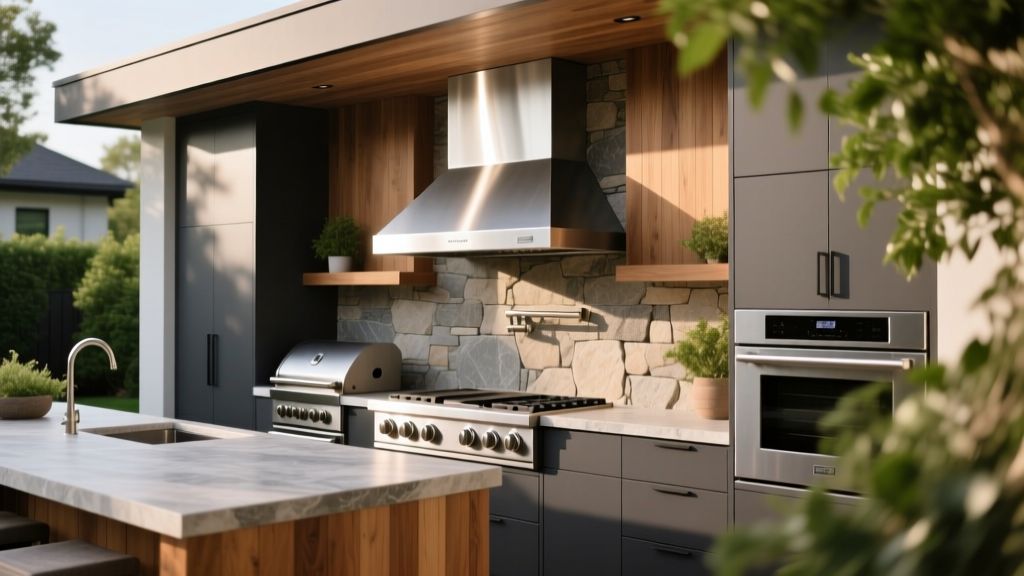
Outdoor Kitchen Range Hood Exterior - The Decor Mag
An outdoor kitchen is often the centerpiece of patio living—where weeknight grilling turns into weekend gatherings, and your backyard starts to feel like an extension of your home. Yet one detail quietly determines whether that space feels breezy and inviting or smoky and uncomfortable: the exterior range hood. A well-chosen outdoor kitchen range hood doesn’t just remove smoke and grease; it protects finishes, improves air quality, and elevates the entire look of your outdoor cooking zone.
Because outdoor environments are tougher on appliances and building materials—sun, rain, salty air, temperature swings—your range hood exterior needs to be designed like a hardworking piece of architecture. The right hood style and surround can anchor your outdoor kitchen design, complement your patio layout, and make year-round outdoor living feel effortless.
This guide walks through practical design choices, material recommendations, layouts, climate considerations, and common mistakes so you can create an outdoor kitchen that looks polished, performs well, and stays easier to maintain season after season.
Why the Exterior of an Outdoor Range Hood Matters
Outdoor cooking creates more than aroma. It produces heat, smoke, grease particles, and sometimes sparks—especially with high-BTU grills, charcoal setups, pizza ovens, and flat-top griddles. Without effective ventilation, those byproducts end up trapped under a covered patio or drifting into seating areas, staining ceilings and making guests uncomfortable.
- Comfort: Better airflow means less smoke lingering in the patio living space.
- Cleanliness: Less grease on stone, stucco, ceiling panels, and outdoor furniture.
- Durability: Proper exterior cladding and weather-rated construction prevent rust, warping, and discoloration.
- Design impact: A hood surround can be a focal point, tying together stone, tile, and cabinetry.
Choosing the Right Outdoor Range Hood Type
Wall-Mounted Hoods for Outdoor Kitchen Islands Against a Wall
If your grill is built into a counter run along an exterior wall, a wall-mounted hood is typically the simplest and most cost-effective solution. It also provides a great opportunity for a dramatic material feature wall—stacked stone, tile, or a stucco finish that matches your home.
Best for: Covered patios, outdoor kitchens tucked under a roofline, and courtyard layouts.
Island Hoods for Freestanding Outdoor Kitchen Layouts
An island hood hangs from a ceiling or overhead structure and captures smoke from a grill placed in an island. This looks sleek, but it requires a solid overhead framing plan and careful attention to wind direction.
Best for: Large patios, outdoor entertaining zones with a dedicated cooking island, and modern outdoor kitchen design.
Custom Hood Enclosures (The “Architectural” Approach)
A custom enclosure surrounds a stainless steel hood liner (or insert) with a built-built chimney and finish materials such as stucco, stone veneer, or tile. This approach can look fully integrated—like a true outdoor fireplace feature, but for cooking.
Best for: High-end backyard renovations, Mediterranean and farmhouse styles, and homeowners wanting a statement focal point.
Outdoor Range Hood Exterior Materials That Hold Up
304 vs. 316 Stainless Steel (What to Choose)
- 304 stainless steel: A solid standard for most climates. Resists rust well when cleaned regularly.
- 316 stainless steel: Best for coastal and humid climates (salt air). Higher corrosion resistance and longer-term durability.
Pro tip: If you’re within a few miles of the ocean or have salty air, prioritize 316 stainless steel for the hood and exterior fasteners.
Stucco and Smooth Cement Finishes
Stucco is a classic choice for outdoor kitchen range hood surrounds, especially if your home exterior is stucco. It creates a seamless, built-in look and can be tinted to match trim or patio columns.
- Best climates: Dry to moderate climates.
- Maintenance: Inspect for hairline cracks annually; seal and patch early to prevent moisture intrusion.
Stone Veneer (Manufactured or Natural)
Stone adds instant texture and pairs beautifully with outdoor countertops like granite, concrete, or porcelain slab. It also disguises minor soot or discoloration better than smooth surfaces.
- Design styles: Rustic, mountain, transitional, and traditional outdoor living spaces.
- Tip: Choose a stone profile that’s easy to wipe down near the cookline (avoid extremely deep ledges right at hood height where grease can settle).
Porcelain Tile and Large-Format Slabs
Porcelain is a standout for modern patio design. It’s stain-resistant, UV-stable, and available in realistic concrete, marble, limestone, and metal looks.
- Best for: Contemporary outdoor kitchens and low-maintenance landscaping environments.
- Tip: Use exterior-rated grout (or epoxy grout) and plan clean edges with metal trim profiles.
Powder-Coated Metal Accents
Black or bronze powder-coated trim can frame the hood surround, coordinate with pergola brackets, or match outdoor lighting. Use it strategically—too much dark metal near heavy grease can show smudges.
Designing the Hood Surround as a Backyard Focal Point
Match the Hood to Your Outdoor Kitchen Style
- Modern: Flat-front stainless hood + porcelain slab surround + minimal grout lines.
- Mediterranean: Stucco surround + arched niche details + warm-toned tile behind the grill.
- Farmhouse: Simple, boxy chimney surround + matte black accents + natural stone counters.
- Coastal: 316 stainless + light porcelain tile + pale stone + airy pergola.
Recommended Layout Clearances and Practical Proportions
Every manufacturer has requirements, but these general guidelines help early planning:
- Hood width: Aim for a hood that’s at least as wide as the grill, preferably 6 inches wider (3 inches on each side) for better capture.
- Mounting height: Many outdoor setups work well around 30–36 inches above the cooking surface, depending on grill output and hood specs.
- Depth: Deeper hoods usually capture smoke better, especially in breezy yards.
Wind-aware planning: If your patio regularly gets cross-breezes, consider side panels or a deeper hood design. Position seating areas upwind of the grill when possible.
Lighting and Finishing Touches That Feel High-End
- Integrated task lighting: Hood lights (warm-white LEDs) make night grilling easier and safer.
- Accent sconces: Place outdoor-rated sconces on either side of the hood surround for a balanced, architectural look.
- Heat-tolerant backsplash: Use stainless panels, porcelain tile, or natural stone behind the grill for easy wipe-down.
- Ceiling coordination: If under a covered patio, match hood trim to ceiling fans, recessed lighting, and beams.
Furniture, Planting, and Landscaping Ideas Around the Outdoor Kitchen
Furniture That Works Near a Grill Zone
Think about durability, cleanability, and traffic flow. Keep the immediate cooking area open, and create a comfortable “hangout” zone nearby.
- Bar seating: Powder-coated aluminum stools with quick-dry cushions (keep them 3–5 feet from the grill edge).
- Dining: Teak or aluminum tables hold up well; avoid placing fabric-heavy seating directly under the hood exhaust path.
- Outdoor rugs: Use polypropylene rugs away from grease zones; skip rugs directly in front of the grill.
Layout tip: Plan a clear cooking corridor—about 42–48 inches of walkway behind the cook—so guests aren’t crowding the grill.
Plants That Complement Outdoor Kitchens (Without Making a Mess)
Plants soften hardscape and make patios feel resort-like, but you want choices that won’t drop sticky fruit, shed heavily, or attract swarms of insects near food.
- Herb pots (functional and beautiful): Rosemary, thyme, oregano, chives, sage (place slightly away from direct grill heat).
- Low-litter foundation plants: Dwarf boxwood (cooler climates), podocarpus (warm climates), lomandra, agave, dwarf yaupon holly.
- Ornamental grasses: Muhly grass (away from open flame), blue fescue (cooler regions), carex varieties.
- Privacy screens: Clumping bamboo (non-invasive varieties), evergreen viburnum, or tall planters with trellises.
Plant placement tip: Avoid planting directly where grease-laden air exits; it can coat leaves over time. Use plants to frame the kitchen perimeter and define patio zones.
Climate and Year-Round Outdoor Living Considerations
Coastal and High-Humidity Areas
- Choose 316 stainless and marine-grade fasteners.
- Rinse exterior stainless surfaces periodically with fresh water (especially after storms).
- Consider a hood cover when not in use.
Hot, Sunny Climates
- Prioritize UV-stable finishes (porcelain, stone, high-quality powder coating).
- Add shade via pergolas, insulated patio covers, or slatted structures to reduce heat buildup.
- Pick lighter colors for stucco and surrounds to reduce heat absorption.
Cold and Freeze-Thaw Regions
- Use freeze-thaw rated stone and mortar systems.
- Seal grout and natural stone to reduce staining and cracking.
- Winterize: clean filters, cover the hood, and shut down gas lines per local guidance.
Maintenance Tips: Keep the Hood Exterior Looking New
- Clean grease filters regularly: Many are dishwasher-safe; check manufacturer guidance.
- Wipe stainless properly: Use a stainless cleaner and wipe with the grain to avoid scratching.
- Inspect caulking and seams: Especially where the surround meets walls or ceilings.
- Check the vent path: Ensure it’s clear and properly sealed to keep moisture out.
- Protect during off-season: Use fitted covers and store cushions away from cooking areas.
Budget Ranges: What Homeowners Can Expect
- Budget-friendly ($400–$1,200): Basic stainless outdoor-rated hood (or liner) with straightforward installation; limited customization.
- Mid-range ($1,200–$3,500): Higher CFM options, better lighting, quieter blowers, and upgraded exterior materials; may include partial surround work.
- High-end ($3,500–$10,000+): Premium 316 stainless, custom hood enclosures (stucco/stone/porcelain slab), integrated architectural design, and complex venting.
Where to spend: If you cook often or use high-heat appliances, prioritize performance (capture area, weather rating, and corrosion resistance) before decorative finishes.
Common Mistakes to Avoid
- Undersizing the hood: Too narrow or too shallow leads to smoke spilling into your patio seating area.
- Ignoring wind patterns: Breezes can overpower weak capture designs—plan placement and side protection.
- Using indoor-rated products outside: Indoor hoods and blowers can fail quickly in moisture and temperature swings.
- Poor material pairing: Porous stone right at the cookline without sealing can stain; low-grade metal can rust.
- Forgetting access panels: Make sure you can service the blower, ducting, and electrical connections.
- Placing soft furnishings too close: Cushions, curtains, and rugs near the grill become grease magnets.
FAQ: Outdoor Kitchen Range Hood Exterior
How powerful should an outdoor range hood be?
It depends on grill BTUs, hood size, and how enclosed the patio is. Outdoor cooking typically benefits from higher airflow than indoor kitchens, especially under covered patios. Aim for a hood designed specifically for outdoor use and sized wider than the grill for better capture.
Do I need a hood if my grill is in the open air?
If the grill is fully open to the sky with no roof or pergola overhead, a hood may be optional. If your outdoor kitchen sits under a covered patio, pavilion, or pergola with a solid roof, a hood becomes much more valuable for smoke control and keeping surfaces clean.
What’s the best material for a hood exterior near the ocean?
316 stainless steel is the top choice for coastal climates. Pair it with non-corrosive fasteners and commit to occasional rinsing and gentle cleaning to keep it looking sharp.
Can I build a stucco or stone surround around a stainless hood?
Yes—many outdoor kitchens use a stainless hood liner inside a custom stucco, stone veneer, or tile enclosure. Follow manufacturer clearance requirements and use heat-rated, exterior-approved construction methods.
How do I keep my hood exterior from looking greasy?
Use a hood with effective capture, clean filters routinely, and wipe exterior surfaces after heavier cooking sessions. Choosing textured stone or porcelain tile around (not directly on) the hood area can also hide minor smudges better than glossy finishes.
What plants should I avoid near an outdoor grill and hood?
Avoid highly resinous, very dry plants right beside heat sources, and skip messy fruiting varieties or heavy shedders near prep counters. Keep ornamental grasses and shrubs slightly back from direct heat and airflow paths.
Your Next Steps for a Better-Performing, Better-Looking Outdoor Kitchen
Start by mapping your outdoor kitchen layout: where the grill sits, how the wind moves through your yard, and how guests circulate between cooking, dining, and lounging. Then select an outdoor-rated range hood sized for your grill, choose weather-ready exterior materials (stainless, stucco, stone, or porcelain), and finish the space with lighting, durable furniture, and smart landscaping that frames the patio without creating extra cleanup.
- Measure your grill and plan a hood that’s wider for better smoke capture.
- Match materials to your climate: 316 stainless for coastal, freeze-thaw rated finishes for cold regions.
- Design the hood surround as a focal point that coordinates with countertops, patio pavers, and pergola details.
- Add practical touches: task lighting, service access, and easy-to-clean backsplash materials.
For more outdoor kitchen design ideas, patio living inspiration, and landscaping tips for every season, explore the latest guides and trends on thedecormag.com.
More Articles
 Outdoor Kitchen Countertop Materials - The Decor Mag
 How to Design a Japanese-Inspired Garden - The Decor Mag
 The Outdoor Living Room Tools Checklist: Essential Gear for Designing, Building, and Maintaining Your Backyard Living Space
 Performance Alternatives to Styling: Why Functionality Should Anchor Outdoor Living Design
 Outdoor Kitchen Flat Top Grill Setup - The Decor Mag
 How to Design a Native Plant Garden - The Decor Mag
 Best Outdoor Bar Cutting Board Station - The Decor Mag
 Deck vs Patio Design Comparison - The Decor Mag
 Best Outdoor Serving Cart Options - The Decor Mag
 Outdoor Fireplace and Fire Pit Ideas - The Decor Mag