Best Outdoor Bar Olive Oil Display - The Decor Mag
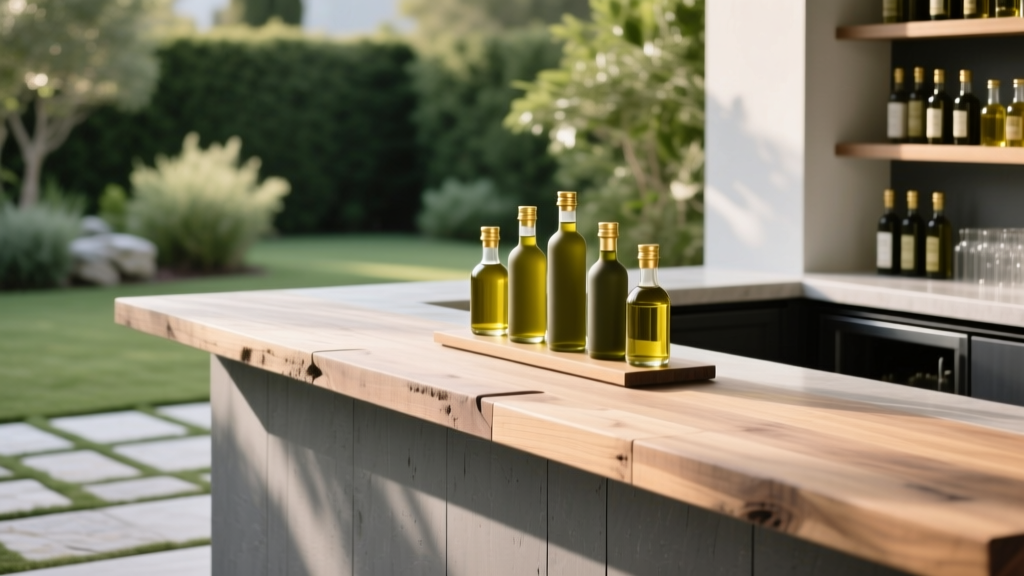
An outdoor bar is one of the fastest ways to make a patio or backyard feel like a destination. But the details—the pieces you see and touch—are what turn a simple serving station into an experience. An olive oil display is one of those details that instantly signals hospitality, warmth, and a thoughtful approach to outdoor living. It’s functional (finishing grilled vegetables, dipping bread, dressing salads) and decorative (glow-through glass, sculptural bottles, natural wood and stone textures).
When designed well, an outdoor bar olive oil display becomes a focal point that complements your landscaping and patio design. Whether your style is modern, coastal, rustic, or full Mediterranean courtyard, the right bottles, tray, lighting, and greenery can make the whole space feel curated—without feeling precious or hard to maintain.
Below you’ll find expert-level design approaches, material recommendations, plant pairings, and climate-smart maintenance tips so your olive oil station looks beautiful and works beautifully year-round.
Why an Olive Oil Display Belongs at Your Outdoor Bar
Olive oil is a natural fit for outdoor entertaining: it finishes grilled foods, boosts flavor instantly, and supports a casual “grazing” style of hosting. Design-wise, it adds a warm, sunlit aesthetic that pairs perfectly with outdoor kitchens, pergolas, and garden dining.
- Function: Quick access for marinades, finishing oils, and bread dipping during patio meals.
- Style: Beautiful bottles and a coordinated tray read like a boutique bar setup.
- Seasonal versatility: Summer salads, fall roasted vegetables, winter citrus, spring herbs—olive oil works all year.
Design Principles for the Best Outdoor Bar Olive Oil Display
1) Keep It Close to Prep and Serving Zones
The best outdoor bar and outdoor kitchen layouts follow “reach” logic: the items you use most should live closest to where you prep and plate. If your olive oil is mainly for cooking, position it near the grill side shelf or outdoor kitchen counter. If it’s mainly for guests (dipping and finishing), position it at the serving end of the bar.
- Ideal placement: within 1–2 steps of cutting board, salt/pepper, and serving platters.
- Tip: If you entertain often, create a “finishing zone” with olive oil, flaky salt, pepper mill, lemon wedges, and herb scissors.
2) Control Light, Heat, and Air (Your Oil’s Biggest Enemies)
Outdoor living means sun exposure, temperature swings, and breezes. Olive oil degrades fastest with UV light, heat, and oxygen. Your display should look inviting while protecting quality.
- Choose: dark glass, ceramic, or stainless steel cruets.
- Avoid: clear bottles in direct sun on an uncovered patio bar.
- Upgrade: use pour spouts with caps, or cruets with tight stoppers.
3) Build a “Display Cluster” (Not a Random Lineup)
The most polished patio design uses small, intentional clusters. Think: one hero bottle, one backup bottle, and a supporting element (tray, herbs, or a small lantern). Keep it visually balanced and easy to wipe down.
The winning formula:
- One statement olive oil cruet (ceramic or dark glass)
- One small bottle of finishing oil (optional: chili, lemon, garlic)
- A tray or board to anchor everything
- One living element (potted herb or small arrangement)
Top Outdoor Bar Olive Oil Display Styles (With Materials That Last)
Mediterranean Courtyard: Terracotta + Herbs + Ceramic Cruets
This style feels sun-washed and timeless—perfect for pergolas, stone patios, and gardens filled with lavender and rosemary.
- Best materials: terracotta tray, glazed ceramic cruet, tumbled travertine or limestone coaster
- Plant pairing: rosemary, thyme, oregano, lavender (drought-tolerant and aromatic)
- Lighting: warm LED candle lantern (battery-powered for safety outdoors)
Budget range: $40–$120 for a complete look (cruet + tray + herb pot). If you add premium ceramic and stone accessories, expect $120–$250.
Modern Outdoor Bar: Stainless + Teak + Minimal Dark Glass
For contemporary patios and outdoor kitchens with sleek lines, keep the olive oil display crisp and restrained.
- Best materials: matte black or stainless cruet, teak tray, concrete or porcelain tile coaster
- Plant pairing: snake plant (in shade), dwarf olive tree (sun), or sculptural succulents in modern planters
- Color palette: black, warm wood, soft gray, deep green
Budget range: $60–$180. Teak trays and designer cruets can push it to $200–$350.
Coastal Patio: Sea Glass Tones + White Ceramics + Citrus
Coastal outdoor living looks best when it feels breezy and bright. Keep the oil protected (tinted glass or ceramic), but bring in light colors through the tray and accessories.
- Best materials: white melamine tray (easy-clean), glazed ceramic cruet, acrylic salt cellar (shatter-resistant)
- Plant pairing: potted bay laurel, thyme, or a small citrus tree (lemon/calamondin in warmer climates)
- Extra touch: a small dish for flaky salt and lemon wedges
Budget range: $35–$120 (coastal can be very affordable if you choose durable melamine and simple ceramics).
Rustic Garden Bar: Reclaimed Wood + Stone + Antique-Inspired Bottles
Perfect for backyard entertaining near raised beds, gravel paths, and informal landscaping. The goal is charm that still performs outdoors.
- Best materials: sealed reclaimed wood board, stone slab (slate or granite), amber glass bottle
- Plant pairing: basil (summer), parsley (cooler seasons), chives, or nasturtiums (edible flowers)
- Texture tip: mix matte (wood/stone) with a little shine (glass or brushed metal)
Budget range: $25–$90 if you DIY with a sealed board and a simple bottle; $90–$200 if you add premium stone and custom accessories.
Best Containers, Trays, and Accessories (Outdoor-Ready Picks)
Choose the Right Olive Oil Bottle or Cruet
- Ceramic cruet: excellent UV protection, classic look for patio dining; choose a narrow spout and snug stopper.
- Dark glass bottle (amber/green): protects from light; select a weighted base for windy patios.
- Stainless steel cruet: best for maximum light protection; ideal for modern outdoor kitchens.
Pro tip: Use smaller bottles (8–16 oz) for the outdoor bar and keep the larger bottle indoors. Smaller bottles stay fresher and are easier to store when temperatures spike.
Pick a Tray That Can Handle Outdoor Life
- Teak: naturally weather-resistant; oil and wipe clean. Great for high-end patio design.
- Acacia (sealed): budget-friendly; reseal seasonally if it lives outdoors full-time.
- Powder-coated metal: tough and modern; choose rust-resistant finishes.
- Melamine: lightweight, affordable, and easy to clean—great for families and poolside patio living.
- Stone (travertine, slate, granite): heavy (wind-proof) and elegant; use felt pads to protect countertops.
Helpful Add-Ons That Make the Station Feel Complete
- Flaky salt in a lidded cellar (keeps moisture out)
- Pepper mill (choose stainless or sealed wood to resist humidity)
- Small ramekin for dipping or herbs
- Mini cutting board for lemons or bread
- Herb scissors or small knife (store indoors between uses)
Layout Ideas for Outdoor Bars, Patios, and Outdoor Kitchens
Option A: The “Finishing Station” (Best for Entertaining)
Set this at the end of the bar where guests naturally gather.
- Olive oil cruet + finishing oil
- Salt + pepper
- Herb pot (rosemary or basil depending on season)
- Small plate stack or cocktail napkins
Option B: The “Chef’s Corner” (Best for Outdoor Cooking)
Keep it near the grill or pizza oven, away from guest traffic.
- Heat-safe tray (metal/stone)
- Olive oil in stainless or ceramic
- Silicone basting brush (store in a drawer when not in use)
- Garlic, chili flakes, and a lemon reamer (optional)
Option C: The “Seasonal Showcase” (Best for Year-Round Outdoor Living)
Rotate one element to match the season while keeping the base setup consistent.
- Spring: thyme + edible flowers
- Summer: basil + cherry tomatoes in a small bowl
- Fall: rosemary + grilled squash menu cards
- Winter (mild climates): citrus + bay laurel; in cold climates, use hardy greenery stems
Climate and Maintenance Considerations
Hot, Sunny Climates
- Keep olive oil in stainless or ceramic and place the station under shade (pergola, umbrella, or covered patio).
- Bring the oil indoors after gatherings; avoid storing it on an outdoor bar during heat waves.
- Choose heat-tolerant plants: rosemary, thyme, lavender, sage.
Humid or Coastal Areas
- Use powder-coated metal, teak, or melamine to reduce warping and corrosion.
- Opt for lidded salt cellars to prevent clumping.
- Great plants: bay laurel, rosemary, lemongrass (sun), and select succulents in sheltered spots.
Cold Winters and Freeze-Thaw Regions
- Bring bottles and trays indoors between uses; freeze-thaw can crack ceramics and stone if moisture gets in.
- Switch to a portable caddy you can carry out when entertaining.
- Winter-friendly greenery: dwarf conifers in pots, hardy evergreen sprigs as decor, or indoor-grown herbs brought out for events.
Common Mistakes to Avoid
- Leaving oil in direct sunlight: it looks pretty for a day, then quickly loses flavor and aroma.
- Using clear bottles outdoors: clear glass is best kept indoors and away from windows.
- Overcrowding the display: too many items become clutter, and spills become a cleanup headache.
- Choosing porous, unsealed wood: oil stains and weather damage add up fast; seal or select naturally durable woods like teak.
- Ignoring wind: lightweight bottles and napkins blow away; anchor the setup with a heavier tray or stone base.
- Using open bowls for salt in humid weather: you’ll end up with wet clumps instead of crisp flakes.
FAQ: Outdoor Bar Olive Oil Displays
What’s the best olive oil container for an outdoor bar?
A ceramic or stainless steel cruet is best because it protects oil from light. If you prefer glass, choose dark amber or green glass and keep it out of direct sun.
Can I leave olive oil outside year-round?
It’s not recommended. Temperature swings and sun exposure shorten shelf life. For the best flavor, keep a smaller bottle outdoors during gatherings and store the main bottle indoors.
How do I make my olive oil display look high-end on a budget?
Use one beautiful dark bottle, then elevate it with a simple melamine or sealed acacia tray and a small potted herb. Keeping the setup minimal often reads more luxurious than adding extra items.
What plants look best next to an olive oil station?
Herbs are the perfect pairing. Try rosemary (tough and elegant), thyme (compact), basil (summer favorite), oregano, or bay laurel for structure.
How do I keep the station clean during outdoor entertaining?
Place the bottle on a tray with a small absorbent cloth or cocktail napkins underneath, and choose a cruet with a drip-resistant spout. Wipe the spout after use, especially with infused oils.
Should I use infused oils in an outdoor display?
Yes—sparingly. Keep one infused oil (like chili or lemon) in a small, dark bottle and store it indoors between uses. Heat and sun can intensify oxidation and reduce freshness.
Your Next Steps: Build a Display That Fits Your Patio Lifestyle
Start with one decision: Will your olive oil station serve guests or support cooking? Then choose a protective bottle (ceramic, stainless, or dark glass), anchor it with a tray that can handle outdoor conditions (teak, powder-coated metal, stone, or melamine), and finish with one living element—ideally a potted herb that thrives in your climate. With a few intentional choices, your outdoor bar becomes more inviting, more functional, and more memorable for every gathering.
For more outdoor bar ideas, patio design inspiration, and landscaping tips for year-round outdoor living, explore the latest guides at thedecormag.com.
More Articles
 How to Create a Raised Bed Garden - The Decor Mag
 Outdoor Hammock and Swing Ideas - The Decor Mag
 How to Design a Fern Garden - The Decor Mag
 How to Create a Night Blooming Garden - The Decor Mag
 How to Create a Vegetable Garden Layout - The Decor Mag
 Best Outdoor Glass Storage Cabinet - The Decor Mag
 Materials vs Science: How Engineering Precision and Material Innovation Are Redefining Outdoor Living
 How to Design a Rooftop Terrace - The Decor Mag
 Outdoor Kitchen Rotating Grill Basket - The Decor Mag
 Pergola vs Awning vs Sail Shade: Best Patio Shade (2026)