Upcycled Garden Planters for Balconies (2026)
Turn Everyday Objects into Chic Balcony Planters
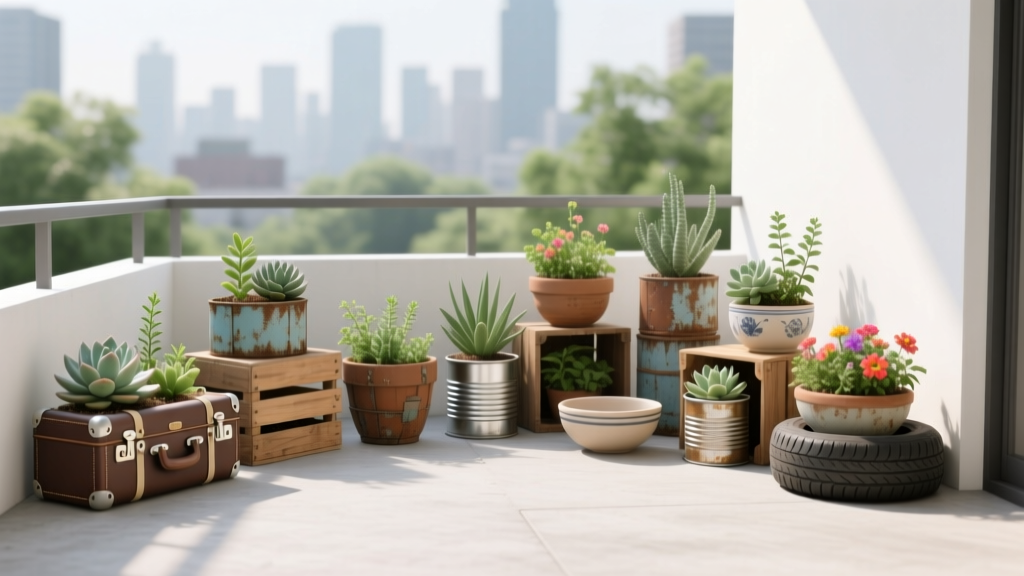
Urban gardeners don’t need fancy pots to grow greenery—just creativity and a few repurposed household items. Small-space gardening thrives on ingenuity, and upcycled planters add personality while reducing waste. Tin cans, old wooden drawers, well-worn boots, and even chipped teapots can become charming, functional homes for herbs, succulents, or flowering annuals. Unlike mass-produced containers, these pieces tell a story—and when grouped thoughtfully, they create visual rhythm without overcrowding tight balconies.

Top Household Items to Repurpose—& How to Prep Them
Tin Cans (Coffee, Soup, or Tea Tins)
Clean thoroughly, remove labels, and sand sharp edges. Drill 3–5 drainage holes in the base using a metal punch or drill bit. For longevity, coat interiors with rust-inhibiting enamel spray—especially important for acidic soils or frequent watering.
Wooden Drawers (Old Dresser or Desk Compartments)
Line with landscape fabric or a food-grade plastic liner (e.g., cut-from-bucket) to retain moisture and prevent rot. Elevate slightly on feet or bricks to ensure airflow and drainage. Ideal depth: 6–8 inches for root development.
Rain Boots & Leather Shoes
Drill 4–6 small holes in the sole and one in the heel. Use waterproof sealant around seams if leather is cracked. Avoid boots with glued soles that may delaminate when wet—opt for vulcanized rubber or sturdy canvas instead.
Vintage Teapots & Ceramic Mugs
Drill a single ½-inch hole in the bottom (use a ceramic-tile bit and steady pressure). Glazed interiors hold moisture well—perfect for ferns or mosses—but avoid overwatering. Pair matching sets or go eclectic with mismatched china for visual charm.
Smart Drainage Solutions for Non-Plant Containers
Most repurposed items lack built-in drainage—so improvisation is key. Beyond drilling, try these pro-approved methods:
- Layered Base: Add 1 inch of crushed pottery, wine corks, or clean gravel beneath potting mix to elevate roots above pooled water.
- Double-Potting: Nest your upcycled item inside a slightly larger, drilled container (like a glazed nursery pot), then lift it out to drain after watering.
- Self-Watering Inserts: Place a wicking cup (cut plastic bottle with cotton rope) at the base for consistent hydration—ideal for busy urbanites.
Soil & Plant Pairings for Each Planter Type
Mismatched containers demand tailored growing conditions. Here’s what thrives where:
| Planter Type | Recommended Soil Mix | Ideal Plants |
|---|---|---|
| Tin Cans | Lightweight mix: 2 parts potting soil + 1 part perlite + ½ part compost | Thyme, oregano, dwarf marigolds, cherry tomatoes (dwarf varieties like 'Tiny Tim') |
| Wooden Drawers | Moisture-retentive blend: 1 part coconut coir + 1 part compost + 1 part worm castings | Lettuce, spinach, parsley, pansies, creeping thyme (as edging) |
| Rain Boots | Well-draining succulent mix: 1 part soil + 1 part pumice + 1 part coarse sand | Echeveria, sedum, string-of-pearls, lavender (in full sun) |
| Teapots & Mugs | Airy, humus-rich mix: 2 parts peat-free potting compost + 1 part orchid bark + slow-release fertilizer | Ferns (Maidenhair, Button), baby tears, miniature begonias, trailing ivy |
Styling Tips for a Cohesive Balcony Garden
Even a riot of upcycled containers can feel intentional with smart styling:
- Anchor with Color: Paint 2–3 items in the same muted tone (e.g., sage green or terracotta oxide) to unify disparate shapes.
- Vary Heights Strategically: Stack boots on bricks, hang teapots from wall hooks, and place drawers on low stools—create vertical layers without blocking light.
- Add Texture Contrast: Pair smooth-glazed mugs with rough-hewn drawers or matte-finish cans. Introduce woven baskets or macramé hangers for softness.
- Group by Theme: A ‘kitchen garden’ corner (cans + herbs), a ‘whimsy zone’ (boots + fairy lights), and a ‘tea-time nook’ (teapots + mint + lemon balm).
Pro Tip: Use removable adhesive hooks or tension rods—not nails—to mount lightweight planters on railings or walls. Renters and condo dwellers rejoice!
Seasonal Plant Rotation for Year-Round Appeal
Maximize your balcony’s potential with thoughtful seasonal swaps:
- Spring: Peas (in tall boots), violas, chives, and strawberry runners in shallow drawers.
- Summer: Cherry tomatoes (cans), basil (teapots), nasturtiums (spilling from drawers), and portulaca (in sunny boots).
- Fall: Kale, Swiss chard, ornamental cabbage, and asters—pair with dried wheat stalks in larger tins.
- Winter: Evergreen boxwood clips, rosemary topiaries, hellebores (in insulated teapots), and preserved moss arrangements in mugs.
Rotate plants every 6–8 weeks—or sooner if growth slows—to refresh nutrients and prevent pest buildup. Keep a simple log: date planted, variety, and observed performance. Over time, you’ll learn which upcycled vessels suit your microclimate best—whether it’s your south-facing ledge or your wind-swept, shaded corner.
More Articles
 Best Outdoor Bar Stool Choices - The Decor Mag
 Best Outdoor Bar Olive and Pickle Station - The Decor Mag
 Best Outdoor Lounge Furniture Picks - The Decor Mag
 How to Create a Vegetable Garden Layout - The Decor Mag
 How to Design a Cottage Core Garden - The Decor Mag
 How to Design a Tropical Garden Oasis - The Decor Mag
 Best Outdoor Bar Tool Storage Ideas - The Decor Mag
 Container Garden Design Inspiration - The Decor Mag
 Outdoor Arbor and Gate Design Ideas - The Decor Mag
 Outdoor Kitchen Corner Cabinet Ideas - The Decor Mag