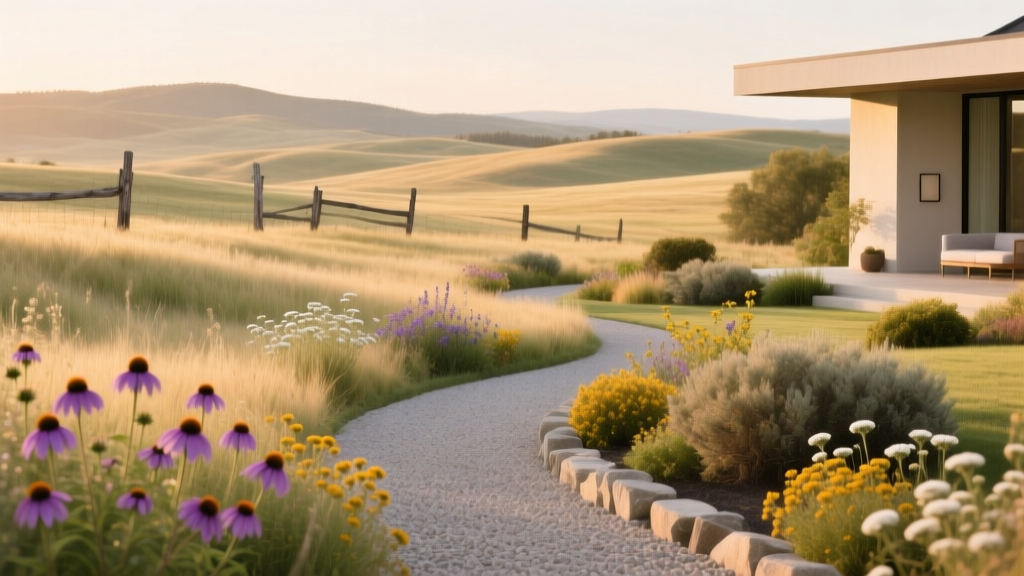
How to Design a Prairie Garden - The Decor Mag
A prairie garden brings the best of wide-open landscapes into the places you actually live: your patio, side yard, or a sunny corner by the deck. It’s a style built on movement—grasses swaying in the wind, pollinators working the blooms, seed heads catching winter light—and it can make even a small outdoor living space feel expansive and calming.
For homeowners, the appeal is practical as much as it is beautiful. Prairie-style landscaping is designed around resilient, climate-adapted plants that can handle heat, wind, and periods of drought once established. That often means less watering, fewer fussy inputs, and a garden that looks intentional across the seasons—especially when you design it with pathways, seating, and structure that connect to your patio living areas.
Whether you’re converting a lawn, refreshing foundation beds, or creating a new entertaining zone outdoors, a prairie garden can be the most “livable” landscape you’ll ever install—welcoming, biodiverse, and striking from spring through winter.
What Makes a Prairie Garden (and Why It Works in Residential Landscapes)
Prairie gardens take cues from native grasslands: plant communities dominated by grasses and perennials with deep roots. In modern outdoor design, that translates into a layered, naturalistic planting that still feels polished when you give it clear edges, intentional pathways, and a few strong focal points.
Core prairie design traits
- Grasses as the framework: They provide structure, motion, and winter presence.
- Perennials as the color and pollinator engine: Long bloom windows and habitat value.
- Seasonal storytelling: Spring emergence, summer peak, fall color, winter silhouettes.
- Density and “plant community” thinking: Fewer bare spots means fewer weeds and lower maintenance long term.
- Naturalistic, but not messy: Crisp borders, repeated plant drifts, and mown/stone edges keep it intentional.
Start With Site Conditions: Sun, Soil, and How You Use the Space
Before choosing plants or patio furniture, map what you have. Prairie plants love sun, but “prairie style” can be adapted to part shade with the right palette.
Quick site checklist
- Sun: Full sun (6+ hours) is ideal; part sun works with shade-tolerant natives.
- Soil: Most prairie plants prefer well-drained soil. Heavy clay can work with the right species and soil prep.
- Moisture: Note low spots and dry slopes—use them to your advantage with plant selection.
- Wind exposure: Taller grasses may need grouping or a windbreak in very exposed yards.
- Outdoor living patterns: Where do you grill, dine, lounge, or watch kids/pets? Let circulation guide bed shapes.
Plan the “use zones” first
Prairie gardens shine when they frame outdoor living spaces rather than replace them. Consider these simple relationships:
- Patio + prairie border: A deep, layered border softens hardscaping and adds privacy.
- Dining terrace + low prairie: Keep plant heights lower near seating for sightlines and breezes.
- Path through plantings: A narrow walk creates immersion and makes the garden feel bigger.
Prairie Garden Layouts That Look Designed (Not Accidental)
The secret to prairie-style landscaping in a homeowner yard is structure. You can be wild with plants, but be disciplined with lines, repetition, and focal points.
Three layouts that work in most yards
1) The “Prairie Frame” (best for patios and decks)
- Create a generous planting bed around 2–3 sides of a patio.
- Keep plants near the edge at 18–30 inches, graduating to 4–6 feet toward the back.
- Add one focal element: a sculptural boulder, birdbath, or small multi-stem tree.
2) The “Meadow Island” (best for front yards and lawn conversions)
- Carve an island bed into lawn with a bold, curved edge.
- Use 3–5 species repeated in drifts for a calm, cohesive look.
- Include a mown strip or gravel edge to signal intention.
3) The “Pathway Prairie” (best for side yards)
- Install a stepping-stone or decomposed granite path.
- Plant taller grasses away from the walkway, with airy perennials nearer the path.
- Add low lighting for year-round usability and evening patio living.
Spacing rule that prevents the #1 prairie mistake
Prairie gardens are not sparse. Under-planting leads to weeds and “random” looks. As a starting point:
- Small perennials: 12–18 inches on center
- Medium perennials/grasses: 18–24 inches on center
- Large grasses: 24–36 inches on center
Planting Design: Grasses First, Then Blooms, Then Ground Layer
Think of your plant palette like a well-styled outdoor room: the grasses are the architecture, the perennials are the color and texture, and the ground layer is the rug that ties everything together.
Signature prairie grasses (structure + winter beauty)
- Little bluestem (Schizachyrium scoparium): Blue-green summer blades, copper fall color.
- Switchgrass (Panicum virgatum): Upright form; great for screens and rain-friendly spots.
- Prairie dropseed (Sporobolus heterolepis): Fine texture, tidy mounds; ideal near patios.
- Indian grass (Sorghastrum nutans): Tall, golden fall plumes for the back of beds.
Reliable prairie perennials for long bloom and pollinators
- Purple coneflower (Echinacea purpurea): Summer-to-fall color; leave seed heads for birds.
- Black-eyed Susan (Rudbeckia fulgida): Bright mid-summer; great in drifts.
- Bee balm (Monarda spp.): Pollinator magnet; choose mildew-resistant varieties.
- Blazing star (Liatris spicata): Vertical purple spikes; excellent with grasses.
- Blue false indigo (Baptisia australis): Shrub-like presence; spring blooms, strong structure.
- Asters (Symphyotrichum spp.): Fall fireworks; essential for late-season interest.
- Goldenrod (Solidago spp.): Underused and stunning in fall; supports beneficial insects.
- Butterfly weed (Asclepias tuberosa): Drought tolerant; host plant for monarchs.
Ground-layer plants to reduce weeds and finish edges
- Prairie smoke (Geum triflorum): Spring blooms with smoky seed heads.
- Wild strawberry (Fragaria virginiana): Low, spreading, and edge-friendly in sunny areas.
- Sedges (Carex spp.): A “prairie-adjacent” staple, especially for part shade or moist soils.
Simple plant palette recipes (copy-and-use combos)
- Sunny patio border: Prairie dropseed + coneflower + blazing star + black-eyed Susan + asters
- Modern prairie look: Switchgrass + alliums (ornamental) + baptisia + echinacea + Russian sage (where non-invasive and appropriate)
- Moist/rain-garden edge: Switchgrass + joe-pye weed (Eutrochium) + blue flag iris (Iris versicolor) + asters
Tip: Prioritize regionally native cultivars when possible. They typically perform better, support more wildlife, and fit local climate conditions.
Materials and Hardscaping That Elevate Prairie Style
The right materials give prairie plantings a clean “designed” frame and make your outdoor living space comfortable year-round.
Best edging and path materials
- Steel edging (black or corten): Crisp, modern lines; holds curves well.
- Natural stone edging: Timeless and sturdy; great for slopes and transitions.
- Decomposed granite (DG): Natural look for paths; choose a stabilized DG for less tracking.
- Large-format concrete or stone slabs: A modern counterpoint to “wild” planting; excellent for stepping paths.
- Gravel bands: A 6–12 inch strip of gravel between lawn and planting reduces encroachment and simplifies mowing.
Mulch choices (practical and prairie-appropriate)
- Shredded hardwood mulch: Best for establishment years; choose dark brown for a refined look.
- Fine gravel mulch: Excellent for drought-tolerant prairie beds and modern designs; reduces splash and can deter weeds.
Outdoor furniture that fits the prairie aesthetic
- Low-profile lounge seating: Powder-coated aluminum or teak to withstand sun and temperature swings.
- Weather-resistant cushions: Solution-dyed acrylic (like Sunbrella-type fabrics) in warm neutrals, clay, olive, or charcoal.
- Dining sets with open silhouettes: Slatted teak, metal mesh, or rope-wrapped frames feel airy against grasses.
- Fire pit or fire table: Extends patio living into fall; choose gas for ease or steel wood-burning for a rustic note.
Budget Ranges: What Prairie Gardens Cost in the Real World
Costs vary by region and whether you DIY or hire a landscape designer/installer. These ranges help set expectations for a prairie garden that looks intentional and supports outdoor living.
- DIY refresh (small bed, 80–150 sq ft): $300–$1,200
- Perennials/grasses, mulch, basic edging
- Mid-size DIY conversion (200–500 sq ft): $1,200–$4,500
- More plants for proper density, soil improvements, path materials
- Installed by a pro (300–800 sq ft): $6,000–$20,000+
- Includes design, plantings, prep, and often lighting or hardscape upgrades
- Patio + prairie border package: $12,000–$40,000+
- Pavers or slabs, seating wall, lighting, irrigation tweaks, layered planting
Climate and Maintenance: Designing for Long-Term Success
Prairie gardens are low-maintenance, not no-maintenance. The first two years are about establishment; after that, your workload often drops dramatically.
Establishment timeline (what to expect)
- Year 1: Water regularly, weed often, and expect plants to “sleep” while roots build.
- Year 2: Growth fills in; blooms increase; weeds decrease with better plant coverage.
- Year 3: The garden “leaps” with mature structure, seasonal drama, and fewer inputs.
Watering guidance
- First season: Deep water 1–2 times per week depending on heat and soil drainage.
- After establishment: Water during extended droughts, especially for first-year additions.
Seasonal care for year-round outdoor living
- Spring: Cut back grasses/perennials to 4–8 inches before new growth (or leave some stems until consistent warmth for overwintering insects).
- Summer: Spot-weed and deadhead selectively if you want a tidier look near patios.
- Fall: Leave seed heads and grasses standing for privacy, texture, and winter interest.
- Winter: Enjoy structure and snow-catching forms; brush off heavy wet snow near pathways if flattening is an issue.
Cold, hot, coastal, and dry-region considerations
- Cold climates: Choose hardy species and avoid late-season nitrogen fertilizing; standing stems protect crowns.
- Hot/humid climates: Prioritize airflow—avoid overcrowding; select mildew-resistant bee balm and tough grasses.
- Coastal/windy sites: Use sturdier upright grasses (switchgrass) and include wind-buffer shrubs or fencing.
- Arid regions: Lean into drought-tolerant natives and consider gravel mulch with drip irrigation for establishment.
Common Prairie Garden Mistakes to Avoid
- Planting without a clear edge: Prairie plantings need a crisp border (steel, stone, gravel band, or mown edge) to read as designed.
- Using too many species: Limit to 5–9 main plants and repeat them. Too much variety can look chaotic.
- Under-planting: Sparse planting invites weeds and delays the “full” look by years.
- Ignoring mature height: Put tall grasses behind seating sightlines and away from driveway corners for safety.
- Over-mulching the crown: Keep mulch off plant crowns to prevent rot, especially in heavier soils.
- Cutting everything down in fall: Winter structure is part of the prairie magic—and it supports wildlife.
FAQ: Prairie Garden Design
Is a prairie garden the same as a meadow garden?
They’re closely related. A meadow garden often emphasizes a softer, more floral look, while a prairie garden typically leans more heavily on grasses and a structured plant-community feel. In residential landscaping, the terms are often used interchangeably.
Will a prairie garden look messy next to a patio?
Not if you design it with intention. Add a clean edge, repeat a limited plant palette, and include a path or seating area. Keeping plants shorter near the patio and taller farther away also creates a groomed transition.
Do I need irrigation for prairie-style landscaping?
For the first year or two, yes—consistent watering helps deep roots establish. After that, many prairie plants are drought-tolerant and only need supplemental watering during prolonged dry spells.
How do I convert lawn to a prairie garden?
Start by defining the bed shape, remove or smother turf (solarization or cardboard-and-mulch), improve drainage if needed, then plant densely. Keep up with weeding the first season to prevent turf and annual weeds from returning.
What are the best prairie plants for small yards?
Choose compact grasses like prairie dropseed and smaller perennials like coneflower, liatris, and coreopsis (where appropriate). Use repetition and a simple layout so the space feels intentional rather than crowded.
Should I use native plants only?
Native plants are ideal for resilience and pollinator support, but a thoughtful mix can work if you avoid invasive species and prioritize plants that match your site conditions. When in doubt, choose regionally native selections for the strongest performance.
Your Next Steps: A Prairie Garden Plan You Can Start This Weekend
- Pick a zone: Choose one area—around the patio, a front-yard island, or a side-yard path.
- Define the edge: Install steel edging, a gravel band, or a stone border for instant “designed” polish.
- Select a tight palette: Choose 1–2 grasses and 3–5 flowering perennials, then repeat in drifts
More Articles
 Smart, Stylish, and Sustainable Outdoor Storage Ideas for Modern Living Spaces
 Outdoor Pizza Oven Installation Guide - The Decor Mag
 Best Outdoor Bar Grapefruit Wedge Bowl - The Decor Mag
 Best Outdoor Bar Cabinet Ideas - The Decor Mag
 Outdoor Arbor and Gate Design Ideas - The Decor Mag
 Outdoor Bar and Beverage Station Ideas - The Decor Mag
 How to Create a Night Blooming Garden - The Decor Mag
 Outdoor Shower Design Ideas - The Decor Mag
 Outdoor Pergola Beam Spacing Guide - The Decor Mag
 Best Outdoor Swinging Chair Picks - The Decor Mag