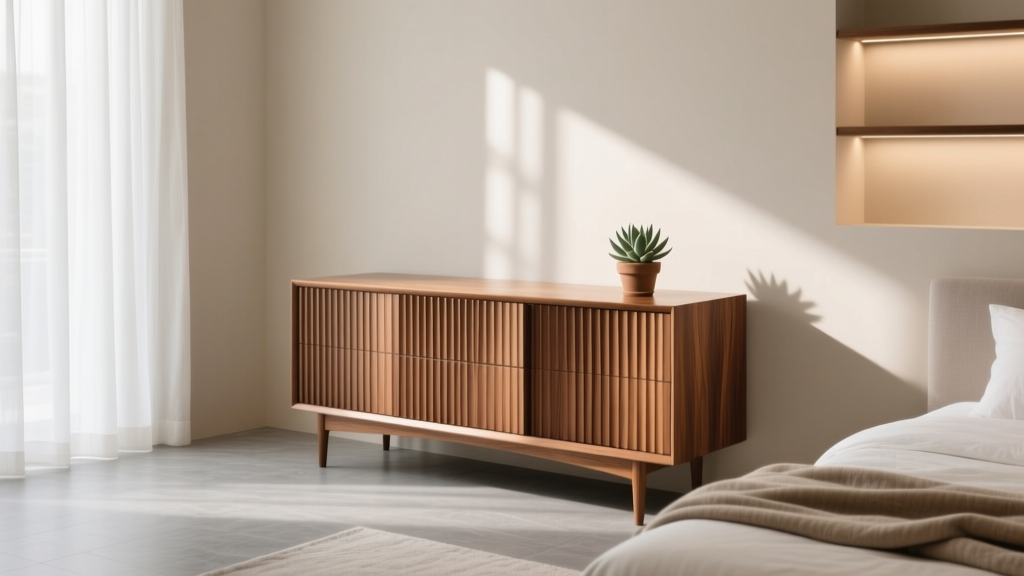
Bedroom Fluted Wood Dresser Trend - The Decor Mag
A bedroom that supports deep rest is rarely about one “perfect” purchase—it’s about how each element works together to create calm. The fluted wood dresser trend has become a favorite in bedroom design for that exact reason: it adds visual rhythm and warmth without demanding attention. Those gentle vertical grooves catch light softly, reduce the flat, sterile feel of smooth cabinetry, and bring a natural, grounded texture into the sleep environment.
When your bedroom feels orderly and soothing, your mind follows. A well-chosen dresser can lower visual clutter (one of the most common sleep disruptors in a space) by giving everyday items a dedicated home. Fluted wood also pairs easily with restful colors, soft textiles, and warm lighting—three pillars of a sleep-friendly bedroom decor plan.
If you’re a homeowner investing in a long-term bedroom upgrade or a renter looking for a high-impact, low-renovation refresh, a fluted dresser is a practical centerpiece. This guide covers how to choose the right piece, style it for better sleep quality, avoid common mistakes, and create a calm layout that supports relaxation.
Why Fluted Wood Dressers Feel So Calming
Fluting is a series of repeated grooves, most often vertical, that creates depth and shadow. In a bedroom, that matters because hard, flat surfaces can feel visually “loud,” especially under overhead lighting. Fluted wood introduces texture that reads as warm and soft, even when the silhouette is modern.
What makes the trend work in bedroom design
- Softened visual edges: The grooves break up the mass of a large dresser, making it feel less heavy.
- Natural material cues: Wood grain signals warmth and safety—helpful for creating a restful sleep environment.
- Easy compatibility: Fluted fronts look at home in modern, Japandi, Scandinavian, transitional, and even coastal bedrooms.
- Better “tidy energy”: A statement dresser encourages you to keep the surface clear, which reduces bedtime stress.
Choosing the Right Fluted Dresser for Your Space
The best fluted wood dresser is the one that supports your daily routine—morning readiness and evening wind-down—without adding visual noise. Focus on size, storage, finish, and hardware.
Size and proportion: the sleep-friendly approach
A dresser that is too large can crowd walkways, making the room feel cramped (a subtle stressor). Too small, and you’ll end up with overflow piles—clutter that competes with relaxation.
- Small bedrooms: Choose a tall chest (vertical storage) or a compact 5–6 drawer dresser, roughly 28–45 inches wide.
- Medium bedrooms: A standard 6–8 drawer dresser, roughly 50–65 inches wide, balances storage and breathing room.
- Large bedrooms: A wider lowboy dresser (65–80+ inches) anchors the space and can replace multiple small storage pieces.
Layout tip: Aim for at least 24–30 inches of clear walking space in front of the dresser so you can move calmly without bumping into corners—especially at night.
Materials to look for (and what to avoid)
Not all “wood look” pieces wear the same over time. For a bedroom, durability matters because drawers are used daily.
- Best long-term options:
- Solid wood (oak, ash, walnut, rubberwood) for strength and repairability
- Engineered wood with real wood veneer for stability and a true wood finish at a lower cost
- Plywood drawer boxes (better than particleboard for longevity)
- Be cautious with:
- Thin laminate over particleboard in high-use drawers (chips and swelling are common)
- Very delicate softwoods if you tend to bump furniture or have pets
Wellness note: If you’re sensitive to smells, look for low-VOC finishes or allow a new dresser to off-gas in a ventilated area for several days before placing it in the bedroom.
Finish and color: calming choices that elevate bedroom decor
Fluted wood dressers look best when the finish supports a restful palette. Consider how the tone interacts with wall color, flooring, and bedding.
- Light oak / white oak: Airy, bright, ideal for Scandinavian or coastal bedroom design
- Warm walnut / caramel tones: Cozy, grounding, excellent for moody neutrals and layered textiles
- Black-stained wood: Sophisticated, best when balanced with soft lighting and lighter bedding
- Painted fluted fronts: Great for renters who want color without full-room painting (sage, clay, dusty blue)
Hardware and drawer function: small details that matter daily
- Soft-close glides reduce noise—helpful if you share a bedroom or keep different schedules.
- Integrated pulls keep the look seamless and reduce snagging on pajamas or robes.
- Rounded edges (or a slightly softened profile) are more comfortable in tight layouts.
Budget Ranges and What You Can Expect
Fluted detailing can raise cost due to extra labor and tooling. Here’s a practical breakdown so you can shop smart.
- $250–$500: Typically engineered wood with faux or thin veneer fluting; best for light use, guest rooms, or short-term rentals.
- $500–$1,200: The sweet spot for many bedrooms—real wood veneer, better drawer glides, sturdier frames, more consistent finishes.
- $1,200–$2,500+: Solid wood or premium veneer over high-quality construction, soft-close hardware, refined proportions, and longer lifespan.
Money-saving strategy: Spend on the dresser frame and drawers, then save on styling (a simple lamp, a calm mirror, a tray). A strong core piece makes the room feel more intentional.
How to Style a Fluted Wood Dresser for Better Sleep
A dresser top can either become a clutter magnet or a calming visual anchor. For sleep quality, aim for a surface that feels “finished” but not busy.
The 3-object rule for a calmer surface
Try grouping items in threes—enough to feel styled, not enough to feel crowded.
- One soft light source: A warm bedside-style lamp (even if it’s across the room)
- One grounding element: A ceramic dish, wooden tray, or stone coaster
- One living or natural detail: A small plant, dried stems, or a simple vase
Mirror or art above the dresser?
- Mirror: Helps reflect light and makes small bedrooms feel larger. Choose a rounded or arched shape to soften lines.
- Art: Better if you prefer a less reflective sleep environment. Choose low-contrast, calming artwork (landscapes, abstracts in muted tones).
Sleep-friendly tip: If a mirror reflects the bed and it feels stimulating or distracting at night, shift it slightly or opt for art instead.
Pairing the Dresser with Bedding, Lighting, and Color
The fluted dresser works best when the rest of the bedroom design supports rest: soft textures, warm layered lighting, and a quiet color palette.
Bedding recommendations (texture matters)
- Sheets: Cotton percale for cool sleepers; linen for breathability and relaxed texture; sateen if you want smoother warmth.
- Duvet or quilt: Choose a matte finish in calming neutrals (ivory, oatmeal, warm gray, soft white) to complement wood grain.
- Throw blanket: Chunky knit or brushed cotton adds tactile comfort and balances the dresser’s structured grooves.
Lighting that flatters fluted wood and supports wind-down
Grooved wood looks best under warm, directional lighting. Bright cool bulbs can make the texture look harsh and the room feel clinical.
- Best bulb temperature: 2200K–2700K for a cozy glow in the evening
- Add two light layers:
- Ambient: A dimmable ceiling fixture or plug-in wall sconce
- Task/accent: A table lamp on the dresser or near it
- Easy upgrade: Use a dimmer plug or smart bulb to shift into a low-light mode 60–90 minutes before bed.
Color palettes that make fluting feel serene
- Warm neutral: Cream walls + oak dresser + tan textiles
- Earthy calm: Soft clay or mushroom walls + walnut dresser + off-white bedding
- Muted green: Sage walls + light wood dresser + natural linen bedding
- Modern quiet: Pale gray-beige walls + black-stained fluted dresser + warm white bedding
Layout Tips: Where the Dresser Should Go
Placement affects flow, light, and how restful the room feels. A dresser that interrupts movement can make the bedroom feel more like a storage unit than a retreat.
- Best placement: On the wall opposite the bed or on the longest uninterrupted wall.
- Avoid: Blocking windows (morning light supports circadian rhythm) or squeezing the dresser too close to the bed.
- If you share a bedroom: Choose a dresser height and placement that allows both people easy access without crossing paths in tight spots.
Renter-friendly move: If closet storage is limited, position the dresser close to the closet to create a simple “get-ready zone” that prevents clothing piles near the bed.
Sleep-Friendly Wellness Tips to Pair with the Trend
A fluted dresser can help you build a calmer sleep environment when it supports healthier habits.
- Create a tech boundary: Use a top drawer as the “charging drawer” with a power strip (vents/space for heat), keeping screens off the nightstand.
- Set up a 2-minute reset: Each evening, clear the dresser top and return items to drawers. Visual calm can reduce racing thoughts.
- Use scent wisely: If you enjoy fragrance, keep it subtle—lavender, cedar, or chamomile—and avoid overpowering diffusers right by the bed.
- Reduce nighttime noise: Soft-close drawers and felt drawer liners make the bedroom quieter, especially during early mornings.
Common Mistakes to Avoid
- Over-styling the top: Too many objects become visual clutter, which can make it harder to relax at night.
- Choosing fluting that’s too busy: Very high-contrast grooves or mixed-direction fluting can feel stimulating in a sleep space.
- Ignoring scale: A dresser that’s too tall or too wide for the room disrupts flow and makes the bedroom feel crowded.
- Cool, bright lighting: 4000K–5000K bulbs can make wood tones look dull and keep your brain in “day mode.”
- High-gloss finishes: Shine reflects light and fingerprints, creating a higher-maintenance surface that reads less restful.
- Not anchoring the look: A fluted dresser without complementary textures (curtains, rug, bedding) can feel disconnected rather than calming.
FAQ: Fluted Wood Dressers in Bedroom Design
Are fluted wood dressers just a trend, or are they timeless?
Fluting has historical roots in architecture and furniture, so it’s more than a passing fad. Choosing a simple silhouette, warm wood tone, and minimal hardware helps it feel timeless in bedroom decor.
Do fluted dresser fronts collect dust?
They can. Look for slightly wider grooves (easier to wipe) and use a microfiber cloth or soft brush attachment weekly. A quick pass takes less than a minute and helps the room feel fresher.
What nightstand style pairs best with a fluted dresser?
For a calm, cohesive bedroom design, pair it with either (1) a simpler nightstand (flat-front wood or painted) or (2) a matching fluted nightstand if your room is minimal. In smaller rooms, mismatched but coordinated pieces can feel lighter than a full matching set.
Is a fluted dresser a good choice for renters?
Yes. It adds architectural interest without any renovation. Choose a piece with a durable veneer, and use furniture pads to protect floors. If you move often, prioritize a sturdy frame and smooth drawer glides.
How do I keep the bedroom from feeling too “wood heavy”?
Balance the dresser with soft elements: light bedding, a plush rug, linen curtains, and warm lighting. If your floors are also wood, consider a rug with a calm pattern and a slightly cooler neutral to break up the tones.
What’s the best dresser height if I want to add a mirror?
A dresser between 30–36 inches high works well for most bedrooms. Hang the mirror so its center sits around eye level, and keep a little breathing room (about 6–10 inches) between the dresser top and the mirror’s bottom edge.
Next Steps: Bring the Look Home Without Overthinking It
Start with your room’s needs: more hidden storage, a calmer focal point, and a smoother daily routine. Choose a fluted wood dresser that fits your floor plan, prioritize quality drawers and a low-sheen finish, and style the surface with a simple lamp-and-tray setup to reduce visual clutter. Layer in warm lighting, breathable bedding, and a muted color palette so the whole sleep environment feels quiet and supportive.
For more soothing bedroom ideas, renter-friendly upgrades, and sleep-friendly decor guidance, explore the latest on thedecormag.com.
More Articles
 Bedroom Reeded Wood Mirror Frame - The Decor Mag
 Best Bedroom Sleep Journal Prompts - The Decor Mag
 Bedroom Fluted Wood Bed Frame Trend - The Decor Mag
 Best Bedroom Memory Display Shelf - The Decor Mag
 Plaster Range Hood Headboard for Bedrooms
 How to Match Your Family’s Needs With the Right Bedroom Options: A Practical, Evidence-Based Guide
 Bedroom Lighting Ideas for Soothing Ambiance (2026)
 How to Style a Bedroom with Earth Tones - The Decor Mag
 Bedroom Fluted Headboard Panel Design - The Decor Mag
 How to Create a Bedroom That Feels Collected - The Decor Mag