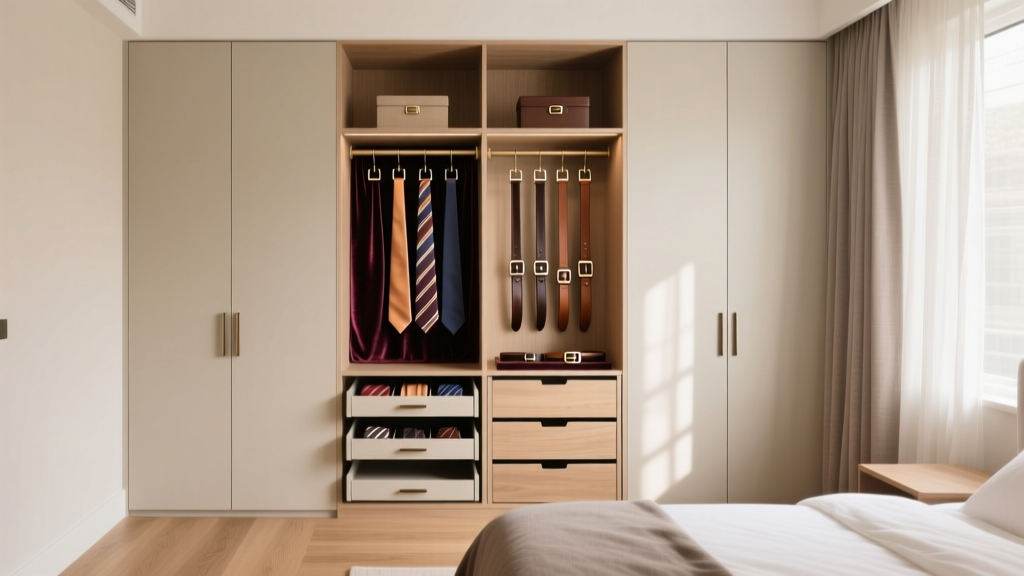
Best Bedroom Tie and Belt Storage - The Decor Mag
A calm bedroom starts with visual quiet. When belts slip off hangers, ties tangle in a drawer, and tomorrow’s accessories end up draped over a chair, the room feels busier than it needs to. That low-level clutter can keep your mind in “to-do mode,” making it harder to wind down at night and easier to wake up feeling mentally scattered.
Thoughtful tie and belt storage is a small upgrade with an outsized impact on bedroom design and sleep quality. When accessories have a dedicated home, your surfaces clear, your closet becomes easier to use, and your evening routine becomes smoother. The result is a more restful sleep environment—one that signals to your brain that the bedroom is for restoration, not rummaging.
This guide covers the best bedroom tie and belt storage options for homeowners and renters, with practical recommendations for furniture, layout, materials, and budgets. You’ll find solutions for tight closets, shared bedrooms, and minimalist spaces—plus sleep-friendly tips to keep your bedroom decor calm and your mornings friction-free.
Why Tie and Belt Storage Belongs in a Sleep-Friendly Bedroom
Bedroom organization isn’t just about aesthetics; it’s part of sleep wellness. When accessories are easy to find and put away, you reduce decision fatigue and end-of-day clutter. A bedroom that supports simple routines helps lower stress and creates a cleaner visual field—both linked to better relaxation.
- Less visual noise: Clear floors and surfaces make the room feel larger and calmer.
- Faster bedtime reset: A designated place for accessories means you can tidy in minutes.
- Better morning flow: Fewer rushed searches = lower cortisol spikes first thing.
- Closet efficiency: When belts and ties are stored correctly, clothing stays wrinkle-free and easy to access.
Best Tie Storage for the Bedroom
1) Closet Rod Tie Hangers (Best for easy visibility)
A multi-tier tie hanger that hangs from your closet rod is one of the most straightforward upgrades for bedroom closet organization. It keeps ties separated, visible, and ventilated—useful if you rotate between silk, cotton, and knit ties.
- Best for: Standard closets, quick outfit selection, minimal drawer space
- Look for: Smooth, snag-free hooks; rotating heads; non-slip coating
- Materials: Solid wood (quiet, classic), powder-coated metal (durable), velvet-coated plastic (budget-friendly)
- Budget range: $10–$35
Sleep-friendly tip: Choose a design that keeps ties from brushing your hanging shirts. Less friction means less morning fuss, helping you keep your bedroom routine calm.
2) Pull-Out Closet Valet Rod with Tie Rack (Best for boutique-style closets)
If you want a streamlined, built-in look without a full closet renovation, a pull-out valet rod or slide-out tie rack is a smart middle ground. These mount to the inside wall of your closet and glide out smoothly, keeping accessories close but hidden when not in use.
- Best for: Narrow closets, shared closets, capsule wardrobes
- Look for: Soft-close slides; sturdy mounting hardware; slim profile
- Materials: Brushed stainless steel, anodized aluminum
- Budget range: $25–$90
Design note: A hidden storage solution supports a minimalist bedroom aesthetic—great if you’re aiming for a more serene sleep environment.
3) Drawer Tie Organizers (Best for a clutter-free closet line)
If your bedroom design favors clean closet lines and you’d rather not see accessories at all, a drawer insert with divided compartments keeps ties flat and protected. This is especially helpful for silk ties that crease easily.
- Best for: Dressers, closet drawer systems, small bedrooms with limited hanging space
- Look for: Adjustable dividers; shallow profile; smooth interior that won’t snag
- Materials: Bamboo (warm and breathable), felt-lined organizers (gentle on fabric)
- Budget range: $15–$60
Wellness tip: Reserve the top drawer for “tomorrow items” (tie, belt, watch). Preparing once reduces bedtime mental load.
Best Belt Storage for the Bedroom
1) Belt Hangers with Hooks or Rings (Best all-around option)
A dedicated belt hanger prevents creases and keeps buckles from scratching other accessories. Hook styles are flexible; ring styles keep belts evenly spaced.
- Best for: Most closets, frequent belt wearers
- Look for: Rounded hooks (protect leather), non-slip coating, strong swivel hook
- Materials: Wood with smooth lacquer, powder-coated metal, velvet finish for grip
- Budget range: $12–$40
2) Over-the-Door Belt Racks (Best for renters and small closets)
An over-the-door rack turns an unused surface into high-capacity storage—ideal for renters who can’t drill or who need quick access without rearranging the closet.
- Best for: Apartments, shared bedrooms, overflow storage
- Look for: Padded door hooks; slim profile; quiet, stable construction
- Materials: Metal with protective coating to prevent scuffs
- Budget range: $15–$45
Sleep-friendly tip: If the rack is on the bedroom door, choose one that doesn’t rattle. Noise at night—even subtle clinks—can fragment sleep.
3) Drawer Belt Rolls or Compartment Inserts (Best for protecting leather)
Belts last longer when stored gently. Drawer inserts prevent buckles from rubbing against leather and reduce the chance of scuffed hardware.
- Best for: Premium leather belts, minimalist closet setups
- Look for: Soft lining, structured compartments, low height for shallow drawers
- Materials: Felt, microfiber, bamboo with fabric lining
- Budget range: $20–$70
Hybrid Storage: The Best Solutions for Ties, Belts, and Accessories Together
1) Accessory Drawers in a Dresser or Closet System
If you’re building a more organized bedroom, a dresser with shallow top drawers or a closet system with accessory drawers can store ties, belts, watches, and jewelry in one soothing, easy-to-maintain zone.
- Best for: Master bedrooms, shared closets, streamlined bedroom decor
- Recommended features: Felt lining, dividers, full-extension drawer slides
- Budget range: $150–$800+ depending on furniture and system size
2) Wardrobe or Armoire with Built-In Accessory Storage
If your bedroom lacks a closet, a wardrobe or armoire can act as both clothing storage and a visual anchor in the room. Many include door-mounted racks ideal for belts and ties.
- Best for: Older homes, rentals without closets, guest rooms
- Materials: Solid wood (quiet and durable), engineered wood with quality veneer (budget-friendly)
- Budget range: $250–$1,200+
Layout tip: Place a wardrobe on the wall farthest from the bed when possible. Keeping “getting-ready activity” away from the sleep zone supports a calmer bedroom layout.
3) Valet Stand (Best for nightly routine and outfit planning)
A valet stand holds tomorrow’s tie and belt (plus jacket and trousers) without landing on a chair. It’s a subtle upgrade that supports evening wind-down and a smoother morning.
- Best for: Busy mornings, small bedrooms, anyone who likes to plan outfits
- Materials: Wood (warmer look), metal (modern), padded bars (protect fabrics)
- Budget range: $40–$200
Bedroom Design Recommendations That Make Storage Feel Effortless
Furniture placements that reduce clutter
- Keep the dresser within 3–6 steps of the closet: This “short path” makes putting accessories away feel automatic.
- Use one “landing zone” only: A tray on a dresser or inside a top drawer prevents ties and belts from spreading around the room.
- Avoid chair-as-storage: If you keep a chair in the bedroom, style it intentionally (a throw, not piles of accessories).
Lighting that supports calm routines
- Warm bulbs (2700K–3000K): Softer light supports a more restful sleep environment while you tidy up at night.
- Closet lighting: Battery LED motion lights or integrated closet LEDs help you find accessories without turning on bright overheads.
- Low-glare bedside lamps: Helps you prep tomorrow’s outfit without overstimulating your eyes before sleep.
Colors and materials that feel restful
- Color palette: Warm neutrals, soft gray, muted blues, sage, and oatmeal tones help the bedroom feel grounded.
- Material choices: Bamboo and wood add warmth; felt-lined organizers reduce noise and protect fabrics; matte metal finishes look clean and modern.
- Visual harmony: Match organizer finishes to closet hardware or bedroom furniture for a cohesive bedroom design.
How to Choose the Right Storage (A Simple Checklist)
- Count your accessories: Fewer than 10 ties/belts can live happily on a hanger; larger collections benefit from drawers or slide-outs.
- Pick your “access point”: Do you dress from the closet, the dresser, or both? Store accessories where you naturally reach.
- Protect the materials: Leather belts prefer rounded hooks or compartments; silk ties prefer flat, divided storage or smooth hangers.
- Prioritize quiet function: Avoid clanky racks and flimsy hooks—sound and irritation add up in a sleep space.
- Choose renter-friendly when needed: Over-the-door, adhesive-mounted (lightweight only), or freestanding options avoid damage.
Sleep-Friendly Wellness Tips for Keeping Accessories Under Control
- Try a 2-minute evening reset: Hang belts and ties before brushing teeth. Pairing habits makes them stick.
- Create a “tomorrow slot”: One hook or drawer compartment for the next day reduces decision stress at bedtime.
- Limit bedroom surfaces: The fewer flat surfaces you have, the fewer places clutter can gather—helpful for a calm sleep environment.
- Keep scent gentle: If storing leather in drawers, use mild cedar blocks rather than strong fragrances that can be stimulating or irritating.
- Maintain airflow: Avoid sealing damp accessories in bins. Ventilation protects materials and keeps the closet fresh.
Common Mistakes to Avoid
- Storing belts buckled tight in a pile: This creases leather and scuffs hardware. Hang them or lay them in compartments.
- Overstuffing tie drawers: Crowding causes wrinkles and makes the drawer feel chaotic—exactly what you don’t want in a restful bedroom.
- Using rough hooks: Sharp edges can snag silk and knit ties. Look for smooth, rounded hardware.
- Choosing noisy over-the-door racks: If it clangs when the door moves, it can disrupt sleep and add stress.
- Putting “daily-use” storage too far away: If the belt rack is inconvenient, belts will end up on doorknobs and chairs.
- Ignoring lighting in the closet: Poor visibility increases morning frustration and can push clutter into the bedroom.
FAQ: Bedroom Tie and Belt Storage
What’s the best way to store ties to prevent wrinkles?
For wrinkle prevention, use a smooth tie hanger (so ties hang freely) or a drawer organizer with divided compartments that lets ties lie flat. Avoid stacking ties in thick piles, which creates creases and visual clutter.
Should belts be hung or rolled in a drawer?
Both can work. Hanging belts on rounded hooks is great for frequent use and helps leather keep its shape. Drawer compartments are better for protecting premium leather and preventing buckles from scratching other items. Avoid tightly rolling belts with heavy buckles pressed against the leather.
What’s the best storage option for renters who can’t drill?
Over-the-door racks, closet-rod hangers, and freestanding valet stands are the most renter-friendly. Look for padded door hooks to protect paint and choose designs that don’t rattle.
How many ties or belts can a hanger realistically hold?
Most multi-hook hangers comfortably hold 12–24 ties or 8–16 belts, depending on thickness. If accessories feel crowded or hard to remove, upgrade to a second hanger or switch to a drawer insert to keep your bedroom closet organization stress-free.
Are cedar blocks safe for storing ties and belts in drawers?
Cedar is generally a good option for freshness and moth deterrence, especially for wool items nearby. Choose mild, natural cedar and avoid placing it directly against delicate fabrics; a small pouch or separate corner of the drawer helps.
How do I keep my bedroom looking calm if my closet is open or visible?
Use matching hangers, choose one consistent organizer finish (wood or matte metal), and keep accessories in a single dedicated zone. If the closet is open, uniformity acts like “visual silence,” supporting a soothing bedroom design.
Actionable Next Steps for a Calmer Bedroom
- Pick one storage zone: Closet rod, inside-closet slide-out, or top dresser drawer—keep ties and belts together.
- Choose one product type: Start with a $10–$40 hanger if you want immediate improvement; upgrade to drawers or valet systems if you want a cleaner visual look.
- Do a 10-minute edit: Donate rarely worn accessories and keep only what fits your current style—less clutter supports better rest.
- Set up a nightly reset: Hang or file tomorrow’s tie and belt, then clear the bedroom chair and surfaces.
A well-designed bedroom supports sleep, and smart accessory storage is one of the simplest ways to make the room feel calmer, quieter, and more intentional. For more soothing bedroom decor ideas, closet organization tips, and sleep-friendly design inspiration, explore the latest guides on thedecormag.com.
More Articles
 Modern Bedroom Design on a Budget: Smart, Stylish, and Sustainable Solutions
 Best Bedroom Memory Display Shelf - The Decor Mag
 Bedroom Plaster Sconce Wall Application - The Decor Mag
 Best Bedroom Humidifier Placement - The Decor Mag
 How to Mix Bedroom Furniture Finishes - The Decor Mag
 Bedroom Natural Stone Nightstand Top - The Decor Mag
 Bedroom Layout Common Mistakes: What 92% of Homeowners Get Wrong (And How to Fix Them)
 Small Bedroom Design Tricks to Maximize Space (2026)
 How to Choose Bedroom Throw Size for Bed - The Decor Mag
 How to Match Your Family’s Needs With the Right Bedroom Options: A Practical, Evidence-Based Guide