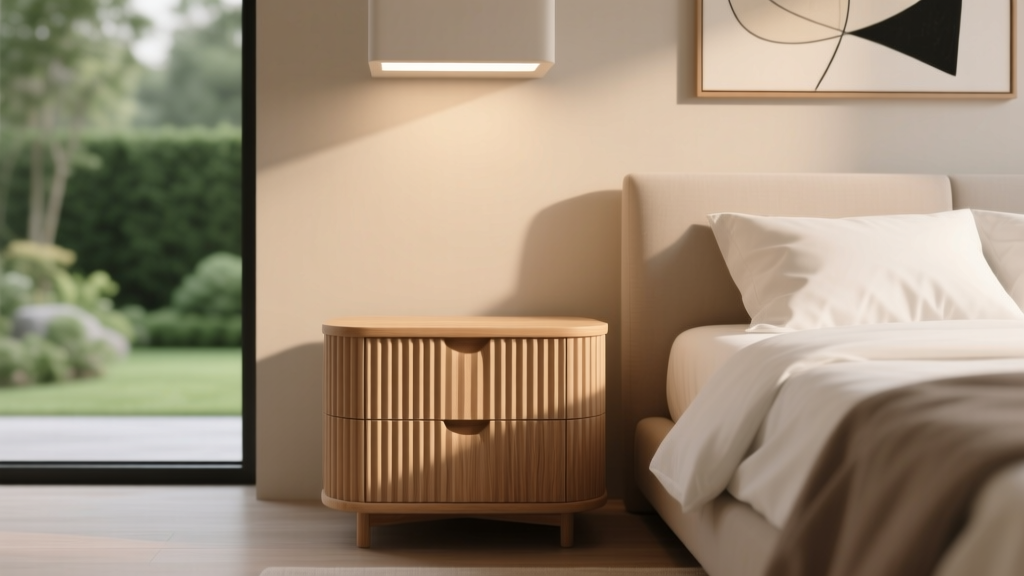
Bedroom Fluted Detail Bedside Table - The Decor Mag
A bedside table is one of the smallest pieces of furniture in a bedroom, yet it quietly shapes how the room feels at night. It’s where your hand reaches in the dark for water, where a lamp sets the mood for winding down, and where the everyday clutter either settles your mind—or keeps it busy. When the surface looks calm and the essentials are easy to find, the bedroom becomes more supportive of rest.
A fluted detail bedside table adds a unique advantage to sleep-friendly bedroom design: texture. Fluting—those vertical grooves carved or wrapped around drawers and doors—softens the look of hard furniture lines and adds visual rhythm without loud patterns. Done well, it’s calming, elevated, and versatile across modern, Scandinavian, transitional, and even warm minimal interiors. If you’re building a better sleep environment, this is one piece that can carry style while still serving practical wellness needs: organization, lighting support, and a clutter-controlled landing zone.
This guide breaks down how to choose and style a bedroom fluted detail bedside table so it improves both decor and sleep quality—plus which materials hold up best, what to spend, and what to avoid.
Why a Fluted Bedside Table Works So Well in a Sleep-Friendly Bedroom
Texture that feels restful, not busy
In bedroom decor, pattern and contrast can be energizing. Texture is different—it adds depth without demanding attention. Fluted details catch light gently, which can make the room feel softer at night. That visual softness supports a calmer wind-down routine and helps the bedroom read as a true rest zone rather than an all-purpose space.
It elevates the room without adding clutter
Many people try to “upgrade” their bedroom with more decor: extra frames, trays, objects. A fluted nightstand creates interest through craftsmanship, meaning you can keep the top surface simpler. Less visual noise often translates to a more soothing sleep environment.
It pairs naturally with warm, muted color palettes
Fluted bedside tables look especially good in bedroom color schemes that support relaxation: creamy whites, warm taupes, clay, soft sage, dusty blue, and gentle greige. You get a designer look without making the room feel stark or overly styled.
Choosing the Right Bedroom Fluted Detail Bedside Table
1) Get the height right for better sleep habits
Comfort and convenience reduce nighttime wake-ups. A bedside table that’s too low makes you reach and strain; too high makes the tabletop feel intrusive.
- Ideal height: within 1–3 inches of the top of your mattress (including the topper).
- If you read in bed: aim for slightly higher (level with the mattress top) so a lamp and book are easy to reach.
- If you have a tall platform bed: look for nightstands in the 24–30 inch range.
- If your bed is low: 18–22 inches often feels best.
2) Pick the best storage format for your nightly routine
A sleep-supportive bedroom needs the right kind of storage—close enough to be useful, closed enough to hide clutter.
- 1-drawer + open shelf: Great for a calm look. Use the drawer for chargers/meds/eye mask; the shelf for one or two books.
- 2-drawer nightstand: Best for people who want a clear tabletop and more hidden storage.
- Door cabinet style: Helpful if you store bulkier items (CPAP accessories, notebooks, extra cables).
- Floating bedside table: Works well in small bedrooms; keeps the floor visually open and easier to clean (helpful for allergy-friendly sleep).
3) Choose fluting style: subtle vs. statement
Not all fluted details feel the same. The groove depth and spacing will affect the mood of the room.
- Fine, shallow fluting: Minimal, modern, and calm—ideal for small bedrooms.
- Wide, deep fluting: More sculptural and bold—best when the rest of the bedroom decor is simple.
- Rounded corners + fluting: Softens the silhouette and feels especially serene in a sleep-focused space.
4) Material recommendations: what looks good and lasts
Bedrooms are humidity- and temperature-variable spaces, and bedside tables take daily wear from cups, skincare, and charging devices. Prioritize surfaces that resist warping and wipe clean easily.
- Solid wood (oak, ash, walnut): Durable, warm, and naturally calming. Look for a matte or satin finish to reduce glare from lamps.
- Wood veneer over plywood: A strong mid-range option. Veneer can look high-end when edges and seams are clean.
- MDF with quality laminate: Budget-friendly and consistent, especially in painted finishes. Avoid very thin, papery laminates that chip easily.
- Painted finishes (cream, greige, soft black): Practical and forgiving; pair with warm metals like brushed brass for a gentle glow.
- Stone or faux stone tops: Excellent for water resistance, but can feel cold visually—balance with a warm lamp shade and textiles.
Tip: If you like the fluted trend but want maximum durability, choose a table with fluted drawer fronts and a smooth, sealed top that’s easy to wipe.
5) Budget ranges: what to expect
- Under $150: MDF/laminate builds, lightweight hardware, simpler fluting. Best for renters or temporary upgrades.
- $150–$400: Better drawer slides, sturdier construction, improved finishes, veneer options. A sweet spot for most bedrooms.
- $400–$900: Solid wood or premium veneer, refined fluting, soft-close drawers, higher-quality pulls and legs.
- $900+: Designer or handcrafted pieces, specialty woods, custom finishes, and heirloom-level detail.
How to Style a Fluted Bedside Table for a Calm Sleep Environment
Keep the surface intentionally sparse
A crowded nightstand can subtly keep the brain “on.” Aim for a setup that supports sleep hygiene and feels visually quiet.
A simple, sleep-friendly bedside table formula:
- One lamp (soft, warm light)
- One essential (water carafe, book, or journal)
- One grounding element (small plant, ceramic dish, or framed photo)
Optional if it helps your routine:
- Eye mask and earplugs in a lidded container
- Hand cream or lip balm (choose calming scents or fragrance-free)
- A coaster to prevent water rings and preserve the finish
Lighting recommendations that support melatonin
Lighting is one of the strongest links between bedroom design and sleep quality. Your bedside table is the command center for wind-down lighting.
- Bulb color temperature: Choose 2200K–2700K (warm white) for evening use.
- Brightness: Use a dimmable bulb or lamp with a dimmer switch; aim for gentle, low lux in the last hour before bed.
- Lampshade material: Linen or fabric shades diffuse light softly and reduce harsh shadows.
- Best lamp types:
- Small ceramic table lamp (stable and calming)
- Wall-mounted swing-arm sconce (frees surface space)
- Touch lamp with dim settings (easier when sleepy)
Sleep tip: If you wake often at night, consider a motion-activated amber night light placed near the floor rather than turning on a bright lamp. It supports safe navigation without fully waking your brain.
Color pairings that highlight fluting without overstimulation
Because fluted furniture already creates light-and-shadow movement, it pairs best with quieter palettes and natural materials.
- Warm white walls + oak fluted nightstand: Airy, restful, timeless.
- Greige walls + cream fluted nightstand: Soft contrast that feels hotel-calm.
- Dusty blue walls + walnut fluted nightstand: Cocooning, grounded, excellent for relaxation.
- Sage green accents + light ash fluting: Nature-inspired and gentle.
Finish suggestion: Matte and satin finishes tend to feel calmer than glossy ones, which reflect light and can read “busy” at night.
Layout Tips: Where the Bedside Table Should Sit
Spacing for comfort and flow
- Leave 2–4 inches between the bed and the nightstand so bedding doesn’t snag on pulls.
- Walkway clearance: Aim for 24–30 inches of clear space on the open side of the bed when possible.
- Small bedroom solution: Choose a narrow fluted table (10–14 inches wide) or a floating shelf with a drawer.
Two nightstands vs. one: what helps sleep best?
If two people share a bed, two bedside tables can reduce friction—each person has their own light, water, and storage. Less disruption equals better sleep.
- Two nightstands: Best for couples and balanced bedroom design.
- One nightstand: Fine for solo sleepers or tight rooms; add a wall sconce on the side without a table for symmetry and function.
Wellness-First Features to Look For
Quiet, smooth drawers
If you’re reaching for something at night, noisy drawers can fully wake you or disturb a partner. Look for:
- Soft-close drawer slides or quality metal runners
- Solid drawer bottoms that don’t flex
- Sturdy pulls that are easy to grip without rattling
Charging solutions that reduce bedtime screen time
A phone on the nightstand can tempt late-night scrolling. You can still charge smartly while supporting better sleep hygiene.
- Choose a bedside table with a rear cable cutout to keep cords tidy.
- Use a charging dock inside the drawer (with ventilation and safe cable routing) so the phone isn’t in your line of sight.
- Consider switching to an analog alarm clock and charging your phone across the room.
Low-VOC finishes for a healthier sleep environment
If you’re sensitive to odors or chemicals, look for brands that specify low-VOC paints, stains, and adhesives. Let new furniture off-gas in a ventilated room before placing it near your bed, especially in smaller bedrooms.
Common Mistakes to Avoid
- Choosing style over height: A nightstand that’s too low or too high becomes annoying nightly, and annoyance is not sleep-friendly.
- Over-accessorizing the tabletop: Too many objects create visual clutter that can keep your mind alert.
- Using cool, bright bulbs: 4000K–6500K lighting can suppress melatonin and make it harder to feel sleepy.
- Ignoring drawer function: Pretty fluted fronts don’t help if drawers stick or wobble.
- Glossy finishes in a reflective room: Shine can bounce light around and make the bedroom feel less cozy at night.
- Blocking pathways: Oversized nightstands can pinch walkways and create a cramped, restless feeling.
FAQ: Bedroom Fluted Detail Bedside Tables
Are fluted bedside tables just a trend, or are they timeless?
Fluting has classical roots and tends to cycle back into interior design regularly. Choosing a simple silhouette, a natural wood tone, and minimal hardware keeps it feeling timeless even as trends shift.
What’s the best material for a bedside table in a humid climate?
Look for solid wood with a sealed finish, or a quality veneer over plywood. Avoid poorly sealed MDF in very humid spaces unless the finish is durable and edges are well-protected.
Should my bedside tables match exactly?
Matching creates a calm, balanced bedroom layout, which many people find soothing. If you prefer a collected look, keep them coordinated by height and color family (for example, two different fluted tables in similar warm wood tones).
How do I keep my nightstand from becoming cluttered?
Create “zones”: a lamp zone, an essentials zone, and a small catchall zone. Store everything else in a drawer. A lidded box inside the drawer is especially effective for cords, hand cream, and small items.
What kind of lamp looks best on a fluted bedside table?
Rounded ceramic bases, linen shades, and warm metals complement the vertical grooves. Keep the lamp scale proportional: the shade should typically be no wider than the nightstand top, and the lamp height should allow comfortable reading light without glare.
Can a fluted bedside table work in a small bedroom?
Yes—choose a narrower profile, use a wall sconce to free surface space, and prioritize one drawer for closed storage. Fine, subtle fluting reads calmer and less busy in tight quarters.
Next Steps: Create a Calmer Nightly Landing Zone
If you want a bedroom that supports better sleep, start with the spot you touch every night and every morning. Measure your mattress height, choose a fluted bedside table with the right storage for your routine, and pair it with warm, dimmable lighting. Then simplify the surface so it signals “rest” instead of “to-do list.”
For more soothing bedroom ideas, space-saving nightstand solutions, and sleep-friendly decor guidance, explore the latest inspiration on thedecormag.com.
More Articles
 How to Style a Bedroom with Layered Textiles - The Decor Mag
 Bedroom Retreat: Decor Ideas for 2026
 How to Create a Calming Bedroom Retreat - The Decor Mag
 Bedroom Organic Cotton Bedding Guide - The Decor Mag
 Bedroom Fabric Wrapped Headboard Ideas - The Decor Mag
 Best Bedroom Crystal Collection Display - The Decor Mag
 Best Bedroom Scarf and Accessory Storage - The Decor Mag
 Bohemian Bedroom Decor Inspiration - The Decor Mag
 Best Bedroom Sleep Tracking Device Spot - The Decor Mag
 Bedroom Low Profile Bed Frame Styles - The Decor Mag