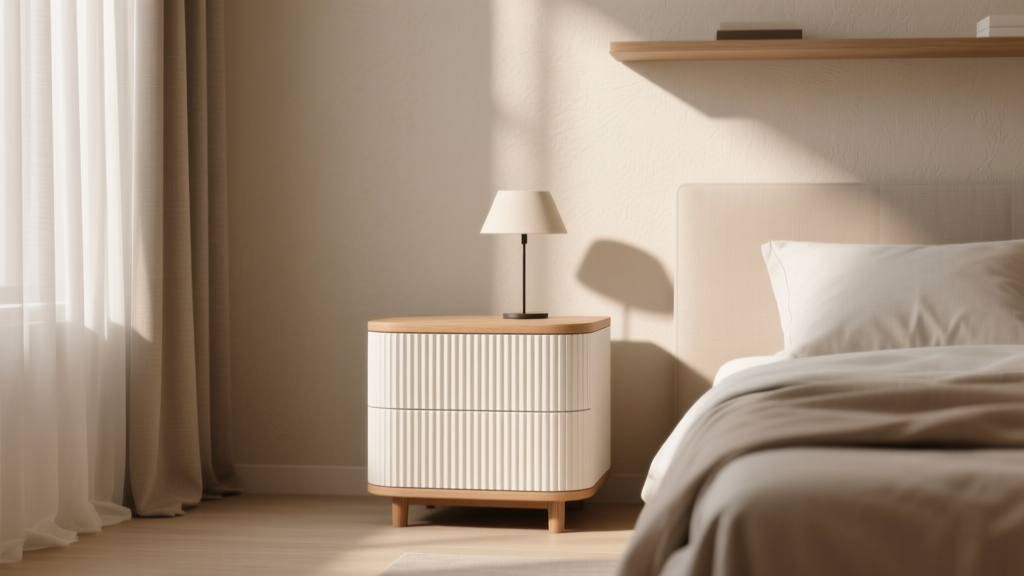
Bedroom Fluted Nightstand Design - The Decor Mag
A bedroom that supports deep, restorative sleep is rarely the result of a single “perfect” item. It’s the sum of small, thoughtful decisions: calming colors, gentle lighting, clear surfaces, and furniture that makes nightly routines feel effortless. One piece that quietly shapes all of those factors is the nightstand—especially a fluted nightstand, where texture and craftsmanship add warmth without visual clutter.
Fluted nightstands (those with vertical grooves or ribbed detailing) have become a favorite in modern bedroom design because they soften hard lines, hide fingerprints and wear better than flat fronts, and add a serene rhythm to the space. When your bedroom feels orderly and soothing, your nervous system gets the message that it’s safe to power down—supporting better sleep quality, fewer nighttime disruptions, and a more relaxed start to the morning.
This guide breaks down how to choose and style a fluted nightstand for a sleep-friendly bedroom, with practical recommendations on materials, lighting, layout, and common mistakes to avoid—whether you’re furnishing a primary suite or upgrading a rental bedroom.
What Makes a Fluted Nightstand So Sleep-Friendly?
Fluting is more than a trend. Those repeated vertical lines create a subtle sense of structure that reads as calm and intentional—similar to how tidy bedding or symmetrical layout can make a room feel more restful.
- Visual softness without visual noise: Texture adds interest while keeping the palette quiet—helpful for a relaxing bedroom environment.
- Better wear and forgiveness: Grooves can disguise minor scuffs and smudges, which helps the room feel “cleaner” day to day.
- Pairs beautifully with warm lighting: Ribbed surfaces catch light and shadow gently, making bedside lighting feel cozy rather than harsh.
- Works across styles: Scandinavian, modern organic, contemporary, coastal, and even classic spaces can all benefit from fluted detailing.
Choosing the Right Fluted Nightstand: Size, Function, and Fit
Get the Height Right (Your Sleep Routine Depends on It)
For comfort and convenience, your nightstand should be close to mattress height. A too-low table forces you to reach down (disruptive when sleepy), while too-tall can feel looming next to the bed.
- Ideal height range: Within 1–3 inches of the top of your mattress.
- Typical nightstand heights: 22–28 inches (platform beds skew lower; taller beds skew higher).
- If you use a thick mattress topper: Measure after adding it—your “real” mattress height may change.
Choose Storage Based on Your Nighttime Habits
A calmer bedroom design often starts with hidden storage. Decide what needs to disappear at bedtime: chargers, eye masks, hand cream, medications, books, earplugs, or a journal.
- One drawer: Minimal, clean look; ideal for small essentials.
- Two drawers: Best for keeping the top surface clear—great for renters with limited closet space.
- Door cabinet: Useful for bulkier items (extra tech, tissue boxes, sleep accessories) and helps reduce visual clutter.
- Open shelf: Pretty for books and baskets, but can look messy fast; use a lidded box or woven bin for a tidier sleep environment.
Find the Right Width (Especially for Small Bedrooms)
Fluted fronts add depth visually, so balance matters—particularly in compact rooms.
- Small spaces: 14–18 inches wide; consider a “slim” fluted nightstand.
- Standard bedrooms: 18–24 inches wide.
- Large bedrooms / king beds: 24–30 inches wide (or a small bedside chest).
Materials and Finishes: Calm, Durable, and Practical
The material you choose affects both the aesthetic and the everyday ease—key for a bedroom meant for rest and relaxation.
Wood and Wood Veneer (Warm and Timeless)
- Oak (white oak, natural oak): A top choice for modern organic bedrooms; the grain feels calming and pairs well with neutral bedding.
- Walnut: Rich, grounding, and excellent with warm white lighting for a cozy bedroom feel.
- Painted MDF with fluting: Often more budget-friendly; look for durable, low-VOC finishes if possible.
Stone, Marble, and Faux Stone Tops (Easy Cleanup, Cooler Look)
- Marble or travertine tops: Beautiful, but can be porous—use a coaster for water and skincare.
- Sintered stone / engineered stone: Lower maintenance and often more stain-resistant; great for nightly tea drinkers.
Hardware and Details (Quiet Luxury Without the Fuss)
- Soft-close drawers: A genuine sleep-friendly upgrade—no slamming sounds at night.
- Rounded corners: Helpful in tight layouts and safer if you tend to bump into furniture.
- Integrated pulls: Keeps the fluted pattern uninterrupted and reduces “visual busyness.”
Budget Ranges: What to Expect
Prices vary based on construction, materials, and hardware quality. Here are realistic ranges for fluted nightstands:
- Budget: $120–$250 each
- Common materials: MDF with veneer, laminate tops
- Best for: renters, guest rooms, trend-forward updates
- Mid-range: $250–$650 each
- Common materials: wood veneer over solid frames, better drawer glides
- Best for: primary bedrooms needing durability and everyday function
- Investment: $650–$1,500+ each
- Common materials: solid wood, premium veneers, stone tops, artisan detailing
- Best for: long-term homes, heirloom-quality bedroom furniture
Styling a Fluted Nightstand for a Restful Bedroom
A nightstand should support your bedtime routine, not compete for attention. Keep the styling minimal, tactile, and functional.
The Sleep-Friendly Nightstand Top: A Simple Formula
A calm setup often follows a “three-item” approach with one optional add-on:
- Lighting: a bedside lamp or wall sconce with warm light
- Hydration: a carafe and glass, or a lidded cup
- Wind-down item: a book, journal, or calming room spray
Optional: a small catchall tray for rings, lip balm, and earplugs (this prevents clutter creep).
Best Decor Pairings for Fluted Texture
- Ceramic lamp bases: matte white, sand, or warm gray for a soft, spa-like bedroom vibe
- Woven accents: a small rattan tray or linen-covered box keeps things breathable and relaxed
- Curved shapes: a round lamp shade or oval tray balances the vertical lines of the fluting
Lighting Recommendations: Gentle, Layered, and Dimmable
Lighting has a direct connection to sleep quality because brightness and color temperature influence melatonin. Your fluted nightstand becomes the anchor point for bedside lighting, so choose options that support your circadian rhythm.
What to Look for in Bedside Lamps
- Bulb warmth: 2200K–2700K for a cozy, sleep-friendly glow
- Brightness: aim for 400–800 lumens with a dimmer (or lower if you prefer very soft light)
- Dimming: a dimmable bulb + dimmer switch, or a touch lamp with multiple levels
- Shade material: linen or fabric shades diffuse light more gently than clear glass
Great Alternatives When Space Is Tight
- Wall sconces: free up nightstand surface area; ideal for narrow bedrooms
- Plug-in swing-arm lights: renter-friendly and adjustable for reading
- Under-shelf lighting: soft LED strips (warm temperature) can act as a nightlight without glare
Color Palettes That Complement Fluted Nightstands (and Support Relaxation)
The best bedroom colors for sleep tend to be muted, warm, and low-contrast. Fluted pieces shine in palettes that let texture do the talking.
- Modern organic: natural oak + creamy whites + warm beige textiles
- Soft contrast: walnut + greige walls + ivory bedding
- Coastal calm: light wood + sandy tones + pale blue accents
- Moody restful: black or deep brown fluted nightstand + charcoal walls + warm linen bedding (use extra warm lighting)
Layout Tips: Where the Nightstand Helps Sleep the Most
Bedroom layout affects how relaxed you feel at bedtime. A stable, balanced setup can reduce the sense of clutter and improve the flow of your nightly routine.
Placement Guidelines
- Keep pathways clear: aim for at least 24 inches of walking space beside the bed when possible.
- Align for visual calm: matching nightstands create symmetry, which many people find soothing.
- If you can’t fit two: use one fluted nightstand on the primary side and a slim floating shelf or stool on the other.
- Anchor with a rug: a rug under the front two-thirds of the bed reduces visual “float” and makes the room feel settled.
Sleep Wellness Tips to Pair With Your Nightstand Setup
Even the most beautiful bedroom decor works best when it supports healthy sleep habits. Use your nightstand as a tool for a smoother wind-down.
- Create a “charging zone” away from the pillow: use a drawer or a cord-managed tray to keep phones out of reach and reduce late-night scrolling.
- Keep nighttime essentials consistent: eye mask, earplugs, hand cream, and a notepad for “brain dump” thoughts.
- Choose calming scent carefully: light lavender or chamomile can be soothing; avoid overpowering diffusers that may irritate sinuses.
- Reduce harsh reflections: if the nightstand is glossy, balance with a matte lamp and soft textiles to keep light gentle.
Common Mistakes to Avoid
- Choosing style over function: a beautiful fluted nightstand without enough storage can lead to clutter—one of the fastest ways to make a bedroom feel restless.
- Wrong scale next to the bed: a tiny nightstand beside a tall bed looks awkward and feels impractical; match height and visual weight.
- Too many objects on top: candles, stacks of books, skincare, and decor can create visual noise. Keep it to a small, intentional set.
- Bright, cool bulbs: 4000K–5000K lighting can feel clinical and stimulate alertness. Choose warmer bulbs for a sleep-friendly bedroom.
- No cord management: dangling cables instantly make a room look messy. Use adhesive clips, a cord box, or a nightstand with a rear cutout.
- Ignoring drawer quality: sticky drawers are frustrating at bedtime. Look for smooth glides and soft-close when possible.
FAQ: Bedroom Fluted Nightstand Design
Are fluted nightstands just a trend, or will they age well?
Fluted detailing has classic roots (you’ll see it in columns and traditional woodworking), so it tends to age better than loud patterns. Choose a simple silhouette and a timeless finish like natural oak, walnut, or a soft matte neutral for longevity.
What’s the best nightstand for a small bedroom or apartment?
Look for a slim fluted nightstand (14–18 inches wide) with at least one drawer. If floor space is tight, pair a narrow nightstand with a wall sconce to free up the surface and reduce clutter.
Do fluted nightstands collect dust in the grooves?
They can, especially in deeper fluting. A quick weekly pass with a microfiber cloth or a soft brush attachment on a vacuum keeps the texture looking crisp without much effort.
Should my nightstands match my bed frame?
Matching can feel calm and cohesive, but it’s not required. What matters most is coordination in undertone and style. For example, a walnut fluted nightstand pairs well with an upholstered bed in warm oatmeal tones, while a painted fluted nightstand works with many wood finishes.
What type of lamp looks best on a fluted nightstand?
A simple lamp with a linen shade is the most universally calming. Choose a base shape that contrasts the fluting—rounded ceramic, smooth stone, or matte metal—so the texture doesn’t compete.
How can I make my nightstand setup more sleep-friendly?
Use warm, dimmable lighting, keep surfaces clear, store stimulating items (work materials, bright screens) out of sight, and set up a consistent “wind-down kit” in the top drawer.
Actionable Next Steps for a Calmer Bedroom
- Measure your mattress height and choose a fluted nightstand within 1–3 inches for easy reach.
- Decide on storage: one drawer for minimalists, two drawers for clutter control, or a cabinet for bulkier essentials.
- Upgrade your bedside lighting to warm (2200K–2700K) and dimmable to support better sleep quality.
- Edit the nightstand top to a simple trio: lamp, hydration, wind-down item—plus a small tray if needed.
- Manage cords so the bedroom looks and feels calmer every single night.
If you’re planning a full bedroom refresh—bedding, layout, color palette, and sleep-friendly lighting—explore more soothing bedroom design ideas and wellness-minded decor inspiration on thedecormag.com.
More Articles
 Bedroom Reeded Wood Mirror Frame - The Decor Mag
 Best Bedroom Sleep Temperature Guide - The Decor Mag
 Best Bedroom Perfume Collection Display - The Decor Mag
 Best Bedroom Sleep Sound Playlist - The Decor Mag
 Bedroom Built-In Wardrobe Ideas - The Decor Mag
 Natural Bedroom Materials: Stylish Ideas for 2026
 Best Bedroom Sleep Tea Collection - The Decor Mag
 Bedroom Textured Plaster Headboard Wall - The Decor Mag
 Bedroom Natural Stone Nightstand Top - The Decor Mag
 Modern Bedroom Design Ideas for 2026 - The Decor Mag