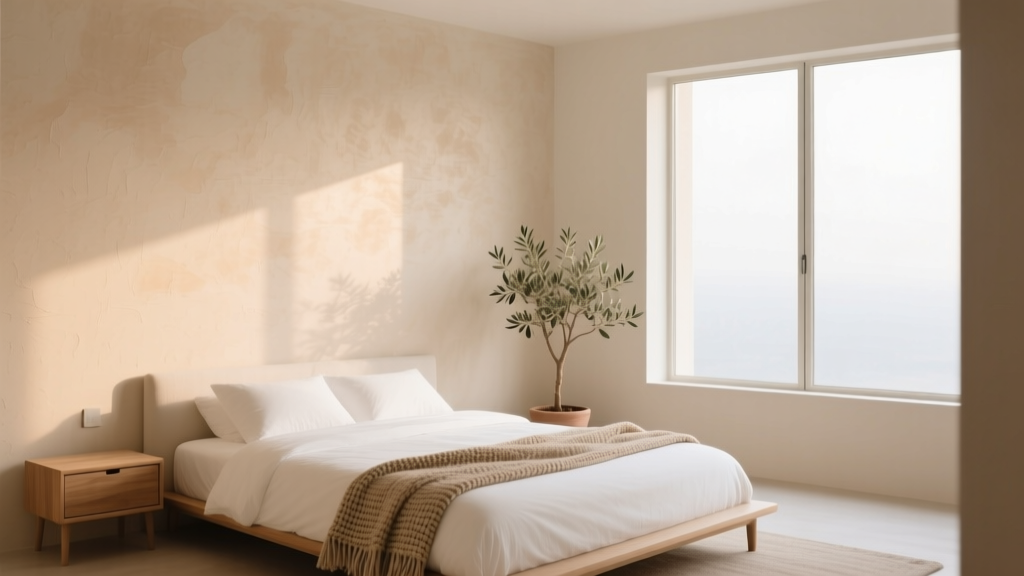
Bedroom Limewash Bedroom Wall Treatment - The Decor Mag
A bedroom should feel like a soft exhale at the end of the day. When the walls are harsh, glossy, or visually busy, your nervous system can stay on alert—exactly the opposite of what you want in a sleep environment. Limewash is one of those rare wall treatments that’s both design-forward and genuinely calming: matte, velvety, and gently dimensional, it reads as quiet texture rather than “statement wall.”
If you’re a homeowner planning a refresh or a renter looking for a sleep-friendly upgrade with minimal fuss, limewash (or limewash-style finishes) can help you create a bedroom that feels warmer, more grounded, and more restorative. Beyond aesthetics, the best bedroom design choices support your circadian rhythm: low-glare finishes, softened contrasts, and a palette that cues the body to unwind.
This guide covers what limewash is, where it works best, how to choose colors for better rest, and how to coordinate furniture, bedding, lighting, and layout around it—plus common mistakes to avoid and practical budget ranges.
Why Limewash Works So Well for Bedroom Design (and Sleep)
Limewash is a mineral-based wall finish made primarily from slaked lime and water, traditionally used on plaster and masonry. Modern versions are available for drywall and previously painted walls, too. What makes it especially suited to bedroom decor is the way it handles light and texture.
Sleep-friendly benefits of limewash walls
- Low glare, high comfort: Limewash is naturally matte, which helps reduce harsh light reflections—ideal for a calming bedroom lighting plan.
- Soft movement without visual clutter: The subtle tonal variation can make a space feel layered without stimulating the brain the way busy patterns can.
- Earthy, grounding effect: Mineral finishes tend to read “natural,” which many people associate with safety and relaxation.
- Often more breathable than standard paint: True limewash can be vapor-permeable (helpful for older homes). For modern “limewash paint,” breathability varies by product.
From a sleep wellness perspective, matte finishes and muted colors support a bedroom environment that’s visually quieter—an underrated factor in winding down, especially if you’re sensitive to light or easily overstimulated.
Limewash vs. “Limewash-Style” Paint: What You’re Really Buying
Not every product labeled “limewash” is the same. Choosing the right one matters for durability, renter-friendliness, and how much texture you’ll see.
True limewash
- Best for: Plaster, brick, stone, and mineral surfaces; character-rich bedrooms; older homes.
- Look: Soft, chalky, mottled, authentically mineral.
- Considerations: Can be more technique-dependent; may require sealing in higher-contact areas; color can shift as it cures.
Limewash-style mineral paint (often acrylic-mineral blends)
- Best for: Drywall, painted walls, DIY projects, rental-friendly upgrades (with landlord approval).
- Look: Similar to limewash—matte with clouding—but more predictable.
- Considerations: Typically easier to apply and more durable; check VOC ratings and washability.
Roman clay / plaster-like finishes
- Best for: A smoother, troweled look; modern bedrooms that still want warmth.
- Look: More uniform, sometimes silkier, with gentle depth.
Wellness tip: If you’re sensitive to odors, prioritize low-VOC or zero-VOC products and allow plenty of cure time before sleeping in the room. Keep windows cracked and run an air purifier for a few days after painting.
Where Limewash Makes the Biggest Impact in a Bedroom
You don’t have to limewash every wall to get the sleep-friendly benefits. The most calming bedrooms typically use limewash strategically, balancing texture with visual rest.
1) The headboard wall (most popular and practical)
A limewash accent wall behind the bed adds depth without introducing busy pattern. It also creates a natural focal point that helps the room feel organized—an underrated contributor to relaxation.
2) All four walls (for a cocoon effect)
In smaller bedrooms, a consistent limewash tone can make the room feel enveloping and serene. Stick with a light-to-mid value color to avoid making the space feel heavy.
3) Niche areas: reading corner, dressing nook, or vanity wall
If your sleep space includes a reading chair or small desk, limewash can visually define zones—helpful for keeping “work mode” separate from “sleep mode.”
Choosing Colors for Rest: Limewash Bedroom Palettes That Calm the Nervous System
The best bedroom colors for sleep tend to be muted, low-contrast, and warm or neutral-leaning. Limewash enhances these palettes because it naturally creates tonal variation.
Sleep-friendly limewash color families
- Soft warm whites: Cream, ivory, and bone create brightness without glare. Great for low-light bedrooms.
- Greige and warm taupe: A balanced neutral that pairs well with wood furniture and linen bedding.
- Sage and muted olive: A classic choice for calming bedroom decor; pairs beautifully with natural textures.
- Clay, sand, and mushroom: Earth tones that feel grounding and cozy, especially in cooler climates.
- Dusty blue-gray: Cooling without feeling icy when the undertone is soft and gray.
Quick palette pairings (walls + textiles)
- Warm white limewash + oatmeal linen duvet + walnut nightstands + soft black accents
- Sage limewash + white percale sheets + natural jute/wool rug + brass lighting
- Greige limewash + sand linen bedding + oak furniture + warm amber bedside bulbs
- Clay limewash + cream boucle throw + dark wood bed frame + ivory curtains
Sleep tip: If you wake often, avoid very bright, high-chroma colors near the bed. Saturated reds and vivid yellows can feel energizing, while overly stark whites can feel clinical under cool LED lighting.
Coordinating Furniture, Bedding, Lighting, and Layout with Limewash Walls
Limewash sets a serene background, but your bedroom furniture and lighting choices determine whether the room truly supports rest. Aim for a “quiet” layout and layered textures that invite relaxation.
Furniture recommendations (with budget ranges)
- Bed frame: Wood (oak, ash, walnut) or upholstered linen for softness.
Budget: $250–$800 (basic), $900–$2,500 (solid wood or quality upholstery) - Nightstands: Two matching or closely related pieces reduce visual noise. Choose closed storage if clutter is a challenge.
Budget: $80–$250 each (budget), $300–$900 each (mid-high) - Dresser: Prioritize smooth-glide drawers and enough capacity so surfaces stay clear.
Budget: $250–$700 (budget), $800–$2,000+ (mid-high) - Reading chair (optional): A small upholstered chair in a neutral performance fabric creates a wind-down nook.
Budget: $200–$600 (budget), $700–$1,500 (mid-high)
Bedding materials that pair beautifully with limewash
- Linen duvet cover: Textural, breathable, and visually soft against limewash texture.
- Cotton percale sheets: Crisp and cool for hot sleepers; keeps the bed feeling fresh.
- Cotton sateen sheets: Smoother and slightly warmer for cooler rooms.
- Wool or alpaca throw: Temperature-regulating and cozy without feeling stuffy.
Bedding budget ranges:
- Sheets: $50–$120 (budget cotton), $120–$250 (quality percale/sateen), $250–$450 (premium/organic)
- Duvet cover: $70–$150 (budget), $150–$300 (mid), $300–$500 (premium linen)
- Pillows: $30–$80 (basic), $90–$180 (quality latex/foam/down alternative), $180–$300 (premium)
Lighting that flatters limewash and supports circadian rhythm
Limewash looks best under warm, diffused light. For sleep wellness, avoid cool color temperatures at night.
- Bedside lamps: Choose shades that diffuse light (linen, paper, frosted glass). Aim for 2700K (warm) bulbs.
- Wall sconces: Great for small bedrooms—free up nightstand space and reduce clutter.
- Dimmer switches: One of the highest-impact upgrades for a restful bedroom.
- Layered lighting plan: Combine ambient (ceiling), task (reading), and low-level (night light) options.
Lighting budget ranges:
- Plug-in sconces: $40–$140 each
- Table lamps: $30–$120 (budget), $150–$400 (mid-high)
- Dimmer + installation: $20–$60 (DIY parts), $150–$350 (electrician)
Layout guidance for a calmer sleep environment
- Give the bed breathing room: Ideally 24–30 inches on each side for ease and symmetry.
- Anchor with a rug: A wool or wool-blend rug reduces echo and feels warm underfoot. Size up so at least the front 2/3 of the bed sits on the rug.
- Keep pathways clear: Nighttime navigation should be effortless; this reduces stress and improves safety.
- Create a “drop zone”: A small tray or bowl for glasses/earplugs prevents bedside clutter.
Practical Application Tips (DIY-Friendly and Renter-Aware)
Limewash is achievable as a DIY project, but it’s technique-sensitive. A smooth plan lowers stress—and leads to a more serene finish.
Before you start
- Sample first: Paint large swatches on multiple walls and observe morning, afternoon, and evening light.
- Prep matters: Patch holes, sand rough spots, and clean walls. Limewash highlights texture—good and bad.
- Check compatibility: Some products need a specific primer (especially over glossy paint).
Application essentials
- Tools: A specialty limewash brush (large, blocky bristles) or the manufacturer-recommended brush; painter’s tape; drop cloths.
- Technique: Work in small sections using varied, crisscross strokes for a natural clouding effect.
- Coats: Usually 2 coats for depth; allow proper drying time between coats.
Renter-friendly options
- Landlord-approved paint: If allowed, choose a mineral paint with easier coverage for future repainting.
- Peel-and-stick alternatives: Consider limewash-look wallpaper for a similar softness without permanent change (choose matte, low-sheen options).
- Focus on one wall: An accent wall behind the bed is often the simplest to restore later.
Sleep Wellness Enhancements to Pair with Limewash Walls
Limewash sets the mood, but these bedroom upgrades directly support sleep quality.
- Blackout or room-darkening curtains: Especially helpful if you’re near streetlights. Look for lined drapery panels or blackout roller shades.
- Air quality support: A quiet HEPA air purifier can reduce dust and allergens. Choose one rated for your room size.
- Sound softening: Add a wool rug, upholstered headboard, and heavier curtains to reduce echo.
- Nightstand boundaries: Keep chargers, bright screens, and work items off the bedside surface to reinforce “sleep-only” cues.
- Warm, low lighting after sunset: Use dimmable bulbs or smart bulbs to shift warmer in the evening.
Common Mistakes to Avoid with Limewash Bedroom Wall Treatment
- Choosing a color without testing at night: Limewash can look dramatically different under warm ламplight vs daylight.
- Pairing limewash with cool, bright LEDs: 4000K–5000K bulbs can make walls feel flat and clinical, undermining cozy bedroom decor.
- Over-accessorizing: Limewash already adds visual movement. Too many art pieces, patterns, and decorative objects can feel restless.
- Skipping surface prep: Unfilled dents and uneven patches become more obvious under matte finishes.
- Ignoring sheen coordination: High-gloss trim next to matte limewash can feel harsh. Consider satin or matte trim paint for a softer transition.
- Not planning ventilation/cure time: Even low-VOC products may have an odor. Give the room time before sleeping there.
FAQ: Bedroom Limewash Walls
Is limewash a good choice for small bedrooms?
Yes. A light-to-mid tone limewash can make a small bedroom feel softer and more dimensional without adding visual clutter. Pair it with warm lighting (2700K) and simple bedding for a calm, spacious feel.
Are limewash walls durable enough for a bedroom?
Typically, yes—bedrooms are low-traffic compared to hallways or kitchens. Durability depends on the product and whether it’s sealed. If your headboard or pillows rub the wall, consider a tougher limewash-style paint or a manufacturer-approved sealer.
What’s the best limewash color for better sleep?
Muted neutrals and soft, nature-inspired tones tend to be most sleep-friendly: warm white, greige, sage, and clay. Choose a shade that looks calm under both daylight and bedside lamp light.
Can renters do a limewash wall treatment?
If your lease allows painting, a limewash-style mineral paint is often the most straightforward. If painting isn’t allowed, look for matte peel-and-stick wallpaper with a limewash look, or create a similar effect with layered textiles and art behind the bed.
Do limewash walls work with modern bedroom furniture?
They do. Limewash is a strong match for modern, Scandinavian, Japandi, and minimalist bedroom design because it adds warmth and texture without needing bold patterns. Keep furniture lines clean and add a few natural materials (wood, linen, wool) for balance.
How much does it cost to limewash a bedroom?
Costs vary by product and whether you DIY. As a general range, plan for $150–$400 for DIY materials for one accent wall (paint, primer as needed, brushes), and $600–$2,000+ for professional labor depending on room size, wall condition, and finish complexity.
Actionable Next Steps for a Calmer Limewash Bedroom
- Decide your scope: Headboard wall first, or all walls for a cocoon effect.
- Pick 2–3 sample colors: Test them in morning light and bedside lamplight.
- Set your sleep-first lighting: Add dimmers and switch to warm 2700K bulbs before you paint, so you can judge the color accurately.
- Choose grounding textiles: Linen duvet, cotton sheets, and a wool rug to complement the mineral texture.
- Reduce visual noise: Prioritize closed storage, clear pathways, and a simplified nightstand setup.
Limewash is more than a trend—it’s a practical way to create softer light, calmer visuals, and a bedroom atmosphere that supports true rest. For more soothing bedroom ideas, sleep-friendly decor guides, and real-world layout tips, explore the bedroom inspirations at thedecormag.com.
More Articles
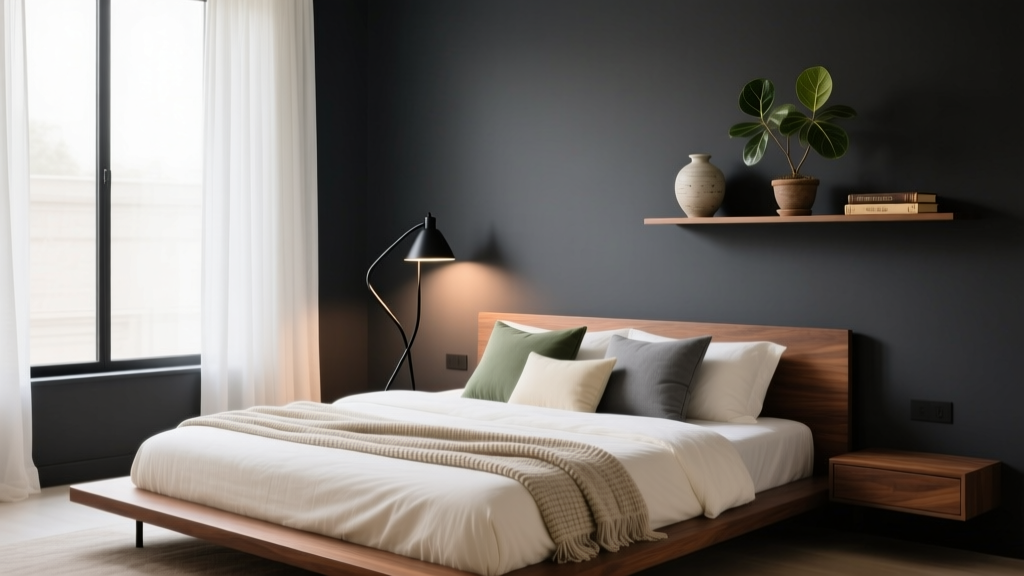 How to Style a Bedroom with Dark Walls - The Decor Mag
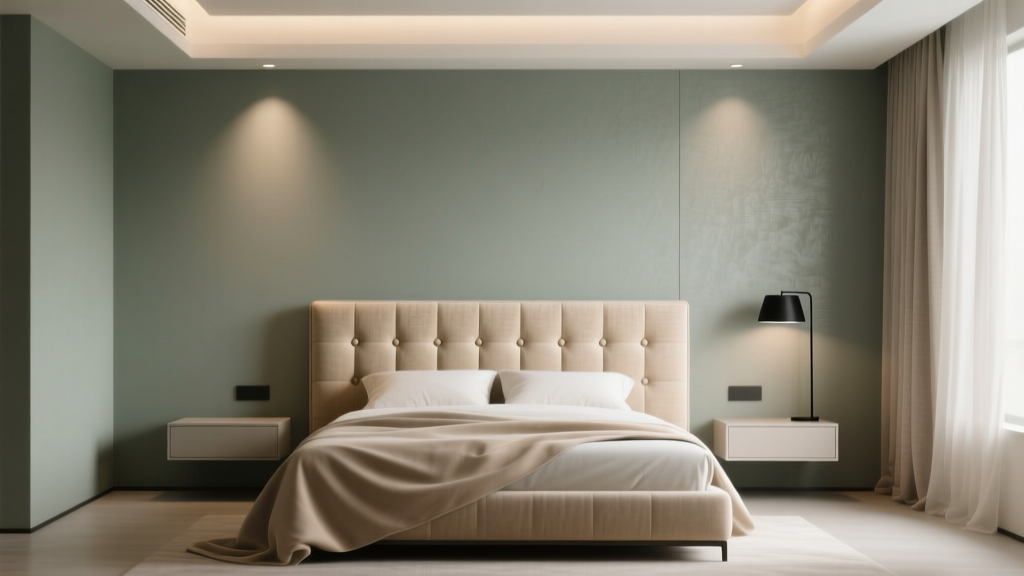 Bedroom Upholstered Headboard Trends - The Decor Mag
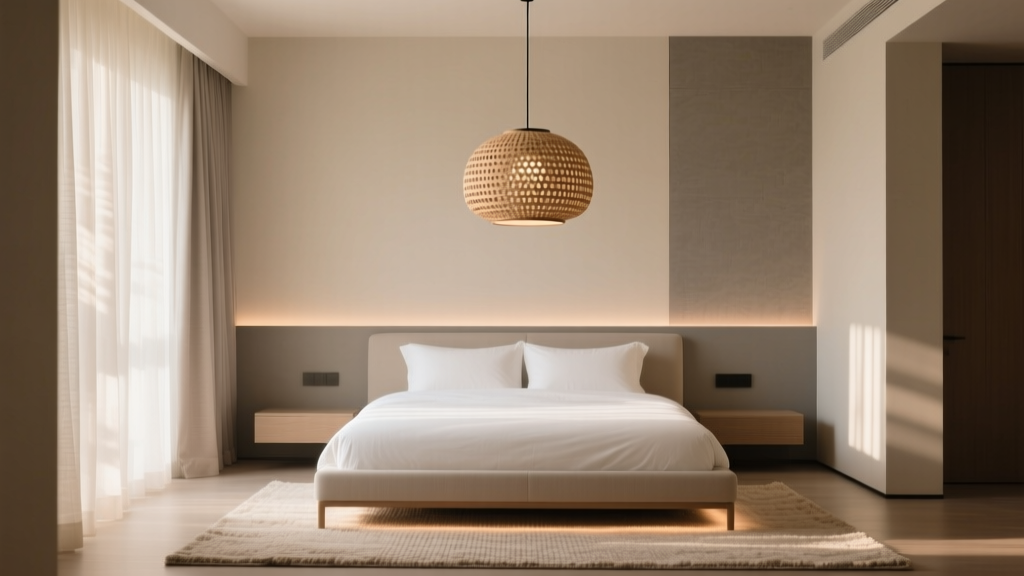 Bedroom Woven Pendant Light Ideas - The Decor Mag
 How to Choose Bedroom Curtain Length - The Decor Mag
 Best Bedroom Storage Solutions Under Bed - The Decor Mag
 Mid-Century Modern Bedroom Furniture Guide - The Decor Mag
 Small Bedroom Design Tricks to Maximize Space (2026)
 Bedroom Styling with Intentional Design | The Decor Mag
 Minimalist Bedroom Styling: Simple Ideas (2026)
 How to Choose Bedroom Furniture Scale - The Decor Mag