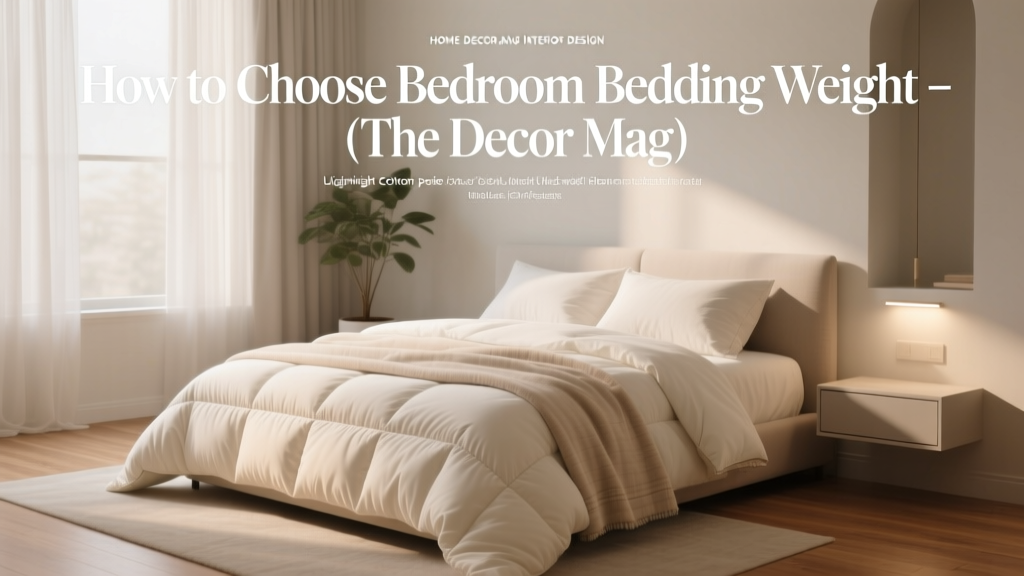
How to Choose Bedroom Bedding Weight - The Decor Mag
The right bedding weight can be the quiet difference between tossing at 2 a.m. and drifting off easily. If you wake up sweaty, shivering, or constantly adjusting the covers, your sleep environment is sending signals to your nervous system that it isn’t safe, stable, or comfortable. A well-chosen duvet, comforter, or blanket helps your body stay in its ideal temperature range, reduces nighttime wake-ups, and supports deeper, more restorative sleep.
Bedding weight is also a bedroom design decision. The loft of a duvet changes the look of your bed. A lightweight quilt creates an airy, minimal feel, while a plush comforter makes the room feel cocooned and cozy. When your bedding weight matches your climate, your body temperature, and your bedroom decor, your space becomes calmer and easier to maintain—two underrated factors in long-term sleep wellness.
This guide breaks down how to choose bedding weight with practical benchmarks, material recommendations, and room-by-room design tips—whether you’re a hot sleeper in an apartment or layering for winter in a drafty older home.
What “Bedding Weight” Really Means (And Why It Affects Sleep)
Most people think “weight” means how heavy a comforter feels. In reality, bedding weight is a mix of warmth, insulation, and drape. Your brain and body respond to all three.
The key factors that determine bedding weight
- Fill weight: How much down, feather, or fiber is inside a duvet/comforter. More fill usually means warmer and heavier.
- Loft: How fluffy it is. Higher loft traps more air (more warmth) even if it doesn’t feel “heavy.”
- Fabric and weave: Percale breathes; sateen feels smoother and warmer. Flannel traps heat. Linen vents heat and moisture.
- Layering system: A quilt plus blanket can feel heavier than one duvet, but offer better adjustability.
- Bed size and drape: A king comforter on a queen bed adds perceived weight and warmth because of extra fabric coverage.
How bedding weight connects to sleep quality
- Thermoregulation: Your body temperature naturally drops at night. Overheating or getting chilled can trigger micro-awakenings.
- Pressure and comfort: Some people sleep better with a gentle “tucked in” feeling; others feel restricted by heavy bedding.
- Humidity management: Breathable materials reduce clamminess and help stabilize comfort across the night.
Start With Your Sleep Profile: Hot, Cold, or “In Between”
Before you shop, get clear on how you actually sleep—not just the season outside.
Quick self-check
- Hot sleeper signs: Night sweats, feet outside the covers, waking up dehydrated, prefer crisp sheets.
- Cold sleeper signs: Cold hands/feet, pile on blankets, wake up tense or curled up.
- Mixed sleeper signs: Warm at bedtime but chilly at 4–5 a.m., or partners have different temperature needs.
Partner mismatch solutions (without buying two beds)
- Split duvets: Two Twin XL duvets on a King (common in Scandinavian bedding) so each person chooses their own warmth level.
- Layer asymmetrically: Add a throw or light blanket on one side only.
- Choose a breathable base: A mid-weight duvet + breathable sheets often solves most “one hot, one cold” households.
Choose the Right Warmth Level: Lightweight, Midweight, or Heavy
Brands label warmth differently, but these categories help you compare. If you see a “TOG rating” (common in the UK/EU), higher TOG means warmer.
Lightweight bedding (summer weight)
Best for: Hot sleepers, warm climates, well-insulated apartments, rooms above 70°F/21°C.
- What to look for: Lightweight duvet/comforter, quilt, coverlet, or a breathable blanket (cotton, linen).
- Ideal materials: Cotton percale, linen, bamboo lyocell (cool feel), light down alternatives.
- Design tip: Choose a structured quilt with a clean edge for a polished bed without visual bulk.
Midweight bedding (all-season)
Best for: Most sleepers, variable weather, rooms around 65–70°F/18–21°C.
- What to look for: “All-season” duvet insert or comforter with moderate fill; add or remove a blanket as needed.
- Ideal materials: European down (or a high-quality down alternative), cotton sateen cover (slightly warmer), percale cover (slightly cooler).
- Design tip: Midweight inserts create that hotel-bed look—full, inviting, and easy to style with a tailored duvet cover.
Heavyweight bedding (winter weight)
Best for: Cold sleepers, drafty homes, rooms under 65°F/18°C, winter climates.
- What to look for: Heavy duvet/comforter with higher fill weight; flannel or brushed cotton layers; wool blanket.
- Ideal materials: Down (high fill power), wool (excellent temperature regulation), thick cotton flannel.
- Design tip: Balance visual heaviness with lighter colors (cream, oat, pale gray) so the room stays serene.
Material Guide: What Feels Light, What Sleeps Cool, What Lasts
Your bedding materials influence both comfort and bedroom decor. Prioritize breathability and durability for a healthier sleep environment.
Comforter and duvet fill options
- Down: Warm for its weight, breathable, long-lasting. Look for responsibly sourced down. Great for cold sleepers who don’t want a “heavy” feel.
- Down alternative (polyester microfiber): Budget-friendly, easy-care, often hypoallergenic. Can trap heat depending on quality; choose one marketed as “cooling” or with breathable baffle construction.
- Wool: Excellent at regulating temperature and moisture; feels gently substantial without overheating easily. Often pricier, but a smart long-term investment.
- Cotton fill: Breathable and weighty, but can feel heavier and less lofty; good for those who dislike “puffy” bedding.
- Silk: Lightweight and thermoregulating; luxurious and often costly. A strong choice for hot sleepers who want a refined feel.
Sheet and cover fabrics that change warmth
- Cotton percale: Crisp, breathable, cooler feel. Excellent for hot sleepers and layered looks.
- Cotton sateen: Smooth, slightly warmer, drapes beautifully for a cozy bedroom aesthetic.
- Linen: Airy, moisture-wicking, relaxed texture that suits calm, modern bedroom design.
- Flannel: Warm and cozy; best for winter, but can overheat hot sleepers.
- Bamboo lyocell/TENCEL: Soft and often cool-to-the-touch, good for humidity control; choose reputable brands for longevity.
Layering: The Most Practical Way to Get Bedding Weight Right
If you’re unsure, build an adjustable bedding “wardrobe.” Layering makes your bed look intentional and lets you fine-tune warmth without buying multiple expensive duvets.
A simple, sleep-friendly layering formula
- Base: Breathable fitted sheet (percale or linen for cooler sleep).
- Top sheet (optional): Helpful for hot sleepers who kick off the duvet but still want coverage.
- Main layer: Duvet/comforter in your most-used weight (often midweight).
- Adjuster layer: A cotton blanket or lightweight quilt to add/remove quickly.
- Accent: Throw blanket at the foot (choose wool or cotton for function, not just style).
How to style layers so the room feels calm
- Stick to 2–3 core colors (example: warm white + sand + muted sage) for a cohesive bedroom decor palette.
- Mix textures instead of patterns: linen + matelassé + a knit throw reads soothing and elevated.
- Use one patterned element max (pillow sham or throw) to avoid visual clutter that can feel mentally stimulating at night.
Match Bedding Weight to Your Bedroom Temperature (Not the Calendar)
Room temperature is one of the biggest drivers of sleep quality. Bedding weight should complement how warm or cool your bedroom runs.
If your room runs warm
- Choose a lightweight duvet insert and rely on a blanket for flexibility.
- Use percale sheets and a breathable duvet cover (cotton or linen).
- Swap heavy rugs for a flatweave to reduce heat retention in small bedrooms.
If your room runs cold or drafty
- Add a wool blanket under the duvet for steady warmth without trapping moisture.
- Consider thermal curtains to reduce drafts (also improves sleep by blocking outdoor light and noise).
- Place your bed away from leaky windows; even 6–12 inches can reduce the chill zone.
Bedroom Design Recommendations That Support Better Sleep
Bedding weight works best when the rest of the sleep environment is set up for comfort: calm lighting, uncluttered layout, and materials that feel good to the touch.
Furniture and layout
- Upholstered or wood headboard: Adds insulation and comfort; helps pillows stay in place for better neck support.
- Keep pathways clear: A clutter-free route to the bed reduces stress and nighttime disruptions.
- Use a bench or trunk at the foot of the bed: Perfect for storing seasonal bedding (swap weights without crowding closets).
Lighting for a calmer wind-down
- Use 2700K warm bulbs in bedside lamps to support melatonin-friendly evening light.
- Add dimmer switches or smart bulbs to gradually lower brightness at night.
- Avoid harsh overhead lighting right before bed; rely on two bedside lamps for balanced, soothing light.
Colors and textiles that make bedding feel more comfortable
- Cool, airy feel: Soft whites, misty gray, pale blue, muted green; pair with linen or percale.
- Warm, cozy feel: Cream, oatmeal, clay, warm taupe; pair with sateen, flannel (in winter), and wool accents.
- Tip: If you want a heavier-looking bed without extra warmth, choose plush textures in lighter weights (matelassé quilts, double-layer gauze).
Budget Ranges: What to Buy First (And What’s Worth Spending More On)
You can build a comfortable, sleep-friendly bed at many price points. Prioritize items that directly affect temperature and nightly comfort.
Starter budget: $80–$200
- Lightweight or all-season down-alternative comforter: $40–$120
- Cotton percale sheet set (basic): $40–$100
- Cotton blanket for layering: $25–$60
Mid-range upgrade: $200–$500
- Quality all-season duvet insert (down alternative or entry-level down): $120–$250
- Linen or premium percale duvet cover: $120–$220
- Wool or cotton throw: $60–$150
Investment level: $500–$1,200+
- High fill-power down duvet or wool duvet: $300–$800+
- Premium linen sheet set or TENCEL blend: $250–$600
- Storage-friendly bed bench/trunk for seasonal rotation: $200–$600+
Sleep-Friendly Wellness Tips That Make Any Bedding Weight Work Better
- Air out your bed: Fold the duvet back for 10–15 minutes each morning to release moisture and keep bedding fresher.
- Rotate seasonally: Even if you keep one main duvet, swap the top layer (quilt vs. wool throw) to match the room.
- Keep the bedroom slightly cool: Many sleepers do best around 60–67°F (15–19°C), then adjust bedding weight for comfort.
- Choose breathable mattress protection: A waterproof protector can trap heat; look for a “cooling” or breathable membrane style.
- Reduce nighttime wake-ups: Keep an extra layer (thin blanket) within reach so you can adjust without fully waking.
Common Mistakes to Avoid When Choosing Bedding Weight
- Buying based on looks alone: A dramatic, lofty comforter can overheat you if your room runs warm.
- Ignoring duvet cover fabric: A warm sateen or flannel cover can turn an all-season insert into a winter setup.
- Over-layering with non-breathable materials: Synthetic fleece throws can trap heat and moisture, leading to clammy sleep.
- Choosing one “perfect” comforter for all year: Most homes need at least a layering strategy, especially in transitional seasons.
- Wrong sizing: Too small leads to drafts and nightly tug-of-war; consider sizing up for better drape and coverage.
FAQ: Choosing the Right Bedding Weight
What bedding weight is best for hot sleepers?
Hot sleepers usually do best with a lightweight duvet or quilt plus breathable percale or linen sheets. Look for down with lower fill weight (still breathable) or a cooling down-alternative insert, and avoid flannel or heavy synthetic throws.
Is a heavier comforter always warmer?
Not always. Warmth depends on insulation and loft, not just heaviness. A lofty down duvet can be very warm without feeling heavy, while a dense cotton-filled blanket may feel heavy but not trap warmth the same way.
Should I use a duvet or a comforter?
A duvet insert + duvet cover is easier to customize seasonally (swap inserts or covers) and is great for a curated bedroom design. A comforter is simpler and often budget-friendly, but less flexible if your temperature needs change.
What’s the best all-season bedding setup?
A reliable system is: percale sheets + a midweight all-season duvet insert + a cotton blanket you can add or remove. This combination fits most homes and helps stabilize comfort across the night.
How can I make my bed feel cozier without overheating?
Layer texture rather than bulk: add a matelassé quilt, a lightweight wool throw, or a linen duvet cover. Keep your main insert midweight and use the throw as a removable warmth boost.
How often should I replace a duvet or comforter?
Quality duvets can last 5–10 years (sometimes longer) with a duvet cover and proper care. Replace sooner if you notice persistent odors, flattened loft, clumping fill, or allergy flare-ups despite cleaning.
Next Steps: Build a Bed That Looks Beautiful and Sleeps Even Better
Start by noticing your temperature pattern over a week: do you wake up warm, cold, or both? Then choose a main bedding weight (lightweight, midweight, or heavy) and add one flexible layer to fine-tune comfort. Pair breathable materials with calming bedroom colors and warm, dimmable lighting so your space supports sleep from the moment you walk in.
For more soothing bedroom decor ideas, sleep-friendly layouts, and bedding guides, explore the latest inspiration on thedecormag.com.
More Articles
 Best Bedroom Sound Machine Placement - The Decor Mag
 How to Mix Patterns on Your Bed - The Decor Mag
 How to Incorporate Woven Textiles in Bedroom - The Decor Mag
 Bedroom Leather Pull Nightstand Handles - The Decor Mag
 How to Choose Bedroom Mattress Topper - The Decor Mag
 How to Choose Bedroom Duvet Cover Style - The Decor Mag
 Best Bedroom Shoe Storage Solutions - The Decor Mag
 Bedroom Cane Webbing Headboard Ideas - The Decor Mag
 Bedroom Fluted Wood Bed Frame Trend - The Decor Mag
 How to Layer Bedroom Lighting - The Decor Mag