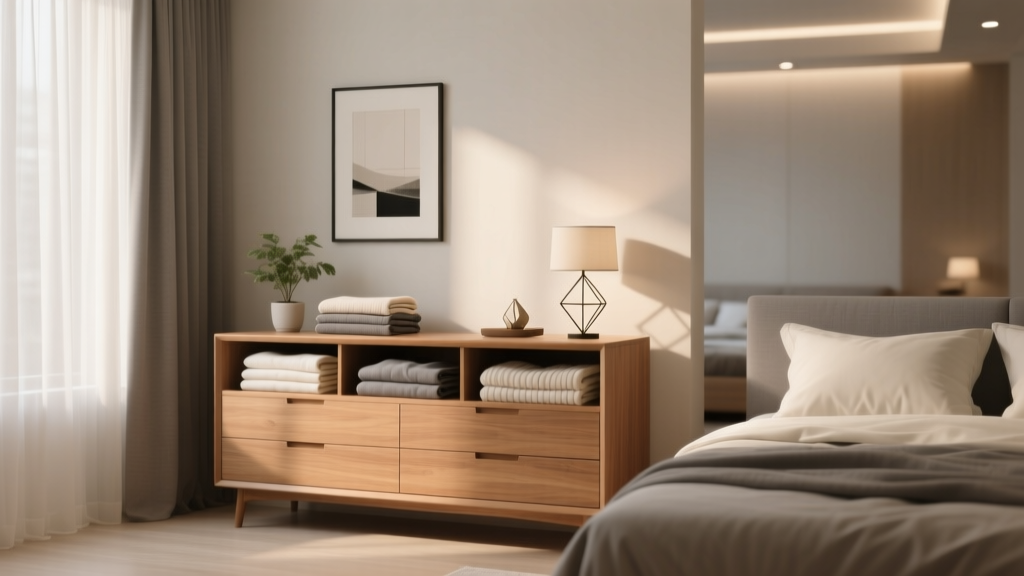
Best Bedroom Dresser Organization Tips - The Decor Mag
A well-organized dresser does more than make your bedroom look tidy—it changes how your space feels at night and how your mornings begin. When drawers glide open easily, clothes are easy to find, and surfaces stay clear, your bedroom becomes calmer by default. That sense of visual order signals “rest” to the brain, supporting a more peaceful sleep environment and a smoother wind-down routine.
Clutter and decision fatigue are real sleep disruptors. A dresser that constantly overflows can create low-grade stress, keep you hunting for essentials, and invite “just one more task” energy right when you want your body to settle. Thoughtful bedroom design—storage included—reduces friction, softens the mood, and keeps the room focused on relaxation.
These dresser organization tips combine practical systems, sleep-friendly layout ideas, and decor-minded details so your bedroom stays restorative while still handling real life.
Start With a Calm Reset: Declutter Before You Organize
Organizing works best when you’re not trying to store too much. Before buying bins or dividers, do a quick edit so your dresser only holds items you truly use.
The 20-Minute Dresser Reset
- Empty one drawer at a time (less overwhelming, more effective).
- Sort into four piles: Keep, Donate/Sell, Repair, Relocate.
- Match the dresser to its job: everyday clothing, sleepwear, undergarments, and accessories should live here; seasonal overflow can go elsewhere.
- Use the “two-week test” for loungewear and pajamas: if you don’t reach for it within two weeks, it likely doesn’t deserve prime drawer space.
What to Relocate (So Your Bedroom Feels Lighter)
- Work documents and office supplies (they subtly cue productivity, not rest).
- Bulky winter gear in summer (store in under-bed bins or closet shelves).
- Extra toiletries and backups (better in a linen closet or bathroom storage).
Assign Each Drawer a Purpose (The Key to Staying Organized)
Most dresser chaos comes from “miscellaneous drawers” that become catch-alls. Instead, give each drawer a clear category so putting laundry away stays simple and your bedroom remains uncluttered.
Recommended Drawer Map (Adaptable to Any Dresser)
- Top drawer: underwear, socks, bras, everyday accessories.
- Second drawer: sleepwear and loungewear (supports bedtime routines).
- Middle drawers: tees, tanks, gym basics.
- Bottom drawers: jeans, heavier knits, seasonal items in rotation.
If you share a dresser, divide it by columns (left/right) instead of alternating drawers—this reduces daily mix-ups and keeps the system stable.
Use Dividers and Inserts That Actually Fit Your Clothing
Dresser organizers should match your drawer depth and your wardrobe. A few well-chosen inserts create structure without making drawers harder to use.
Best Product Types for Dresser Organization
- Expandable bamboo drawer dividers: sturdy, breathable, and visually warm. Great for socks, underwear, and tees.
- Fabric drawer bins (modular cubes): ideal for renters—lightweight, adjustable, and easy to move.
- Acrylic organizers: best for small accessories you want to see quickly (watches, hair ties). Use sparingly to avoid a “busy” look.
- Felt or wool-blend trays: soft, quiet, and gentle on jewelry—excellent for a sleep-friendly bedroom vibe.
- Drawer liner: reduces sliding and noise; choose non-adhesive, washable options.
Material Recommendations (Sleep-Friendly and Low-Odor)
- Bamboo, solid wood, and cotton canvas for lower off-gassing and a natural look.
- Avoid strong-smelling plastics in tightly closed drawers, especially in smaller bedrooms.
- Look for low-VOC finishes when purchasing a new dresser—helpful for overall bedroom air quality.
Budget Ranges for Organizing Supplies
- $15–$35: fabric bins, basic dividers, drawer liner.
- $35–$80: bamboo divider sets, felt tray systems, mixed organizer kits.
- $80–$150: premium modular systems, custom-fit inserts, jewelry drawer trays.
Folding Methods That Keep Drawers Peaceful (and Visible)
Overstuffed piles create visual noise and make it easy to forget what you own. A tidy folding method can turn drawers into an at-a-glance closet, minimizing morning decisions and nighttime rummaging.
Try “File Folding” for Daily Basics
- Fold items into rectangles that stand upright.
- Arrange by category (tees together, tanks together) and then by color for a calmer visual flow.
- Leave a little breathing room—about a finger’s width between sections—so items lift out easily.
Roll Soft Items for Travel-Like Efficiency
Rolling works well for pajamas, leggings, and workout wear. Keep rolled items in a bin so they don’t unravel and spread.
Make the Top of the Dresser a Restful “Landing Zone”
The dresser top often becomes a magnet for clutter: mail, keys, random chargers. Since it’s typically in your line of sight from bed, a messy surface can subtly keep your mind active. Treat the dresser top like a small vignette—simple, functional, and calming.
A Sleep-Supportive Dresser Top Setup
- One tray (wood, rattan, or ceramic) for essentials: hand cream, lip balm, watch, ring dish.
- A soft-glow lamp with a warm bulb (2700K) for evening wind-down lighting.
- A small plant (snake plant or pothos) or a minimal vase for a soothing natural element.
- Optional: a linen-covered box for chargers to reduce visual clutter.
Lighting Recommendations for Better Sleep
- Choose a bedside or dresser lamp with warm white bulbs (2200K–2700K) to signal evening calm.
- Use dimmable lighting if possible; it reduces harsh contrast and supports melatonin-friendly routines.
- Avoid placing a bright mirror directly opposite the bed if it catches and reflects light at night.
Furniture and Layout Tips: Place the Dresser Where It Helps, Not Hurts
Even a beautifully organized dresser can feel stressful if it blocks movement or crowds your sleep space. Layout matters for both function and relaxation.
Best Dresser Placement for a Calm Bedroom
- Keep pathways open: aim for 24–30 inches of clearance in front of drawers.
- Reduce visual busyness from bed: if your dresser top tends to collect items, place it out of direct sightline from the pillow.
- Anchor with a rug: a soft area rug near the dresser makes morning routines quieter and cozier.
Choosing the Right Dresser (Especially for Small Bedrooms)
- For tight spaces: a tall chest of drawers (vertical storage) saves floor area.
- For shared bedrooms: double dressers or two smaller dressers can reduce daily friction.
- Look for soft-close drawers if noise disrupts sleep schedules (especially with partners or kids).
- Prefer solid wood or quality engineered wood for smoother drawer operation and longer life.
Budget Ranges for Dressers
- $150–$350: flat-pack or compact dressers; check drawer glide quality and stability.
- $350–$800: mid-range solid wood/veneered options with better hardware.
- $800–$2,000+: heirloom-quality solid wood, soft-close hardware, and premium finishes.
Color and Decor Choices That Make Organization Feel Easier
Color affects how restful a bedroom feels. When your dresser area looks cohesive, it’s easier to maintain because it feels “finished,” not chaotic.
Sleep-Friendly Colors Around the Dresser
- Soft neutrals: warm white, oatmeal, greige for a clean, breathable look.
- Cool calming hues: dusty blue, sage, muted lavender to support relaxation.
- Deeper tones (used sparingly): charcoal, navy, forest green for a grounding effect—best balanced with light bedding.
Hardware and Finish Upgrades (Quick, Rental-Friendly)
- Swap knobs for brushed brass, matte black, or ceramic to refresh style without replacing furniture.
- Add non-slip drawer liner in a neutral tone for a cleaner interior and less noise.
- Use matching hangers and consistent storage bins nearby to create visual calm.
Sleep Wellness: Keep Dresser Habits Aligned With Wind-Down
The goal isn’t perfect drawers—it’s a bedroom that supports rest. A few dresser-related habits can make evenings gentler and mornings less rushed.
Nightstand-to-Dresser Routine (2 Minutes)
- Put away jewelry and accessories into a tray or top drawer insert.
- Place tomorrow’s outfit in one designated drawer section (or folded on a shelf) to reduce morning decisions.
- Keep fragrance subtle—choose a low-scent sachet (lavender or cedar) rather than strong sprays.
Odor and Fabric Care Tips
- Use cedar blocks or lavender sachets to keep drawers fresh without overpowering the room.
- Avoid heavy synthetic drawer fresheners if you’re scent-sensitive.
- Wash sleepwear with fragrance-free or lightly scented detergent for a calmer sensory environment.
Common Dresser Organization Mistakes to Avoid
- Overfilling drawers: it causes wrinkles, stuck rails, and constant disruption. Leave 10–20% empty space.
- Buying organizers before decluttering: you’ll end up storing clutter more neatly, not solving the issue.
- Creating a “random” drawer: it becomes a stress drawer that spills into everything else.
- Ignoring drawer depth: deep drawers need bins or vertical folding—otherwise items vanish into stacks.
- Storing sleep-disrupting items: bright electronics, messy paperwork, or anything that triggers “to-do” thoughts.
- Using harsh lighting at the dresser: a glaring bulb can make nighttime routines feel stimulating rather than soothing.
FAQ: Bedroom Dresser Organization Tips
How do I organize a dresser when I have very little space?
Use vertical folding (file method), add one set of expandable dividers, and prioritize everyday essentials in the top two drawers. Store off-season clothing in under-bed bins or a closet shelf to keep dresser drawers breathable.
What’s the best way to organize underwear and socks?
Use drawer dividers or small fabric bins to create sections. Sort socks by type (ankle, crew, athletic) and keep frequently used pairs in the easiest-to-reach area. This prevents the drawer from becoming a tangled pile.
Should I put pajamas and loungewear in the dresser or closet?
If you want a smoother bedtime routine, keep pajamas and loungewear in a dedicated dresser drawer—ideally the second drawer. It reduces the need to open closets or search at night, supporting a calmer sleep environment.
How can I keep my dresser top from becoming cluttered?
Limit the surface to one tray and one decorative moment (lamp, plant, or framed print). If something doesn’t fit in the tray, it doesn’t belong on the dresser. Do a 30-second reset each evening.
What’s the most sleep-friendly lighting near a dresser?
Choose a warm bulb (2200K–2700K) in a shaded lamp and, if possible, make it dimmable. Soft, warm lighting keeps the bedroom feeling cozy and supports a wind-down routine.
How often should I reorganize my dresser?
A quick monthly reset works for most people. Do a deeper seasonal edit (spring/fall) to rotate clothing and reassess what deserves prime drawer space.
Actionable Next Steps for a More Restful Bedroom
Tonight, choose one drawer and give it a clear purpose—then add a simple divider or bin to hold that category. Tomorrow, set up a small dresser-top landing zone with a tray and warm lighting. Within a week, aim to map every drawer so laundry has a home and the room feels visibly calmer.
For more bedroom design ideas, sleep-friendly decor, and practical organization guides, explore the latest inspiration on thedecormag.com.
More Articles
 How to Style a Bedroom with Layered Textiles - The Decor Mag
 Bedroom Accent Wall Ideas - The Decor Mag
 Wellness Bedroom Decor: Design Tips for 2026
 How to Create a Bedroom Sanctuary - The Decor Mag
 Plaster Range Hood Headboard for Bedrooms
 How to Choose Bedroom Throw Size for Bed - The Decor Mag
 Minimalist Bedroom Design Guide - The Decor Mag
 Best Bedroom Throw Pillow Combinations - The Decor Mag
 Bedroom Boucle Fabric Furniture Trend - The Decor Mag
 How to Choose Bedroom Quilt Cover Pattern - The Decor Mag