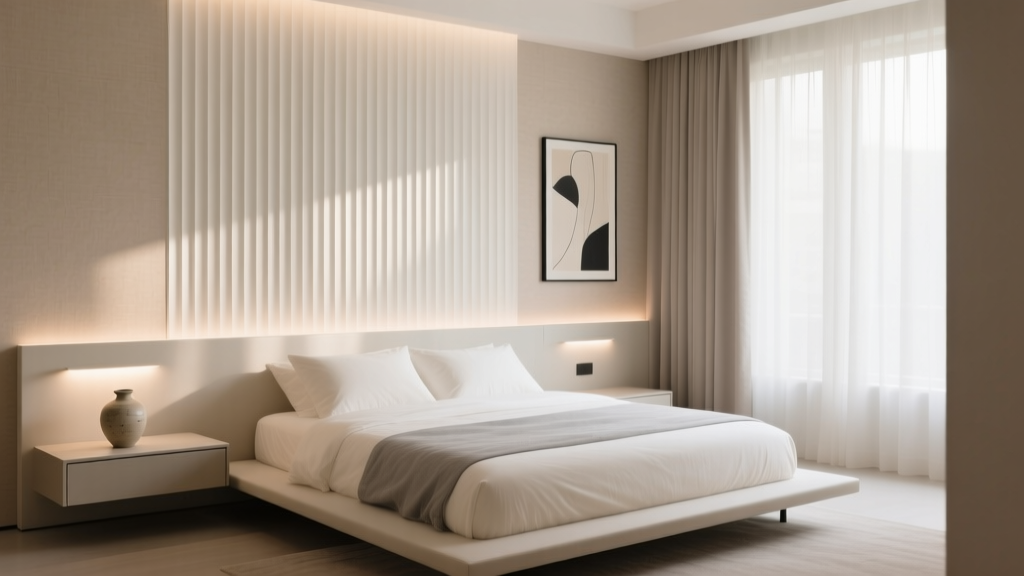
Bedroom Fluted Accent Wall Behind Bed - The Decor Mag
A bedroom should feel like a soft landing at the end of the day—visually calm, physically comfortable, and mentally reassuring. One of the most effective ways to shape that feeling is the wall behind your bed. Because it sits in your direct line of sight when you enter the room and often when you wake, it quietly sets the tone for your entire sleep environment.
A fluted accent wall behind the bed does more than look stylish. Those subtle vertical grooves create rhythm and texture without visual clutter, which can help a bedroom feel more ordered and restful. When done well, fluting adds warmth and depth while supporting what good sleep needs most: a soothing, low-stimulation space with intentional lighting, comfortable materials, and a layout that feels safe and spacious.
This guide walks through design options, materials, budget ranges, renter-friendly solutions, and sleep wellness considerations—so your fluted feature wall becomes both a beautiful focal point and a better backdrop for rest.
Why a Fluted Accent Wall Works So Well in a Sleep-Friendly Bedroom
Texture without chaos
Bedrooms benefit from “quiet” visual interest—details that feel tactile and comforting but don’t demand attention. Fluted panels achieve this balance because:
- Repetition is calming: The consistent vertical lines reduce visual noise compared to busy wallpaper or high-contrast art.
- Soft shadowing adds depth: Gentle highlights and shadows give dimension, especially in warm, layered lighting.
- It anchors the bed: A defined headboard wall helps the room feel grounded and intentional, which can reduce that “unfinished” feeling that keeps the mind active.
Vertical lines can make a room feel more spacious
Fluting draws the eye upward, which can visually lift low ceilings and make small bedrooms feel taller. That subtle sense of openness can support relaxation—especially in urban apartments or compact rooms where the bed dominates the floor plan.
Design Styles: Choosing the Right Fluted Look Behind Your Bed
1) Full-wall fluted feature (most dramatic, most cohesive)
A full fluted wall creates a hotel-like calm and looks especially polished with a centered bed and symmetrical nightstands.
- Best for: Primary bedrooms, medium-to-large rooms, minimalist or modern spaces
- Pairs well with: Upholstered headboards, simple bedding, warm wood tones
- Budget range: $500–$3,500+ depending on material and labor
2) Half-wall or wainscot-height fluting (balanced and budget-smart)
Installing fluting up to 42–54 inches (or just above your headboard) offers texture and structure while keeping the room airy.
- Best for: Smaller bedrooms, renters (with removable methods), traditional-transitional decor
- Bonus: Leaves space for soft paint color above, which can feel lighter at bedtime
- Budget range: $250–$1,800
3) Fluted panel “frame” behind the bed (accent without commitment)
This approach creates a centered fluted rectangle behind the bed, like a built-in headboard extension.
- Best for: Renters, budget makeovers, rooms with windows/doors on the bed wall
- Works with: Floating shelves (used minimally), plug-in sconces, art placed thoughtfully
- Budget range: $150–$900
Material Options: What to Use for a Fluted Accent Wall
Wood slats (timeless, warm, naturally calming)
Wood brings a biophilic, grounded feel that supports relaxation. Look for:
- Oak veneer MDF slats: Stable and cost-effective, with a real-wood look
- Solid wood battens: More premium; ideal if you want a long-lasting installation
- Pre-made acoustic slat panels: Often include a felt backing that can reduce echo and improve bedroom acoustics
Budget range: $8–$35 per sq ft installed (varies widely by region and product)
MDF fluted panels (paintable and smooth)
MDF is popular for painted fluting. It’s consistent and sleek—great for a serene, monochromatic bedroom design.
- Best for: Soft whites, warm greiges, muted greens, clay tones
- Tip: Use a durable, low-VOC paint for better indoor air quality
Budget range: $5–$20 per sq ft installed
PVC or polyurethane fluted moulding (humidity-friendly, lightweight)
These materials can be helpful in humid climates or if the bedroom connects to an en suite where moisture can fluctuate. Choose higher-quality options to avoid a “plasticky” look.
Budget range: $6–$22 per sq ft installed
Renter-friendly alternatives (temporary but convincing)
- Peel-and-stick fluted wallpaper: Look for subtle texture and matte finishes to avoid glare.
- Removable slat kits: Lightweight slats mounted on a thin backer board you can take with you.
- Large fluted headboard: The easiest shortcut—choose a channel-tufted or reeded wood headboard for a similar effect.
Budget range: $60–$800 depending on approach
Color, Finish, and Visual Calm: Picking a Sleep-Friendly Palette
The best bedroom color choices support a wind-down response. Fluting naturally adds shadow and depth, so you can keep colors gentle without the wall feeling flat.
Sleep-supportive color ideas for fluted walls
- Warm white (creamy, not stark): Reflects light softly and pairs with any bedding.
- Greige or mushroom: A neutral that feels cozy and grown-up, excellent for renters and resale.
- Muted sage or olive-gray: Earthy and calming, especially with natural wood furniture.
- Dusty clay or soft terracotta: Warm and cocooning, best with warm lighting.
- Light oak or walnut stain: Adds warmth without relying on color contrast.
Finishes to prioritize for a restful bedroom
- Matte or eggshell paint: Reduces glare from lamps and morning sun.
- Low-VOC paints and adhesives: Supports better bedroom air quality, especially in smaller spaces.
- Natural oil or water-based finishes on wood: Lower odor than traditional solvent-heavy products.
Layout and Sizing: Getting Proportions Right Behind the Bed
How wide should the fluted wall be?
A reliable rule: make the fluted section at least as wide as the bed, ideally 6–12 inches wider on each side. For a more expansive look, extend it to include nightstands.
Height guidelines that look intentional
- Panel-only look: 48–60 inches high (good for low ceilings or budget builds)
- Headboard-plus: 72–84 inches high (creates a stronger focal point)
- Ceiling height: Full height is most seamless, especially in modern spaces
Spacing and safety around the bed
For a bedroom layout that supports easy movement (and fewer nighttime stumbles):
- Keep 24–30 inches of clearance on each side of the bed when possible.
- Avoid sharp-edged shelves directly above pillows.
- If adding sconces, keep wiring neat and cords secured to reduce hazards.
Furniture, Bedding, and Lighting That Pair Beautifully with Fluting
Best bed and headboard pairings
- Upholstered headboard (linen, performance fabric): Softens the linear look and feels inviting.
- Simple wood frame: Lets the fluted wall shine; ideal for Scandinavian or Japandi bedrooms.
- Low-profile platform bed: Keeps the wall as the main visual feature, great for small rooms.
Nightstands and dressers: keep shapes calm
Because fluting already creates texture, choose furniture with simpler silhouettes:
- Rounded-edge nightstands (safer and softer visually)
- Warm wood or matte painted finishes
- Integrated or minimal hardware to reduce visual “sparkle”
Budget range: $80–$350 per nightstand (budget), $350–$900 (mid-range), $900+ (premium)
Bedding that enhances a restful look
- Sheets: Cotton percale (cool and crisp) or cotton sateen (smooth and slightly warmer)
- Duvet/comforter: Down alternative for easy care, or wool-filled for excellent temperature regulation
- Layering: Add a linen or cotton throw for texture without extra patterns
- Pillows: Limit decorative pillows to 2–3 to reduce clutter and simplify nightly reset
Budget range: $60–$150 (sheet sets budget), $150–$350 (mid-range), $350+ (premium)
Lighting: the key to making fluting look soft, not harsh
Fluting comes alive under the right light. For a sleep-friendly bedroom lighting plan, aim for layers:
- Ambient: A dimmable ceiling fixture or semi-flush mount
- Task: Bedside lamps or wall sconces for reading
- Accent: A warm LED strip in a diffuser channel (hidden) to graze the flutes gently
Choose 2700K (warm white) bulbs for a calming glow. If you read in bed, use a bedside light with focused shade and dimmer so brightness stays low during wind-down.
Budget range:
- Plug-in sconces: $40–$180 each
- Table lamps: $30–$250 each
- Dimmers and smart bulbs: $15–$80
Sleep Wellness Tips: Make Your Accent Wall Support Better Rest
- Reduce bedtime stimulation: Keep the fluted wall free from overly bright art or reflective decor that catches headlights or morning sun.
- Improve acoustics: Consider acoustic slat panels or add a thick rug, lined curtains, and upholstered elements to soften echo—helpful for light sleepers.
- Protect air quality: Choose low-VOC paint, allow adhesives to cure, and ventilate well for several days before sleeping in the room.
- Prioritize darkness: Pair the feature wall with blackout curtains or lined drapery to support melatonin production.
- Keep surfaces clear: A calmer visual field reduces mental “to-do” cues. Use drawers or baskets to hide clutter.
Common Mistakes to Avoid
- Overly high contrast: Stark black-and-white fluting can look striking but may feel energizing. If you love contrast, soften it with warm lighting and natural textiles.
- Too many competing textures: Fluting + busy wallpaper + patterned bedding can feel restless. Let one feature lead.
- Wrong sheen: Glossy paint highlights every groove and can create glare. Stick with matte or eggshell.
- Poor alignment: Crooked slats or uneven spacing is immediately noticeable. Use a level and spacers, or hire a pro for larger walls.
- Ignoring outlet and switch placement: Plan your panel layout so outlets remain accessible, especially for phone charging and lamps.
- Harsh lighting on the wall: Cool bulbs or uncovered LEDs can make the grooves feel sharp. Use warm, diffused light.
Budget Planning: What a Fluted Accent Wall Costs
Costs depend on materials, wall size, and whether you DIY or hire out. These ranges help set expectations:
- Budget ($100–$400): Peel-and-stick fluted wallpaper, partial panel behind bed, DIY slats on a backer board
- Mid-range ($400–$1,500): MDF fluted panels, half-wall builds, upgraded paint, plug-in sconces
- Premium ($1,500–$5,000+): Full-wall wood slats, acoustic panels, integrated lighting, professional installation
FAQ: Bedroom Fluted Accent Wall Behind Bed
Does a fluted accent wall make a bedroom feel smaller?
Usually the opposite. Vertical fluting can make ceilings feel taller, and the texture adds depth without taking up floor space. Keep the color low-contrast and the lighting warm to maintain an open, calm feel.
What’s the best color for a fluted wall in a sleep-focused bedroom?
Warm whites, greige, muted sage, and soft clay tones are consistently calming. If you prefer wood, light oak and medium walnut feel especially cozy under 2700K lighting.
Are fluted panels hard to clean?
They can collect dust in the grooves. A soft brush vacuum attachment or microfiber duster works well. For painted MDF, wipe gently with a barely damp cloth and mild soap when needed.
Can renters install a fluted accent wall behind the bed?
Yes. Consider peel-and-stick fluted wallpaper, removable slat kits mounted to a portable backer board, or a fluted/reeded headboard to get the look with minimal wall impact.
Do acoustic slat panels really help with sleep?
They can reduce echo and soften room acoustics, which supports a quieter sleep environment—especially in rooms with hard floors, high ceilings, or minimal textiles.
Should the fluted wall go behind the headboard or replace the headboard?
Either works. A fluted wall plus a simple upholstered headboard is often the most comfortable and visually balanced option. If you skip the headboard, add a soft cushion layer (like large pillows) and keep the wall finish smooth and matte.
Next Steps: A Calmer Bedroom Starts with One Intentional Wall
Choose a fluted style that suits your space (full wall, half wall, or a centered panel), select a sleep-friendly color and matte finish, then build a lighting plan that washes the texture in warm, dimmable light. Finish with breathable bedding, clutter-minimizing nightstands, and a layout that keeps pathways open and peaceful.
For more calming bedroom design ideas, renter-friendly upgrades, and sleep wellness styling tips, explore the latest inspiration on thedecormag.com.
More Articles
 Scheme Kitchen Design Essentials: Precision, Proportion, and Purpose-Built Functionality
Best Bedrooms for Warm Climates: Design, Materials, and Climate-Smart Strategies
Scheme Kitchen Design Essentials: Precision, Proportion, and Purpose-Built Functionality
Best Bedrooms for Warm Climates: Design, Materials, and Climate-Smart Strategies
 How to Create a Bedroom for Better Sleep - The Decor Mag
 Best Bedroom Lamp Styles for Nightstands - The Decor Mag
 Best Bedroom Storage Solutions Under Bed - The Decor Mag
 Bedroom Limewash Ceiling Treatment Idea - The Decor Mag
 Bedroom Curved Nightstand Design Trend - The Decor Mag
 How to Organize Your Bedroom Closet - The Decor Mag
 Bedroom Textured Plaster Headboard Wall - The Decor Mag
 Bedroom Paint for Sleep Quality | The Decor Mag