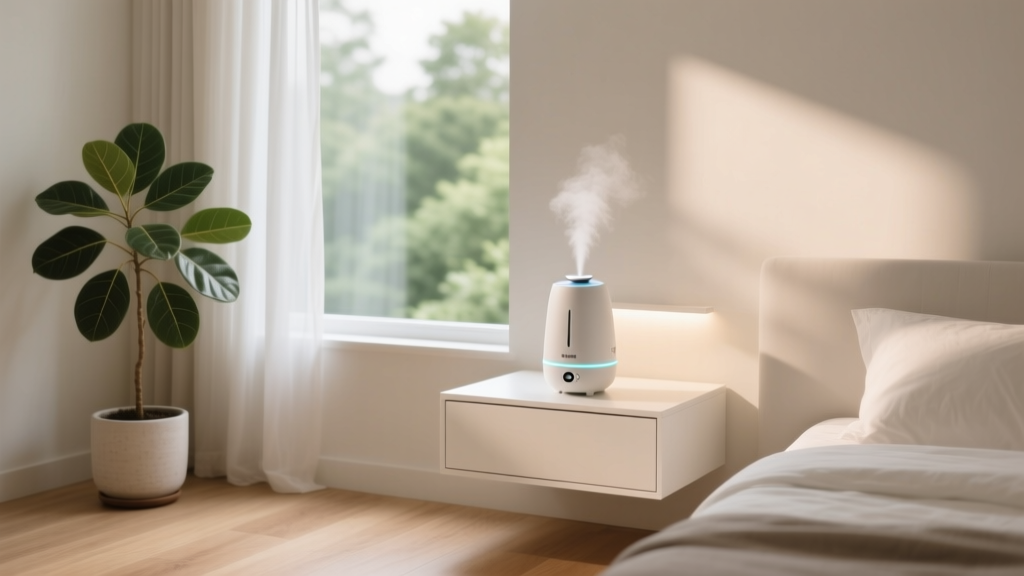
Best Bedroom Humidifier Placement - The Decor Mag
A well-designed bedroom doesn’t just look restful—it helps your body settle into sleep. Humidity plays a quiet but meaningful role in that equation. When the air is too dry, you may wake with a scratchy throat, dry skin, irritated sinuses, or static-filled bedding. When it’s too humid, the room can feel heavy, musty, and uncomfortable, and it can encourage dust mites and mildew—two common sleep disruptors.
Finding the best bedroom humidifier placement is where sleep wellness meets bedroom design. The goal is simple: create a balanced sleep environment (typically around 40–50% relative humidity) without blowing mist onto furniture, soaking textiles, or adding noise and light that interferes with rest. With a few practical placement rules—and a little attention to your layout, materials, and lighting—you can make a humidifier feel like a natural part of your decor while supporting deeper, easier breathing at night.
This guide walks you through where to place a humidifier in a bedroom, what to avoid, and how to style it so it improves comfort without compromising your space.
What Humidity Level Is Best for Sleep?
For most bedrooms, the sweet spot is 40–50% relative humidity. This range supports comfortable breathing, helps prevent overly dry nasal passages, and can reduce static and dry skin—especially in winter or in homes with forced-air heating.
- Below 30%: air often feels dry; you may notice sore throat, nasal dryness, cracked lips, and static cling.
- 40–50%: ideal for many sleepers; comfortable and generally safe for most furnishings when managed properly.
- Above 60%: increased risk of condensation, musty odors, mold growth, and dust mite activity.
Decor + wellness tip: Add a small hygrometer (often under $15) to your nightstand or dresser. It’s the simplest way to keep your sleep environment consistent and avoid over-humidifying.
Best Bedroom Humidifier Placement: The Core Rules
1) Place It 3–6 Feet From the Bed (Not Right Next to Your Pillow)
It’s tempting to put a humidifier on the nightstand, but direct mist near your face can feel clammy, create condensation on skin and hair, and dampen bedding. Aim for a comfortable “humidity zone” rather than a direct stream.
- Best range: about 3–6 feet from where you sleep.
- Why it matters: helps the mist disperse evenly and reduces the chance of wet sheets or a damp headboard.
2) Elevate It 2–4 Feet Off the Floor
Most humidifiers work better when placed on a stable surface—like a dresser, console, or sturdy side table—so the mist can circulate. Floor placement can concentrate moisture low in the room and increase the chance of damp carpet or baseboards.
- Ideal surfaces: dresser, floating shelf, bedside cabinet (if large enough), or a small accent table.
- Avoid: carpet, rugs, and upholstered ottomans that can trap moisture.
3) Keep It 12–24 Inches Away From Walls, Curtains, and Artwork
Mist that repeatedly hits a wall can lead to peeling paint, water spots, or mildew behind furniture—especially on exterior walls in colder climates. Curtains can absorb moisture and develop an odor over time.
- Clearance goal: at least 12 inches on all sides, and 24 inches if you have heavy drapery or delicate wall finishes.
- Extra caution: wallpaper, framed prints, wood paneling, and gallery walls.
4) Don’t Aim Mist at Wood Furniture or Upholstery
Repeated exposure to moisture can warp veneer, dull finishes, and encourage staining—especially on antique nightstands, wood headboards, and fabric-upholstered beds.
Placement trick: angle the nozzle (or rotate the unit) so mist rises into open air, not into a headboard, bookshelf, or chair.
5) Use an Outlet-Friendly Spot (Without a Cord Hazard)
Bedroom safety matters. Position the humidifier near an outlet so the cord can run neatly behind furniture—not across a walkway where you might trip at night.
- Best: behind a nightstand, next to a dresser, or near a wall outlet with a cable clip.
- Avoid: running cords under rugs or across the foot of the bed.
Placement Ideas by Bedroom Layout
Small Bedroom: One Best “Anchor Surface”
In compact bedrooms, the easiest solution is to treat the humidifier like a functional decor piece on a single surface that isn’t overcrowded.
- Top pick: a dresser top across from or diagonal to the bed.
- Runner-up: a small accent table near the bed, leaving the nightstand for essentials.
- Design tip: choose a humidifier with a matte finish (white, sand, or charcoal) to blend with minimal bedroom decor.
Primary Bedroom: Balance Coverage and Calm
Larger bedrooms often need more output, but placement still benefits from thoughtful zoning.
- Best placement: on a low-profile dresser or console, roughly centered in the room’s airflow.
- If you use a ceiling fan: place the humidifier so airflow helps disperse mist without blowing it directly onto your bed.
- Two-zone option: for very dry climates, consider one larger unit for the room (placed on a dresser) instead of a small unit near the bed.
Shared Bedroom or Nursery: Keep Pathways Clear
If two people share the room—or you’re placing a humidifier near a crib—safety and clear walkways come first.
- Best: a stable dresser or shelf away from curtains and out of reach of children.
- Avoid: placing it where someone may bump it during nighttime wake-ups.
- Noise tip: prioritize a quiet unit with a low setting or “sleep mode.”
Choosing a Humidifier Type That Fits Your Bedroom Design
Cool Mist (Ultrasonic): Sleek, Quiet, Decor-Friendly
Ultrasonic humidifiers are popular for bedrooms because they’re typically quiet and come in compact, modern shapes that suit contemporary bedroom decor.
- Best for: light sleepers, minimalist bedrooms, apartments.
- Watch for: white dust if you use hard tap water (use distilled water or a demineralization cartridge).
- Budget range: $30–$120 for most bedroom sizes.
Evaporative: Lower Risk of Over-Humidifying
Evaporative models use a wick filter and a fan, naturally limiting output as humidity rises. They’re great for maintaining a stable sleep environment.
- Best for: households concerned about mold, those who prefer low-maintenance humidity control.
- Watch for: fan noise and ongoing filter costs.
- Budget range: $50–$180 plus filters.
Warm Mist: Cozy Feel, But Less Popular for Bedrooms
Warm mist can feel soothing in winter, but it uses heat and can be a burn risk in homes with kids or pets. It can also add warmth to an already warm bedroom.
- Best for: adults-only spaces, cold climates, congestion relief.
- Watch for: safety, extra heat, mineral buildup.
- Budget range: $40–$120.
Decor-Friendly Setup: Furniture, Bedding, Lighting, and Colors
A humidifier doesn’t have to look like a utilitarian appliance. With a few styling choices, it can feel integrated—like a subtle part of your sleep sanctuary.
Furniture Surfaces That Work Best
- Sealed wood, lacquer, or laminate: easiest to wipe clean; less likely to show water marks.
- Stone or composite tops: very moisture-resistant; excellent for warm or cool mist.
- Metal side tables: practical and modern; pair with a felt pad to reduce vibration noise.
Smart accessory: Place the humidifier on a waterproof tray (melamine, sealed wood, or metal) with a raised edge. It protects your surface and looks intentional.
Bedding Materials That Pair Well With Balanced Humidity
- Cotton percale: crisp, breathable; great if you tend to sleep warm.
- Linen: excellent airflow; helps prevent that “clammy” feeling if humidity rises.
- Wool duvet or blanket: naturally regulates temperature and moisture—ideal for year-round comfort.
Lighting Choices for a Calm Sleep Environment
Many humidifiers have bright indicator lights that can disrupt sleep. If you’re sensitive to light, prioritize a unit with a true “lights off” or “sleep” setting.
- Best bedside lighting: warm bulbs (2700K), dimmable lamps, shaded sconces.
- Placement tip: position the humidifier so any display faces away from the bed.
Colors and Layout That Support Rest
Humidifiers often look best against a calm, low-contrast palette.
- Soothing color families: warm whites, soft greige, muted sage, dusty blue, clay-tinted neutrals.
- Layout goal: keep the “sleep zone” visually simple—bed, nightstand, lamp—while placing the humidifier slightly outside that focal area.
Sleep-Friendly Wellness Tips for Using a Bedroom Humidifier
- Use a hygrometer: keep humidity around 40–50% to support comfortable breathing and protect furniture.
- Run it on low: steady, gentle output is usually better for sleep than blasting mist for a short time.
- Choose distilled water if possible: reduces mineral residue and helps keep the unit cleaner (especially with ultrasonic models).
- Clean weekly: follow manufacturer instructions; biofilm buildup can create odors and reduce air quality.
- Pair with air circulation: a slightly open bedroom door or a fan on low can help distribute humidity evenly.
Common Mistakes to Avoid
- Placing it on the nightstand next to your pillow: can dampen bedding and feel uncomfortable on skin and hair.
- Positioning it under shelves or cabinets: moisture rises and can warp wood or peel finishes over time.
- Letting mist hit curtains or upholstered headboards: encourages lingering dampness and odors.
- Over-humidifying the room: can trigger musty smells and increase dust mites; use a hygrometer and adjust output.
- Skipping cleaning: a neglected humidifier can spread unpleasant smells and reduce overall bedroom air quality.
- Using hard tap water in an ultrasonic unit without a plan: may leave fine mineral dust on dark furniture and decor.
Quick Placement Checklist (Save This)
- Set humidifier 3–6 feet from the bed
- Elevate 2–4 feet on a stable surface
- Keep 12–24 inches from walls, curtains, and artwork
- Avoid directing mist at wood furniture, headboards, and upholstery
- Use a tray to protect surfaces
- Keep cords tucked away and pathways clear
- Maintain 40–50% humidity with a hygrometer
FAQ: Bedroom Humidifier Placement
Where should I put a humidifier in a bedroom for the best results?
Place it on a stable surface about 3–6 feet from the bed, elevated 2–4 feet off the floor, with at least 12 inches of clearance from walls and curtains. This helps the mist disperse evenly and protects furniture and bedding.
Is it okay to put a humidifier on a nightstand?
It can be, but it’s rarely ideal. If your nightstand is your only option, keep the mist pointed away from the bed, use a waterproof tray, and choose a unit with a low, quiet setting and lights you can fully dim.
Should a humidifier be near a vent or window?
Avoid placing it directly under an HVAC vent (the airflow can blow mist onto walls or bedding). Near a window can be tricky in winter because cold glass may collect condensation. If you do place it near a window, monitor humidity carefully and keep it several feet back.
How do I prevent mold or mildew when using a bedroom humidifier?
Keep humidity around 40–50%, clean the unit weekly, and avoid letting mist hit walls, curtains, or upholstered surfaces. Good airflow also helps—crack the door or run a fan on low if the room feels stagnant.
Which humidifier type is best for a sleep-friendly bedroom?
For most people, a quiet ultrasonic cool-mist unit is the most bedroom-friendly, especially in small to medium rooms. If you worry about over-humidifying, an evaporative model provides more natural humidity control (often with slightly more fan noise).
What size humidifier do I need for a bedroom?
Match the humidifier to your room size. Small units work for compact bedrooms, while larger bedrooms often need medium-capacity models. Look for coverage recommendations on the box and consider a unit with an auto-humidistat for consistent overnight comfort.
Next Steps: Make Humidity Part of Your Bedroom Design
Start by choosing a stable, elevated surface—often a dresser or accent table—then position your humidifier with breathing room around it and a clear path for cords. Add a simple hygrometer, keep the mist away from textiles and wood finishes, and aim for a calm 40–50% humidity range that supports comfortable sleep.
For more ideas on creating a soothing sleep environment—through bedroom layout, lighting, bedding materials, and decor that truly rests the mind—explore more bedroom inspiration on thedecormag.com.
More Articles
 Stylish Bedroom Design for Hot Summers
 Best Bedroom Lingerie Drawer Organizers - The Decor Mag
 Bedroom Limewash Bedroom Wall Treatment - The Decor Mag
 Bedroom Wingback Headboard Design - The Decor Mag
 Bedroom Curtains for Better Sleep (2026)
 How to Style a Bedroom with Dark Walls - The Decor Mag
 Bedroom Fluted Wood Dresser Trend - The Decor Mag
 Transitional Bedroom Design Guide - The Decor Mag
 Bedroom Rattan Furniture Trends - The Decor Mag
 Best Bedroom Bedside Tea Setup - The Decor Mag