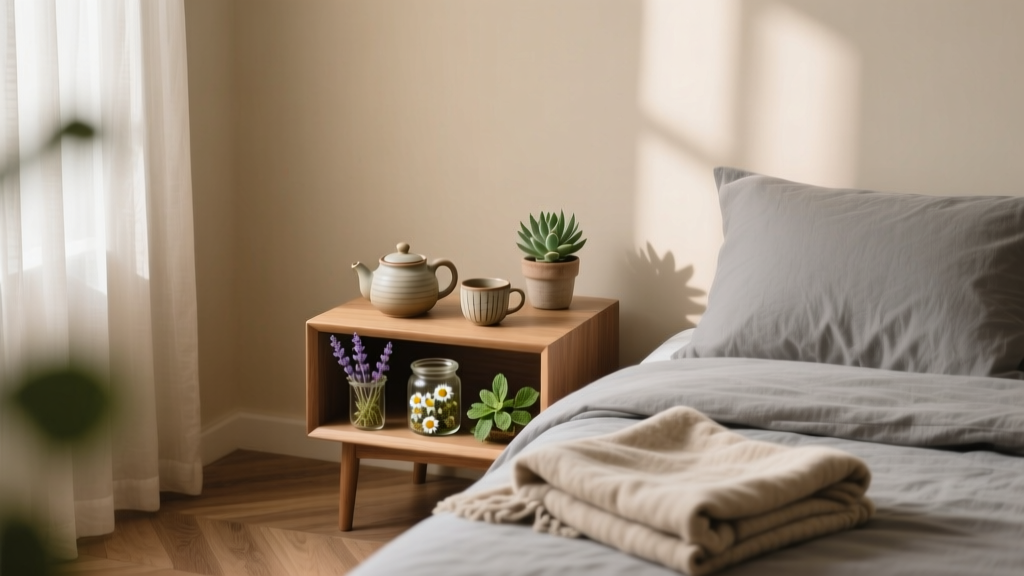
Best Bedroom Herbal Tea Bedside Setup - The Decor Mag
A well-designed bedroom does more than look good—it gently guides your nervous system toward rest. When your sleep environment feels calm, convenient, and sensory-friendly, your body gets the message that it’s safe to unwind. A bedside herbal tea setup is a small design choice with outsized impact: it creates a predictable wind-down ritual, reduces late-night wandering for water or snacks, and adds a soft, spa-like layer to your bedroom decor.
Herbal tea also pairs naturally with sleep hygiene. Warmth, soothing aromas, and a screen-free routine can help you transition out of “day mode.” The key is to design the setup so it supports sleep quality rather than disrupting it—no harsh light, no clutter, no strong stimulants, and no precarious mugs near your favorite sheets.
Below is a practical, calming guide to creating the best bedroom herbal tea bedside setup—covering furniture, lighting, layout, materials, color choices, wellness tips, and common mistakes to avoid—so your bedroom becomes a more restful, intentional space night after night.
What Makes a Bedside Tea Setup “Sleep-Friendly”
Your goal is convenience without clutter. A sleep-friendly tea station should feel visually quiet, be easy to use in low light, and minimize risks (spills, broken glass, cords, crumbs, or overstimulation). Think of it as a micro “wellness corner” that supports a healthy sleep routine.
The three pillars: comfort, safety, simplicity
- Comfort: Warm drink, soft lighting, a cozy throw, and a soothing scent profile.
- Safety: Stable surfaces, covered mugs, heat protection, and easy cleaning.
- Simplicity: A curated set of items you actually use—stored neatly and reset daily.
Choosing the Right Nightstand (and Why It Matters for Sleep)
Your nightstand is the foundation of your bedside ritual. The wrong one leads to visual clutter and constant fumbling, which can increase alertness when you’re trying to relax. The right nightstand supports a calm bedroom design and keeps essentials within reach without crowding your sleep space.
Ideal nightstand dimensions and features
- Height: Aim for the top surface to sit within 1–2 inches of your mattress height for easy reach.
- Surface area: At least 16–20 inches wide if you want a tray + lamp + book; 12–16 inches can work for minimal setups.
- Storage: One drawer or a lower shelf helps hide tea sachets, a spoon, or supplements, reducing visual noise.
- Stability: Heavier, sturdier pieces reduce spill risk—especially for light sleepers.
Best materials for a calming sleep environment
- Solid wood or wood veneer: Warm, grounding, and generally quieter than metal when placing items down.
- Rattan/cane fronts: Adds texture and airflow; pairs well with natural, cozy bedroom decor.
- Stone or marble tops: Beautiful and heat-tolerant, but choose a matte finish to reduce glare from bedside lighting.
- Avoid: High-gloss lacquer (reflective), flimsy acrylic (tippy), or rough unfinished surfaces (catch spills).
Budget ranges for nightstands
- Budget ($60–$150): Simple wood or engineered wood nightstands, often with one drawer.
- Mid-range ($150–$350): Better hardware, sturdier construction, soft-close drawers, nicer finishes.
- Investment ($350–$900+): Solid hardwood, designer silhouettes, premium finishes, built-in cord management.
The Bedside Tea Tray: A Small Detail That Changes Everything
A tray instantly makes your setup look intentional (not cluttered) and protects your nightstand. It also helps you “reset” the space each morning—one of the easiest ways to maintain a calming bedroom layout.
Tray recommendations
- Best everyday choice: A low-sided tray (1–2 inches high) in wood, bamboo, or matte metal.
- For spill-prone sleepers: A tray with a slightly raised lip and a wipeable finish.
- For small spaces: A narrow rectangular tray that fits a mug + small jar + teaspoon.
Add a heat-safe layer
- Cork trivet or coaster (quiet, warm, non-slip)
- Felted wool coaster (soft, sound-dampening)
- Ceramic coaster (easy to clean, more “clink” noise)
Herbal Tea Choices for a Wind-Down Ritual
Tea selection is both a wellness decision and a sensory design choice—aroma, taste, and even packaging influence how restful your bedtime routine feels. Choose herbs associated with relaxation, and keep the presentation visually calm.
Popular sleep-friendly herbal teas
- Chamomile: Gentle, floral, classic bedtime tea. Choose whole-flower blends for a softer flavor.
- Lemon balm: Bright, calming, and often well-tolerated.
- Lavender: Aromatic and soothing; best blended (too much can taste perfumey).
- Passionflower: Common in “sleep” blends; earthy taste.
- Rooibos: Naturally caffeine-free, warm and vanilla-like—great if you dislike florals.
- Peppermint: More “digestive reset” than sleepy, but helpful after dinner.
What to avoid close to bedtime
- Caffeinated teas: Green tea, black tea, matcha, and many chai blends.
- Hidden caffeine: Yerba mate and guayusa.
- Very acidic blends: Some hibiscus-heavy teas can be too bright/alerting for certain people.
Storage that looks like bedroom decor
- Minimalist tea canisters: Matte ceramic, tin, or amber glass jars with simple labels.
- Tea drawer inserts: Great for keeping sachets out of sight (and your nightstand surface clear).
- Small lidded box: Keeps tea organized and reduces scent mixing.
Mug, Kettle, and Water: Designing the Setup for Quiet Convenience
The best bedside tea setup minimizes friction. If you have to turn on bright kitchen lights, hunt for a clean mug, or wrestle with a loud kettle, the routine won’t stick. Design for ease and low stimulation.
Best mug types for bedtime
- Ceramic mug with lid: Helps retain warmth and reduces spill risk. Look for a smooth lip and comfortable handle.
- Double-walled glass: Elegant and insulating, but choose thicker, more stable designs to reduce breakage risk.
- Stainless insulated tumbler: Excellent heat retention and spill resistance; pick one with a quiet lid.
Where should the hot water come from?
For safety, most people should avoid boiling water in the bedroom. Instead, set up a system that keeps the bedroom calm and the process simple:
- Kitchen prep + bedside pour: Make the tea in the kitchen, carry it in a lidded mug, and place it on a tray.
- Insulated carafe method: Fill a high-quality insulated carafe with hot water after dinner and keep it on a dresser (or a stable nightstand shelf) to pour later with minimal noise and no cords.
- Warm “tea concentrate” approach: Brew a stronger infusion earlier, then dilute with warm water before bed.
Budget guide for tea gear
- Budget ($15–$40): Ceramic mug + cork coaster + basic tea box.
- Mid-range ($40–$120): Lidded mug, attractive tray, insulated bottle/carafe, nicer tea canisters.
- Premium ($120–$250+): High-end insulated carafe, design-forward ceramics, matching bedside set.
Lighting That Supports Sleep (and Makes Tea Feel Like a Ritual)
Lighting is one of the most powerful elements in bedroom design for sleep quality. Bright, cool light signals “daytime,” while soft, warm light supports melatonin production and relaxation. Your bedside tea ritual should happen in the gentlest light possible.
Best bedside lighting choices
- Warm bedside lamp (2200K–2700K): Creates a cozy glow without overstimulating.
- Dimmer switch or dimmable bulb: Lets you taper the room toward darkness as you wind down.
- Shielded shade: Fabric or frosted glass reduces glare—especially important if your tea setup sits beside the lamp.
- Motion-activated amber night light: Ideal for late-night sips without turning on overhead lighting.
Placement tip
- Keep the lamp slightly behind your tea tray (toward the wall) to reduce glare reflecting off liquid surfaces and glossy trays.
Colors, Textures, and Bedding: Making the Setup Feel Like Part of the Room
A bedside tea setup should look like it belongs in your bedroom decor—not like a kitchen corner. Color and texture help it blend seamlessly into a restful sleep environment.
Best calming color palettes for a tea-focused bedroom corner
- Warm neutrals: Cream, sand, oatmeal, and camel pair beautifully with wood trays and ceramic mugs.
- Soft greens: Sage or olive accents echo botanical teas and promote a grounded feel.
- Muted blues: Dusty blue or smoky navy can feel cool and quiet, especially with warm lighting.
Textiles that enhance “quiet luxury” comfort
- Bedding: Cotton percale for crisp sleepers; linen for breathable texture; cotton sateen for a smoother, warmer feel.
- Throw blanket near the tea setup: Cotton knit or lightweight wool for a cozy cue without overheating.
- Rug underfoot: A low-pile wool or wool-blend rug helps dampen sound and adds warmth when you step out of bed.
Layout Tips: Where the Tea Setup Works Best
The best bedroom layout keeps bedtime tools within reach while maintaining a clear, open pathway. You want “easy access” without turning the nightstand into a crowded landing pad.
Small bedroom or renter-friendly layout ideas
- Floating shelf as a nightstand: Saves floor space; pair with a small tray and wall-mounted sconce.
- Narrow nightstand + drawer organizer: Keeps tea supplies hidden while preserving surface space.
- Bedside caddy (fabric): Use it for tea bags and a sleep mask; keep liquids on a stable surface.
- Mini bar cart (only if you have space): Place near the bedroom door for tea storage, leaving the nightstand minimal and serene.
Spill-proofing the zone
- Keep tea on the far side of the nightstand (away from the bed edge).
- Use a lidded mug if you tend to shift pillows or move quickly.
- Choose a tray large enough that the mug never sits right at the edge.
Wellness Tips: Pair Tea With a Sleep-First Routine
Bedroom design and sleep quality are deeply connected, and rituals strengthen that connection. When your environment supports your routine, your routine becomes easier to keep.
A simple 20-minute tea wind-down
- 10 minutes: Dim lights, put phone on charge away from the bed, and start steeping your tea (or pour from a carafe).
- 5 minutes: Sit up in bed or in a nearby chair; sip slowly and breathe in through your nose for a calmer pace.
- 5 minutes: Read a paper book or do a gentle stretch; stop drinking 30–60 minutes before sleep if nighttime bathroom trips are an issue.
Gentle add-ons (choose one, not all)
- Lavender sachet in the nightstand drawer: Subtle scent without overpowering the room.
- Journal + pen: A quick “tomorrow list” reduces racing thoughts.
- Eye mask: Helps if you can’t fully control light in a rental.
Common Mistakes to Avoid
- Using overhead lighting: Bright ceiling lights can undo your wind-down and make tea feel like a task instead of a ritual.
- Cluttering the nightstand: Too many objects create visual stimulation. Keep only what supports rest: tea, a book, a lamp, and one personal comfort item.
- Choosing a wobbly side table: Instability increases spill anxiety (and that doesn’t help sleep).
- Strong scents or overly floral blends: They can trigger headaches or feel cloying in warm rooms. Start subtle and adjust.
- Boiling water in the bedroom: Hot water + cords + sleepy hands is a preventable risk. Use a kitchen kettle and an insulated carafe if needed.
- Drinking too much too late: If you’re waking up to use the bathroom, scale back volume or drink earlier in the evening.
FAQ: Best Bedroom Herbal Tea Bedside Setup
What is the best herbal tea for sleep?
Chamomile, lemon balm, and gentle lavender blends are popular for a calming bedtime routine. If you’re sensitive to floral flavors, rooibos is naturally caffeine-free and comforting.
Should I keep a tea kettle in the bedroom?
Most bedrooms aren’t designed for boiling water safely. A better approach is to heat water in the kitchen and use an insulated carafe, or bring a lidded mug to your bedside setup.
How can I set up tea next to the bed without cluttering my nightstand?
Use a dedicated tray and limit the surface to three essentials: a mug + coaster, a small tea canister or sachet box, and your lamp. Store extras in a drawer organizer.
What lighting is best for a bedtime tea ritual?
Choose warm, dimmable lighting (2200K–2700K). A bedside lamp with a fabric shade or an amber night light keeps the sleep environment calm and reduces glare.
What if I’m renting and can’t change much about my bedroom design?
Focus on renter-friendly upgrades: a small tray, warm bulb, a lidded mug, and a slim nightstand or floating shelf. These changes improve your sleep environment without permanent modifications.
Can a bedside tea setup really improve sleep quality?
It can support sleep by reinforcing a consistent wind-down routine, reducing late-night wandering, and creating a calmer bedroom environment. The combination of soothing sensory cues and a tidy bedside setup helps signal rest to your body.
Next Steps: Create Your Calm, One Nightstand at a Time
Start small: choose one stable surface, add a tray and coaster, switch to warm, dim lighting, and pick one caffeine-free herbal tea you genuinely enjoy. Keep the styling minimal, the materials cozy, and the routine consistent. Within a week, your bedroom will feel more intentional—and your wind-down will feel easier.
For more soothing bedroom design ideas, sleep-friendly decor tips, and relaxing layout inspiration, explore more guides on thedecormag.com.
More Articles
 Plaster Range Hood Headboard for Bedrooms
 Perfect Mattress for Bedrooms: 2026 Picks
 Natural Bedroom Materials: Stylish Ideas for 2026
 How to Incorporate Plants in Bedroom Decor - The Decor Mag
 Modern Bedroom Design on a Budget: Smart, Stylish, and Sustainable Solutions
 How to Incorporate Woven Textiles in Bedroom - The Decor Mag
 Three-Layer Bedroom Lighting: Calm & Functional (2026)
 Bedroom Curved Headboard Upholstery Trend - The Decor Mag
 Mid-Century Modern Bedroom Furniture Guide - The Decor Mag
 Best Bedroom Sound Machine Placement - The Decor Mag