Best Bedroom Sleep Journal Prompts - The Decor Mag
Your bedroom is more than a place to store clothes and charge your phone—it’s the environment that quietly trains your nervous system what to expect at night. When the room feels calm, predictable, and comfortable, your body tends to follow. When it’s cluttered, overly bright, noisy, or visually busy, sleep can become lighter and more fragmented.
A sleep journal is one of the simplest tools for improving rest because it turns vague fatigue into clear patterns you can actually work with. Pairing sleep journaling with thoughtful bedroom design is especially powerful: your notes reveal what’s disrupting sleep, and your decor choices become targeted solutions—better bedding, smarter lighting, a more supportive mattress, or a layout that feels less chaotic.
Below you’ll find the best bedroom sleep journal prompts—organized by goal—along with practical bedroom design recommendations and wellness tips. Use them to build a sleep-friendly bedroom that looks good and feels even better.
How to Use Sleep Journal Prompts (Without Turning It Into Homework)
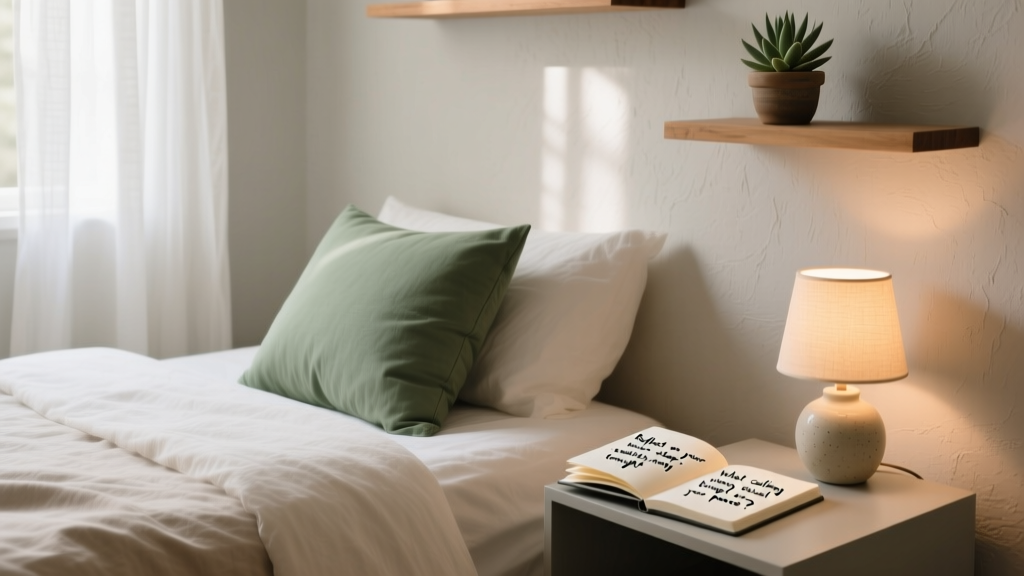
The most effective sleep journal is short, consistent, and easy to complete from bed. Keep a dedicated notebook in your nightstand or a slim journal on a shelf near your bedside lamp.
A simple routine that works
- Evening (2–3 minutes): Fill out 3–5 prompts that help your brain “close the day.”
- Morning (1–2 minutes): Answer 2–4 prompts about sleep quality and the bedroom environment.
- Weekly (10 minutes): Look for patterns and choose one bedroom design tweak to try.
Make your journaling spot sleep-friendly
- Lighting: Use a warm bedside lamp (2700K–3000K) or an amber reading light to reduce glare and cue melatonin-friendly evening light.
- Surface space: A nightstand with a clear top reduces visual clutter and makes journaling feel calm, not cramped.
- Tools: Keep a pen that writes smoothly (no clicking) and a small bookmark to open instantly to your nightly page.
Best Bedroom Sleep Journal Prompts (Evening)
Evening prompts help you transition from “doing” to “resting.” They’re also a gentle way to identify what your bedroom needs: darker curtains, softer bedding, less noise, a better pillow, or a less stimulating layout.
Wind-down and nervous system prompts
- What time do I want to be asleep tonight, and what time will I start winding down?
- On a scale of 1–10, how alert do I feel right now?
- What’s one thing I can let go of until tomorrow?
- What does my body need most tonight: warmth, coolness, quiet, movement, or comfort?
- Did anything in my bedroom feel irritating today (lighting, clutter, smell, noise, temperature)?
Bedroom environment check prompts
- Is the room dark enough for deep sleep? If not, where is the light coming from?
- How does my bedding feel right now—crisp, scratchy, heavy, or cozy?
- Is the air comfortable (too dry, too warm, too cold, stuffy)?
- What sounds might wake me up tonight (street noise, HVAC, neighbors)?
- Does the layout make bedtime feel easy—clear path to bed, reachable nightstand, minimal obstacles?
Mind-clearing prompts for racing thoughts
- What thoughts keep looping tonight? Write them as bullet points.
- What’s the smallest next step I can take tomorrow?
- What do I know for sure, and what am I guessing?
- What went well today (even if it was small)?
- What would “good enough” sleep look like tonight?
Best Bedroom Sleep Journal Prompts (Morning)
Morning prompts help you connect sleep quality to your sleep environment and habits. Over time, you’ll see patterns like “I sleep better with cooler temps and heavier blankets” or “I wake up when the hallway light leaks under the door.”
Sleep quality and wake-up prompts
- What time did I fall asleep (estimate) and what time did I wake up?
- How many times do I remember waking?
- How rested do I feel (1–10)?
- What was my first thought upon waking?
- Did I wake up too hot, too cold, congested, or thirsty?
Bedroom design reflection prompts
- Did my pillow support my neck well, or did I shift a lot?
- Did I notice pressure points (hips/shoulders) that suggest mattress discomfort?
- Was the room too bright at any point?
- Did noise disrupt me? If yes, what kind?
- What’s one change to the bedroom that could improve tonight’s sleep by 10%?
Weekly “Bedroom Reset” Journal Prompts
These prompts turn your journal into a practical bedroom design plan—especially helpful for homeowners and renters who want a calmer sleep environment without a full renovation.
- What is the biggest sleep disruptor this week: light, noise, temperature, clutter, stress, or comfort?
- Which corner of the bedroom feels most visually busy?
- What’s one item I can remove, relocate, or store to make the room feel calmer?
- What’s one upgrade that would make bedtime easier (lamp, blackout curtains, bedding, storage)?
- What bedtime habit pairs best with my room (reading chair, tea station, stretching mat)?
Design Recommendations Inspired by What Your Journal Reveals
Your sleep journal will likely point to the same few categories. Here’s how to translate the patterns into bedroom decor choices that support rest.
If your journal shows: “Too much light”
- Blackout window treatments: Choose blackout curtains or cellular blackout shades. Look for labeled “true blackout” or “100% blackout.”
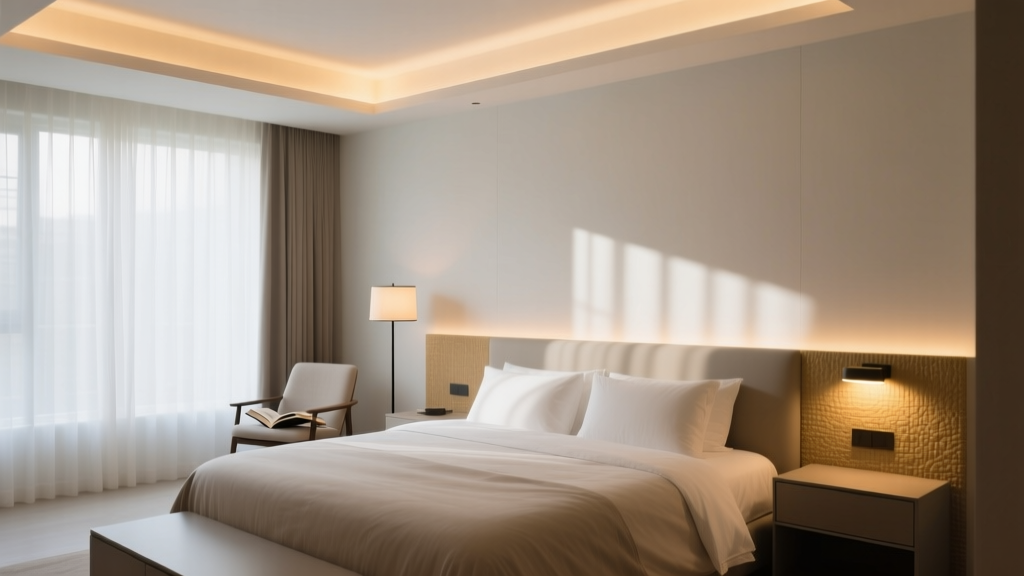
- Layered lighting: Replace harsh overhead lighting with:
- Bedside lamps (warm LED bulbs, 2700K)
- Wall sconces with dimmers (great for small nightstands)
- Soft floor lamp in a corner to reduce contrast and shadows
- Doorway light leaks: Add a draft stopper or door sweep for hallway light and sound.
Budget ranges: Blackout curtains $30–$120 per panel; blackout shades $60–$250 per window; dimmable bulbs $8–$25 each; plug-in sconces $40–$150.
If your journal shows: “I wake up hot/cold”
- Bedding materials:
- Hot sleepers: percale cotton, linen, or bamboo lyocell sheets; lightweight quilt; breathable duvet insert
- Cold sleepers: brushed cotton flannel (seasonal), cotton sateen, wool blanket, down or down-alternative duvet
- Layer the bed: A sheet + light blanket + duvet makes it easier to adjust without fully waking.
- Rug placement: If floors are cold, a wool-blend rug beside the bed can make mornings gentler and reduce the “cold shock” wake-up.
Budget ranges: Sheet sets $50–$220; duvet inserts $60–$250; wool blanket $80–$300; area rugs $100–$500.
If your journal shows: “My neck or back hurts”
- Pillow fit matters more than price:
- Side sleepers: medium-high loft pillow to fill shoulder-to-neck gap
- Back sleepers: medium loft with gentle contour
- Stomach sleepers: low loft (or no pillow) to reduce neck strain
- Mattress support check: If you notice consistent pressure points, consider a medium or medium-firm mattress and/or a quality topper (latex for responsiveness, memory foam for pressure relief).
- Bed frame stability: Squeaks and wobble can fragment sleep. A sturdy platform bed or reinforced slats can help.
Budget ranges: Pillows $25–$120; toppers $80–$300; platform bed frames $150–$800; mattresses $600–$2,500.
If your journal shows: “Noise wakes me up”
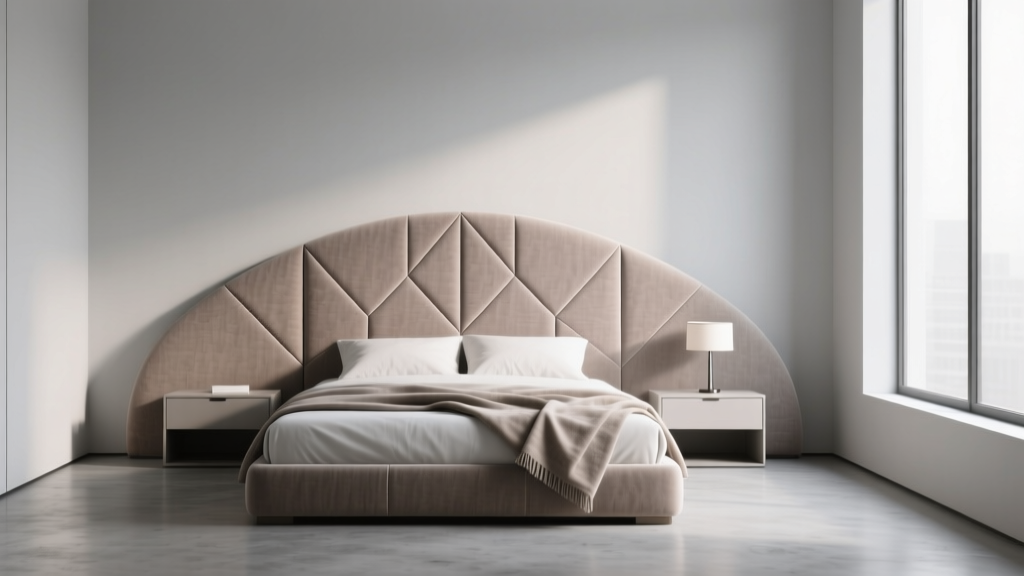
- Soft surfaces: Add sound-absorbing textiles—curtains, upholstered headboards, rugs, and fabric wall art can reduce echo.
- White noise: A dedicated white noise machine often works better than a phone speaker.
- Seal gaps: Weatherstripping around windows or a thicker curtain liner can reduce street noise in rentals.
Budget ranges: White noise machine $25–$80; rugs $100–$500; upholstered headboard $120–$600.
If your journal shows: “My mind won’t shut off”
- Create a clear visual “sleep zone”: Keep work items out of sight. Use a lidded basket, closed storage, or a wardrobe cabinet to hide laptops and paperwork.
- Add a wind-down cue: A reading chair, a small tray for herbal tea, or a bedside carafe signals “rest time” and reduces late-night wandering.
- Choose calming bedroom colors: Soft, muted tones help the room feel less stimulating:
- Warm neutrals (sand, oatmeal, creamy beige)
- Muted greens (sage, olive-gray)
- Dusty blues (denim, fog blue)
- Soft clay or blush for warmth without intensity
Budget ranges: Storage baskets $15–$60; nightstand trays $12–$45; accent chair $150–$900; paint $35–$80 per gallon.
Bedroom Layout Tips That Support Better Sleep
Even small layout changes can make a bedroom feel quieter and more restorative.
- Prioritize the bed: Place the bed so you can see the door without being directly in line with it. This often feels more secure and relaxing.
- Keep pathways clear: Aim for a clutter-free route from door to bed. Fewer obstacles reduces stress and nighttime stumbles.
- Nightstand symmetry (when possible): Matching or similarly sized nightstands can create visual calm, especially in smaller bedrooms.
- Screen distance: If a TV is in the bedroom, consider a cabinet with doors or a fabric cover to reduce the “always on” visual cue.
Sleep-Friendly Wellness Tips That Pair Well With Journaling
- Light timing: Dim lights 60–90 minutes before bed. Use lamps rather than overhead fixtures for a softer sleep environment.
- Temperature range: Many people sleep best in a cool room. Let your journal guide you—track the nights you felt most comfortable.
- Scent as a cue: If fragrance doesn’t bother you, a gentle linen spray (lavender, chamomile) can become a consistent bedtime signal. Avoid strong synthetic scents if you’re sensitive.
- Air quality: If you wake congested, consider a HEPA air purifier and wash bedding weekly. For dry rooms, a humidifier can help—clean it regularly.
- Caffeine and late meals: If your journal shows delayed sleep onset, track caffeine timing and heavy dinners. Small adjustments often make a noticeable difference.
Common Mistakes to Avoid
- Journaling too much at night: A long emotional deep dive can increase alertness. Keep bedtime journaling brief and soothing.
- Using bright, cool lighting for journaling: Blue-leaning bulbs (4000K–6500K) can feel energizing. Choose warm light and dim it.
- Upgrading decor without tracking results: A beautiful bedroom doesn’t automatically equal a sleep-friendly bedroom. Let your journal guide what to change first.
- Ignoring tactile comfort: Scratchy sheets, slippery duvets, and overheating fabrics are frequent sleep disruptors. Comfort is a design feature.
- Clutter “hot spots” near the bed: Piles on the nightstand or floor create visual noise. Closed storage is your best friend in small bedrooms.
- Relying on a phone as your journal: Notifications and bright screens can undo the calm you’re trying to create. Paper is often better for bedtime.
FAQ: Bedroom Sleep Journaling and Sleep-Friendly Design
How long does it take for a sleep journal to improve sleep?
Many people notice patterns within 7–14 days. Improvements often follow once you act on what you learn—like adjusting bedroom lighting, switching bedding materials, or tightening your evening routine.
What are the best sleep journal prompts if I have insomnia?
Use prompts that reduce pressure and rumination: “What can wait until tomorrow?” “What is one calming thing I did tonight?” and “What would ‘good enough’ rest look like?” Keep it short and avoid analyzing every detail at bedtime.
Should I redecorate my bedroom to sleep better?
You usually don’t need a full makeover. Start with high-impact updates: blackout window treatments, warm layered lighting, breathable bedding, and a clutter-reducing layout. Your journal will show which change is most urgent.
What bedroom colors are best for sleep?
Muted, low-contrast colors tend to feel the most restful—soft neutrals, dusty blues, and gentle greens. If you love darker colors, consider a matte finish and warm lighting to keep the room cozy rather than intense.
What if I’m a renter and can’t make major changes?
Focus on renter-friendly sleep environment upgrades: plug-in sconces, removable blackout shades or tension-rod curtains, area rugs, door draft stoppers, and bedding swaps. These can dramatically improve bedroom comfort without permanent changes.
What’s the best place to keep a sleep journal in the bedroom?
Store it in the top drawer of your nightstand or on a small tray with a pen. If your nightstand is tiny, a slim wall shelf beside the bed keeps it accessible without adding clutter.
Actionable Next Steps for Tonight
- Choose five prompts from the evening list and write your answers in under three minutes.
- Do a one-minute bedroom scan: light leaks, clutter near the bed, noise sources, and bedding comfort.
- Pick one small upgrade for the week—blackout curtains, a warm bulb, a breathable sheet set, or a storage basket for bedside clutter.
- In the morning, rate your rest (1–10) and note one environmental factor that helped or hurt.
When your sleep journal and bedroom design work together, you get a clear path forward: fewer guesses, better rest, and a bedroom that truly supports relaxation. For more calming bedroom decor ideas, sleep-friendly layouts, and wellness-forward design tips, explore the latest guides on thedecormag.com.
More Articles
 How to Layer Bedroom Lighting - The Decor Mag
 Bedroom Curved Headboard Upholstery Trend - The Decor Mag
 Bedroom Fluted Wood Dresser Trend - The Decor Mag
 Best Bedroom Watch Box Display - The Decor Mag
 Beyond the Accent Lamp: 7 Thoughtful, Functional Bedside Alternatives for Modern Bedrooms
 How to Choose Bedroom Duvet Cover Style - The Decor Mag
 Bedroom Channel Tufted Headboard Guide - The Decor Mag
 Bedroom Plaster Sconce Wall Application - The Decor Mag
 Bedroom Natural Stone Bedside Tray - The Decor Mag
 How to Style a Bedroom with Vintage Pieces - The Decor Mag