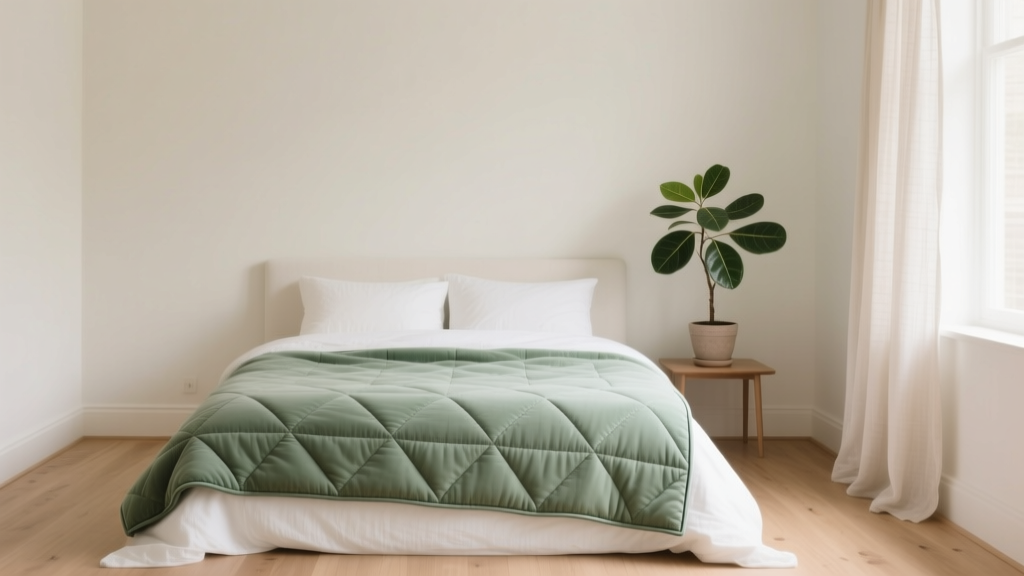
Best Bedroom Sleep Weighted Blanket Guide - The Decor Mag
A bedroom that truly supports rest is rarely about a single “magic” item—it’s a blend of comfort, sensory calm, and thoughtful bedroom design. A weighted blanket can be a powerful addition because it changes how your body feels at bedtime: more grounded, more settled, and less prone to nighttime tossing. When paired with a sleep-friendly environment—quiet lighting, breathable bedding, and a clutter-light layout—it can help turn your bedroom into a reliable place to unwind.
For homeowners and renters alike, weighted blankets also offer a practical upgrade: they don’t require renovations, they work with most decor styles, and they can make an immediate difference in how cozy and secure your bed feels. The key is choosing the right weight, fabric, and fill for your sleep needs—and making sure it complements the rest of your sleep environment rather than overheating or crowding the bed.
This guide walks you through how to choose a weighted blanket, how to style it for a beautiful, restful bedroom, and what to avoid so your new bedding supports sleep quality instead of disrupting it.
Why a Weighted Blanket Can Improve Your Sleep Environment
Weighted blankets are designed to provide gentle, evenly distributed pressure. Many people find that this “settling” sensation helps them relax at bedtime and feel more comfortable staying asleep. A weighted blanket isn’t a cure-all, but it can be a meaningful part of a calm bedroom setup—especially when you’re building a consistent wind-down routine.
How it supports bedroom comfort
- Creates a cocooned feel: Helps the bed feel more secure and inviting, which can reduce bedtime restlessness.
- Encourages stillness: The added weight can make fidgeting less frequent for some sleepers.
- Pairs well with sensory-friendly decor: Works beautifully alongside soft lighting, layered textiles, and muted colors.
Who tends to love weighted blankets
- People who feel “wired” at bedtime and want a more grounded feel
- Light sleepers who benefit from a steadier, tucked-in sensation
- Those creating a cozy bedroom aesthetic with layered bedding
If you have circulation concerns, respiratory conditions, or limited mobility, consult a clinician before using a heavy blanket. Comfort should always come with safety.
How to Choose the Right Weighted Blanket (Weight, Size, and Feel)
1) Pick the right weight
A common starting point is choosing a blanket around 8–12% of your body weight. From there, adjust based on personal preference and temperature needs.
- Prefer lighter pressure: Try 7–9% of body weight
- Prefer a snug, grounded feel: Try 10–12%
- Sharing a bed: Many couples do better with two separate weighted blankets so each person can choose their ideal weight and warmth.
2) Choose the size based on mattress and drape
Unlike decorative throws, a weighted blanket typically works best when it sits on top of the mattress rather than hanging far over the sides (which can cause shifting and uneven pressure).
- Twin bed: Twin or throw-sized weighted blanket
- Full/Queen bed: Queen-sized that covers the sleep surface (not necessarily the full drop)
- King bed: Consider two twin/throw blankets (great for temperature differences) or one king-sized if you both like the same feel
3) Match materials to your sleep temperature
The best weighted blanket for sleep is the one that doesn’t make you overheat. Use your usual sleep tendencies as your guide.
- Hot sleepers: Look for cooling weighted blankets in bamboo lyocell, eucalyptus (TENCEL™ Lyocell), cotton percale, or open-knit designs.
- Neutral sleepers: Cotton sateen or a removable duvet cover gives you flexibility.
- Cold sleepers: microfiber covers, minky-style plush, or wool blend covers create extra warmth (best in cooler rooms).
4) Understand fill types (and what they feel like)
- Glass beads: Popular for a smoother drape and less bulk; often preferred for a sleeker bedding look.
- Plastic poly pellets: Can feel bulkier; may be noisier; often more budget-friendly.
- Knitted weighted blankets: No beads—weight comes from the yarn structure; breathable and stylish, often higher priced.
Bedroom Design Tips: Make a Weighted Blanket Look Beautiful (Not Bulky)
A weighted blanket can elevate your bedroom decor when it’s styled with intention. Think of it as a functional layer—like a duvet or quilt—that should complement your bed’s proportions and color palette.
Layering formulas that work
- Minimal and calm: Fitted sheet + breathable duvet + weighted blanket folded at the foot
- Cozy boutique-hotel: Fitted sheet + top sheet + duvet + weighted blanket laid full-length + light throw for texture
- Summer-friendly: Fitted sheet + lightweight quilt + cooling weighted blanket only (skip the duvet)
Colors that support a restful bedroom
For a sleep-friendly bedroom palette, aim for muted, low-contrast tones that feel steady at night:
- Soft neutrals: warm white, oat, flax, stone
- Cool calm tones: misty blue, dusty sage, gray-green
- Earthy grounding: clay, taupe, muted terracotta (best as accents)
If your weighted blanket is a bold color, keep the rest of your bedding simple so the bed doesn’t feel visually “busy.” Visual quiet supports mental quiet.
Furniture and layout adjustments for better sleep
- Nightstands with closed storage: Reduce visual clutter and give you a place to stash the blanket when not in use.
- Bench or storage ottoman at the foot of the bed: Ideal for folding a weighted blanket without piling it on a chair.
- Rug placement: A soft rug under the bed reduces morning shock from cold floors and subtly improves the comfort of the room.
Budget ranges:
- Storage bench/ottoman: $120–$400 (upholstered); $200–$700 (lift-top or storage)
- Nightstands: $80–$250 each (renter-friendly); $250–$800 each (solid wood, soft-close)
- Area rugs (8x10 typical for queen): $150–$450 (synthetic); $450–$1,200 (wool)
Bedding Pairings That Keep Sleep Comfortable
Choose breathable base layers
A weighted blanket traps more warmth than a standard throw, so your sheets matter. For a comfortable sleep environment:
- Best for hot sleepers: Cotton percale sheets, bamboo lyocell sheets
- Best for all-season: Cotton sateen (smooth, slightly warmer)
- Best for winter: Flannel (pair carefully—may overheat under weight)
Budget ranges:
- Cooling sheet sets: $60–$140 (good); $140–$280 (premium)
- Weighted blankets: $50–$120 (entry); $120–$250 (mid-range cooling/glass beads); $250–$450+ (knit or premium cooling)
Use a removable cover for easier care
For most bedrooms, a weighted blanket with a duvet-style cover is the easiest to live with—especially in rentals with smaller washers.
- Look for corner ties to prevent shifting inside the cover
- Choose machine-washable covers (cotton or bamboo blends)
- Keep a second cover so laundry day doesn’t disrupt your routine
Lighting, Sound, and Temperature: Make the Bedroom Work With Your Blanket
Sleep-friendly lighting recommendations
- Warm bulbs (2700K or lower): Softer and less alerting at night
- Dimmable bedside lamps: Helps you transition gradually into sleep
- Wall sconces: Free up nightstand space and reduce clutter
Budget ranges:
- Dimmable lamp: $30–$120
- Plug-in sconces (renter-friendly): $50–$180 per pair
- Blackout curtains: $35–$120 per panel (varies by length/lining)
Temperature targets for better sleep
Many sleepers rest best in a slightly cooler room. If a weighted blanket makes you warm, compensate with:
- Breathable sheets (percale or lyocell)
- Fan or air circulator pointed away from the face for gentle airflow
- Lightweight duvet or quilt instead of a heavy comforter
Sound and serenity upgrades
- Soft-close drawer hardware or felt pads to reduce noise
- White noise machine or a simple fan for consistent sound
- Felted baskets for bedtime essentials (chargers, eye mask, book)
Wellness Tips: Get the Most Out of a Weighted Blanket
- Start gradually: Use it for 20–30 minutes before sleep for the first few nights, then increase if it feels good.
- Try it during wind-down: Reading or gentle stretching under the blanket can train your brain to associate it with calm.
- Support your neck and knees: Pair with a pillow that matches your sleep position; side sleepers may like a knee pillow for alignment.
- Keep the bedroom cue clean: Reserve the bed for sleep and relaxing (not work). Bedroom design is behavioral design.
Common Mistakes to Avoid
- Choosing a blanket that’s too heavy: Heavier isn’t always better. If you feel trapped or wake sore, size down.
- Ignoring heat buildup: Plush covers + flannel sheets + a heavy duvet can quickly become too warm, disrupting sleep quality.
- Buying the wrong size for the bed: Excess overhang can cause shifting and uneven pressure.
- Skipping a washable plan: If it’s hard to clean, it won’t stay fresh. Prioritize removable covers and check washer limits.
- Overstyling the bed: Too many pillows and throws create visual clutter and nightly effort—both enemies of a relaxing bedroom.
FAQ: Weighted Blankets and Bedroom Sleep Design
What weight should I choose for a weighted blanket?
A helpful starting point is 8–12% of your body weight. If you’re new to weighted blankets or sleep warm, lean lighter. If you love a snug feel, lean closer to 10–12%.
Are cooling weighted blankets actually cooler?
They can be. Look for breathable cover materials like bamboo lyocell, eucalyptus lyocell, or cotton percale, plus glass bead fill or knitted designs that allow airflow. Cooling also depends on your room temperature and sheet choice.
Can two people share one weighted blanket?
Some couples do, but many sleep better with two separate weighted blankets. It prevents tug-of-war, allows different weights, and supports different warmth preferences—especially helpful in small bedrooms where sleep quality can be sensitive.
How do I style a weighted blanket so it doesn’t look messy?
Fold it neatly across the foot of the bed or drape it lengthwise with clean edges. Choose a solid, muted color that matches your bedroom decor palette, and keep the rest of the bedding simple for a calm, cohesive look.
Can I use a weighted blanket year-round?
Yes, with the right materials. Use breathable sheets and a lighter top layer in summer, and swap to a warmer cover or add a duvet in winter. Seasonal layering is one of the easiest bedroom design upgrades for comfort.
What’s the easiest weighted blanket to maintain?
A blanket with a removable, machine-washable cover (with corner ties) is typically the most practical. If the inner blanket is also washable, check your washer capacity and follow the care label closely.
Next Steps: Build a Calmer Bedroom Around Better Sleep
Start with the simplest upgrade: choose a weighted blanket in the right weight and a breathable fabric that fits your sleep temperature. Then support it with a sleep-friendly bedroom setup—soft, warm lighting; tidy surfaces; comfortable sheets; and a layout that makes winding down feel effortless. A well-designed sleep environment doesn’t just look good; it helps your body recognize that it’s safe to rest.
For more calming bedroom design ideas, bedding guides, and sleep-friendly decor inspiration, explore the latest on thedecormag.com.
More Articles
 Global Textiles in Bedrooms: Styling Ideas (2026)
 How to Choose Bedroom Quilt Style - The Decor Mag
Wood for Practical Bedroom Use: Durability, Maintenance, and Real-World Performance Data
How to Choose Bedroom Quilt Style - The Decor Mag
Wood for Practical Bedroom Use: Durability, Maintenance, and Real-World Performance Data
 Best Bedroom Bedside Tea Setup - The Decor Mag
 Bedroom Built-In Wardrobe Ideas - The Decor Mag
 Best Bedroom Sleep Tracking Device Spot - The Decor Mag
 Best Bedroom Nighttime Routine Essentials - The Decor Mag
 Bedroom Curved Furniture Design Trend - The Decor Mag
 Bedroom Washed Linen Bedding Styling - The Decor Mag
 Reading Corner in Bedroom: Decor Ideas (2026)