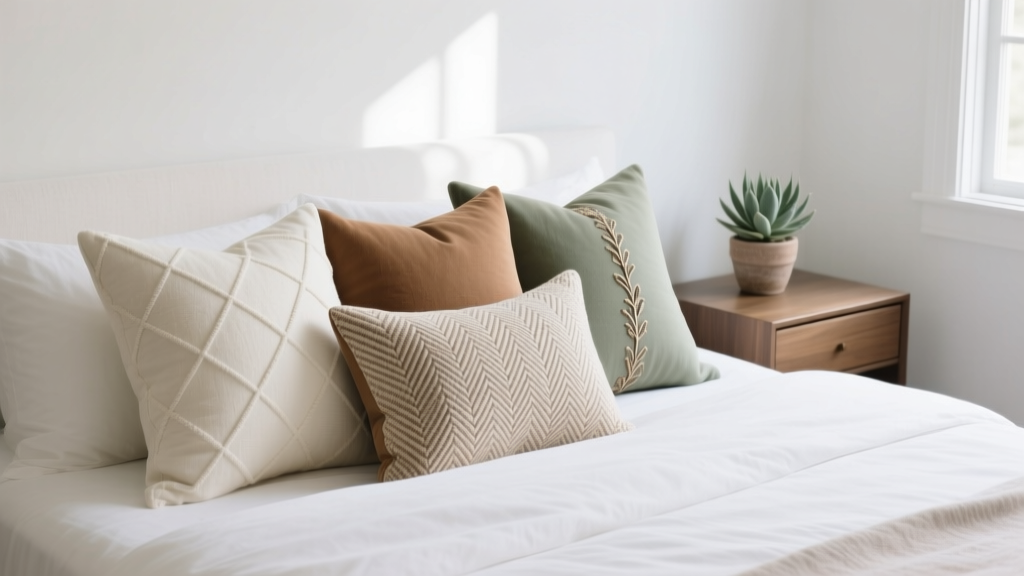
Best Bedroom Throw Pillow Combinations - The Decor Mag
Throw pillows do more than “finish” a bed. They shape the visual calm of your bedroom, signal comfort to your nervous system, and help your space feel intentional rather than cluttered. When your bedroom looks balanced, it’s easier to mentally downshift at night—an underrated part of creating a sleep-friendly environment.
The right bedroom throw pillow combinations also support practical comfort. Pillows can prop you up for reading, soften a firm headboard, and add warmth through texture—without changing your entire bedding setup. The key is choosing a combination that looks restful, feels good against the skin, and stays easy to maintain.
This guide shares expert, practical throw pillow styling formulas for different bed sizes and design styles, plus sleep wellness tips, common mistakes to avoid, and budget ranges so you can build a relaxing bedroom decor plan that fits your home (and your real life).
How Throw Pillow Combinations Affect the Sleep Environment
Your sleep environment is shaped by light, sound, temperature, and—often overlooked—visual noise. Too many pillows, busy patterns, or scratchy fabrics can make a bedroom feel “on,” not restful. A well-chosen pillow combination supports a calmer bedroom design by adding:
- Visual balance: Symmetry or gentle asymmetry helps the room feel organized and quiet.
- Texture comfort: Soft, breathable fabrics feel better during nightly wind-down routines.
- Color harmony: Muted, low-contrast palettes cue relaxation more than high-contrast brights.
- Practical function: A lumbar pillow can support your back for reading without extra clutter.
Start With the Foundation: Bedding, Headboard, and Color
The best bedroom throw pillow combinations begin with what’s already on the bed. Before buying anything, anchor your plan with these sleep-friendly basics.
Choose Bedding That Feels as Good as It Looks
- Sheets: Cotton percale (crisp and cool), cotton sateen (smooth), linen (breathable, relaxed), or bamboo/lyocell blends (soft and temperature-friendly).
- Duvet/comforter: A medium-weight insert for year-round use, plus a washable duvet cover for easy upkeep.
- Quilt/coverlet: A layer that adds texture without heaviness—great for a calm bedroom decor look.
Sleep tip: If you run warm, keep the pillow fabric breathable (cotton, linen) and avoid thick synthetics that trap heat around your face.
Headboard and Bed Frame Considerations
- Upholstered headboard: Softens the room visually; pairs well with minimal pillow stacks.
- Wood headboard: Adds warmth; looks best with textured pillows (linen, boucle, knit).
- Metal headboard: Can feel cool visually; balance it with plush, matte fabrics and warm neutrals.
Color Palette Guidelines for a Relaxing Bedroom
For a sleep-friendly bedroom design, aim for a palette that feels low-stimulation:
- Best calming bases: warm white, ivory, oatmeal, greige, soft taupe, pale gray, muted sage, dusty blue.
- Accent colors: terracotta, clay, olive, deep navy, charcoal, muted blush.
- Rule of thumb: Keep pillow colors within 2–4 related tones for a cohesive, relaxing look.
Throw Pillow Sizing: What Works for Each Bed
Pillow proportions matter as much as color. Oversized pillows can overwhelm a full bed; too-small pillows disappear on a king. Use these as reliable starting points.
Twin/Twin XL
- 1–2 sleeping pillows + 1 lumbar (12"x20" to 14"x22")
- Optional: 1 small accent (18"x18")
Full/Double
- 2 sleeping pillows + 2 standard shams (20"x26")
- Add 1 lumbar or 1 accent (20"x20") for depth
Queen
- 2 sleeping pillows + 2 shams
- Add 2 euros (26"x26") for a layered look
- Finish with 1 lumbar or 1–2 accents
King/California King
- 2–3 sleeping pillows + 2 king shams (20"x36")
- Add 3 euros (or 2 oversized 26"x26" if you prefer minimal)
- Finish with 1 long lumbar (14"x36") or 2 accents
Practical comfort note: The more pillows you add, the more nightly “reset” work you create. For better sleep routines, build a combination you can clear in under 30 seconds.
Best Bedroom Throw Pillow Combinations (Easy Formulas)
These combinations are designed to look polished, feel cozy, and stay manageable for everyday life. Mix and match based on your room’s style, lighting, and bedding.
1) The Classic Hotel Stack (Clean and Calming)
Best for: minimalist bedrooms, small rooms, anyone craving a clutter-free sleep environment
- 2 sleeping pillows (with breathable cotton cases)
- 2 matching shams (white, ivory, or soft gray)
- 1 crisp lumbar pillow in a subtle texture (matelassé, waffle weave, linen)
Color idea: white + warm beige + a touch of charcoal piping
Budget range: $60–$180 for shams + lumbar cover/insert
2) The Soft Neutral Layer (Texture-Forward, Low Visual Noise)
Best for: cozy bedroom decor, Scandinavian or modern organic style
- 2 shams in cotton percale or linen blend
- 2 euro pillows in chunky weave or brushed cotton
- 1 lumbar in bouclé or knit (choose a soft hand-feel)
Color idea: oatmeal + ivory + pale taupe
Sleep tip: If bouclé feels scratchy to you, keep it as a decorative lumbar you don’t rest your face on.
Budget range: $90–$250
3) The Calm Contrast Combo (One Dark Anchor)
Best for: bright bedrooms that need grounding, modern bedrooms with strong lines
- 2 shams in a light neutral
- 2 euros in a medium tone (stone, warm gray)
- 1 lumbar in a deep anchor color (navy, charcoal, forest green)
Color idea: ivory + stone + deep navy
Lighting recommendation: Pair darker accents with warm, dimmable bedside lighting (2700K) to keep the room soothing at night.
Budget range: $80–$220
4) The Pattern + Solid Balance (Relaxed, Not Busy)
Best for: renters updating a bedroom quickly; transitional bedroom design
- 2 solid shams (match duvet or sheets)
- 2 euros in a subtle stripe or small-scale pattern
- 1–2 accents in a complementary solid color
Pattern rule: Keep patterns soft-edged (thin stripes, small checks) and avoid high-contrast prints near the head of the bed.
Budget range: $70–$200
5) The Earthy Modern Combo (Warm and Grounding)
Best for: warm minimalist bedrooms, terracotta and wood tones, natural materials
- 2 linen shams in sand, flax, or warm white
- 2 euros in olive, clay, or a textured neutral
- 1 lumbar in rust/terracotta (or a woven pattern that includes it)
Furniture pairing: Works beautifully with a walnut bed frame, oak nightstands, and a woven bench at the foot of the bed.
Budget range: $120–$300
6) The Serene Coastal Combo (Cool, Airy, Sleep-Friendly)
Best for: bedrooms with lots of natural light, coastal or soft traditional decor
- 2 shams in crisp cotton (white or pale blue)
- 2 euros in a faded stripe or chambray texture
- 1 lumbar in sandy beige or driftwood gray
Color idea: white + misty blue + sand
Sleep tip: Keep blues muted and gray-washed rather than bright to avoid an energizing feel.
Budget range: $80–$240
7) The Elevated Minimal (Two Pillows Only)
Best for: tiny bedrooms, people who dislike extra items on the bed, sensory-sensitive sleepers
- 2 beautiful shams (linen, cotton sateen, or a high-quality percale)
- Optional: 1 long lumbar for reading support
How to make it look intentional: Choose a sham with a tailored edge detail (flange, piping) and keep the duvet slightly oversized for drape.
Budget range: $40–$160
Materials That Feel Better at Bedtime
For a relaxing bedroom, prioritize fabrics that are breathable, soft, and easy to keep clean—especially if your pillows sit near your face during wind-down routines.
- Cotton percale: Cool and crisp; great for hot sleepers.
- Cotton sateen: Smooth with a subtle sheen; feels cozy without heavy texture.
- Linen: Breathable and relaxed; gets softer over time.
- Velvet (use sparingly): Rich and cozy, but can hold heat—best as an accent away from your face.
- Bouclé/wool blends: Stylish and warm; choose only if it feels soft to your skin.
Insert tip: Feather/down inserts look full and “choppable,” but can irritate allergies. A quality down-alternative insert is a great compromise for sensitive sleepers.
Layout and Styling Tips That Keep the Bedroom Peaceful
Use the “One Statement” Rule
For calm bedroom decor, let only one element stand out:
- Either a bold lumbar, or patterned euros, or a strong color accent—not all three.
Coordinate With Lighting for a Softer Look
- Choose warm bulbs (2700K) for bedside lamps.
- Add dimmer switches or smart bulbs to reduce evening brightness.
- Layer light: bedside lamps + a soft overhead option + optional accent (wall sconce or floor lamp).
Pair Pillows With One Supportive Furniture Piece
To make the bed feel like a restful “zone,” add:
- Upholstered bench at the foot of the bed (helps manage decorative pillows at night)
- Small storage ottoman if space is tight
- Two streamlined nightstands to reduce clutter and keep essentials within reach
Sleep-Friendly Wellness Tips (Beyond Looks)
- Keep bedtime setup simple: If your pillow pile annoys you nightly, scale back. Less friction supports consistent routines.
- Washability matters: Choose removable covers and wash every 2–4 weeks if you lounge on them often.
- Allergy-conscious choices: Use down-alternative inserts and tightly woven covers if you’re sensitive to dust.
- Reduce scent overload: Skip heavily fragranced sprays on pillows; mild detergent and fresh air are usually enough.
- Temperature check: If you wake up warm, replace heat-trapping velvet accents with linen or cotton.
Common Mistakes to Avoid
- Too many pillows: A crowded bed can feel stressful and creates nightly cleanup.
- Wrong scale: Tiny pillows on a king bed look lost; oversized euros on a full bed look bulky.
- High-contrast, busy patterns near your face: They can make the room feel visually loud at night.
- Scratchy textures: Trendy fabrics aren’t worth it if they irritate your skin during reading or relaxing.
- Ignoring the rest of the room: Pillows won’t fix harsh lighting, cluttered nightstands, or mismatched bedding colors.
- Buying everything at once: Start with one anchor (shams or lumbar), then layer slowly to avoid returns and waste.
Budget Guide: What to Spend (and Where to Save)
- Budget ($40–$120): Focus on 2 shams + 1 lumbar cover; reuse inserts or buy affordable down-alternative inserts.
- Mid-range ($120–$250): Add euro covers + quality inserts; choose linen-blend or better cotton weaves.
- Higher-end ($250–$500+): Invest in 100% linen, designer textiles, premium inserts, and tailored details like piping.
Save smart: Splurge on the pillow covers you touch most often (shams, lumbar for reading). Save on purely decorative accents and swap them seasonally.
FAQ: Bedroom Throw Pillow Combinations
How many throw pillows should be on a bed for a calm look?
For most bedrooms, 3–5 pillows total (including shams and one lumbar) looks styled without feeling cluttered. If you want the most sleep-friendly setup, try 2 shams + 1 lumbar.
What sizes look best for a queen bed?
A reliable queen formula is 2 standard shams + 2 euros (26"x26") + 1 lumbar. If you prefer minimal, skip the euros and keep just shams plus a lumbar.
Should throw pillows match the duvet cover?
They don’t need to match exactly. A more relaxing bedroom decor approach is to coordinate using the same undertone (warm or cool) and repeat one color in two places (for example, a beige duvet with oatmeal or ivory pillows).
Are decorative pillows bad for sleep?
Not inherently, but too many can create nightly hassle and visual noise. Choose a combination that’s easy to remove, and avoid fabrics that trap heat or irritate sensitive skin.
What’s the most durable fabric for bedroom throw pillow covers?
Cotton canvas, tightly woven cotton, and linen blends tend to hold up well. Look for removable covers with sturdy zippers and wash-friendly care labels.
How do I make my bed look styled without buying new pillows?
Try swapping covers, adding one lumbar, or changing texture. Even a single waffle weave or linen lumbar can make basic shams look elevated—especially if you smooth the duvet and keep the palette cohesive.
Next Steps: Build Your Pillow Combo in 15 Minutes
- Pick a base palette from your duvet or wall color (2–4 tones).
- Choose your formula (Hotel Stack, Soft Neutral Layer, Calm Contrast, etc.).
- Select fabrics that feel good at night—cotton and linen are usually the safest bets.
- Limit to one “statement” (pattern or deep color) for a calmer sleep environment.
- Make it easy to reset by keeping the total pillow count manageable and adding a bench or ottoman if needed.
Small changes in bedroom design—like a more soothing throw pillow combination, warmer lighting, and breathable materials—can make your space feel quieter and more supportive of quality rest. For more calming bedroom decor and sleep-friendly styling ideas, explore the latest guides on thedecormag.com.
More Articles
 How to Choose Bedroom Bedding Weight - The Decor Mag
 How to Layer Bedroom Lighting - The Decor Mag
 Grounded Bedroom Decor: Calm & Serene (2026)
 Best Bedroom Mirror Placement Ideas - The Decor Mag
 Small Bedroom Design Tricks to Maximize Space (2026)
 Antique Bedroom Furniture: Styling Tips (2026)
 Reading Corner in Bedroom: Decor Ideas (2026)
 Best Bedroom Handbag Storage Solutions - The Decor Mag
 How to Choose Bedroom Pillow Insert Fill - The Decor Mag
 How to Choose Bedroom Sheet Thread Count - The Decor Mag