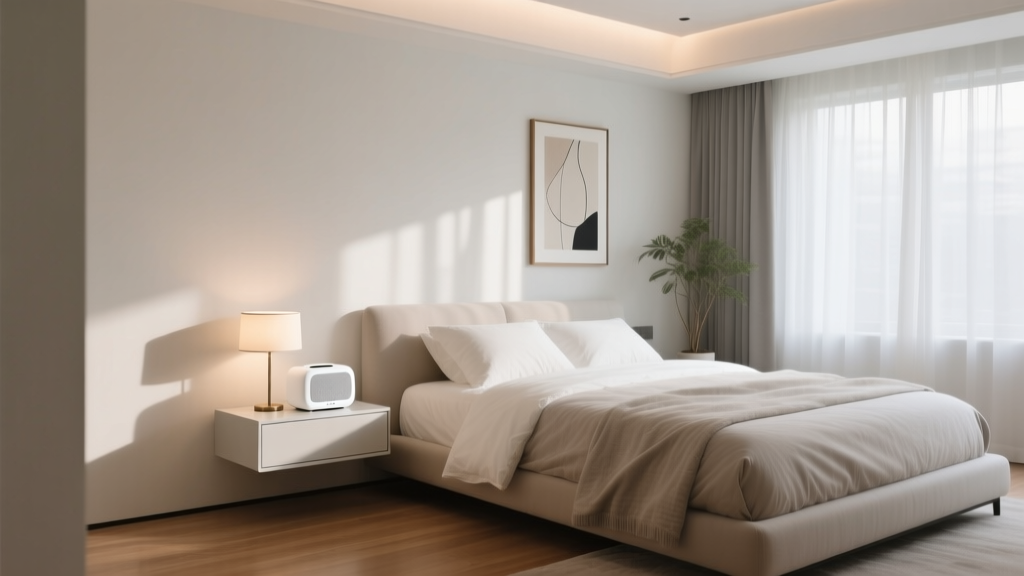
Best Bedroom White Noise Setup - The Decor Mag
A quiet, steady sound can be one of the simplest upgrades for better sleep—especially when your bedroom sits near street noise, roommates, a snoring partner, or a home that creaks and pops at night. White noise works by masking sudden changes in sound (a car door, footsteps in the hall, the neighbor’s TV) that can pull your brain back into alert mode. When the sound around you is consistent, your nervous system has fewer “interrupt” signals to respond to, which often translates into easier sleep onset and fewer wake-ups.
The best part: a great white noise setup doesn’t require a full renovation. With the right device, placement, and a few bedroom design tweaks—soft materials, thoughtful layout, and calming lighting—you can create a sleep environment that feels more private, peaceful, and predictable. Think of white noise as the audio layer of a well-designed bedroom: it pairs beautifully with blackout curtains, breathable bedding, and a clutter-free layout to support deep rest.
What White Noise Does (and What It Doesn’t)
White noise is an even blend of frequencies that creates a “shhh” sound. It doesn’t eliminate noise; it reduces the contrast between background silence and sudden sounds. Many people also prefer related sound profiles:
- Pink noise: slightly deeper and softer than white noise, often described as more “natural” and less hissy.
- Brown noise: deeper still, like a low rumble—helpful if higher frequencies feel sharp or irritating.
- Nature soundscapes: rain, ocean, fan sounds—great if you want masking plus a calming mood.
If you’re sensitive to sound, start with pink or brown noise; they tend to feel warmer in a bedroom setting. If you’re masking sharp urban sounds, standard white noise can be more effective.
Choosing the Right White Noise Source
1) Dedicated White Noise Machine
For most bedrooms, a dedicated machine is the easiest, most consistent option. It’s designed to run all night without interruptions from notifications, app updates, or battery limits.
- Best for: consistent sound, simple controls, reliability
- Look for: continuous playback (not short loops), timer options, volume range, and a warm-toned indicator light or fully dark display
- Budget range: $25–$80 (basic to mid-range); $80–$150 (premium features like adaptive volume or smart scheduling)
Material/finish tip: Choose a matte finish or fabric-wrapped unit so it blends into bedroom decor without reflecting light. Neutral tones (white, sand, charcoal) disappear visually on a nightstand.
2) Smart Speaker or Phone App (With Boundaries)
Apps and smart speakers can work well, especially for renters or minimalists. The key is preventing sleep disruptions.
- Best for: tight budgets, temporary setups, travel, or guest rooms
- Set it up right:
- Enable Do Not Disturb and disable notifications.
- Use offline audio or downloaded tracks to avoid buffering gaps.
- Keep the device across the room to avoid late-night scrolling.
- Budget range: $0–$10 for apps/subscriptions (if you already own a device); $30–$100+ for a smart speaker
3) Fan or Air Purifier (Dual-Purpose Sound)
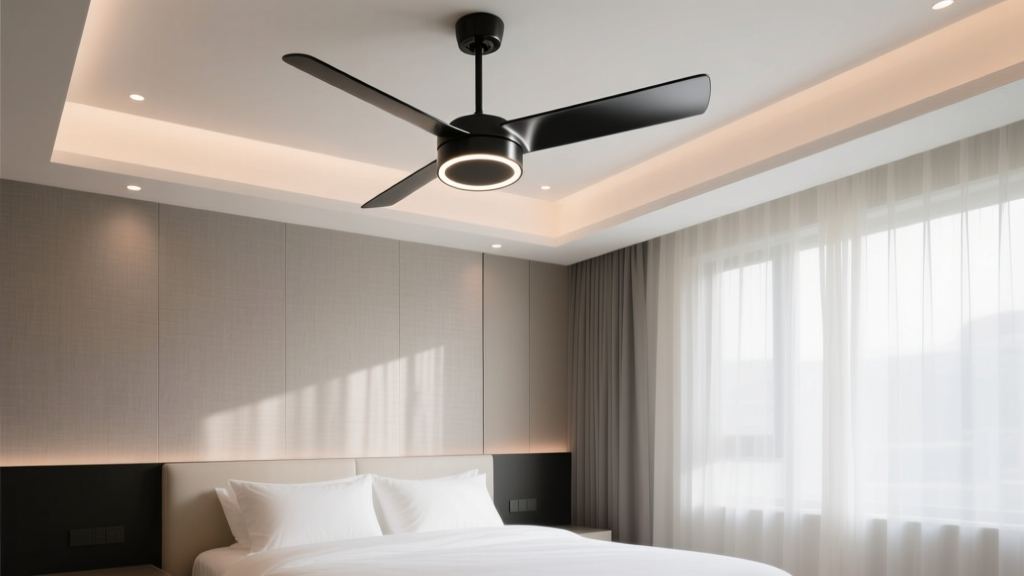
If you like a “real” mechanical sound, a fan or air purifier can provide steady noise while improving comfort and air quality—especially helpful in dusty homes or allergy season.
- Best for: hot sleepers, allergy sufferers, people who prefer low-frequency hum
- Look for: multiple speeds, stable sound profile (no rattling), and an option that won’t blast cold air directly onto your face
- Budget range: $30–$120 (fan); $80–$250+ (air purifier)
Design note: Choose a slim tower fan or a compact purifier with a clean silhouette to keep the bedroom feeling open and uncluttered.
Best Bedroom White Noise Placement (So It Works Without Annoying You)
Placement is where many white noise setups fail. You want the masking effect where it matters most: near the noise source and/or near the sleeper.
Ideal placement rules
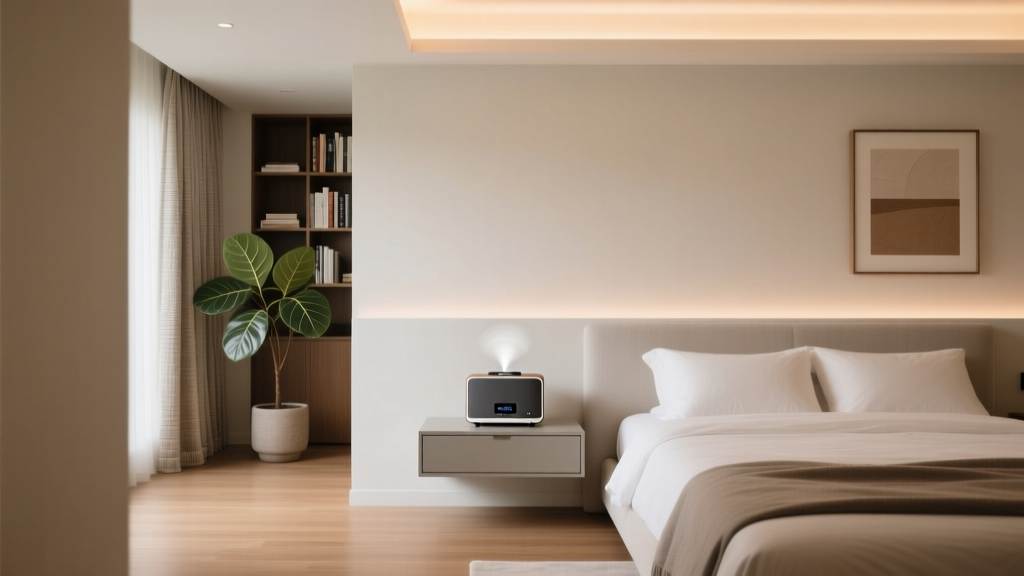
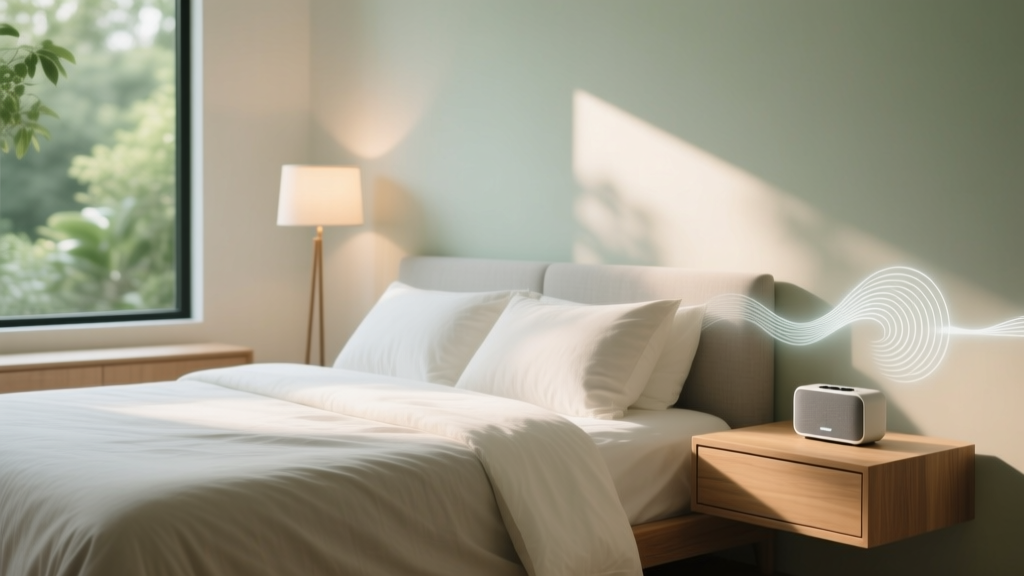
- Start with the nightstand on the side closest to the noise source (street-facing window, shared wall, hallway).
- Keep it 2–6 feet from your head—close enough to mask, far enough to avoid feeling “in your ear.”
- Aim sound across the room rather than directly at your face. This feels softer and more ambient.
- If you share a bed, place it centered (on a dresser opposite the bed) or use two smaller sources at lower volume.
Volume: the sweet spot
- Set volume just loud enough to blur disruptive sounds, not dominate the room.
- If you need to raise your voice to speak over it, it’s usually too loud for restful sleep.
- Increase gradually over a few nights; your brain adapts best with small adjustments.
Designing a Bedroom That Supports White Noise (and Better Sleep)
White noise performs best when the room itself is designed to reduce echo, soften harsh acoustics, and support relaxation. These decor and layout choices elevate the whole sleep environment.
Sound-softening materials to add
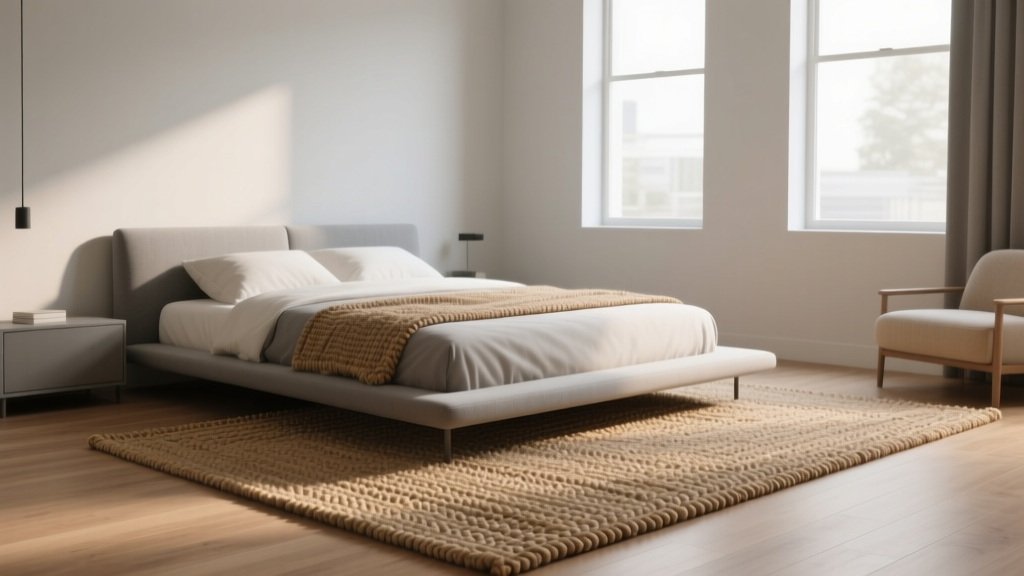
- Rugs with a thick pad: especially in bedrooms with hardwood or laminate floors. Look for wool blends or dense low-pile rugs for easy cleaning.
- Upholstered headboard: fabric or velvet absorbs more sound than wood or metal and adds a cozy visual anchor.
- Full-length curtains: heavier curtains or lined drapery reduce noise bounce and help with light control.
- Layered bedding: a quilt plus duvet (or a blanket at the foot of the bed) adds softness and a calmer, cocooned feel.
Budget guide:
- Rug + pad: $80–$350 (more for wool or large sizes)
- Upholstered headboard: $120–$400
- Blackout or lined curtains: $50–$200 per window
Lighting that won’t compete with your noise setup
Harsh overhead lighting can make even a quiet room feel stimulating. Pair your white noise with calming, layered lighting for a more sleep-friendly bedroom.
- Warm color temperature bulbs: 2200K–2700K in bedside lamps for an evening glow.
- Dimmers: plug-in dimmers for lamps are renter-friendly and inexpensive.
- Low-profile night lighting: a motion-sensing amber night light helps you move around without “waking up” your brain.
Budget ranges: $10–$25 for warm bulbs; $12–$30 for plug-in dimmers; $15–$40 for amber night lights.
Calming bedroom color palettes that encourage rest
The best bedroom colors for sleep are typically muted, low-contrast, and easy on the eyes—especially under warm lighting.
- Soft whites and creams: cozy and clean without feeling stark
- Warm grays and greiges: sophisticated, calming backdrops for any decor style
- Dusty blues and muted greens: naturally soothing, great for stress reduction
- Earthy taupes and clay tones: grounding, especially in modern or boho bedrooms
If your room has a lot of outside noise, choose colors that feel visually quiet—busy patterns and high-contrast palettes can make the space feel more alert even when it’s acoustically masked.
Layout tweaks for a more protected sleep zone
- Move the bed away from shared walls when possible, even by a few inches.
- Avoid placing the headboard under a window if street noise is an issue. If you can’t, add heavier curtains and an upholstered headboard.
- Create a buffer: place a dresser, bookcase, or tall upholstered bench along the noisiest wall to add mass and reduce perceived sound.
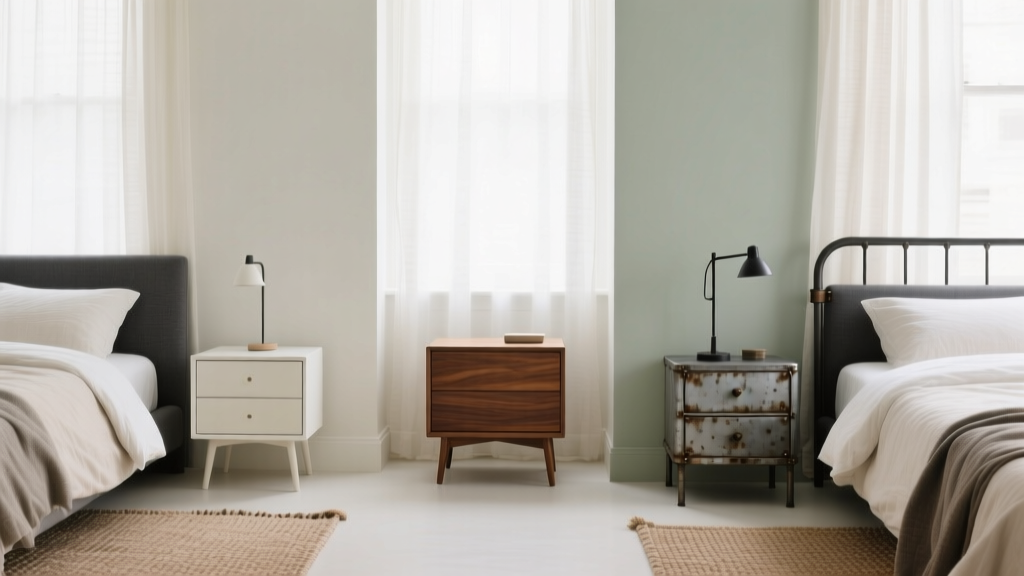
- Declutter the nightstand: a calmer surface supports a calmer mind—keep only essentials (lamp, book, water, white noise device).
Recommended Bedroom White Noise Setups (By Lifestyle and Budget)
Setup A: The Simple Nightstand Solution (Budget-Friendly)
- Dedicated white noise machine
- Warm bedside lamp with 2700K bulb
- Blackout curtain panel (or blackout liner)
Estimated budget: $70–$180 total
Setup B: The Apartment Noise-Blocker (Street + Hallway Defense)
- White noise machine (or two smaller units) placed near the noisiest side
- Rug + rug pad to reduce echo
- Lined curtains plus a door draft stopper to reduce hallway sound leaks
- Upholstered headboard for extra softness
Estimated budget: $250–$700 total
Setup C: The Wellness Upgrade (Air Quality + Sleep Routine)
- Air purifier with a stable, low-frequency sound profile
- Soft, breathable bedding (cotton percale or bamboo lyocell)
- Layered lighting with dimmers and amber night light
Estimated budget: $250–$900 total (depending on purifier and bedding)
Sleep-Friendly Wellness Tips That Pair Well With White Noise
- Build a consistent sound cue: use the same noise profile nightly. Consistency trains your brain to associate it with sleep.
- Set a wind-down scene: dim lights 60–90 minutes before bed, start white noise as you begin your routine, not only when you lie down.
- Keep the bedroom cool: many sleepers rest best around 60–67°F (15–19°C). A fan can help if your home runs warm.
- Choose breathable bedding: cotton percale for crisp coolness, linen for airy texture, and a medium-weight duvet for balanced comfort.
- Protect the dark: cover LED indicators on devices or choose models with a fully dark mode.
Common Mistakes to Avoid
- Playing white noise too loud: louder isn’t better. Aim for masking, not dominance.
- Using looped tracks with noticeable seams: the repeating “reset” can cause micro-wake-ups. Continuous sound or well-designed long tracks feel smoother.
- Placing the device randomly: if it’s not positioned near the noise source or sleep zone, you’ll crank the volume unnecessarily.
- Ignoring the rest of the bedroom design: hard floors, bare walls, and bright lighting make the room feel more stimulating and echo-prone.
- Letting tech disrupt your sleep: phone-based white noise can backfire if notifications, low battery, or late-night scrolling creep in.
- Choosing a machine with bright lights: even small LEDs can affect light-sensitive sleepers—especially if they’re within your line of sight.
FAQ: Bedroom White Noise Setup
What’s the best type of noise for sleep: white, pink, or brown?
It depends on your sensitivity and the noise you’re masking. White noise is effective for sharper, higher-frequency disruptions. Pink noise feels softer and is a popular choice for bedrooms. Brown noise is deeper and can be soothing if you dislike hissy sounds.
Where should I place a white noise machine in the bedroom?
Place it 2–6 feet from your head, ideally on the side closest to the noise source (window, hallway, shared wall). Aim it across the room for a more ambient feel.
Can I use a fan as white noise?
Yes. A fan creates consistent sound and can improve comfort for hot sleepers. Choose a model that doesn’t rattle and won’t blow directly onto your face all night, which can cause dryness for some people.
Will white noise block out snoring?
It can help mask mild to moderate snoring, especially when the snoring is inconsistent and the room is otherwise quiet. For louder snoring, you may need a combination of strategies: white noise, repositioning, and possibly sleep/health interventions for the snorer.
Is it okay to run white noise all night?
Many people use it safely throughout the night. Keep the volume moderate and choose a stable, non-irritating sound. If you wake up feeling overstimulated, lower the volume or switch from white to pink/brown noise.
What’s a renter-friendly way to improve bedroom acoustics?
Add a rug with a thick pad, hang lined curtains, use an upholstered headboard, and place a tall dresser or bookcase against the noisiest wall. These changes reduce echo and make white noise more effective—without permanent alterations.
Your Next Steps for a Calmer, Better-Sleep Bedroom
Start small: choose a reliable white noise source, place it strategically, and set the volume to a gentle masking level. Then support it with a few high-impact bedroom design upgrades—lined curtains, a rug pad, warm lighting, and breathable bedding. The goal is a sleep environment that feels steady and protected, so your body can fully settle.
For more calming bedroom decor ideas, sleep-friendly layout tips, and restful design inspiration, explore the bedroom guides and wellness features on thedecormag.com.
More Articles
 Bohemian Bedroom Decor Inspiration - The Decor Mag
 Best Bedroom Journal and Book Nightstand - The Decor Mag
 Best Bedroom Scarf and Accessory Storage - The Decor Mag
 Best Bedroom Sconce Lighting Options - The Decor Mag
 Best Bedroom Sound Machine Placement - The Decor Mag
 Bedroom Natural Jute Rug Under Bed - The Decor Mag
 The Best Nightstands for Every Bedroom Style - The Decor Mag
 Best Bedroom Ceiling Fan Options - The Decor Mag
 Best Bedroom Sleep Sound Playlist - The Decor Mag
 Antique Bedroom Furniture: Styling Tips (2026)