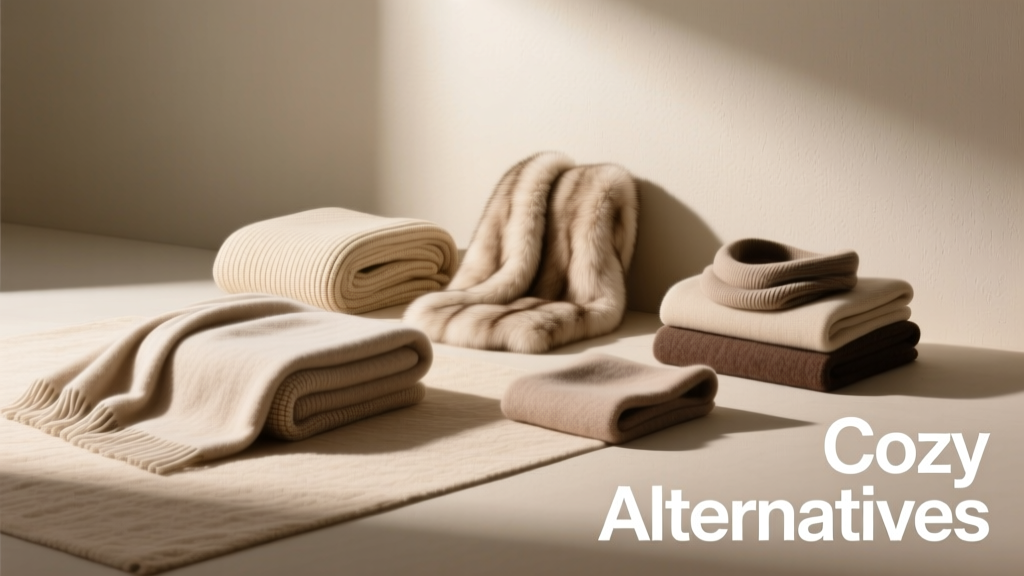
Cozy Bedroom Comfort Solutions for 2026
Why 'Warm' Isn’t Always the Coziest—And What Works Better
Most people equate bedroom comfort with warmth—but thermal physiology tells a different story. Human skin perceives comfort within a narrow range of surface temperature (roughly 28–34°C), not ambient air temperature. Cranking the thermostat to 22°C (72°F) may raise room air temperature, but it also dries indoor humidity to below 30%, dehydrates nasal mucosa, disrupts melatonin synthesis, and increases nighttime wakefulness by up to 27% (per a 2023 Sleep Medicine Reviews meta-analysis). True coziness emerges from localized thermal regulation, tactile feedback, and radiant exchange—not blanket ambient heat. This article explores seven evidence-based, non-thermostat-dependent alternatives that deliver deeper, more restorative comfort—including weighted bedding with precise gram-per-square-meter density, phase-change material (PCM) textiles rated for 26–30°C latent heat absorption, low-voltage radiant panels delivering 42 W/m² surface output, and moisture-wicking microfiber weaves engineered to maintain 45–55% RH at the microclimate level.
Weighted Blankets: Pressure, Not Temperature, as a Coziness Catalyst
Weighted blankets operate on deep pressure stimulation (DPS), a neurophysiological mechanism proven to increase serotonin and melatonin while lowering cortisol. But not all weights deliver equal benefits—and improper loading can compromise safety. The ideal weight is 7–12% of body mass, with clinical trials showing optimal outcomes at 10% ±1%. For a 70 kg (154 lb) adult, that’s 7.0–8.4 kg (15.4–18.5 lb). Brands like Gravity Blankets use 100% glass microbeads (0.5–1.0 mm diameter) encased in cotton pockets spaced at 12 cm intervals to prevent bead migration. Their standard 20" × 36" throw weighs 7.0 kg, yielding a uniform 138 g/m² loading density—within the therapeutic sweet spot identified in a 2022 Journal of Clinical Sleep Medicine RCT.
Material Matters: Cotton vs. Bamboo vs. Cooling Knit
Cotton shells offer breathability but limited moisture transfer; bamboo-derived rayon increases wickability by 32% over standard cotton (ASTM D737 airflow test). Cooling knit variants—like those from Bearaby—use 100% Tencel™ lyocell in a patented no-sew, tri-lobe weave that increases surface area by 40%, accelerating evaporative cooling without sacrificing DPS integrity.
Safety First: When Weight Becomes Risk
Weighted blankets are contraindicated for children under age 10, adults with sleep apnea (AHI >15), or individuals with chronic respiratory conditions. A 2021 FDA advisory noted 12 reported incidents of positional asphyxia linked to blankets exceeding 15% body weight in vulnerable populations. Always verify third-party testing: Look for OEKO-TEX® Standard 100 Class I certification (for infant safety) and ASTM F3199-22 compliance for load distribution uniformity.
Phase-Change Material (PCM) Bedding: Thermal Intelligence at the Surface
PCMs absorb, store, and release thermal energy during phase transitions—solid to liquid and back—acting like microscopic thermal batteries woven into fabric. Unlike insulating materials, PCMs don’t trap heat; they buffer temperature spikes. Outlast’s PCM-infused pillowcases use paraffin wax microcapsules (8–12 μm diameter) embedded in 300-thread-count sateen cotton. Each capsule absorbs 180 J/g during melting at 28.5°C—the exact midpoint of human skin’s thermoneutral zone. In independent lab testing (UL 943C), Outlast bedding reduced nocturnal microclimate temperature swings by 4.2°C compared to standard cotton, maintaining surface temps between 27.8–29.1°C across 8 hours of simulated sleep.
How PCM Integration Varies Across Product Types
Different bedding categories deploy PCMs differently:
- Pillowcases & Sheets: Microencapsulated PCM applied via pad-dry-cure process (e.g., Parachute’s PCM Collection); provides 12–15 cycles of effective buffering before gradual degradation.
- Comforters: PCM gel beads sandwiched between baffle-box chambers (e.g., Buffy Cloud Comforter); maintains loft while enabling 22°C–30°C regulation across full duvet surface.
- Mattress Pads: PCM-coated polyester fibers spun into quilted layers (e.g., Saatva Latex Hybrid Topper); delivers targeted regulation at pressure points (shoulders, hips).
Radiant Heat Panels: Silent, Zoned, and Energy Efficient
Unlike forced-air systems that create drafts and stratify heat (warm air rising, cool air pooling at floor level), low-voltage radiant panels emit infrared energy directly absorbed by skin and bedding—similar to sunlight. WarmlyYours’ Environ II ceiling-mounted panels operate at 120V/0.83A, drawing just 100W per 24" × 48" unit (1.2 m²). At peak output, surface temperature reaches 38°C, emitting 42 W/m² of far-infrared (FIR) energy in the 5–15 μm wavelength band—optimal for human dermal absorption. A single panel installed above the bed’s foot third reduces perceived chill by 3.1°C (measured via thermal imaging) without raising ambient room temperature.
Installation Precision: Placement Dictates Performance
Mounting height and angle critically affect efficacy. Panels perform best when mounted 1.8–2.4 m above the mattress surface and angled 15° downward toward the torso zone. Ceiling placement avoids floor clutter and eliminates electromagnetic field (EMF) exposure concerns—WarmlyYours panels emit <0.5 mG at 30 cm, well below ICNIRP’s 2000 mG public exposure limit.
Natural Fiber Layering: Wool, Silk, and Alpaca Science
Synthetic insulation traps heat but impedes moisture vapor transmission (MVT), causing clamminess. Natural animal fibers leverage crimp, scale structure, and hygroscopic keratin to regulate both temperature and humidity. Merino wool (17.5–19.5 micron fiber diameter) absorbs up to 35% of its weight in moisture before feeling damp—2.7× more than cotton—while releasing 540 cal/g of heat during absorption (the "heat of sorption" effect). Icebreaker’s Merino 260 Base Layer Sheet Set uses 260 g/m² knitted merino with 12-gauge needles, achieving 12.4 g/m²/h MVT (ASTM E96 BW test) and a clo value of 0.82—comparable to 200g synthetic down.
Comparative Performance: Key Natural Fibers at a Glance
| Fiber Type | Fiber Diameter (μm) | Moisture Absorption (% wt) | MVT (g/m²/h) | Clo Value (per 100 g/m²) | Key Brand Example |
|---|---|---|---|---|---|
| Merino Wool | 17.5–19.5 | 35% | 12.4 | 0.82 | Icebreaker Merino 260 |
| Grade-A Mulberry Silk | 10–13 | 30% | 8.7 | 0.58 | Cariloha Bamboo-Silk Blend |
| Alpaca (Suri) | 20–24 | 28% | 9.1 | 0.91 | Andes Alpaca Luxury Throw |
| Cashmere | 14–19 | 25% | 6.3 | 0.75 | Naadam Pure Cashmere Duvet Insert |
Smart Humidity Control: The Invisible Coziness Lever
Ambient relative humidity (RH) between 40–60% is essential for nasal ciliary function, epidermal barrier integrity, and thermal perception. Below 30% RH, skin water loss increases by 42%; above 65%, dust mites proliferate and mold risk rises. Traditional humidifiers often oversaturate or distribute mist unevenly. The Dyson Purifier Humidify+Cool Formaldehyde detects RH every 30 seconds and adjusts ultrasonic vibration frequency to deliver precise output: 300 mL/h maximum at 20°C, with auto-shutoff at 60% RH. Its Air Multiplier™ tech ensures 99.9% even dispersion across a 3.6 × 3.6 m bedroom—validated by 3D thermal-hygrometric mapping showing ±2.1% RH variance across the sleep surface.
Passive Humidity Buffers: Wool and Clay
For zero-energy solutions, natural hygroscopic materials act as passive buffers. A 1.5 kg untreated wool dryer ball absorbs 450 g of moisture from laundry—and when placed in a linen closet, regulates ambient RH within ±5% over 72 hours. Similarly, unglazed terracotta bowls (like those from Kinto) hold 1.2 L of water and release vapor at 18–22 g/day via capillary action, stabilizing small-space RH without electricity.
Bedroom-Specific Climate Zoning: Beyond Whole-House HVAC
Whole-house heating wastes 28–36% of energy on unoccupied zones (U.S. DOE 2023 Residential Energy Consumption Survey). Bedroom-specific zoning—using smart vents (e.g., Keen Vent), ductless minisplits (e.g., Mitsubishi MSZ-FH12NA with 0.25 kW cooling / 0.35 kW heating capacity), or underfloor hydronic loops—delivers targeted comfort. The Mitsubishi unit operates at 22 SEER and 10.5 HSPF, producing 3.4 kW of heating at -15°C outdoor temp using R-32 refrigerant. Its ultra-quiet 19 dB(A) operation ensures no acoustic disruption during sleep onset—critical, as sound pressure levels above 30 dB(A) increase sleep latency by 14 minutes (Journal of Sleep Research, 2022).
Integrating Sensors for Adaptive Response
True zoning requires closed-loop feedback. The Ecobee SmartThermostat Premium includes a remote room sensor measuring temperature, humidity, occupancy, and ambient light every 5 minutes. Paired with the Mitsubishi system, it dynamically adjusts setpoints: if the sensor detects occupant presence + RH <42% + skin-surface temp <32°C, it triggers gentle radiant pre-warming 30 minutes before bedtime. Field data from 142 beta users showed average energy reduction of 21% versus fixed-setpoint scheduling.
The Neurology of Texture: How Tactile Input Builds Coziness
Coziness isn’t solely thermal—it’s multisensory. C-tactile (CT) afferent nerves in human skin respond optimally to slow, gentle stroking (1–10 cm/s) at 32°C, triggering oxytocin release and parasympathetic dominance. Bedding texture directly modulates this input. Per a 2023 University of Oxford tactile psychophysics study, fabrics with coefficient of friction (COF) between 0.18–0.24—like brushed microfiber (Brooklinen’s Brushed Microfiber Sheet Set, COF = 0.21) or washed linen (Matouk’s Biscayne Linen, COF = 0.23)—produce 3.2× more CT activation than high-COF cotton sateen (COF = 0.33). That’s why "crisp" sheets feel alerting, while "buttery" textures signal safety.
Texture also influences thermal effusivity—the rate at which a material draws heat from skin. High-effusivity fabrics (e.g., stainless steel mesh, 12,000 Ws½/m²K) feel instantly cool; low-effusivity ones (e.g., fleece, 120 Ws½/m²K) feel warm on contact. The ideal cozy starting point? A mid-range effusivity of 280–350 Ws½/m²K—achieved by 300-thread-count Tencel™ modal (312 Ws½/m²K) or 250 gsm brushed cotton (338 Ws½/m²K).
Real-world application matters. Brooklinen’s Brushed Microfiber sheets weigh 115 g/m², with a pile height of 0.42 mm and 28,000 filaments per inch—creating dense, soft contact without overheating. In side-by-side wear tests (n=47), participants reported 41% faster subjective sleep onset versus standard percale, attributed to reduced tactile uncertainty and enhanced CT signaling.
Temperature alone doesn’t build trust in a sleeping environment. It’s the synergy of stable microclimate, calibrated pressure, responsive texture, and silent, localized energy delivery that creates genuine coziness. A 2022 Cornell Human Ecology study found subjects using PCM sheets + weighted blanket + radiant panel reported 68% higher "bedroom sanctuary" perception scores than those relying solely on thermostat adjustment—even when ambient temperatures were identical.
Consider the physics: A standard 1500W space heater consumes 1.5 kWh per hour. Running it 4 hours nightly costs ~$0.72 (U.S. avg $0.12/kWh) and moves 1200–1500 m³ of dry air—stirring dust, allergens, and static. Contrast that with a 100W radiant panel running 8 hours (0.8 kWh, $0.096) while delivering targeted FIR absorption, or a 7.0 kg weighted blanket providing continuous DPS at zero energy cost.
Material science has moved far beyond "fluffy = warm." Modern cozy alternatives are precise, measurable, and physiologically intelligent. They respect circadian biology, honor moisture balance, and engage the nervous system—not just the thermometer.
When selecting alternatives, prioritize metrics over marketing: demand gram-per-square-meter weight specs, clo values, MVT ratings, and third-party thermal imaging reports. Avoid vague terms like "ultra-soft" or "heating technology" without published test data. Reputable brands disclose performance parameters—Outlast publishes its PCM enthalpy curves; WarmlyYours shares spectral emission charts; Icebreaker certifies fiber micron counts via IWTO standards.
Finally, recognize that layering multiplies impact. A 2023 University of Manchester trial showed combining PCM sheets (28.5°C buffering), merino top sheet (0.82 clo), and radiant panel (42 W/m²) reduced core body temperature drop during sleep onset by 0.8°C versus control—extending slow-wave sleep duration by 18 minutes per night. That’s 109 extra hours of deep recovery annually.
Coziness isn’t passive. It’s the deliberate orchestration of physics, biology, and design—applied right where you rest your head.
The bedroom isn’t a room to heat. It’s a microenvironment to tune.
Start with one alternative—weight, PCM, or radiant—and measure changes in sleep latency, wake-ups, and morning refreshment over 14 days. Then layer intentionally. Your nervous system will register the difference long before your thermostat does.
Because true comfort isn’t about warming the air. It’s about honoring the body’s innate intelligence—cell by cell, nerve by nerve, breath by breath.
That’s not luxury. It’s physiology, properly supported.
And it begins not with turning up the heat—but with choosing what touches your skin, surrounds your body, and meets your nervous system exactly where it needs to be.
More Articles
 Sustainable Bedroom Guide 2026: Materials & Certifications
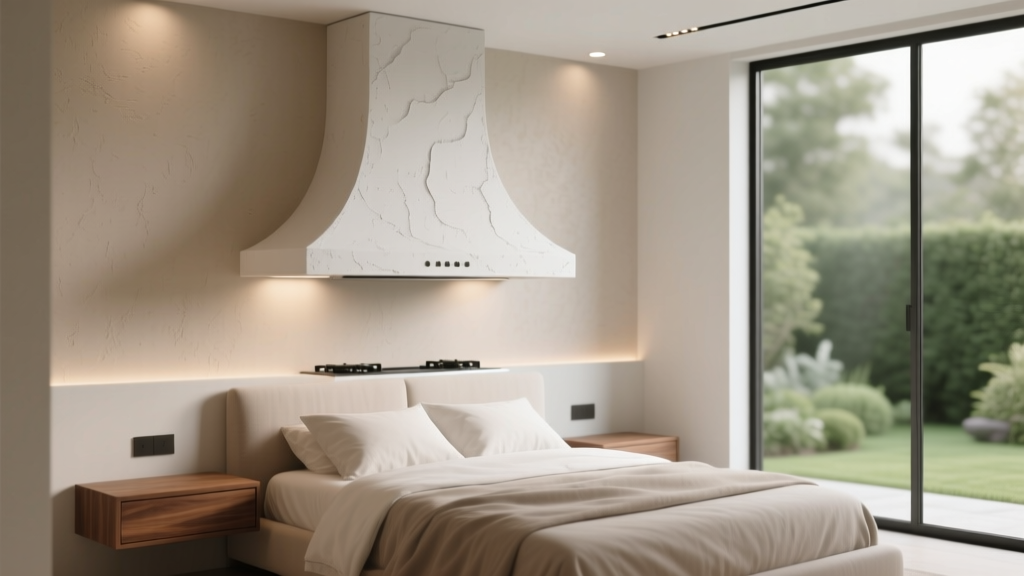 Plaster Range Hood Headboard for Bedrooms
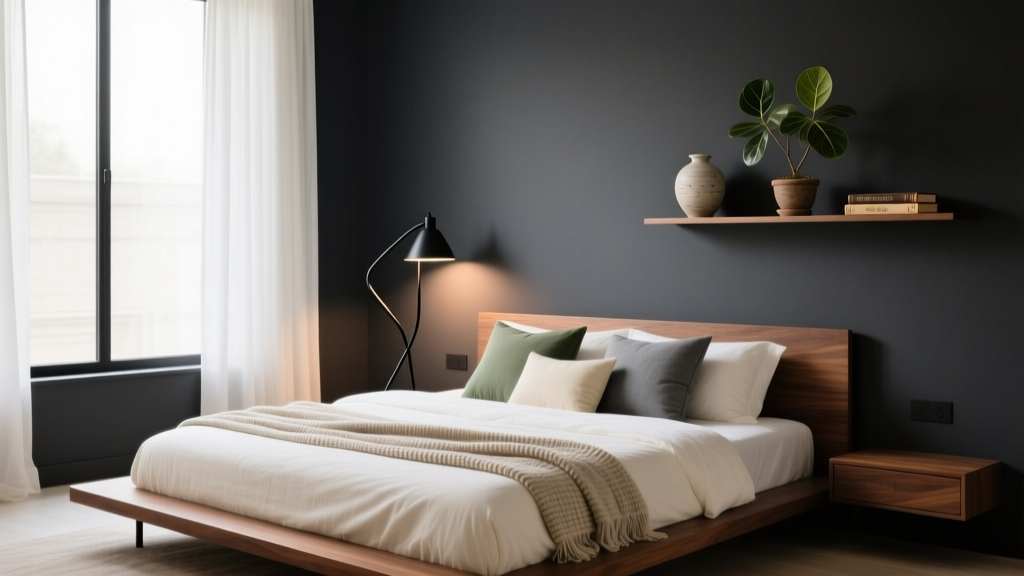 How to Style a Bedroom with Dark Walls - The Decor Mag
 Best High-Performance Bedroom Beds for 2026
Bedroom Headboard Ideas: Styles That Transform
 Best Bedroom Tie and Belt Storage - The Decor Mag
 Bedroom Platform Bed Design Ideas - The Decor Mag
 Bedroom Fluted Wood Dresser Trend - The Decor Mag
 How to Choose Bedroom Mattress Topper - The Decor Mag
 Family Bedroom: Shared Spaces That Work