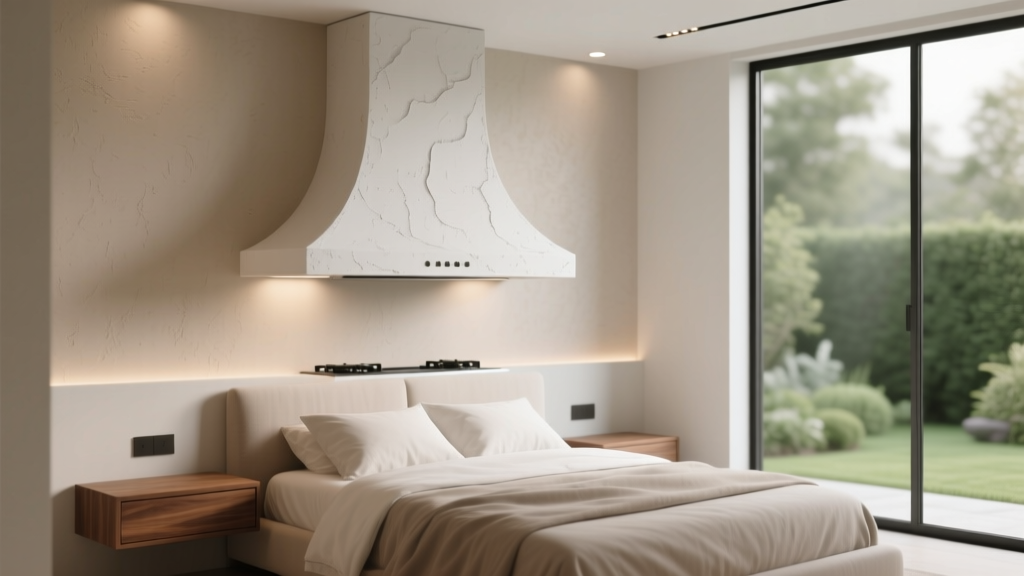
Plaster Range Hood Headboard for Bedrooms
Bedrooms are often designed around what looks good in daylight—pretty bedding, a statement wall, a stylish nightstand—yet what truly matters is how the space supports you at night. A calm, cohesive bedroom design can lower visual stress, reduce nighttime stimulation, and help your brain transition into sleep. When the room feels grounded and “quiet,” many people find it easier to fall asleep and stay asleep.
A plaster range hood inspired headboard is a surprisingly powerful way to get there. Borrowing from the soft architectural curves of a plaster kitchen hood, this headboard style creates a built-in, sculptural focal point without relying on busy patterns or high-contrast artwork. The result is a bedroom that feels more like a boutique retreat—serene, dimensional, and intentionally simple.
This guide walks you through how to design (or DIY) the look, what materials and budget ranges to expect, and how to make sure the final setup is truly sleep-friendly—supporting comfort, air quality, lighting control, and a restful bedroom layout.
What Is a Plaster Range Hood Inspired Headboard?
This style mimics the silhouette of a plaster range hood: gently flared sides, a tapered or arched top, and a monolithic, built-in appearance. In a bedroom, it reads as soft architecture—less “furniture,” more “finish.”
Why it works for a restful sleep environment
- Low visual noise: Large, calm surfaces reduce the “busy” feeling that can keep your mind alert.
- Rounded edges: Curves feel softer than sharp corners, subtly supporting relaxation.
- Matte finishes: Plaster and limewash are typically non-glossy, minimizing glare from lamps and screens.
- Grounding focal point: A clear anchor behind the bed helps the whole room feel resolved—an underrated contributor to bedroom peace.
Design Styles That Pair Beautifully With This Headboard
A plaster hood-inspired headboard is versatile because it’s more about form and texture than a specific decor trend. It can lean modern, rustic, Mediterranean, or minimalist depending on color and surrounding materials.
- Warm modern: Cream plaster + light oak + linen bedding + minimal art.
- Organic coastal: Sandy tones + woven textures + soft blues/sea glass accents.
- Mediterranean/Spanish revival: Ivory plaster + terracotta accents + arched mirrors.
- Japandi: Putty plaster + low-profile platform bed + muted, natural textiles.
Materials and Build Approaches (From Rental-Friendly to Custom)
Your best approach depends on whether you rent, your DIY comfort level, and whether you want a true plaster finish or a convincing look-alike.
Option 1: Rental-friendly faux “plaster” panel headboard
Best for renters or anyone who wants a non-permanent upgrade.
- How it’s made: A lightweight MDF or plywood panel with an attached curved profile (foam, thin wood ribs, or pre-formed trim), then skim-coated with joint compound for a plaster-like finish.
- Finish options: Matte paint, Roman clay, or a sand-textured paint for depth.
- Mounting: Leaning headboard secured to the wall with furniture straps; or mounted with French cleats (landlord permitting).
- Budget range: $150–$600 DIY; $600–$1,500 from a local carpenter or Etsy maker depending on size and finish.
Option 2: Upholstered “plaster silhouette” headboard
Best if you want the shape but prefer a softer surface behind the pillows.
- What to look for: An arched or flared wingback headboard in a textured, matte fabric.
- Best fabrics for a calm bedroom: Linen blends, bouclé (low-shed), cotton velvet (matte), performance weaves for easy cleaning.
- Budget range: $300–$1,200 ready-made; $1,200–$3,500 custom upholstery.
Option 3: Built-in plaster or microcement feature wall with integrated headboard
Best for homeowners who want the most authentic architectural look.
- Materials: Veneer plaster, lime plaster, or microcement over a shaped substrate.
- Considerations: Skilled installation matters—cracks, sheen variations, and dust can become issues if rushed.
- Budget range: $2,000–$8,000+ depending on wall size, region, and whether electrical/lighting is integrated.
Proportions and Placement That Look Intentional (and Feel Calming)
Because this headboard style is sculptural, proportion is what makes it feel serene rather than overpowering.
Recommended dimensions
- Width: Bed width + 6–18 inches on each side (more for a dramatic built-in look).
- Height: 48–62 inches from floor is a common sweet spot; higher ceilings can handle taller.
- Depth (if curved/built out): 2–6 inches creates dimension without eating up floor space.
Layout tips for better sleep quality
- Center the bed on the wall whenever possible to create symmetry—symmetry reads as “resolved” and calming.
- Keep walkways open: Aim for 24–30 inches clearance on each side of the bed if the room allows.
- Anchor with a rug: A rug under the front two-thirds of the bed reduces echo and makes mornings quieter.
Color Palette Ideas: Soft, Sleep-Friendly, and Plaster-Flattering
Plaster looks best in low-contrast palettes that highlight its gentle movement and texture. These colors also support a soothing sleep environment by reducing harsh visual stimulation.
Sleep-supportive plaster palette suggestions
- Warm whites: Cream, ivory, almond—cozy without feeling stark.
- Greige and putty: Ideal if you want a modern, grounded bedroom.
- Muted clay: Soft terracotta or blush-beige adds warmth without “energizing” the room.
- Dusty sage: A nature-based hue that pairs beautifully with plaster texture.
Paint and finish guidance
- Choose matte or flat for walls and headboard surfaces to minimize glare.
- Avoid high-contrast trim around the headboard—keeping edges soft helps the feature feel calming.
- If you love texture: Consider limewash or Roman clay for subtle variation that still reads quiet.
Bedding and Furniture Recommendations to Complete the Look
This headboard shines when the rest of the room supports it: fewer competing shapes, warmer textures, and functional comfort.
Bedding: breathable layers that support sleep
- Sheets: Cotton percale (crisp and cool) or linen (breathable, relaxed texture). Budget: $60–$250 for quality sets.
- Duvet insert: Choose by climate—down alternative for easy care, wool for temperature regulation. Budget: $120–$350.
- Top layer: A quilt or blanket in a matte weave adds softness without shine. Budget: $80–$250.
- Pillows: Match to sleep style (side/back/stomach). A supportive pillow reduces neck tension, helping you stay asleep. Budget: $40–$200 each.
Nightstands and dressers: keep the visual profile low
- Nightstands: Light oak, walnut, or painted wood with simple lines. Rounded corners pair well with the headboard’s curves. Budget: $120–$600 each.
- Hardware: Choose muted finishes—brushed brass, aged bronze, or matte black.
- Storage: Closed storage reduces clutter (and the stress it creates). Look for drawers rather than open shelves.
Mirrors and art: less, larger, calmer
- Mirror shape: Arched or softly rounded to echo the range hood silhouette.
- Art: One large, low-contrast piece rather than a busy gallery wall behind the bed.
Lighting Plan: Soft, Layered, and Circadian-Friendly
Lighting is one of the most direct links between bedroom design and sleep quality. A plaster-inspired headboard looks gorgeous with grazing light, but brightness and color temperature need to stay gentle at night.
A simple 3-layer lighting setup
- Ambient: A ceiling fixture on a dimmer (warm LED). Budget: $80–$400.
- Task: Reading sconces or adjustable lamps. Choose shielded designs that direct light downward. Budget: $60–$300 each.
- Glow: A small table lamp, salt lamp-style warm accent, or LED strip hidden behind the headboard (very low brightness). Budget: $20–$150.
Bulb recommendations for better sleep
- Evening bulbs: 2200K–2700K warm light for bedside and ambient lamps.
- Brightness: Use dimmers or smart bulbs so you can transition from evening wind-down to lights-out.
- Avoid bare bulbs: Glare increases alertness and can make plaster texture look harsh instead of soft.
Wellness Add-Ons: Texture, Air, Sound, and Scent
A beautiful headboard sets the tone, but sleep wellness comes from the full sensory environment.
- Air quality: If you’re using plaster-like compounds or paint, choose low-VOC products and ventilate well. Consider an air purifier if your room collects dust. Budget: $80–$250.
- Sound control: A thick rug and lined curtains reduce echo. For city noise, add a white noise machine. Budget: $25–$60.
- Window treatments: Blackout curtains or blackout shades support melatonin production by reducing light leaks. Budget: $40–$250 per window.
- Scent: Keep fragrance subtle—lavender, chamomile, or cedar. Avoid strong diffusers right next to the bed if you’re sensitive.
Common Mistakes to Avoid
- Going too bright white: Stark whites can feel clinical at night and emphasize shadows. Choose warm whites or soft neutrals.
- Over-texturing: Pairing heavy plaster texture with busy bedding, patterned rugs, and bold art can feel chaotic. Let one element lead.
- Poor lighting placement: Sconces that shine into your eyes or cold bulbs (4000K+) can disrupt a calm bedroom atmosphere.
- Skipping symmetry entirely: Perfect symmetry isn’t required, but a balanced layout helps the brain relax. If one side has a lamp, give the other side visual weight (plant, stacked books, second sconce).
- Ignoring maintenance: Chalky finishes can mark easily. Add a gentle, matte sealer when appropriate, especially if you have kids or pets.
- Not planning outlets: Built-in looks often want hidden cords. Use cord channels or plan outlet access so the space stays visually quiet.
FAQ: Plaster Range Hood Inspired Headboards
Will a plaster-style headboard make my room feel smaller?
Not if you keep the color close to the wall tone and avoid high contrast. A tonal plaster headboard can actually make the room feel more cohesive and expansive by simplifying the visual field.
Is real plaster safe for a bedroom?
Once cured and sealed (if needed), plaster is generally fine. During installation, prioritize ventilation and low-VOC products, and allow full curing time before sleeping in the room—especially if you’re sensitive to dust or odors.
What’s the easiest way to get the look on a tight budget?
A DIY panel: shape it with lightweight foam or trim, skim-coat with joint compound, then paint in a warm matte neutral. Many people land in the $150–$300 range if they already have basic tools.
How do I style bedding so the headboard stays the focal point?
Choose solid or subtly textured bedding (linen, cotton matelassé) and keep patterns low-contrast. Use two to three tones max—like cream sheets, oatmeal duvet, and a putty throw.
Can renters install this without damaging walls?
Yes. Use a freestanding/leaning headboard secured with anti-tip straps to furniture rather than wall anchors where possible. If you must anchor, ask your landlord and use minimal holes that can be patched later.
What lighting looks best with a plaster headboard?
Warm, dimmable light with a soft spread. Shielded sconces or linen-shade lamps create gentle shadows that highlight plaster texture without glare.
Next Steps: Create Your Own Calm, Sculptural Sleep Retreat
Start by choosing your approach—rental-friendly panel, upholstered silhouette, or true plaster build—then set the foundation with a soft neutral color palette and warm, dimmable lighting. Finish with breathable bedding, clutter-reducing storage, and blackout window treatments so the room doesn’t just look serene—it supports deeper rest.
For more bedroom design ideas, calming decor inspiration, and sleep-friendly styling guides, explore the latest on thedecormag.com.
More Articles
 Transitional Bedroom Design Guide - The Decor Mag
 How To Clean Actually: A Bedroom Comfort Specialist’s No-Nonsense, Science-Backed Protocol
 Best Bedroom Shoe Storage Solutions - The Decor Mag
 Best Bedroom Sound Machine Placement - The Decor Mag
 How to Choose Bedroom Euro Sham Size - The Decor Mag
 How to Choose Bedroom Mattress Firmness - The Decor Mag
 Bedroom Low Profile Bed Frame Styles - The Decor Mag
 How to Choose Bedroom Mattress Topper - The Decor Mag
 Bedroom Cane Webbing Headboard Ideas - The Decor Mag
 Best Bedroom Valet Stand Options - The Decor Mag