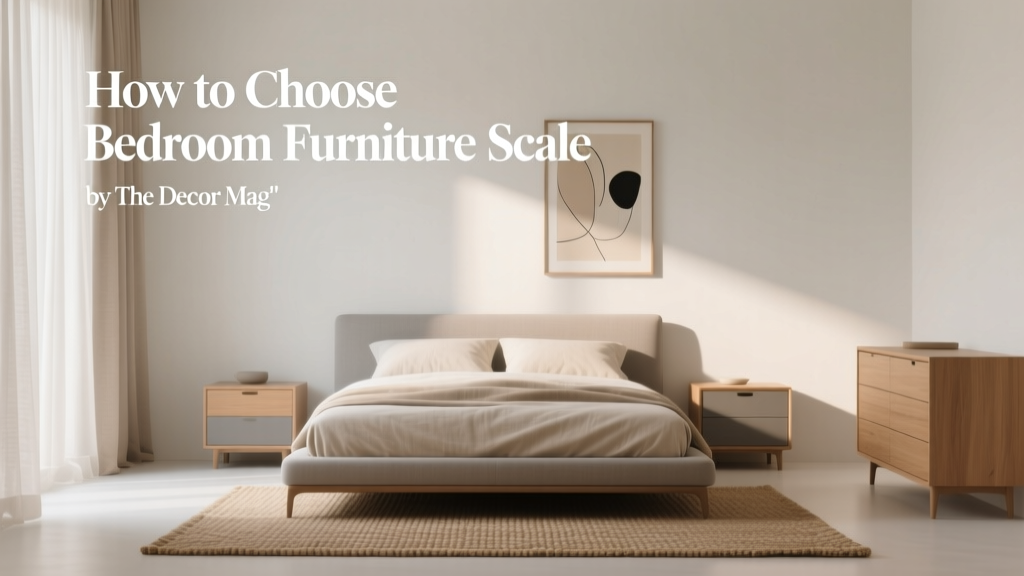
How to Choose Bedroom Furniture Scale - The Decor Mag
A restful bedroom isn’t only about pretty decor—it’s about how the space feels when you walk in, breathe out, and let your body shift into sleep mode. One of the biggest (and most overlooked) factors in that feeling is furniture scale: the relationship between the size of your bed, nightstands, dressers, lighting, and the room itself.
When furniture is too large, your bedroom can feel tight, visually loud, and hard to navigate—conditions that subtly raise stress and make it harder to unwind. When furniture is too small, the room can feel unanchored and cluttered (because you compensate with extra pieces or piles). Choosing the right scale supports a calmer bedroom design, better flow, and a more sleep-friendly environment.
Think of furniture scale as the quiet architecture of your sleep space. Get it right, and the room naturally encourages good habits: fewer obstacles, softer sightlines, easier storage, and lighting that works with your circadian rhythm.
What “Furniture Scale” Really Means (and Why It Impacts Sleep)
In bedroom decor, scale isn’t just about measurements. It’s the visual and functional balance between:
- Room size (square footage and ceiling height)
- Furniture dimensions (width, depth, height)
- Negative space (open space that lets the room breathe)
- Circulation (clear walking paths around the bed and storage)
- Proportion (how pieces relate to one another—bed to nightstands, dresser to wall, rug to bed)
Sleep quality can suffer in bedrooms that feel cramped or chaotic. From a wellness perspective, a room that’s easy to move through and visually calm reduces “micro-stress”—the small, constant signals (bumping into corners, stepping around clutter, harsh light glare) that keep your nervous system slightly on alert.
Start With the Room: Measure Before You Buy
Key bedroom measurements to take
Before choosing bedroom furniture, grab a tape measure and write these down:
- Room dimensions: length x width
- Ceiling height: especially important for tall headboards and armoires
- Window placement: height from floor and how much wall space remains
- Door swings: entry door and closet doors (sliding vs. hinged)
- Outlet locations: for lamps, phone charging, and alarm clock placement
Healthy clearance guidelines (great for flow and calm)
- Walking space around the bed: aim for 24–36 inches on the sides you use most
- At the foot of the bed: 30–36 inches is ideal if you have a dresser or bench nearby
- Closet access: leave at least 30 inches in front of closet doors/drawers
If your room is small, don’t worry—you can still create a beautiful, sleep-friendly bedroom layout. The goal is to be intentional about which pieces earn their footprint.
Choose the Right Bed Scale (Your Anchor Piece)
The bed is the largest piece in most bedrooms, so its scale determines everything else. The wrong bed size can make the room feel either crowded or oddly empty.
Quick bed sizing guidance
- Twin/Twin XL: best for very small rooms, kids’ rooms, guest rooms, and studio apartments
- Full: solid for small bedrooms, solo sleepers, or couples who don’t mind cozy space
- Queen: the most versatile for primary bedrooms; balances comfort and space in many homes
- King: ideal for larger bedrooms; can overwhelm medium rooms if paired with bulky furniture
Bed frame and headboard scale tips
- Low-profile platform beds make ceilings feel higher and rooms feel calmer—great for smaller spaces.
- Upholstered headboards add softness and sound absorption, supporting a quieter sleep environment.
- Heavy, tall footboards can visually “block” the room and reduce airflow around the bed; consider an open foot or no footboard for smaller rooms.
- Canopy beds work best with higher ceilings; in standard-height rooms, choose a slim-frame canopy rather than thick posts.
Budget ranges (bed + frame)
- Budget: $250–$700 (simple platform beds, metal frames, basic upholstered styles)
- Mid-range: $700–$1,800 (solid wood, better upholstery, sturdier slats)
- Investment: $1,800–$4,000+ (crafted hardwood, designer upholstery, heirloom construction)
Nightstands: Get the Height and Width Right
Nightstands are small, but their scale strongly affects bedroom function. If your nightstand is too low, you’ll reach down (annoying at bedtime). Too high, and it feels awkward and visually top-heavy.
Best nightstand proportions
- Height: within 1–2 inches of your mattress top (or slightly higher for convenience)
- Width: visually balanced with the bed—wider beds generally need wider nightstands
- Depth: enough for a lamp and essentials without eating up walkway space (often 16–20 inches works well)
Sleep-friendly nightstand features
- Soft-close drawers to reduce nighttime noise
- Closed storage to hide visual clutter (clutter can increase mental stimulation)
- Rounded corners for safer navigation in low light
- Integrated cable management to keep cords tidy
Material recommendation: solid wood or wood veneer for warmth and durability; avoid high-gloss finishes if you’re sensitive to light reflections at night.
Dressers and Wardrobes: Scale for Storage Without Overwhelm
Storage is where scale often goes wrong. A dresser that’s too large can dominate the room, while too little storage creates piles that interrupt your sleep space.
How to choose the right dresser size
- Low and wide dressers feel calmer and more grounded—especially under a TV or art.
- Tall chests are great for small rooms because they provide storage with less floor space.
- Drawer depth matters: deeper drawers can reduce the number of furniture pieces you need.
Budget ranges (dressers/wardrobes)
- Budget: $200–$700 (flat-pack options, laminate/engineered wood)
- Mid-range: $700–$2,000 (solid wood veneers, better hardware, sturdier construction)
- Investment: $2,000–$5,000+ (hardwood, dovetail joinery, premium slides)
Wellness tip: choose calming storage
Look for drawers that glide smoothly and hardware that feels good in your hand. Friction and noise may seem minor, but bedtime routines thrive on ease and quiet. If possible, keep the top of the dresser mostly clear—an uncluttered surface signals “rest” rather than “tasks.”
Layout Rules That Keep the Bedroom Spacious and Sleep-Friendly
Great bedroom design supports relaxation by improving flow, reducing visual noise, and creating a clear “rest zone.”
Go-to layout recommendations
- Center the bed on the longest uninterrupted wall when possible. It creates symmetry and calm.
- Keep pathways clear from the door to the bed and to the closet/bathroom.
- Limit large pieces to 3–4 core items: bed, two nightstands (or one + wall shelf), and a dresser.
- Use vertical space thoughtfully in small bedrooms: wall sconces, floating shelves, tall dressers.
- Consider a bench only if clearance allows (30–36 inches at the foot of the bed).
Small bedroom layout upgrades
- Swap bulky nightstands for narrow nightstands or wall-mounted ledges.
- Choose under-bed storage instead of adding another cabinet.
- Use sliding closet doors (or add a curtain) if door swing steals precious space.
Scale Beyond Furniture: Bedding, Lighting, Rugs, and Color
Furniture scale works best when the surrounding elements support it. These choices affect how large or calm the room feels—and how sleep-friendly it becomes.
Bedding that matches the bed’s visual weight
- For small rooms: choose streamlined bedding (lighter quilts, tailored duvets) to avoid a “puffy” look that makes the bed feel oversized.
- For larger rooms: add visual softness with layered textiles (duvet + quilt + throw) to keep the bed from feeling undersized.
- Fabric recommendations: cotton percale for cool sleep, linen for breathability, sateen for a smoother feel (warm sleepers often prefer percale or linen).
Lighting scale that supports circadian rhythm
- Bedside lamps: choose lamp height so the shade bottom sits around eye level when seated in bed.
- Wall sconces: ideal for small nightstands; frees surface space and reduces clutter.
- Bulb choice: warm white (about 2700K) for evening calm; consider dimmable bulbs to ease into sleep.
- Avoid harsh overhead-only lighting; layer light with bedside + soft ambient options.
Rug sizing to make the room feel balanced
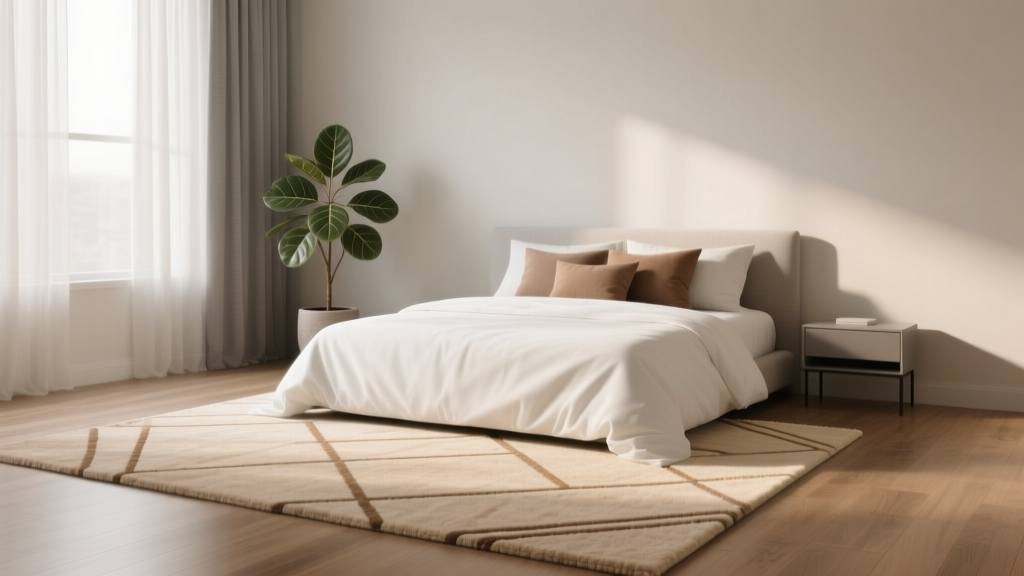
- Common approach: place a large rug under the bed so it extends on both sides (helps the bed feel properly anchored).
- Alternative for tight budgets: two runners on each side of the bed can still soften sound and add comfort.
Colors that visually “right-size” the room
- Small bedrooms: light neutrals, soft sage, misty blues, warm off-whites to open the space.
- Large bedrooms: deeper, muted tones (clay, smoky navy, olive, warm taupe) to create a cozy sleep cocoon.
- Finish tip: matte or eggshell walls reduce glare and feel more restful than high-gloss paint.
Common Mistakes to Avoid When Choosing Bedroom Furniture Scale
- Buying the bed first without measuring the room (especially upgrading to a king).
- Oversized nightstands that shrink walkways and create a cramped bedroom layout.
- Too many small pieces (extra chairs, small side tables, multiple shelves) that create visual clutter.
- Ignoring ceiling height and choosing headboards/armoires that feel looming.
- Using only overhead lighting, which can make the room feel stark and less sleep-friendly.
- Prioritizing style over function: a beautiful dresser that doesn’t hold your clothes will lead to piles, baskets, and stress.
- Blocking windows with tall furniture, which reduces natural light and can make mornings feel sluggish.
A Simple Step-by-Step Plan to Get Scale Right
- Measure your room, doors, windows, and outlets.
- Mark clearances (24–36 inches around key paths).
- Choose your bed size and profile (low-profile for small rooms, more substantial for large rooms).
- Match nightstand height to mattress height for comfort and ease.
- Pick one main storage piece (dresser or wardrobe) before adding anything else.
- Layer lighting with warm, dimmable bedside options.
- Edit ruthlessly: aim for calmer surfaces and fewer visual distractions near the bed.
FAQ: Bedroom Furniture Scale
How much space should I leave on each side of the bed?
Aim for 24–36 inches on the sides you use most. If space is tight, 18–24 inches can work, but prioritize a clear, safe path for nighttime movement.
Should nightstands be higher or lower than the mattress?
Ideally, your nightstand is level with the top of the mattress or up to 1–2 inches higher. This keeps essentials within easy reach and feels visually balanced.
Is a king bed too big for a 10x12 bedroom?
It can be, depending on door/closet placement and whether you need dressers in the room. Many 10x12 rooms feel more comfortable with a queen, or a king paired with very slim nightstands and minimal extra furniture.
What’s the best furniture style for making a small bedroom feel bigger?
Look for low-profile beds, pieces with legs (so you can see floor underneath), lighter wood tones, and streamlined silhouettes. Floating shelves and wall sconces also help free up space.
How do I choose a dresser size that won’t overwhelm the room?
Start with the wall it will sit on and keep enough clearance for drawers to open comfortably (and for you to stand there). If floor space is limited, choose a taller chest; if wall space is wide, a low dresser often feels calmer.
What materials are best for a calm, sleep-friendly bedroom?
Natural or natural-feeling materials tend to read as warmer and quieter: solid wood or wood veneer furniture, cotton/linen bedding, wool or cotton rugs, and matte finishes. They also reduce glare and create a more soothing bedroom environment.
Conclusion: Create a Bedroom That Feels Easy to Live In
The best bedroom furniture scale makes the room feel open, grounded, and quiet—so your body can do what it’s designed to do at night: recover. Measure first, protect your walkways, let the bed set the tone, and choose storage and lighting that reduce clutter and stress.
Your next steps: measure your room, sketch a simple layout, and choose one piece at a time—starting with the bed and nightstands—so every addition supports a calmer bedroom design and better sleep quality.
For more sleep-friendly bedroom decor, layout ideas, and calming design inspiration, explore the latest guides on thedecormag.com.
More Articles
 Plaster Range Hood Headboard for Bedrooms
 Best Bedroom Keepsake Box Storage - The Decor Mag
 How to Create a Bedroom for Better Sleep - The Decor Mag
 Sustainable Bedroom FAQs Answered: Materials, Certifications, and Real Impact
 How to Choose Bedroom Rug Size - The Decor Mag
 Bedroom Curved Headboard Upholstery Trend - The Decor Mag
 How to Choose Bedroom Euro Sham Size - The Decor Mag
 How to Choose Bedroom Art for Relaxation - The Decor Mag
 Best Bedroom Sleep Mask and Pillow Spray - The Decor Mag
 Best Bedroom Sunglasses Organization - The Decor Mag