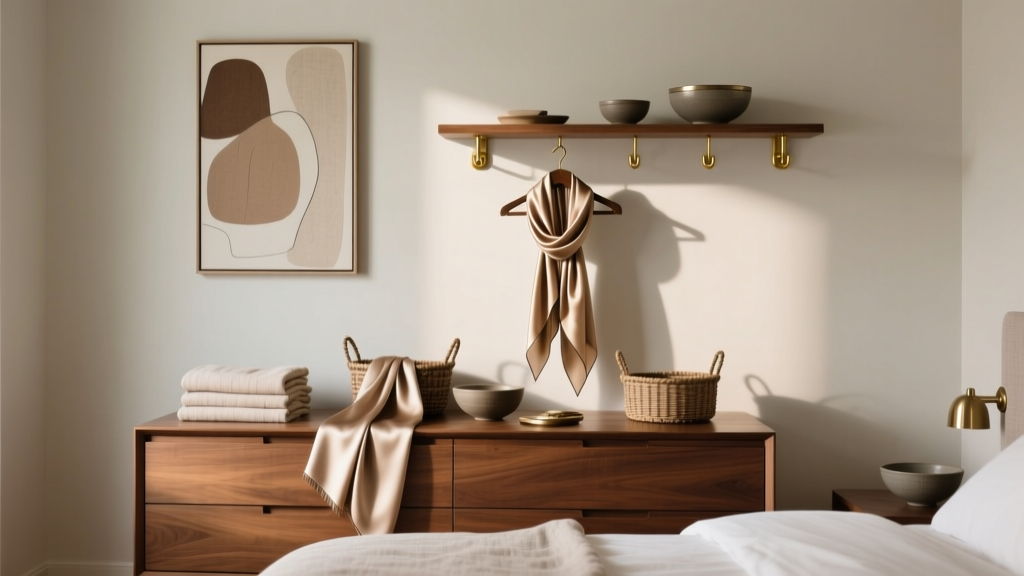
Best Bedroom Scarf and Accessory Storage - The Decor Mag
A calm bedroom supports deeper sleep, steadier mornings, and a sense of ease when you walk in the door. Yet many bedrooms quietly accumulate “soft clutter”: scarves draped over chair backs, belts tangled in drawers, handbags stacked in a corner, and jewelry scattered across nightstands. Even when everything is clean, visual disorder can keep the room feeling busy—making it harder for your nervous system to settle at night.
Scarf and accessory storage isn’t just about tidiness; it’s part of creating a sleep-friendly bedroom design. When accessories have a dedicated home, your bedroom becomes easier to reset each day. That reset matters: a clear path to the bed, calmer surfaces, and fewer last-minute searches reduce stress and support a healthier wind-down routine.
This guide covers practical, attractive ways to store scarves and accessories in bedrooms of any size—rental-friendly solutions included—along with layout tips, material recommendations, budget ranges, and the most common mistakes that sabotage both organization and a restful sleep environment.
What to Store (and Why It Changes the Storage You Choose)
Before buying organizers, take five minutes to define your accessory categories. Storage works best when it matches what you actually own and how you get dressed.
- Scarves: silk, wool, cashmere, cotton; long vs. square; delicate vs. everyday
- Belts: leather, fabric, statement buckles
- Jewelry: daily pieces vs. occasion; necklaces that tangle; rings and earrings
- Bags: handbags, clutches, backpacks
- Cold-weather accessories: hats, gloves, earmuffs
- Hair accessories: clips, headbands, pins
Quick sorting rule: If something needs to stay smooth (silk scarf) or untangled (necklaces), it benefits from hanging or compartmental storage. If something is bulky (winter scarves), it needs breathable volume storage that won’t compress fibers.
Bedroom Layout: Where Storage Works Best for Sleep
The most sleep-supportive accessory storage is placed where it reduces friction—without adding visual noise near the bed.
Best placement zones
- Inside the closet: best for visual calm and dust protection
- Behind the bedroom door: great for renters; keeps accessories off surfaces
- Near the dressing spot: a small valet area by the closet or dresser speeds up mornings
- Away from the nightstand: keeps the sleep zone minimal and relaxing
Sleep-friendly spacing guidelines
- Keep walkways 24–30 inches clear where possible (especially between bed and closet).
- Avoid tall, top-heavy storage near the bed that can feel looming or unsafe.
- Keep “busy” organizers (lots of small items visible) behind doors or inside drawers to reduce visual stimulation at night.
Best Storage Solutions for Scarves
1) Hanging scarf organizers (closet rod or hooks)
Hanging organizers are ideal for anyone who wants quick visibility and fewer wrinkles. They also keep scarves from slipping into drawer corners where they’re forgotten.
- Ring-style hangers: multiple rings for threading scarves; excellent for lightweight and medium-weight scarves.
- Tiered scarf hangers: cascading bars; good for longer scarves.
- Hook strips inside closet: great for daily scarves you grab often.
Materials to look for: smooth wood, powder-coated metal, or padded/velvet-coated rings to reduce snagging—especially for silk and delicate knits.
Budget range: $10–$35 for most hangers; $35–$70 for higher-quality wood or specialty organizers.
2) Drawer storage with dividers (best for a calm, minimal look)
If you love a serene bedroom aesthetic, hidden storage is your friend. Scarves can store beautifully in drawers when folded or gently rolled.
- Adjustable drawer dividers: create sections for color families or seasons.
- Fabric bins or compartment inserts: keeps delicate scarves from snagging on hardware.
Tip for wrinkle control: Roll knit or cotton scarves; fold silk with tissue paper or store silk in a shallow compartment to prevent creasing.
Budget range: $15–$50 for dividers and inserts; $80–$250+ if adding a dedicated drawer unit.
3) Shelf bins for bulky winter scarves
Thick scarves and wraps need airflow and space. Overstuffed containers can flatten fibers and make wool smell musty.
- Breathable fabric bins: cotton canvas or linen blends work well in closets.
- Woven baskets (lined): attractive for open shelving; choose a cotton lining to reduce snagging.
Wellness tip: If you store wool or cashmere long-term, add a cedar block or lavender sachet and keep items fully dry to discourage moths and odors.
Budget range: $15–$40 per bin or basket; $60–$150 for a set of coordinated closet bins.
Best Storage Solutions for Accessories (Belts, Jewelry, Bags, Hair Items)
Belts: no-tangle, easy-grab systems
- Belt rack on closet rod: hang belts vertically to prevent creasing; great for visibility.
- Over-the-door belt organizer: renter-friendly and space-saving.
- Drawer belt roll: best if you want a streamlined closet look; pair with dividers.
Budget range: $10–$30 for racks; $20–$60 for sturdy over-door systems.
Jewelry: protect it, hide it at night
Jewelry storage affects both your decor and your sleep environment. Too much sparkle and visual detail on the nightstand can feel “busy,” especially in small bedrooms.
- Stacking jewelry trays inside a drawer: ideal for a minimal bedroom design.
- Wall-mounted jewelry cabinet with a mirror front: combines function and a clean look.
- Necklace bars or hooks inside the closet: prevents tangles and keeps surfaces clear.
Materials to look for: velvet-lined trays (gentle on metals), solid wood boxes, or powder-coated metal hooks (won’t rust in humid climates).
Budget range: $15–$50 for trays; $50–$200 for mirrored cabinets; $25–$80 for wall hooks and bars.
Bags: keep structure, reduce floor clutter
- Shelf dividers: stand handbags upright so they don’t slump.
- Clear shelf bins: easy to see; best for clutches and small bags.
- Hook storage (sparingly): fine for sturdy totes; avoid hanging delicate leather long-term.
Care tip: Stuff structured handbags with clean tissue paper or a soft scarf to maintain shape. Avoid plastic bags that trap moisture—use cotton dust bags when possible.
Budget range: $15–$45 for shelf dividers; $20–$60 for clear bins; $10–$30 for hooks.
Hair accessories and small items: contain the “micro-clutter”
- Lidded containers: reduce visual clutter and keep dust off.
- Small drawer organizers: best for clips, pins, and elastics.
- Catch-all tray (limited use): keep one small tray on a dresser, not the nightstand, to maintain a sleep-friendly surface.
Budget range: $10–$35 for organizers; $20–$80 for a cohesive set.
Furniture Recommendations That Add Storage Without Overwhelming the Room
Dresser with smart drawers (best all-around choice)
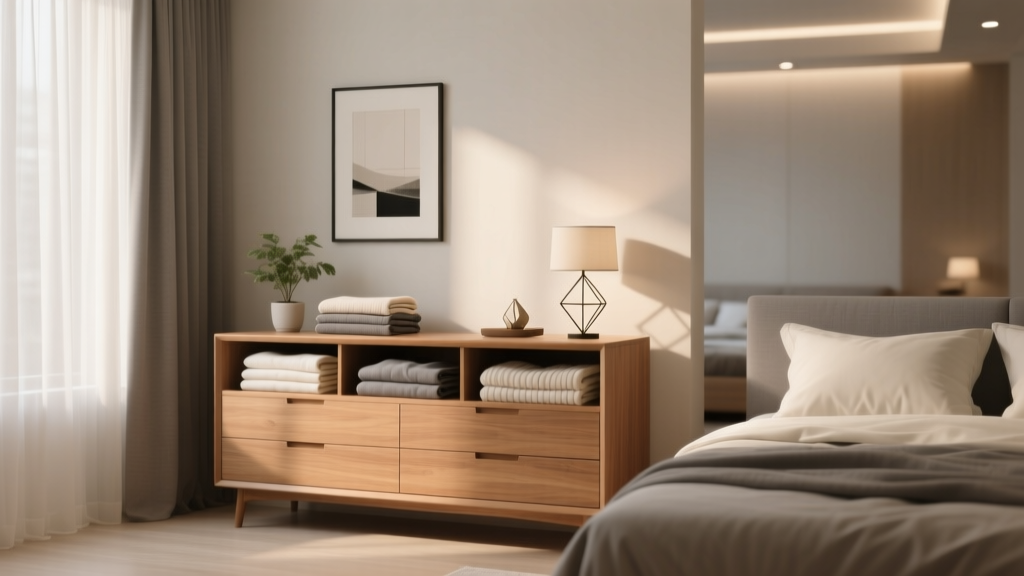
A well-sized dresser can hold scarves, belts, jewelry trays, and seasonal accessories—while keeping the bedroom calm and uncluttered.
- Look for: smooth-glide drawers, deeper bottom drawers for bulky knits, and at least one shallow drawer for accessories.
- Best materials: solid wood or wood veneer with low-VOC finishes (a healthier choice for indoor air quality).
Budget range: $250–$700 for mid-range; $700–$2,000+ for heirloom-quality pieces.
Storage bench or ottoman (excellent for small bedrooms)
Place a storage bench at the foot of the bed for off-season scarves, hats, and bags you don’t need daily.
- Choose: soft-close hinges and a fabric that feels calming (linen blends, performance woven fabrics).
- Avoid: strongly scented faux leather or vinyl if you’re sensitive to odors.
Budget range: $120–$450.
Wardrobe or armoire (ideal for rentals with limited closets)
A freestanding wardrobe creates a dedicated accessory zone and can visually “close away” clutter at night.
- Look for: adjustable shelves, a hanging rod, and at least one drawer.
- Style tip: choose a light wood tone or matte finish for a softer, sleep-friendly bedroom vibe.
Budget range: $250–$900; higher-end wardrobes $900–$2,500+.
Lighting, Colors, and Styling: Keep Storage Calm and Bedroom-Appropriate
Accessory storage should support a restful sleep environment, not turn your bedroom into a retail display.
Lighting that helps you get ready without overstimulating
- Warm bulbs (2700K–3000K): gentler for evenings and early mornings.
- Dimmable bedside and closet lighting: reduces harsh glare during nighttime routines.
- Motion-sensor closet light bars: practical and energy-efficient; choose warm temperature options.
Colors and finishes that feel restful
- Best calming palette: warm whites, soft greige, muted sage, dusty blue, pale terracotta.
- Hardware finishes: brushed nickel, matte black, or antique brass—choose one finish to reduce visual noise.
- Container strategy: match bins and baskets (same color family) for a cohesive bedroom decor look.
Sleep-Friendly Wellness Tips for Accessory Storage
- Keep scent minimal: avoid heavily fragranced drawer liners. If you like a gentle scent, try a small lavender sachet kept away from sensitive fabrics.
- Choose breathable storage: natural fibers (cotton, linen) reduce mustiness, especially for wool scarves.
- Support better air quality: prioritize low-VOC furniture and finishes when upgrading storage pieces.
- Make evenings easier: create a “tomorrow shelf” in the closet—one hook for a scarf, one for a bag—so morning decisions don’t invade your wind-down time.
- Reduce bedtime visual clutter: keep the nightstand for sleep essentials (lamp, book, water). Store jewelry and hair items in a drawer or lidded box.
A Simple Step-by-Step Plan (Works in Any Bedroom)
- Edit: pull out all scarves and accessories; donate duplicates and items you don’t wear.
- Group: daily vs. occasional; warm-weather vs. cold-weather.
- Assign zones: closet for daily items, drawers for delicate pieces, bins for seasonal storage.
- Choose one organizer type per category: one scarf hanger style, one jewelry system, one bin style.
- Label subtly: inside closet bins only; keep labels out of sight for a cleaner bedroom aesthetic.
- Maintain: a 2-minute reset each evening—return accessories to their home to support a calmer sleep routine.
Common Mistakes to Avoid
- Over-the-bed storage overload: shelves or heavy bins above the bed can feel unsafe and visually intense, disrupting relaxation.
- Overstuffing bins: causes wrinkles, fabric stress, and “mystery odors,” especially with wool.
- Too many open organizers: lots of visible small items create visual noise, which can increase bedtime restlessness.
- Storing delicate scarves on rough hooks: can snag silk and knits; opt for smooth, coated, or padded options.
- Turning the nightstand into an accessory station: it blurs the line between the sleep zone and the getting-ready zone.
- Buying organizers before measuring: measure drawer depth, closet rod space, and door clearance first to avoid returns and clutter.
FAQ: Bedroom Scarf and Accessory Storage
What’s the best way to store silk scarves without wrinkles?
Store silk scarves flat in a shallow drawer with a soft liner or fold gently with tissue paper. Avoid tight rolling and overstuffed compartments, which can crease silk.
Are over-the-door organizers bad for bedroom design?
Not if you keep them curated and quiet-looking. Choose a neutral fabric organizer or a slim metal hook system, and place it on the closet door (or inside-facing bedroom door) to reduce visual clutter.
How do I store winter scarves so they don’t smell musty?
Make sure scarves are fully dry and clean before storing. Use breathable cotton or canvas bins, avoid airtight plastic for natural fibers, and add cedar blocks to discourage odors and moths.
What storage works best for a small bedroom with no closet?
A freestanding wardrobe or armoire is the most “closed-away” solution. Pair it with a storage bench for seasonal items and a small drawer unit with dividers for accessories.
How can I keep accessories organized without making my bedroom feel busy?
Use closed storage (drawers, lidded boxes, wardrobes) for small items, and keep open storage minimal—one scarf hanger and a single catch-all tray at most. This supports a calmer sleep environment.
What’s a realistic budget to get organized quickly?
Most bedrooms can see a big improvement with $50–$150 in basics: a scarf hanger, drawer dividers, and two matching bins. If you need furniture, plan $250–$700 for a solid dresser or $120–$450 for a storage bench.
Actionable Next Steps for a Calmer, More Restful Bedroom
Choose one area to improve first: the closet rod, a single drawer, or the space behind the door. Start with a scarf organizer (hanging or drawer dividers), add one contained solution for small accessories, and commit to a nightly 2-minute reset. As clutter disappears from sightlines and surfaces, the whole room feels quieter—supporting the kind of bedroom design that invites rest.
For more soothing, practical bedroom decor and sleep-friendly storage ideas, explore the latest guides on thedecormag.com.
More Articles
 Modern Bedroom Design on a Budget: Smart, Stylish, and Sustainable Solutions
 How To Start Living Room Ideas: A Practical, Step-by-Step Framework for Real Homes
 How to Incorporate Vintage Linens in Bedroom - The Decor Mag
 Best Bedroom Essential Oil Diffuser Spot - The Decor Mag
 Bedroom Warm Wood Nightstand Pair - The Decor Mag
 How to Choose the Right Bed Frame - The Decor Mag
 Bedroom Styling with Intentional Design | The Decor Mag
 Best Bedroom Tie and Belt Storage - The Decor Mag
 Reading Corner in Bedroom: Decor Ideas (2026)
 Best Bedroom Dresser Organization Tips - The Decor Mag