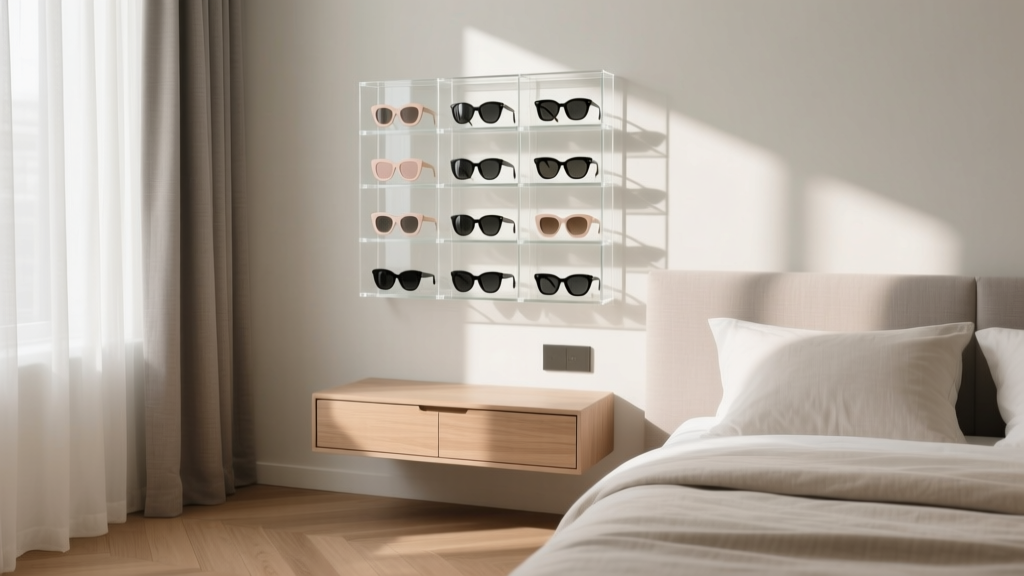
Best Bedroom Sunglasses Organization - The Decor Mag
Sunglasses seem like a daytime accessory, yet they often end up living on the bedroom nightstand—right where you begin and end your day. When pairs pile up in a drawer or scatter across surfaces, the bedroom can start to feel visually noisy. That subtle sense of clutter matters more than most people realize: a messy sleep environment can increase mental load, make bedtime routines feel less calming, and chip away at the restorative feel a bedroom should provide.
Thoughtful sunglasses organization is a small design upgrade with outsized benefits. It protects your lenses from scratches, reduces “where did I put them?” stress in the morning, and helps your room look intentional. Even better, it pairs naturally with sleep-friendly bedroom design: clearer surfaces, softer lighting, and a streamlined layout that supports relaxation.
This guide focuses on practical, bedroom-appropriate ways to store sunglasses—whether you’re in a compact rental or a spacious primary suite—while keeping the bedroom decor cohesive and the sleep environment peaceful.
Why Bedroom Sunglasses Organization Supports Better Rest
Your bedroom is where your brain looks for cues of safety and calm. Visual clutter can act like a low-grade “open loop,” reminding you there’s something to manage. Sunglasses may be small, but they’re often high-traffic items—grabbed at the door, tossed at night, relocated in a hurry.
- Calmer bedtime routine: Clear nightstands reduce stimulation and help you wind down.
- Better morning flow: A dedicated spot prevents frantic searching that spikes stress.
- Lens and frame protection: Proper storage prevents scratches, warping, and loose screws.
- Cleaner bedroom design: Surfaces look curated, supporting a restful, spa-like bedroom aesthetic.
Assess Your Space: The 60-Second Sunglasses Audit
Before buying organizers, take a quick inventory. The best bedroom organization systems match your habits and layout.
- Count your pairs: 1–3 (minimal), 4–10 (average), 10+ (collector).
- Identify your drop zone: Nightstand, dresser top, entry bench, or bathroom counter.
- Note your risk factors: Pets that knock items over, children, dusty rooms, or sunny windows.
- Choose your access style: Open display (fast) vs. closed storage (calm, dust-free).
Best Bedroom Sunglasses Organization Solutions (By Location)
1) Nightstand-Friendly Organizers (For Daily Rotation)
If you keep 1–3 pairs in regular rotation, your nightstand is the most practical home. The key is to avoid “pile storage” and protect lenses from grit and accidental spills.
Best product types:
- Lidded valet tray: Looks polished, keeps dust off, and limits visual clutter.
- Small divided catchall: Separate sunglasses from keys, rings, and lip balm.
- Hard-shell cases in a tray: Ideal if you’re prone to dropping items or have pets.
Material recommendations:
- Wood (bamboo, walnut, oak): Warm, calming, and fits most bedroom decor styles.
- Felt-lined trays: Prevent micro-scratches and reduce noise when setting glasses down.
- Leather or vegan leather: Adds a luxe feel; choose low-sheen finishes for a softer look.
Budget range: $15–$60 for a quality tray; $10–$30 per protective hard case.
Sleep-friendly tip: Keep the organizer on the far side of the nightstand (away from your pillow zone) so you aren’t tempted to “tidy” at bedtime. The goal is a simple set-down routine.
2) Dresser-Top Displays (For Style + Visibility)
A dresser top can handle more volume while keeping sunglasses accessible. To maintain a serene bedroom design, choose one structured organizer rather than multiple small dishes.
Best product types:
- Acrylic sunglasses stand: Easy to see every pair; clean lines work in modern bedrooms.
- Wood display rack: Warmer, softer visual feel than acrylic; great for Scandinavian or transitional decor.
- Glass-front organizer box: Reduces dust while still letting you view your collection.
Where it works best: On the dresser section farthest from your bed, so reflections and visual activity don’t compete with a calming sleep environment.
Budget range: $20–$100 depending on capacity and materials. Glass-top boxes and solid wood racks tend to land in the $50–$120 range for higher quality.
3) Drawer Inserts (The Most Sleep-Calming Option)
For many bedrooms, the most relaxing look is also the simplest: store sunglasses out of sight. Drawer systems reduce visual clutter and help the room feel more spacious—especially in small bedrooms.
Best product types:
- Felt drawer organizer with compartments: Gentle on lenses and frames.
- Adjustable bamboo drawer dividers: Custom fit for different drawer sizes.
- Stackable tray inserts: Great for collectors with limited drawer footprint.
How to size compartments: Look for sections at least 6.5–7 inches long to fit larger frames. If you store cases, measure case width and allow breathing room so you’re not forcing zippers and hinges.
Budget range: $15–$50 for inserts; $25–$80 for premium bamboo systems.
Wellness bonus: A closed drawer reduces dust and allergens, supporting a cleaner sleep environment—especially helpful if you’re sensitive to airborne irritants.
4) Closet and Wall Storage (For Small Bedrooms and Renters)
If surfaces and drawers are limited, vertical organization is your friend. The best systems keep sunglasses protected and easy to grab without turning your bedroom into a retail display.
Best product types:
- Hanging closet organizer with pockets: Budget-friendly, high capacity, minimal footprint.
- Over-the-door organizer (fabric or canvas): Great for rentals; no drilling required.
- Wall-mounted sunglass rail or peg system: Best for curated collections; place inside the closet to keep the bedroom visually calm.
Material recommendations:
- Canvas or thick felt pockets: Softer on lenses than thin plastic sleeves.
- Powder-coated metal hooks: Durable and less visually busy than shiny chrome.
Budget range: $10–$35 for hanging organizers; $25–$90 for wall-mounted rails (higher if solid wood or modular systems).
Bedroom Design Upgrades That Make Organization Easier
Sunglasses organization works best when the bedroom layout supports your routines. A few small design choices can eliminate clutter before it starts.
Choose the Right Nightstand (Storage Beats Surface Area)
A nightstand with at least one drawer keeps small items from migrating across the room.
- Best styles: One-drawer nightstand, two-drawer nightstand, or a compact nightstand cabinet.
- Ideal materials for a calming look: Light oak, walnut veneer, painted matte finishes, or rattan-front details for warmth.
- Budget range: $80–$250 for solid-feeling engineered wood; $250–$600+ for solid wood.
Layered Bedroom Lighting (So You Don’t “Toss and Drop” at Night)
When lighting is harsh or insufficient, it’s easier to misplace items and clutter surfaces. Sleep-friendly lighting supports tidy habits.
- Bedside lamp with warm bulbs: Aim for 2700K (soft warm) for a relaxing glow.
- Dimmable options: A dimmer or 3-way bulb helps transition into bedtime.
- Motion-activated drawer or closet light: Low-level illumination prevents rummaging.
Budget range: $15–$40 for quality warm LED bulbs; $40–$150 for a calming bedside lamp; $15–$35 for motion sensor closet lighting.
Colors and Visual Quiet (Less Clutter, Better Sleep Cues)
To reinforce a restful bedroom environment, choose organizers that blend into your palette rather than shouting for attention.
- Best calming color families: Warm neutrals, soft greige, muted sage, dusty blue, gentle taupe.
- Finish tip: Matte or satin finishes feel calmer than glossy plastics.
- For minimalist bedrooms: Match organizer tones to your nightstand or dresser for a seamless look.
Care and Protection: Keep Sunglasses Bedroom-Ready
Organization isn’t just about neatness; it’s about preserving what you own.
- Always store lenses facing up or in a lined compartment to prevent scratches.
- Use microfiber cloths in each storage area (nightstand, dresser, travel bag).
- Avoid storing near heat sources (radiators, sunny windowsills). Heat can warp frames.
- Keep a small “repair kit” in a drawer: mini screwdriver, spare nose pads, and a lens-safe spray.
Budget range: $5–$15 for microfiber multi-packs; $8–$20 for lens cleaning spray; $10–$25 for a mini repair kit.
Sleep-Friendly Organization Habits (That Stick)
The most beautiful bedroom decor won’t feel restful if the system is hard to maintain. These habits support both bedroom organization and sleep quality.
- Create a two-zone system: “Daily pair” near the bed; “extras” in a drawer or closet.
- Use the one-touch rule: Put sunglasses directly into their tray/slot—no temporary piles.
- Reset the nightstand in 30 seconds: Each evening, return sunglasses to their spot to signal your brain that the day is done.
- Keep surfaces breathable: Limit your nightstand to 3–5 essentials (lamp, book, water, organizer, maybe a plant).
Common Mistakes to Avoid
- Storing sunglasses loose in a junk drawer: Frames bend, lenses scratch, and you’ll avoid using the drawer altogether.
- Using glossy, bright organizers in a calm bedroom: They draw the eye and can make the room feel busier.
- Overfilling a tray or stand: When it’s crowded, you’ll start stacking pairs—leading to scratches and clutter.
- Keeping sunglasses on the bed or windowsill: Easy to sit on them, knock them off, or expose them to heat and sunlight.
- Putting the organizer in the wrong place: If it’s not at your natural drop zone, you won’t use it consistently.
FAQ: Bedroom Sunglasses Organization
What’s the best way to organize sunglasses in a small bedroom?
Use vertical storage: an over-the-door organizer or a hanging closet pocket organizer. If you prefer a cleaner look, choose a felt drawer insert in your dresser to keep surfaces visually quiet.
Should sunglasses be stored in cases or open organizers?
Cases offer the best protection, especially if you have pets, kids, or tend to drop items. Open organizers are faster for daily use. A hybrid approach works well: keep one daily pair in a tray, store the rest in cases inside a drawer.
How do I keep sunglasses from scratching in a drawer?
Use a felt-lined organizer with individual compartments, and store each pair lens-up. Avoid mixing sunglasses with metal items like keys, coins, or hair clips.
What materials look best in a calming bedroom design?
Natural materials and soft finishes: bamboo, oak, walnut, felt, canvas, and matte-painted wood. These blend into relaxing bedroom decor and support a serene sleep environment.
How many sunglasses should I keep in the bedroom?
Keep 1–3 pairs easily accessible (daily rotation) and store the rest in a closet or dresser drawer. This keeps the bedroom organized and reduces visual clutter that can interfere with relaxation.
Where should I place sunglasses so they don’t disrupt sleep?
Avoid placing them where you see them from bed if they add visual noise—especially on a crowded nightstand. A drawer, lidded box, or closet organizer keeps the bedroom feeling more restful.
Actionable Next Steps for a Calmer, More Organized Bedroom
Start with one small win: choose a single “home” for your daily sunglasses—either a lidded tray on the nightstand or a felt drawer insert if you prefer a minimalist bedroom look. Then create a secondary storage spot for the rest (dresser drawer, closet pockets, or a glass-front box). Pair your organizer with warm, dimmable bedside lighting and a nightstand with at least one drawer, and the whole room will feel more intentional—an environment that supports sleep quality instead of distracting from it.
For more soothing bedroom design ideas, smart organization solutions, and sleep-friendly decor guidance, explore the latest inspiration on thedecormag.com.
More Articles
 How to Style a Bedroom with Vintage Pieces - The Decor Mag
 Bedroom Warm Wood Canopy Bed Frame - The Decor Mag
 How To Start Living Room Ideas: A Practical, Step-by-Step Framework for Real Homes
 Mid-Century Modern Bedroom Furniture Guide - The Decor Mag
 How to Choose Bedroom Lighting for Reading - The Decor Mag
 How to Choose Bedroom Rug Size - The Decor Mag
 Bedroom Wingback Headboard Design - The Decor Mag
 Bedroom Boucle Fabric Furniture Trend - The Decor Mag
 Best Bedroom Bedside Hydration Station - The Decor Mag
 Bohemian Bedroom Decor Inspiration - The Decor Mag