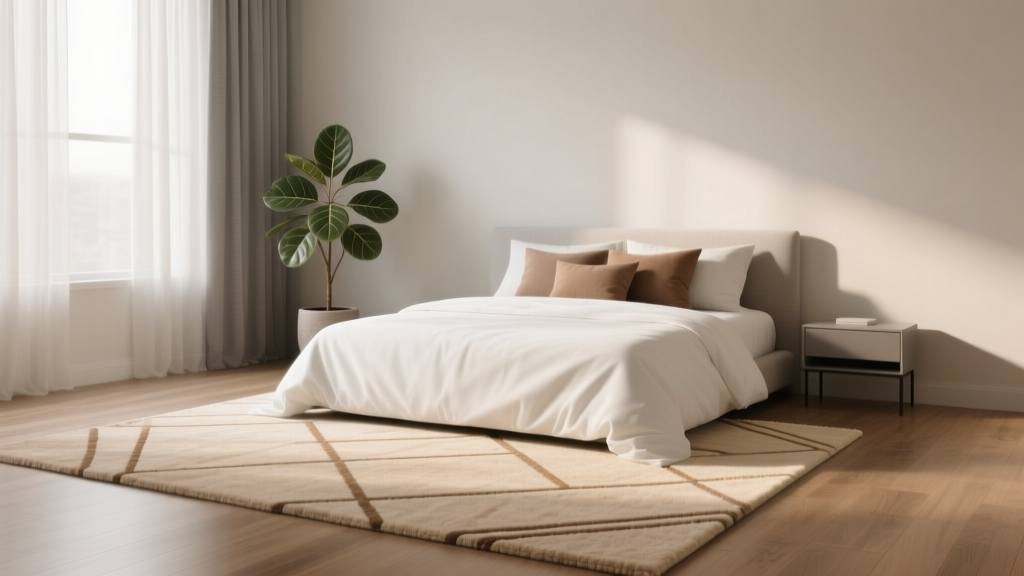
How to Choose Bedroom Rug Size - The Decor Mag
A bedroom rug does more than “finish the look.” It changes how your room feels underfoot, how sound travels, and even how calm your space feels at night. When you wake up and your first step lands on something warm and soft (instead of cold flooring), your body gets an immediate comfort cue—one that supports a more relaxed morning routine and a more soothing bedtime environment.
Size is the detail that makes a rug feel intentional rather than accidental. Too small and it floats awkwardly, creating visual clutter and broken walking paths. Too large and it can swallow the room or interfere with doors and air flow. Choosing the right bedroom rug size helps your space feel grounded, balanced, and quiet—exactly the qualities you want in a sleep-friendly bedroom design.
What the Right Bedroom Rug Size Does for Comfort and Sleep
Thoughtful bedroom decor supports rest when it reduces friction—literal and visual. A properly sized rug can:
- Soften sound by absorbing footfalls and echo, especially in rooms with hardwood or tile.
- Warm up the space (both physically and psychologically), making the bedroom feel more inviting at night.
- Create calmer sightlines by “anchoring” the bed and nightstands, reducing that slightly unsettled feeling of floating furniture.
- Improve nighttime safety by providing traction when you get up to use the bathroom.
Rug size is the foundation. Once it’s right, everything else—bedding, lighting, and layout—feels easier to coordinate.
Measure First: A Simple Bedroom Rug Sizing Method
Step-by-step measuring (10 minutes, no guesswork)
- Measure your bed (Twin, Full, Queen, King, California King) including the frame if it extends beyond the mattress.
- Decide your rug placement (under the bed, two runners, or an accent rug at the foot).
- Mark the rug footprint with painter’s tape. This helps you visualize clearances for doors, drawers, and walking paths.
- Check “step zones”: where your feet land when you get out of bed on both sides. Aim for at least 18–24 inches of rug showing beyond the bed on each open side for comfort.
- Leave breathing room: ideally 6–12 inches of bare floor between the rug edge and the wall for a tailored look (adjust based on room size).
Bedroom layout factors that affect rug size
- Nightstands: Do you want them on the rug or off? Both can work, but consistency matters.
- Door swings: Make sure the bedroom door and closet doors clear the rug easily.
- Under-bed storage: If you frequently pull bins out, a thicker pile may snag; a low-pile rug may be better.
Best Rug Sizes for Bedrooms (By Bed Size)
These are the most reliable bedroom rug size pairings for a balanced, sleep-friendly bedroom layout. Exact choices depend on room proportions and furniture placement, but the guidelines below work in most homes and rentals.
Twin bed rug size
- Best overall: 5' x 8' (placed under the lower 2/3 of the bed)
- Alternative: 4' x 6' if the room is very small
- Runner option: one 2'6" x 8' runner along the open side
Placement tip: For a calm, anchored look, let the rug extend beyond the bed’s sides by at least 18 inches where you step down.
Full (double) bed rug size
- Best overall: 6' x 9'
- Roomy upgrade: 8' x 10' (especially if you want nightstands on the rug)
Sleep-friendly note: If your room echoes, sizing up to 8' x 10' can noticeably reduce sound and make the room feel more cocooning at night.
Queen bed rug size
- Most popular: 8' x 10'
- More generous coverage: 9' x 12' (great for larger bedrooms and open floor plans)
- Budget-friendly alternative: two runners (2'6" x 8' or 3' x 8') on both sides
Placement tip: With an 8' x 10', aim to place the rug so it starts a few inches in front of your nightstands and runs beneath the bed, leaving a comfortable landing zone on both sides.
King bed rug size
- Best overall: 9' x 12'
- Alternate: 8' x 10' (works only if your room is tight and you accept less side reveal)
- Luxurious option: 10' x 14' in large primary bedrooms for a hotel-like feel
Wellness angle: A king bed often goes with a larger room—more hard surface area means more sound. A 9' x 12' or larger helps dampen that “empty” acoustic quality that can feel restless at bedtime.
California King bed rug size
- Best overall: 9' x 12' (often the sweet spot)
- If the room is expansive: 10' x 14' for balanced proportions
Bedroom Rug Placement Options (Choose What Fits Your Lifestyle)
Option 1: Rug under the bed (most cohesive)
This is the classic designer approach and usually the most calming visually.
- Place the rug under the lower 2/3 of the bed (or under the whole bed if the room allows).
- Keep the rug extending 18–24 inches beyond the bed’s sides.
- If possible, let the rug extend 12–24 inches beyond the foot of the bed for a soft landing when you dress.
Option 2: Two side runners (renter-friendly and flexible)
Perfect for narrow bedrooms, tight budgets, or when moving often.
- Choose two runners with similar pile height and texture for a coordinated look.
- Common sizes: 2'6" x 8' or 3' x 8'.
- Keep them aligned with the bed edge and pulled slightly forward so they start near the pillow line.
Option 3: One runner on the open side
Works well when one side of the bed is against a wall.
- Choose a 2'6" x 8' runner for queen/king rooms, or 2' x 6' for smaller spaces.
- Prioritize the side you use most (the side closest to the door or closet).
Option 4: Accent rug at the foot of the bed
A smaller rug can add softness without changing the whole layout, especially if you already have carpet or you’re layering.
- Common sizes: 4' x 6' or 5' x 8'.
- Place it so it sits just under the foot of the bed (or slightly in front) to catch your steps while dressing.
Material Choices That Feel Good and Support a Healthy Sleep Environment
Best bedroom rug materials (comfort + practicality)
- Wool: Plush, naturally insulating, resilient. Great for warmth and sound absorption. Ideal for primary bedrooms.
- Cotton: Softer underfoot, often washable. Good for guest rooms and lighter, casual bedroom decor.
- Jute or sisal: Textured and earthy, but can feel scratchy and trap dust. Better as a layered base with a softer topper.
- Low-pile synthetics (polypropylene/polyester): Budget-friendly, stain resistant, often lower off-gassing than older generations (look for certifications). Great for rentals.
- Viscose/blends: Silky look, less durable; not ideal for high-traffic step zones.
Pile height guidance for bedrooms
- Low pile: Easier to vacuum, better for allergy-sensitive sleepers, less likely to interfere with doors.
- Medium pile: Balanced comfort and maintenance for most bedrooms.
- High pile/shag: Maximum softness, but traps dust and is harder to clean. If you love the feel, keep it smaller (like a bedside rug) and vacuum frequently.
Health and wellness checks
- Look for rugs labeled low-VOC or certified (for example, GREENGUARD Gold) if you’re sensitive to odors.
- Air out new rugs in a ventilated area for 24–72 hours before placing them in the bedroom.
- Use a non-slip rug pad to reduce shifting and nighttime slips—especially important for kids’ rooms and anyone who gets up frequently.
Color, Pattern, and Texture: Rug Choices That Calm the Bedroom
Your rug is a major visual field in the room. A sleep-friendly bedroom design typically benefits from lower visual noise and softer contrast.
Color recommendations for rest
- Soft neutrals: ivory, oatmeal, warm gray, greige—easy on the eyes and flexible with bedding.
- Muted colors: dusty blue, sage green, clay, soft terracotta—grounding without overstimulation.
- Deeper tones: navy, charcoal, forest green—can feel cocooning, especially with warm lighting.
Pattern tips (so it doesn’t feel busy at bedtime)
- If your bedding is patterned, choose a solid or subtle texture rug.
- If your bedding is solid, you can add gentle interest with tone-on-tone geometrics or low-contrast vintage patterns.
- Avoid very high-contrast, tight-repeat patterns if you’re sensitive to visual stimulation.
Coordinate Rug Size with Furniture, Bedding, and Lighting
Furniture layout rules that make the room feel settled
- Anchor the bed: The rug should visually connect the bed to the room. If the rug is too small to extend beyond both sides, consider runners.
- Nightstand strategy: Either place both nightstands on the rug (for a luxurious look) or keep both off (for crisp edges). Mixing often looks accidental.
- Bench at the foot: If you have a bench, a larger rug (8' x 10' for queen, 9' x 12' for king) helps keep it from feeling like it’s hovering on bare floor.
Bedding and rug pairing (for a more restful bedroom)
- Pair a textured rug (looped wool, heathered low pile) with smooth bedding (percale cotton) for balance.
- Pair a plusher rug with linen bedding for a cozy, relaxed feel.
- Keep your palette to 2–4 main tones to reduce visual clutter.
Lighting that complements the rug (and supports sleep)
- Choose warm bulbs (2700K) for bedside lamps to bring out warm rug tones and signal relaxation.
- Add a dimmable bedside lamp or wall sconces so nighttime light feels gentle.
- If your rug is darker, layer lighting (overhead + bedside) to keep the room from feeling heavy.
Budget Ranges and What to Expect
Rug pricing varies widely by material, construction, and size. These ranges help set realistic expectations for bedroom rug shopping.
- Budget ($75–$250): Machine-made synthetic rugs, cotton flatweaves, smaller 5' x 8' options. Great for renters, guest rooms, and style experiments.
- Mid-range ($250–$800): Larger 8' x 10' synthetics, wool blends, better backing and density. Often the sweet spot for comfort and durability.
- Investment ($800–$2,500+): 100% wool, hand-tufted or hand-knotted, 9' x 12' and above. Excellent longevity and a more cushioned, quiet feel.
Worth the add-on: A quality rug pad ($30–$150) improves comfort, reduces slipping, and helps your rug wear evenly—especially important in the step zones beside the bed.
Common Bedroom Rug Size Mistakes to Avoid
- Choosing a rug that’s too small: The most common issue. If it doesn’t reach your step zones, it won’t feel good in daily life.
- Not accounting for door clearance: Thick rugs can catch on doors. Use a low-pile rug near tight swings.
- Ignoring nightstands and drawers: If drawers snag on the rug edge, the layout will feel annoying fast.
- Skipping the rug pad: A sliding rug creates noise and stress (and can be a fall risk).
- Overly busy patterns in a sleep space: If your nervous system craves calm, your rug should support it.
- Buying before taping the footprint: Painter’s tape prevents expensive sizing mistakes.
FAQ: Choosing the Right Bedroom Rug Size
What size rug should go under a queen bed?
An 8' x 10' rug is the most common choice for a queen bed. If your room is large or you want more coverage under nightstands, consider a 9' x 12'.
Should bedroom rugs go under nightstands?
They can. Placing the rug under both the bed and nightstands looks cohesive and feels luxurious underfoot, but it typically requires a larger rug. Keeping nightstands off the rug can look crisp and works well in smaller bedrooms—just keep it consistent on both sides.
How far should a rug extend past the bed?
Aim for 18–24 inches on the sides where you step down. At the foot of the bed, 12–24 inches is comfortable if space allows.
Is it okay to use runners instead of one large rug?
Yes—runners are practical and often more budget-friendly. Use two matching runners for a balanced look, especially with queen and king beds.
What rug material is best for allergies in a bedroom?
A low-pile wool or low-pile synthetic rug is usually easiest to vacuum thoroughly. Pair it with a quality rug pad and vacuum weekly to reduce dust buildup.
Can you layer a rug over carpet in a bedroom?
Yes. Choose a low- to medium-pile rug and add a rug pad designed for carpeted floors to prevent shifting. Layering can add softness and help define the bed area in wall-to-wall carpeted rooms.
Next Steps: A Simple Bedroom Rug Size Checklist
- Measure your bed and the open floor area around it.
- Tape out either an 8' x 10' (queen) or 9' x 12' (king) footprint as a starting point.
- Confirm door clearance and drawer movement.
- Choose material based on your sleep environment goals: softer and quieter (wool/medium pile) or cleaner and simpler (low pile).
- Pick a calming color palette that works with your bedding and warm lighting.
- Add a non-slip rug pad for comfort, safety, and longevity.
Your bedroom should feel like a soft landing—visually, physically, and emotionally. The right rug size supports that grounded feeling, helping your bedroom decor work harder for rest and relaxation.
For more soothing bedroom ideas, sleep-friendly design tips, and decor inspiration, explore the latest guides on thedecormag.com.
More Articles
 How to Create a Bedroom That Feels Serene - The Decor Mag
 Best Bedroom Inspiration for Living: Designing a Space That Supports Rest, Connection, and Daily Well-Being
 Best Bedroom Sleep Hygiene Essentials - The Decor Mag
 How to Choose Bedroom Lighting for Reading - The Decor Mag
 How to Create a Bedroom That Promotes Rest - The Decor Mag
 How to Create a Bedroom That Feels Peaceful - The Decor Mag
 How to Choose Bedroom Furniture Scale - The Decor Mag
 How to Organize Your Bedroom Closet - The Decor Mag
 How to Choose Bedroom Mattress Topper - The Decor Mag
 Best Bedroom Memory Display Shelf - The Decor Mag