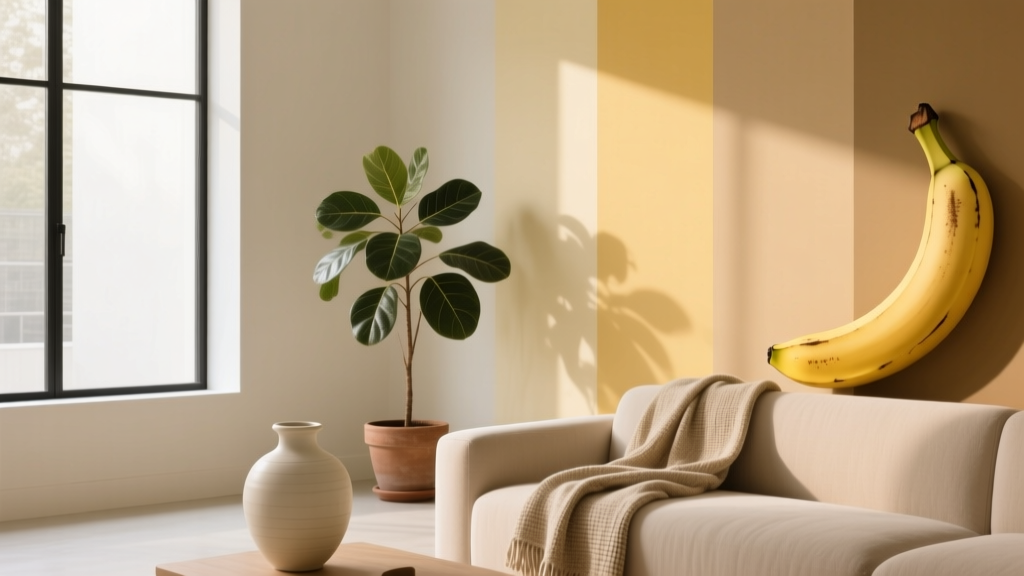
Best Banana Paint Colors - The Decor Mag
Banana paint colors sit in a sweet spot of interior design: they’re cheerful without feeling neon, warm without reading orange, and bright without the intensity of primary yellow. Done well, a banana-inspired yellow makes rooms feel more welcoming, energizes dim corners, and brings a sunlit “good morning” mood even on gray days. Done poorly, it can look brash, sickly, or unexpectedly green.
This topic matters because yellow is one of the most light-reactive paint families. The same banana shade can shift dramatically between morning and evening, north- and south-facing rooms, or under warm LEDs versus cooler daylight bulbs. Understanding undertones, sheen, and placement helps you get the fresh, creamy, “just-ripe” banana look—rather than a highlighter wall or a mustard cast.
Below you’ll find designer-tested banana paint color recommendations, how to pair them into cohesive color schemes, room-by-room application ideas, and the most common mistakes homeowners make when decorating with yellow.
What “Banana” Means in Paint (Undertones & Personality)
In color theory terms, banana paint colors are usually:
- Warm yellows with a hint of cream (white) and sometimes a touch of golden or peach undertone
- Medium-light in value (bright enough to feel sunny, soft enough to feel livable)
- Lower to mid saturation (more “buttery” than “traffic-sign”)
Color psychology: Banana yellows are associated with optimism, sociability, and mental clarity. In interior color design, they can make a room feel more inviting and can subtly boost perceived warmth—helpful in homes with cool daylight or lots of gray finishes.
How lighting affects banana paint colors
- North-facing rooms: Natural light is cooler; banana tones can look muted, slightly green, or dull. Choose a warmer, creamier banana or add warm lighting.
- South-facing rooms: Strong, warm light can intensify yellow. Choose a softer banana or a pale version to avoid glare.
- East-facing rooms: Bright in the morning, calmer later. Banana can look crisp early and creamy by afternoon.
- West-facing rooms: Warm afternoon/evening light can push yellows toward gold. Consider a lighter banana to keep it airy.
Best Banana Paint Color Picks (Designer-Favorite Shades)
These shades land in the “banana family” and work across a range of homes—from modern to traditional. Always sample first, since yellow is famously sensitive to surrounding finishes.
1) Benjamin Moore Hawthorne Yellow (HC-4)
Why it works: A classic warm yellow that reads like ripe banana—inviting, traditional, and grounded. It’s bright enough to lift a space but has a gentle earthiness that keeps it from looking neon.
- Best for: Kitchens, dining rooms, hallways, mudrooms
- Pairs well with: Crisp whites (Benjamin Moore Simply White OC-117), warm off-whites, navy, sage, and medium woods
- Style notes: Beautiful with vintage brass, oak floors, and creamy trim
2) Benjamin Moore Soleil (AF-330)
Why it works: A soft, radiant yellow that feels sunlit and slightly creamy. It’s a strong candidate if you want “banana” without going too bold.
- Best for: Living rooms, open-plan spaces, bedrooms that need warmth
- Pairs well with: Light greige, warm white, terracotta accents, natural linen textures
- Application tip: Use eggshell for walls to soften glare and make the color feel velvety
3) Sherwin-Williams Friendly Yellow (SW 6680)
Why it works: Bright, upbeat, and playful—this is the “fresh banana” end of the spectrum. It can look youthful and modern when styled with clean lines and white trim.
- Best for: Playrooms, breakfast nooks, laundry rooms, craft spaces
- Pairs well with: Bright white (SW Pure White), charcoal accents, aqua, and pale wood tones
- Watch for: In very warm light it can lean more golden; balance with cooler neutrals if needed
4) Sherwin-Williams Banana Cream (SW 6673)
Why it works: True to the name, this is a creamy, softened banana yellow—less “lemon,” more “dessert.” It’s especially flattering in rooms where you want warmth without visual noise.
- Best for: Bedrooms, nurseries, guest rooms, cozy reading areas
- Pairs well with: Soft white trim, warm beige, blush, muted sage, antique brass
- Design tip: Layer in texture (bouclé, linen, woven shades) to keep the palette sophisticated
5) Farrow & Ball Yellow Ground (No. 218)
Why it works: A refined, heritage-style yellow with depth. It has a slightly earthy base that reads elevated rather than sugary.
- Best for: Historic homes, dining rooms, libraries, entryways
- Pairs well with: Off-black accents, olive greens, warm whites, aged woods
- Finish note: Consider a matte wall finish to emphasize its softness and reduce shine
6) Behr Buttercup (typical listing: “Buttercup”)
Why it works: A friendly, accessible banana-leaning yellow that can bring instant warmth to builder-basic interiors. Great for budget-conscious makeovers when you still want a designer feel.
- Best for: Accent walls, rentals (where allowed), small spaces that need brightness
- Pairs well with: White cabinets, light gray counters, black hardware, rattan accents
- Pro tip: If it feels too bright on all walls, use it on one focal wall and keep the rest a warm white
How to Choose the Right Banana Yellow for Your Home
Use the “banana ripeness” scale
- Pale banana (just-ripe): Best for whole rooms and low-stress color. Looks airy and modern.
- Classic banana (ripe): Best for kitchens, dining, and social spaces. Feels cheerful and confident.
- Golden banana (very ripe): Best for cozy rooms, evening spaces, and traditional homes. Can feel rich and enveloping.
Check undertones against fixed finishes
Hold your paint samples next to what you can’t change easily:
- Countertops and backsplash tile
- Flooring (warm oak vs cool gray)
- Cabinet color (white, cream, wood, painted)
- Stone fireplaces (often add cream or taupe undertones)
Pick the right sheen
- Matte: Soft, forgiving, great for larger walls; reduces yellow “glare.”
- Eggshell: The sweet spot for most living spaces; easy to wipe, still soft.
- Satin: Works for kitchens, baths, kids’ rooms; can intensify yellow slightly.
- Semi-gloss: Best for trim/doors; makes banana walls feel crisper when paired with bright white trim.
Room-by-Room Ideas: Real Application Scenarios
Banana yellow kitchen: cozy, sunny, and timeless
Scenario: White cabinets, warm wood floors, simple subway tile.
- Wall color: Benjamin Moore Hawthorne Yellow (HC-4) or Sherwin-Williams Banana Cream (SW 6673)
- Trim/cabinet white: Benjamin Moore Simply White (OC-117) or Sherwin-Williams Pure White
- Accents: Matte black pulls, woven counter stools, a navy runner, clear glass pendants
Why it works: Yellow boosts appetite and sociability, making the kitchen feel like a gathering spot. The white trim keeps it clean and architectural.
Banana in a hallway or entry: a welcoming glow
Scenario: A narrow hallway with minimal daylight.
- Wall color: Farrow & Ball Yellow Ground (No. 218) or Benjamin Moore Soleil (AF-330)
- Lighting: Warm bulbs (2700K–3000K) to prevent a green cast
- Styling: Add a gallery wall with black frames to anchor the warmth
Design principle: Warm hues advance visually, so banana yellow can make an entry feel more inviting and less cave-like.
Bedroom banana: soft, not sugary
Scenario: You want a calm room that still feels sunny.
- Wall color: Sherwin-Williams Banana Cream (SW 6673)
- Pair with: Warm white bedding, muted sage throw pillows, oak nightstands
- Best placement: All walls for a gentle cocoon effect, or just the headboard wall for a lighter look
Banana accent wall in a living room: modern and energetic
Scenario: Neutral furniture, gray walls, and a room that feels flat.
- Accent color: Sherwin-Williams Friendly Yellow (SW 6680)
- Keep other walls: Warm white or soft greige for balance
- Finish: Matte to avoid hotspot reflections behind the TV
Pro move: Repeat the yellow in small doses—artwork, a vase, a throw—so the accent wall feels integrated rather than random.
Best Color Combinations for Banana Paint (Palettes That Work)
1) Banana + crisp white + navy
- Vibe: Classic, tailored, high-contrast
- Where: Kitchens, dining rooms, coastal-inspired spaces
- Try: Banana walls + white trim + navy island or upholstery
2) Banana + warm greige + black accents
- Vibe: Modern, grounded, sophisticated
- Where: Open-plan homes, living rooms, hallways
- Tip: Keep metals consistent (matte black or aged brass) to reduce visual clutter
3) Banana + sage green + natural wood
- Vibe: Fresh, organic, garden-inspired
- Where: Sunrooms, kitchens, breakfast nooks
- Design principle: Yellow and green are adjacent on the color wheel, so they harmonize easily
4) Banana + blush + warm white
- Vibe: Soft, playful, elevated “modern cottage”
- Where: Nurseries, guest rooms, powder rooms
- Tip: Use blush as an accent (textiles/art) to keep the palette grown-up
Common Mistakes to Avoid With Banana Paint Colors
- Skipping large samples: A tiny chip can’t show how yellow amplifies across a wall. Paint at least two 2’x2’ swatches on different walls.
- Ignoring undertones: Some “banana” shades lean green or orange depending on lighting. Compare samples against a true white sheet of paper to spot the bias.
- Choosing the wrong white trim: A cool, stark white can make banana walls look harsher; a creamy white can make them look richer. Test trim whites alongside the wall color.
- Overusing saturated yellow: Full-strength bright yellow on every wall can feel visually loud. Consider one accent wall, or choose a creamier banana for full-room coverage.
- Forgetting the ceiling: A bright white ceiling can create a sharp edge. If the room feels choppy, try a softer white ceiling or carry the wall color up in a lighter tint.
- Mismatched lighting temperature: Cool bulbs (4000K+) can turn banana yellow acidic. Aim for 2700K–3000K in most living spaces.
FAQ: Banana Paint Colors
What’s the difference between banana yellow and lemon yellow paint?
Banana yellow is typically warmer and creamier, with golden or slightly peach undertones. Lemon yellow is cleaner and cooler, often reading sharper and more “zesty,” especially under daylight-balanced bulbs.
Do banana paint colors work in small rooms?
Yes—especially pale or creamy banana tones. They reflect light well and can make a small room feel happier and more open. In very tight spaces, choose a lower-saturation banana and use matte or eggshell to keep it soft.
What neutral colors pair best with banana paint?
Warm whites, soft greige, beige, and light taupe are the easiest companions. If you prefer cooler neutrals, use them in smaller doses and add warm wood or brass to bridge the temperature gap.
How do I keep banana yellow from looking childish?
Balance it with grown-up finishes: natural wood, tailored textiles, matte black accents, or deep navy. Keep patterns simple, and repeat the yellow in subtle accessories rather than adding more bright primary colors.
Is banana yellow a good idea for selling a home?
Soft banana creams can photograph beautifully and feel welcoming to buyers. Highly saturated yellows are more polarizing. If resale is a priority, stay in the creamy, muted banana range and pair with classic whites.
Should I use banana yellow on cabinets or walls?
For most homeowners, banana yellow is easiest on walls, with cabinets in white, wood, or a contrasting color like navy. Yellow cabinets can be stunning in the right home, but they’re more permanent and lighting-sensitive—test thoroughly.
Next Steps: Get the Banana Color Right the First Time
- Collect 3–5 banana paint samples (include one lighter, one mid-tone, one deeper golden).
- Test large swatches on multiple walls and observe them morning, afternoon, and night.
- Confirm your trim white and bulb temperature before committing.
- Build a simple palette: banana + a neutral + one grounding accent (navy/black/sage) + natural texture.
If you’re ready for more color scheme ideas—from buttery yellows to bold modern palettes—explore more color guides and paint roundups on thedecormag.com.
More Articles
 Best Brown Paint Colors for Cozy Rooms - The Decor Mag
 Best Kiwi Green Paint Colors - The Decor Mag
 Best Fire Engine Red Paint Colors - The Decor Mag
 Best Cream Paint Colors for Warm Neutrals - The Decor Mag
 How to Use the 60-30-10 Color Rule - The Decor Mag
 How to Choose Colors That Complement Artwork - The Decor Mag
 How to Use Muted Colors for Sophistication - The Decor Mag
 Best Rust Red Paint Colors - The Decor Mag
 Best Pink Paint Colors That Aren't Juvenile - The Decor Mag
 Bathroom Trends 2026: Wellness Integration, Material Innovation, and Smart Efficiency