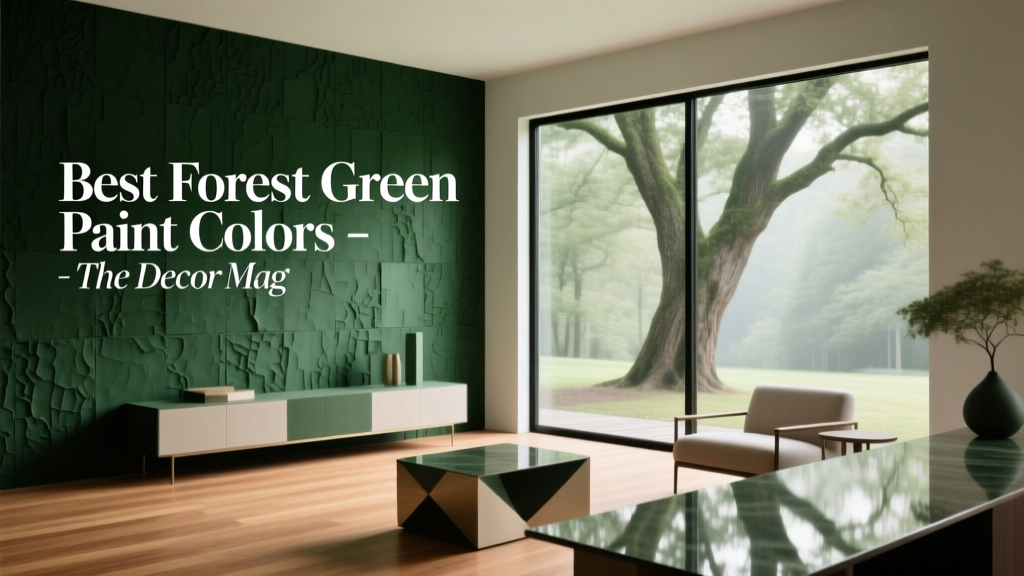
Best Forest Green Paint Colors - The Decor Mag
Forest green has a rare design superpower: it reads as timeless and grounding, yet it can feel fresh, elevated, and fashion-forward depending on what you pair it with. For homeowners, that makes it a high-impact paint color that doesn’t rely on trends to look beautiful. For design enthusiasts, it’s an endlessly versatile shade family—ranging from smoky evergreen to deep pine-black—that can anchor a whole-home color scheme.
Beyond aesthetics, forest green taps into color psychology in a way few colors do. Deep greens are associated with restoration, balance, and security—qualities we crave in bedrooms, living rooms, and even busy entryways. Used well, forest green can visually “quiet” a space, soften harsh architecture, and create that coveted cozy-yet-refined atmosphere.
This guide breaks down the best forest green paint colors, how to choose the right undertone, and how to apply them in real rooms. You’ll find brand-specific recommendations, foolproof color combinations, and the most common mistakes that make green look muddy or dated.
What Counts as “Forest Green” in Interior Design?
Forest green is typically a deep, natural green inspired by evergreen trees and woodland landscapes. In paint terms, it’s usually darker than “true green,” more muted than emerald, and less gray than many sage greens. Forest green can lean:
- Cool (blue-based, crisp, slightly shadowy)
- Warm (yellow-based, earthy, olive-tinged)
- Neutral (balanced, reads classic in many lighting conditions)
Because green sits between warm and cool on the color wheel, small undertone shifts dramatically change how the paint feels. That’s why sampling and matching to your fixed finishes (floors, tile, countertops) matters more with forest green than with many neutrals.
Forest Green Undertones: Quick Guide
- Blue undertones: sophisticated, calming; pairs well with bright whites and brushed nickel.
- Yellow undertones: cozy, traditional; looks great with warm woods and brass.
- Gray undertones: modern, moody; plays well with concrete, black accents, and minimal decor.
How to Choose the Best Forest Green Paint for Your Home
1) Start With Lighting (Natural + Artificial)
Forest green shifts dramatically depending on light temperature and exposure.
- North-facing rooms: cooler, dimmer light can make green look bluer and darker. Choose a forest green with a touch of warmth or higher LRV if you want a softer effect.
- South-facing rooms: abundant warm light can bring out yellow/olive undertones. If you prefer a cleaner evergreen, choose a cooler forest green.
- East-facing rooms: bright mornings, shadowy afternoons. Test samples morning and late day.
- West-facing rooms: muted mornings, warm glowing evenings—greens can turn richer and warmer late day.
2) Match Undertones to Fixed Finishes
Use what you can’t easily change as your guide:
- Warm oak floors, travertine, creamy stone: look best with warmer forest greens (olive-leaning or earthy).
- Cool marble, gray tile, black hardware: pair well with cooler forest greens (blue-leaning, crisp).
- Red/orange brick: choose a green that’s slightly muted (less saturated) so it doesn’t fight the brick.
3) Decide: Statement Wall or Color-Drenched Room?
Forest green works beautifully either way, but the finish and trim strategy changes:
- Accent wall: keeps the room bright; ideal for open-concept spaces.
- Color drenching (walls + trim): high-end, cocooning; ideal for offices, libraries, dining rooms, and powder rooms.
- Cabinetry: forest green kitchen cabinets can read classic or contemporary depending on hardware and counters.
Best Forest Green Paint Colors (Designer-Approved Picks)
Below are standout forest green paint colors from trusted brands. Always test with a large peel-and-stick sample or a painted poster board, because green is highly reflective of nearby colors.
Benjamin Moore Forest Green Paint Colors
- Essex Green (HC-188): A deep, heritage green that can read nearly black in low light. Stunning for front doors, built-ins, libraries, and formal dining rooms with crown molding.
- Hunter Green (2041-10): Classic, saturated, and bold. Great for accent walls, cabinetry, and spaces with strong natural light.
- Backwoods (469): Earthy and slightly muted—excellent if you want forest green without the “black-green” drama.
- Salamander (2050-10): A cult-favorite deep green with luxe depth. Works particularly well with brass, walnut, and creamy whites.
Sherwin-Williams Forest Green Paint Colors
- Rookwood Shutter Green (SW 2809): Historic, warm-leaning, and grounded—ideal with craftsman trims, warm woods, and vintage-inspired decor.
- Evergreen Fog (SW 9130): Not as dark as classic forest green, but a fantastic option for homeowners who want a softer, modern green that still feels rooted in nature.
- Jasper (SW 6216): Deep and moody with a natural vibe; gorgeous for exterior trim, cabinetry, and dramatic interiors.
- Shade-Grown (SW 6188): A lush deep green that feels botanical and refined—beautiful in dining rooms and powder rooms.
Farrow & Ball Forest Green Paint Colors
- Studio Green (No. 93): A nearly-black green with serious drama. Perfect for color drenching, especially in rooms with warm lamps and artwork.
- Calke Green (No. 34): A deep historic green with a softly aged character. Works well in traditional homes and spaces with antiques.
- Duck Green (No. W55): A strong green that plays well with rich reds, warm metals, and natural textiles.
Behr Forest Green Paint Colors
- Black Evergreen (N440-7): A bold, near-black forest green that reads upscale on doors, accent walls, and modern cabinetry.
- Vine Leaf (N400-7): Deep and earthy; a strong choice for homeowners who want warmth without going fully olive.
Real Room Ideas: Where Forest Green Looks Best
1) Living Room: A Grounded Backdrop for Texture
Forest green makes a living room feel collected and intentional. It also elevates everyday materials—linen, leather, boucle, oak—because it provides visual weight and contrast.
Try this look:
- Walls: Benjamin Moore Backwoods or Sherwin-Williams Shade-Grown
- Trim: warm white (avoid icy bright white if your room is low light)
- Furniture: camel leather sofa, walnut coffee table
- Textiles: cream wool rug, rust or cognac accents, black metal lighting
2) Bedroom: Calm, Cocooning, and Sleep-Friendly
Deep green is a favorite for bedrooms because it signals rest and safety—two key themes in color psychology. It’s also forgiving: it hides minor wall imperfections better than lighter paints.
Application scenarios:
- Feature wall behind the bed: great if you want depth without making the room feel smaller.
- Full room color drench: paint walls and trim the same forest green in a soft eggshell/satin for walls and a semi-gloss for trim.
Pair with: crisp white bedding, natural wood nightstands, aged brass sconces, and warm art frames.
3) Kitchen Cabinets: Forest Green That Looks Custom
Forest green kitchen cabinets can read classic or contemporary depending on your countertops and hardware. The key is balancing the depth of the cabinets with enough light surfaces.
- Traditional: Sherwin-Williams Rookwood Shutter Green + unlacquered brass + creamy subway tile
- Modern: Benjamin Moore Essex Green + matte black hardware + white quartz
- Organic modern: Sherwin-Williams Evergreen Fog + light oak + off-white zellige tile
4) Dining Room: Instant Mood and Elegance
A forest green dining room creates a flattering, candlelit feel—even on regular weeknights. If you entertain, it’s one of the fastest ways to make the room feel “special.”
Best moves:
- Choose a deeper green like Farrow & Ball Studio Green or Benjamin Moore Salamander
- Add a large warm pendant light (2700K bulbs)
- Bring in high-contrast trim or go full color drench for a boutique look
5) Bathroom or Powder Room: Small Space, Big Payoff
Forest green shines in powder rooms because limited square footage makes drama feel intentional, not overwhelming. It also pairs beautifully with marble, vintage mirrors, and warm metals.
- Classic combo: forest green walls + white marble + brass faucet
- Modern combo: forest green + matte black fixtures + warm oak vanity
Forest Green Color Schemes That Always Work
Use these interior color design pairings to build a cohesive palette around forest green paint.
Best Trim Colors and Whites
- Warm whites: soften forest green and feel welcoming (great with warm wood and brass).
- Clean whites: create crisp contrast (best with cooler forest greens and modern homes).
- Soft greiges: create a quiet, elevated transition in open-concept layouts.
Forest Green + Complementary Accent Colors
- Terracotta / rust: warm and earthy; ideal for boho, Mediterranean, and eclectic rooms.
- Blush / muted rose: adds softness and sophistication; great for bedrooms and living rooms.
- Navy: creates a tailored, classic look when balanced with white and brass.
- Mustard / ochre: energizes forest green; use in small doses (pillows, art, ceramics).
Best Metals and Woods With Forest Green
- Brass / aged brass: warm, elevated, and timeless with most forest greens.
- Black: sharp and modern; best when the green has some gray or blue undertone.
- Chrome / polished nickel: crisp and clean; ideal with cooler greens.
- Woods: walnut and white oak are especially strong with forest green (one rich, one airy).
Paint Sheen and Application Tips (So Green Looks Rich, Not Chalky)
- Use the right sheen:
- Walls: eggshell or matte (matte hides imperfections; eggshell cleans easier)
- Trim/doors: satin or semi-gloss for durability
- Cabinets: enamel in satin or semi-gloss (plus proper primer)
- Sample correctly: test on multiple walls and view it in daylight and lamplight.
- Control your bulb temperature: 2700K–3000K keeps forest green cozy; 4000K+ can make it feel harsh or clinical.
- Expect deeper coverage needs: many forest greens require an extra coat. Ask the paint store about a tinted primer for very deep shades.
Common Forest Green Paint Mistakes to Avoid
- Choosing forest green without checking undertones: A green that’s too yellow can look muddy next to cool gray tile; a green that’s too blue can feel icy in a north-facing room.
- Pairing it with the wrong white: Very bright, blue-white trim can make warm greens look dingy. Match white undertone to your green and your finishes.
- Forgetting reflectance: Glossy floors, bright rugs, or strong-colored upholstery can bounce color onto green walls and shift the appearance.
- Going too dark in a light-starved room: If you love the look but your room is dim, use forest green on built-ins or one wall, or pick a slightly lighter, softer green like Sherwin-Williams Evergreen Fog.
- Overloading the palette: Forest green already carries visual weight. Keep supporting colors simple: one white, one wood tone, one metal, and one accent color.
FAQ: Forest Green Paint Colors
Is forest green a warm or cool color?
It can be either. Forest green is a family of deep greens that may lean warm (yellow/olive undertones) or cool (blue undertones). The “best” choice depends on your lighting and finishes.
What colors go best with forest green walls?
Forest green pairs beautifully with warm whites, creamy neutrals, light oak, walnut, brass, black accents, terracotta, muted blush, and navy. For a balanced color scheme, keep most supporting colors neutral and add one accent hue.
Will forest green make my room look smaller?
Darker paint colors can visually bring walls in, but forest green often feels enveloping rather than cramped—especially when you layer lighting and keep the palette cohesive. If you’re worried, use it on an accent wall or choose a slightly softer deep green.
Is forest green a good choice for open-concept homes?
Yes, when used strategically. Consider forest green for built-ins, a dining nook, a fireplace wall, or an office zone. Tie it to the rest of the space with a consistent trim color and repeating accents (brass, wood tone, textiles).
What’s the best sheen for forest green walls?
Matte or eggshell are the most popular. Matte gives a velvety, high-end look; eggshell offers better wipeability for hallways, kids’ spaces, and living rooms.
How do I keep forest green from looking muddy?
Choose the right undertone, pair it with a compatible white, and avoid overly cool lighting. Also limit competing strong colors in rugs and upholstery that can reflect onto the walls.
Next Steps: How to Make Forest Green Work in Your Space
Start by picking the mood you want—crisp and tailored, earthy and warm, or dramatic and moody—then choose a forest green that matches your room’s light and your fixed finishes. Grab two to three samples, view them across the day, and build your palette around one great white, one metal finish, and one wood tone.
If you’re ready for more ideas, explore more paint color guides, color schemes, and interior color design tips on thedecormag.com.
More Articles
 Triadic Color Scheme Applications - The Decor Mag
 Jewel Tone Color Scheme Ideas - The Decor Mag
 How to Choose Colors for a Dining Room - The Decor Mag
 How to Choose Colors for West-Facing Rooms - The Decor Mag
 How to Create an Uplifting Color Palette - The Decor Mag
 Best Mustard Yellow Paint Colors - The Decor Mag
 Best Fern Green Paint Colors - The Decor Mag
 Best Azure Blue Paint Colors - The Decor Mag
 Best Lemon Paint Colors - The Decor Mag
 Best Wisteria Paint Colors - The Decor Mag