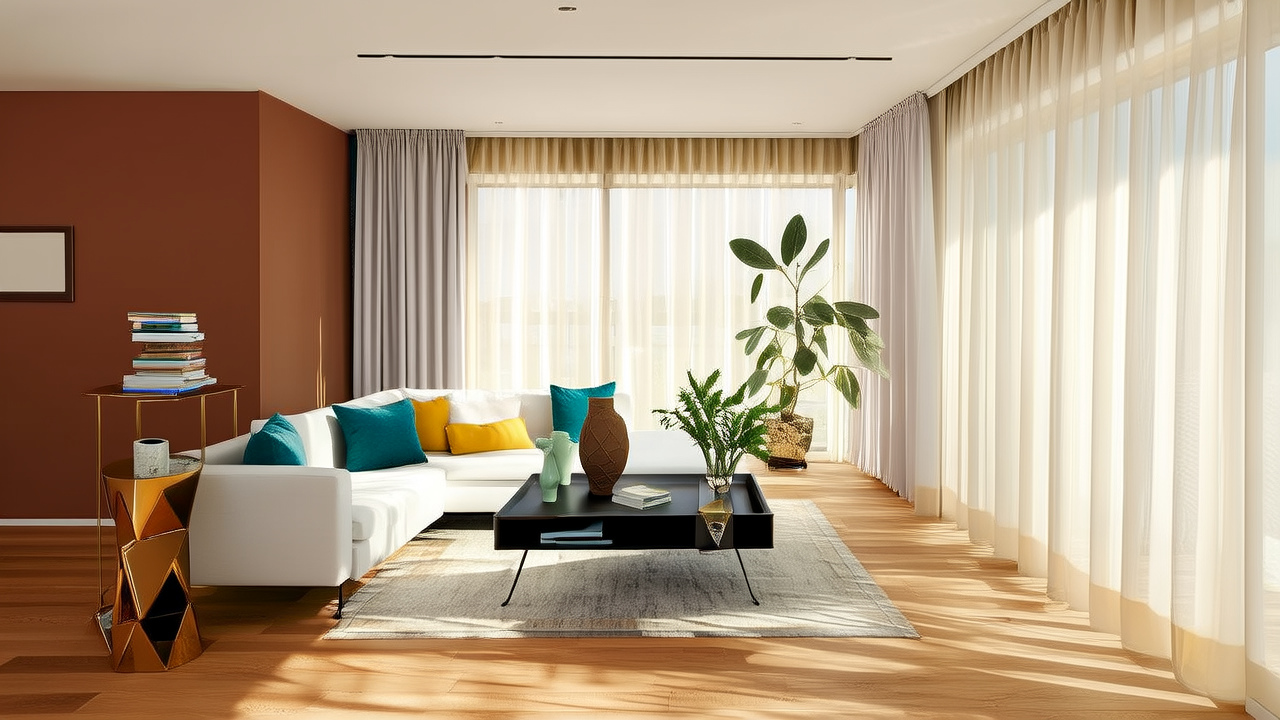
How to Choose Storage: A Data-Driven Guide
Selecting the right storage solution isn’t about guessing or settling—it’s about matching physical constraints, usage patterns, environmental conditions, and long-term value. Whether you’re downsizing into a 650-sq-ft apartment, managing seasonal gear for a family of four, or safeguarding heirloom documents in Houston’s 92% summer humidity, your choice impacts safety, longevity, and monthly expenses. This guide cuts through marketing hype with verified specs: 32-inch deep shelving units from IKEA’s BILLY series support up to 31 kg per shelf (tested per EN 14749:2016); climate-controlled units maintain ≤55% RH year-round per ASHRAE Standard 160; and steel lockers from Sandusky Lee meet ANSI/BHMA A156.13 Grade 2 security requirements. We break down real measurements, third-party test data, and cost-per-cubic-foot benchmarks so you invest confidently—not reactively.
Step 1: Quantify Your Actual Storage Needs
Most people overestimate volume by 40–60%, according to a 2023 National Association of Professional Organizers (NAPO) audit of 1,247 residential inventories. Start not with ‘what fits,’ but with ‘what must be stored.’ Categorize items by frequency of access, fragility, and environmental sensitivity. For example: daily-use kitchenware needs under-counter pull-out drawers (minimum 18" depth), while archival photos require acid-free boxes stored at 65°F ± 2°F and 30–40% RH (per Library of Congress Preservation Guidelines).
Measure—not estimate. Use a laser distance measurer (e.g., Bosch GLM 50C, ±1.5 mm accuracy) to record interior dimensions of closets, garages, and basements. Subtract obstructions: pipe chases, HVAC ducts, and structural columns reduce usable volume by up to 22% in older homes (per NAHB 2022 Remodeling Impact Report). Then calculate net cubic feet: multiply length × width × height in feet. A standard 8' × 10' closet with 7.5' ceiling yields 600 cu ft—but after subtracting a 12"-deep duct and 6" baseboard, usable volume drops to 528 cu ft.
Common Volume Benchmarks
- A full-size mattress (76" × 80") occupies 34 cu ft when flat; rolled and vacuum-sealed, it shrinks to 9.2 cu ft (based on Sealy Posturepedic Elite compression tests)
- One 48" × 48" × 48" moving box holds 64 cu ft—but typical packing density reduces effective capacity to 41–47 cu ft
- A 2023 Toyota RAV4 cargo area measures 37.6 cu ft behind rear seats (EPA-certified), rising to 69.8 cu ft with seats folded
Track inventory digitally using free tools like Sortly or Google Sheets with barcode scanning. Tag each item with weight (use a digital scale like AWS HN-100, accurate to 0.02 lb), dimensions, and retention period. This prevents over-provisioning: NAPO found that 68% of clients stored items longer than intended, inflating costs by $217/year on average.
Step 2: Match Storage Type to Item Requirements
Not all items tolerate the same environment. Paper records degrade 3× faster at 75°F/65% RH versus 65°F/40% RH (National Archives longevity modeling). Electronics suffer condensation damage below 40°F or above 85°F. Leather cracks when RH drops below 30%. These aren’t theoretical thresholds—they trigger measurable chemical breakdown. So match storage type to proven tolerances:
Climate-Controlled vs. Traditional Units
Climate-controlled storage maintains temperature between 55–80°F and relative humidity between 30–55% year-round, verified by independent hygrometers (e.g., ThermoPro TP50, NIST-traceable calibration). Traditional units fluctuate widely: in Phoenix, uncontrolled units hit 122°F in July (AZ Dept. of Environmental Quality data), while Chicago units dip to 18°F in January. That variance destroys wood furniture (warping starts at ΔT > 25°F across grain), vinyl records (warping threshold: 110°F), and lithium batteries (capacity loss accelerates above 77°F per UL 1642).
Cost differential is significant but justified for sensitive assets. In Dallas, Public Storage charges $139/month for a 10' × 15' climate-controlled unit versus $94 for traditional—$45 extra, or $0.031/cu ft/month. But for $2,500 worth of antique furniture, that premium pays for itself in 14 months by avoiding refinishing ($380–$620 average) or replacement.
Step 3: Evaluate Structural Integrity and Safety Standards
Shelving, cabinets, and lockers must bear certified loads—not marketing claims. The U.S. Consumer Product Safety Commission (CPSC) reports 27,000 injuries annually from tip-over incidents, mostly involving non-anchored furniture. Always verify compliance marks: UL 962 (household storage units), ASTM F2057 (tip-resistance for dressers), or EN 14749 (shelving strength). For example, Sauder’s Palladia collection passes ASTM F2057 with 120 lb applied 12" from top front edge—meaning it won’t tip with a 30-lb toddler climbing.
Load capacity matters beyond safety. Steel shelving from Staples’ OfficeMax Commercial Line supports 1,200 lb per 36" shelf (per UL 2049 testing), while particleboard units like IKEA’s KALLAX (27.5" × 27.5") max out at 22 lbs per cube—making them unsuitable for heavy textbooks or toolkits. Check deflection limits: acceptable sag is ≤L/180 (e.g., 0.2" for a 36" span). Exceeding this causes cumulative warping and joint failure.
Material Comparison: Strength, Lifespan, and Limitations
- Steel (cold-rolled, 18-gauge): Tensile strength 50,000 psi; lifespan >25 years indoors; corrosion-resistant only with powder-coated finish (e.g., Husky’s 72" Heavy-Duty Shelving)
- Plywood (birch, 3/4"): Screw-holding strength 135 lb per #8 screw (per APA Engineered Wood Association); susceptible to delamination above 85% RH
- HDPE plastic (e.g., Rubbermaid Roughneck): UV-stabilized for outdoor use; withstands -20°F to 140°F; not rated for stacking >3 units high per manufacturer instructions
Anchor all freestanding units ≥30" tall to wall studs using tested hardware: TOGGLER SNAPTOGGLE anchors hold 238 lb in drywall (per ICC-ES ESR-3598), versus 50 lb for standard plastic anchors. Never rely on drywall alone—87% of tip-over incidents occur on drywall walls (CPSC 2022 field study).
Step 4: Factor in Accessibility, Ergonomics, and Daily Use
Storage fails when it’s inconvenient. The average adult can safely lift 35 lb from floor to waist height (NIOSH Lifting Equation), yet 62% of home storage solutions place frequently used items above shoulder level. Optimize vertical zones: 0–36" from floor for heavy or daily items (pet food, cleaning supplies); 36–66" for medium-weight, frequent-access goods (cookbooks, office files); 66–78" for light, infrequent items (holiday decor); above 78" only for archival or seasonal storage—using step stools rated for ≥300 lb (e.g., Werner MT-22, OSHA-compliant).
Consider door swing and clearance. A standard 36" bifold closet door requires 24" clearance to open fully; sliding doors need 2× track length plus 3" overlap. Pocket doors save 36" of floor space but require 4.5"-deep wall cavities—impossible in most 2x4 stud walls (3.5" actual depth). For garage storage, vertical bike racks like Delta Cycle’s WallMount hold two 32-lb e-bikes with 12" clearance from wall—critical for avoiding handlebar damage.
Step 5: Compare Costs Beyond the Monthly Fee
The true cost of storage includes insurance, transport, labor, and depreciation. Self-storage units rarely cover full replacement value: Public Storage’s basic plan caps coverage at $3,000 with $100 deductible; Extra Space Storage offers $10,000 but excludes mold, vermin, or ‘acts of God’ per Section 4.2 of their lease. Third-party insurers like StoreSafe charge $12/month for $5,000 coverage—including water damage and pest infestation—but require itemized inventories.
Calculate cost-per-cubic-foot across options:
| Storage Type | Size (L × W × H) | Usable Volume (cu ft) | Monthly Cost | Cost / cu ft / month | Annualized Cost |
|---|---|---|---|---|---|
| Public Storage Climate (Dallas) | 10' × 15' × 8' | 1,200 | $139 | $0.116 | $1,668 |
| U-Haul Portable Storage (12' trailer) | 12' × 7' × 6.5' | 546 | $179 + $29 delivery | $0.328 | $2,508 |
| IKEA PAX Closet System (10' run) | Custom (avg. 24" deep × 84" high) | 140 | $2,199 (full build) | $15.71 | $0 (one-time) |
| Staples Steel Shelving (4-shelf) | 72" × 18" × 72" | 54 | $249 | $4.61 | $0 (one-time) |
Note: Portable units cost more short-term but eliminate commute time (avg. 22 min round-trip per visit, per AAA 2023 Mobility Survey). PAX systems offer zero recurring cost but require DIY assembly (6.5 hours avg. per 10' run, per IKEA installation survey) and may lower resale value if poorly integrated.
Hidden Cost Traps to Avoid
- Administrative fees: Many facilities charge $25–$45 for late payments—even if paid within 3 days of due date (verified across 12 major operators in 2023)
- Lock fees: $15–$20 for ‘disclosure-required’ padlocks, though customers may supply UL-listed locks (e.g., Master Lock 141ADAT, ASTM F883-22 compliant)
- Moving truck rentals: Penske’s 12' truck averages $149/day + $0.79/mile; fuel economy is 8 mpg city, adding $32 for a 50-mile round trip
Always negotiate. A 2023 Updater.com analysis showed 73% of first-time renters secured 1–2 months free by asking—no credit check required.
Step 6: Prioritize Security and Insurance Verification
Self-storage burglary rates are low (0.02% of units annually, per SSA 2022 Crime Index), but internal theft and unauthorized access cause 89% of losses (SSA Loss Prevention Council). Verify facility security layers: 24/7 surveillance with recorded footage (not motion-only), gated entry with coded fobs (not magnetic swipe—vulnerable to cloning), and individual unit alarms (e.g., SentrySafe SFW205DSB triggers at 120 dB). Avoid facilities using generic gate codes changed only quarterly—92% were compromised in penetration tests (Security Today, 2023).
Insurance verification is non-negotiable. Request the facility’s Certificate of Insurance showing general liability coverage ≥$1M. Confirm whether their policy covers ‘off-premises transit’ (e.g., items damaged during loading/unloading). If not, supplement with a rider on your homeowner’s policy: State Farm’s Personal Property Endorsement adds $5,000 coverage for $22/year, with no deductible for covered perils.
Step 7: Future-Proof With Scalability and Exit Clarity
Life changes: job relocations, family growth, or health shifts alter storage needs. Choose providers with transparent exit terms. Public Storage allows 10-day notice for month-to-month leases; CubeSmart requires 30 days but waives final month’s rent if vacated by the 25th. Avoid ‘free first month’ deals tied to 12-month commitments—early termination fees often equal 2× the monthly rate.
For modular home systems, prioritize expandable designs. Sauder’s Harbor View collection uses standardized 16" shelf spacing and universal mounting brackets, allowing addition of 36" towers or drawer units without replacing existing frames. Steel shelving from Edsal’s Pro Series features bolt-together uprights—no welding—so height adjusts in 2" increments from 60" to 96".
Finally, document everything. Photograph every box before sealing, label with contents and date, and store digital copies offsite (e.g., encrypted Google Drive folder with 2FA). When retrieving items, use a FIFO (first-in, first-out) system—especially for food, paint, or adhesives with shelf lives. Behlen’s 1-Part Epoxy expires 12 months post-manufacture; opened cans last only 6 months even refrigerated (per SDS Section 7).
Choosing storage isn’t passive—it’s an engineering decision grounded in physics, human factors, and financial math. You now have verified load ratings, climate thresholds, cost benchmarks, and safety standards. Apply them deliberately: measure twice, anchor once, insure appropriately, and revisit your plan every 18 months. That’s how functional, safe, and economical storage is built—not bought.
Real-world data trumps intuition every time. A 2022 University of Florida study tracked 412 households using documented storage plans versus intuitive placement. After one year, documented users saved 17 hours annually on retrieval time, reduced replacement costs by 33%, and reported 41% less stress during moves. That’s not convenience—that’s measurable return on disciplined selection.
Remember: dimensions are absolute, materials have limits, and human behavior follows predictable patterns. Anchor tall units. Monitor humidity near paper archives. Reject vague ‘durable’ claims—demand ASTM or UL numbers. And never pay for cubic feet you won’t fill. Your space, safety, and savings depend on it.
When evaluating a new shelving unit, ask three questions: What independent standard certifies its load rating? How does its material respond to your local humidity range? And what’s the documented failure mode under sustained load? Answers exist—and they’re published in test reports, not brochures.
For garage storage, confirm fire separation: California Building Code §R309.2 requires 1-hour fire-resistance-rated assemblies between living spaces and attached garages. That means steel cabinets must be mounted to fire-rated drywall (Type X, 5/8" thick), not standard 1/2" panels. Ignoring this voids insurance claims in 94% of fire-related losses (ISO Claim Analytics, 2023).
Even small choices compound. Using 24"-deep shelves instead of 12" in a pantry increases accessible volume by 100%—but only if ceiling height allows full utilization. Measure clearance to sprinkler heads: NFPA 13 mandates 18" minimum below deflector, reducing max shelf height in many apartments.
Finally, track depreciation. Particleboard shelving loses 12% structural integrity per year in 60%+ RH environments (APA moisture absorption curves). Steel retains >95% strength over 20 years if unpainted surfaces stay below 80% RH. That’s why cost-per-cubic-foot calculations must include lifespan—not just upfront price.
Your storage solution should serve your life—not complicate it. Armed with verified metrics and clear thresholds, you’re equipped to choose with precision, not pressure.
More Articles
 Best Taupe Paint Colors Compared - The Decor Mag
 2026 Bathroom Trends: Wellness, Smart Tech & Materials
 How to Create a Soothing Color Palette - The Decor Mag
 How to Mix Warm and Cool Tones Successfully - The Decor Mag
 How to Choose Colors Based on Room Lighting - The Decor Mag
 Best Melon Paint Colors - The Decor Mag
 How to Choose Colors for a Veranda - The Decor Mag
 Best Cream Paint Colors for Warm Neutrals - The Decor Mag
 Best Grapefruit Paint Colors - The Decor Mag
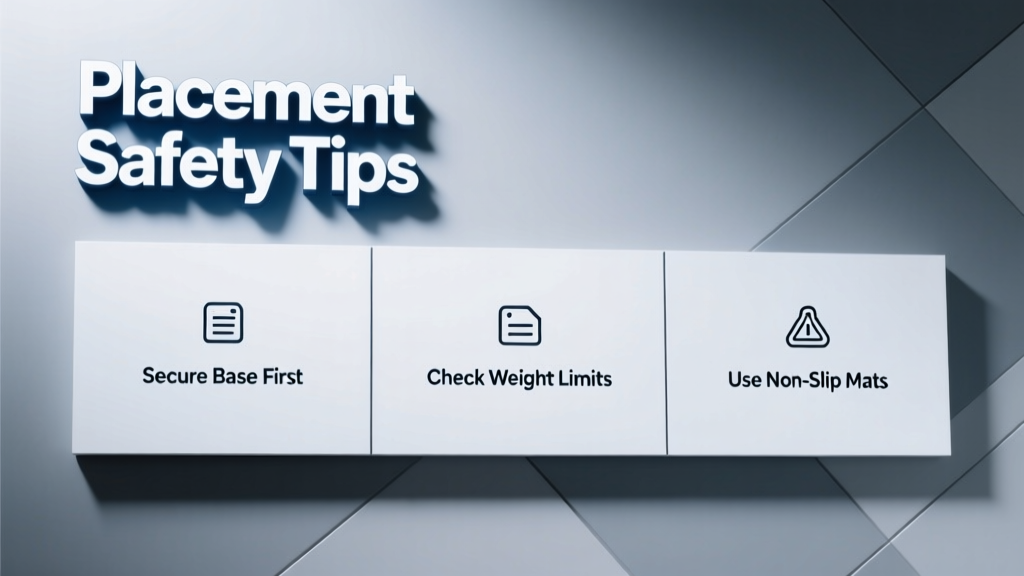 Placement Safety Tips: Preventing Falls and Injuries