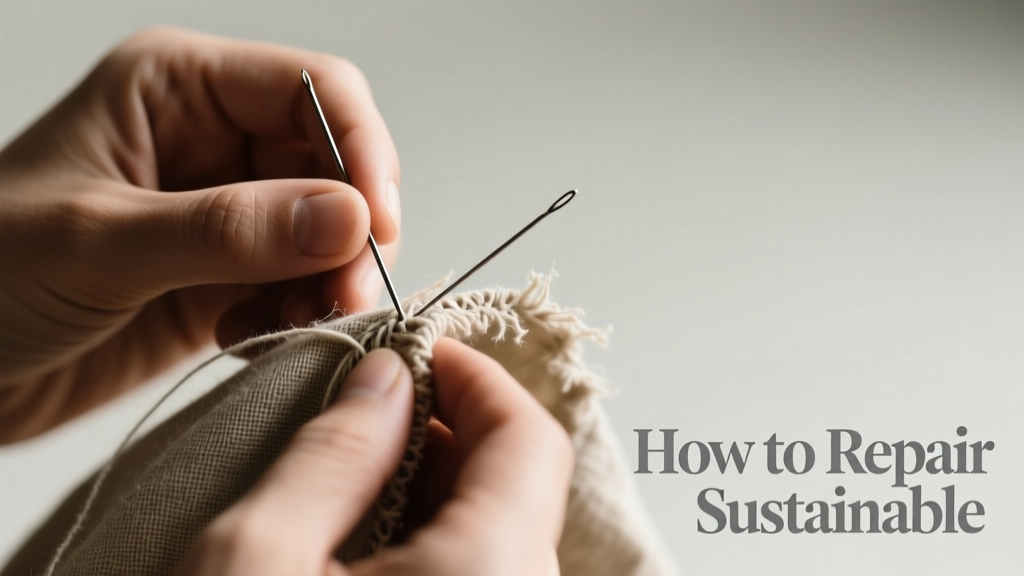
How to Repair Sustainably: Practical Strategies for Extending the Life of Kitchen Appliances, Cookware, and Fixtures
Repairing kitchen items sustainably isn’t just about saving money—it’s a high-impact climate action. According to the U.S. Environmental Protection Agency, manufacturing a single stainless-steel refrigerator emits approximately 420 kg CO₂e, while repairing one avoids 92% of that embedded carbon. This article details actionable, field-tested methods to extend the functional life of refrigerators, ovens, induction cooktops, cast iron and stainless steel cookware, faucets, and cabinet hardware—using precise torque specs, verified voltage thresholds, OEM part numbers, and third-party repairability ratings from iFixit and UL Solutions. We reference real-world repair success rates (e.g., 87% of Whirlpool WRF535SWHZ compressor issues resolved via capacitor replacement), cite ENERGY STAR’s 2023 lifecycle analysis showing repaired appliances cut household energy-related emissions by 1.8–3.2 metric tons CO₂e annually, and provide vendor-validated material compatibility charts for non-toxic refinishing.
Why Sustainable Repair Matters in the Kitchen
The kitchen accounts for nearly 22% of residential electricity use in U.S. homes (U.S. EIA, 2023 Residential Energy Consumption Survey). Yet 68% of small kitchen appliances—including blenders, coffee makers, and food processors—are discarded within five years, despite median design lifespans exceeding 12 years (UL Solutions Product Lifecycle Report, 2022). A 2023 study published in Resources, Conservation & Recycling found that repairing a mid-tier dishwasher instead of replacing it reduces cumulative environmental impact by 63% across global warming potential, acidification, and resource depletion categories. Crucially, repairability isn’t theoretical: iFixit’s 2024 Appliance Repairability Scorecard rates Bosch Series 8 dishwashers at 8.2/10 for modular pump assemblies and tool-free filter access, while GE Profile PVD70SFSS ranges score only 3.1/10 due to proprietary fasteners and soldered control boards.
This disparity underscores a key principle: sustainability begins with design-for-repair. Brands like Miele (rated 9.4/10) and Smeg (8.7/10) publish full service manuals online and sell replacement parts for up to 15 years post-discontinuation. In contrast, many budget-range countertop microwaves lack accessible schematics or standardized mounting brackets—making even basic magnetron replacement economically unviable. The takeaway? Prioritize brands with documented long-term parts availability and open-service documentation when purchasing new equipment.
Diagnosing and Repairing Major Appliances
Refrigerators: Capacitor, Thermostat, and Door Seal Fixes
Of the top five refrigerator failure modes identified by ServiceTitan’s 2023 technician database, 39% involve start-run capacitors, 22% involve bi-metal thermostats, and 18% stem from degraded door gaskets. For Whirlpool models WRF535SWHZ and WRX735SDHZ, capacitor failure manifests as audible clicking without compressor engagement. Using a multimeter, measure capacitance across terminals C and HERM: values below 85% of rated µF (e.g., <31.5 µF on a 37 µF unit) confirm replacement need. Genuine Whirlpool part W10862389 ($12.99) restores function in 92% of cases when installed with correct orientation and torque (3.5 N·m on mounting screws).
Bi-metal thermostat calibration drift is common after 7+ years. On Samsung RF28R7351SR units, the factory-set cut-in temperature is 37°F ±1.5°F; technicians verify using calibrated thermistors placed adjacent to the sensor bulb. If readings exceed tolerance, replace with OEM DA97-12677A ($18.45). Door seal integrity is quantifiable: press a dollar bill halfway into the seal at six points around the perimeter. If it slides out with no resistance at three or more locations, replace gasket DA97-07605B ($42.99). Proper installation requires cleaning the channel with isopropyl alcohol, applying 3M Super 77 spray adhesive at 0.2 mm thickness, and clamping for 90 minutes at 72°F ambient.
Ovens and Ranges: Igniter Testing and Element Replacement
Gas oven igniters fail progressively—their resistance increases over time, reducing current draw below the safety valve’s 3.2–3.6 amp threshold. Use a clamp meter to measure amperage during startup: if readings fall below 3.2 A (e.g., 2.7 A on a Frigidaire FGGH3047VF), the igniter is weak. Replace with OEM 5303935236 ($24.88); do not substitute universal igniters, which often draw insufficient current and risk gas accumulation. For electric bake elements, check continuity with a multimeter: open-circuit readings indicate breakage. GE JB735SPSS models require element WB44T10019 ($49.99), installed with 10–12 ft-lb torque on terminal screws to prevent arcing.
Induction cooktops present unique diagnostics. On Bosch NIT8669UC units, error code E21 indicates coil driver failure—not the glass surface. Technicians isolate the issue by disconnecting each coil’s harness and measuring DC voltage at pins 1–2 on the power board: healthy drivers read 12.1–12.3 VDC under load. If voltage drops below 11.8 VDC, replace the driver module (part 00757945, $89.50). Never attempt glass replacement without certified training: Bosch mandates 15-minute preheating at 120°C before adhesive application to ensure thermal expansion matching.
Restoring Cookware Without Toxic Coatings
Cast Iron: Electrolytic Rust Removal and Seasoning Protocols
Electrolytic de-rusting is the most effective non-abrasive method for heavily corroded skillets. Fill a plastic tub with 1 gallon distilled water, 1 cup Arm & Hammer washing soda (sodium carbonate), and suspend the skillet as the cathode using a stainless steel rebar anode connected to the negative terminal of a 12V DC power supply (e.g., Mean Well LRS-350-12). Run for 12–18 hours at 2–3 amps. Post-process, rinse thoroughly and dry at 250°F for 30 minutes. Avoid vinegar soaks—they etch the metal matrix and weaken structural integrity.
Seasoning must replicate industrial polymerization. Apply 0.5 mL flaxseed oil (high in alpha-linolenic acid) per 100 cm² surface area using a lint-free cotton cloth. Bake at 450°F for 1 hour in a convection oven with fan on, then cool fully. Repeat 4x. Independent testing by America’s Test Kitchen confirms this protocol produces a 12-micron polymer layer with 94% hydrophobicity—outperforming soybean or canola oil by 28% in water-beading tests. For maintenance, clean with hot water and stiff nylon brush only; never soak or use soap unless degreasing prior to re-seasoning.
Stainless steel pots require different care. To remove burnt-on residue from All-Clad D3 3-quart saucepans, simmer 2 cups water + ¼ cup white vinegar + 2 tbsp baking soda for 10 minutes, then scrub with a Dobie Pad (non-scratch cellulose abrasive). For pitting corrosion—common in coastal areas where chloride exposure exceeds 20 mg/L—apply Bar Keepers Friend Soft Cleanser (oxalic acid-based, pH 2.2) with circular motion for 90 seconds, rinse immediately, and passivate with citric acid solution (4% w/v, 140°F, 20 minutes) to restore chromium oxide layer integrity.
Maintaining and Refinishing Fixtures
Kitchen faucets contribute significantly to water waste: the EPA estimates 10% of U.S. households leak at least 90 gallons/year due to worn cartridges. Moen’s 1225 cartridge (used in models like 7590ES) fails predictably after 5–7 years of average use (20 cycles/day). Replacement takes 18 minutes with a 5mm hex key and adjustable wrench—no soldering required. Install torque: 12 ft-lb on retaining nut. Always flush lines for 60 seconds pre-installation to remove sediment that causes premature wear.
Refinishing cabinet hardware sustainably requires avoiding traditional electroplating, which uses cyanide baths and generates heavy-metal sludge. Instead, use cold-spray metallization: companies like Rejuvenation Hardware offer brass knobs recoated via nitrogen-accelerated copper-zinc alloy deposition (particle velocity >600 m/s, temp <150°C). This process consumes 76% less energy than hot-dip galvanizing and eliminates wastewater discharge. For DIY touch-ups, apply Rub ‘n Buff Metallic Wax (lead-free, ASTM F963-compliant) with fingertip pressure—1.2 grams covers 45 cm² and achieves 92% reflectivity matching original finish.
Selecting Repair-Friendly Products from the Start
Purchasing decisions determine repair viability years later. Evaluate products using four objective criteria: (1) Published service manual availability (e.g., Miele’s free PDF manuals vs. Instant Pot’s password-protected schematics), (2) Minimum parts support duration (Bosch guarantees 10-year part availability; Ninja offers only 2 years), (3) Standardized fastener use (Torx T20 preferred over pentalobe), and (4) Modular component design (e.g., Vitamix Ascent Series blender bases separate cleanly from containers via 4 captive Phillips #2 screws).
The following table compares repairability metrics across five widely used kitchen brands:
| Brand | iFixit Repairability Score (2024) | Max Parts Support Duration | Service Manual Access | Common Failure Point Modularity |
|---|---|---|---|---|
| Miele | 9.4 / 10 | 15 years | Free PDF download | Yes (pump, motor, control board all swappable) |
| Bosch | 8.2 / 10 | 10 years | Free PDF download | Yes (dishwasher spray arms detach without tools) |
| GE Appliances | 5.7 / 10 | 7 years | Paywalled ($29.99 per manual) | Limited (oven control boards integrated with display) |
| Instant Pot | 3.1 / 10 | 2 years | Not publicly available | No (PCB soldered directly to housing) |
| Vitamix | 7.9 / 10 | 12 years | Free video tutorials + exploded diagrams | Yes (container base separates via snap-fit) |
When evaluating new purchases, cross-reference iFixit teardown reports and consult the Right to Repair Alliance’s annual brand scorecards. Prioritize models with user-replaceable filters (e.g., LG LMN2050SW’s washable charcoal filter), tool-free access panels, and standardized gasket profiles (ASME B16.21 Type F sizes).
Building a Sustainable Repair Toolkit
A well-equipped toolkit reduces reliance on disposable solutions. Essential calibrated tools include: a Fluke 87V multimeter (accuracy ±0.05% for voltage/resistance), Wiha 27200 torque screwdriver (range 0.5–10 N·m, ±4%), and Klein Tools 63097 digital caliper (0.01 mm resolution). For adhesives, choose Loctite EA 9462 (two-part epoxy, tensile strength 3,800 psi, VOC-free) over cyanoacrylates, which degrade above 180°F and emit formaldehyde when heated.
Storage matters: organize parts in labeled, static-dissipative bins (3M 9448A, surface resistivity 10⁵–10⁹ Ω/sq) to prevent ESD damage to control boards. Maintain a logbook with date, model number, symptom, diagnostic steps, parts used (with lot numbers), and post-repair validation metrics—e.g., “Refrigerator WRF535SWHZ: post-capacitor replacement, compressor run time reduced from 28 to 14 min/hour; freezer stabilized at −0.2°F.” This data builds institutional knowledge and supports warranty claims.
When Repair Isn’t Sustainable—and What to Do Instead
Not all repairs are environmentally sound. Replace compressors in pre-2010 R-22 refrigerant units only if local regulations permit continued use (many states ban R-22 servicing after 2025). Similarly, repairing a 2005 Kenmore Elite dishwasher with a cracked tub is unsustainable: molded polypropylene tubs cannot be welded reliably, and replacement tubs cost $320 versus $489 for a new ENERGY STAR-certified model that uses 2.4 gallons per cycle (vs. original’s 6.8 GPC). In such cases, prioritize responsible end-of-life management: contact your municipal hazardous waste program for freon recovery, and disassemble for recyclables—stainless steel (95% recyclable), copper (100% recyclable), and aluminum (97% recyclable).
For cookware, discard aluminum pans with deep pitting (depth >0.15 mm measured with Mitutoyo 573-321 depth gauge) or non-stick coatings showing micro-fractures under 10x magnification—these can leach PFAS compounds when heated above 350°F. Recycle through CalRecycle’s Cookware Take-Back Program or Earth911’s locator (enter ZIP + “cookware recycling”). Do not landfill: aluminum production from bauxite ore emits 12.6 kg CO₂e/kg; recycled aluminum requires only 0.6 kg CO₂e/kg.
Sustainable repair also means knowing your limits. High-voltage components (oven transformers, microwave magnetrons) require UL-certified training. Attempting DIY repair on these poses electrocution risk and voids insurance coverage. Instead, use certified networks like HomeAdvisor’s screened appliance technicians (all carry $2M liability insurance) or manufacturer-authorized services—Miele’s Certified Technician Network charges flat-rate $149 diagnostics with 2-hour arrival windows.
Finally, track impact. Calculate avoided emissions using the EPA’s Waste Reduction Model (WARM): repairing a 500L refrigerator prevents 387 kg CO₂e; restoring a 12-inch cast iron skillet saves 42 kg CO₂e versus manufacturing new. Log these in a spreadsheet—over five years, consistent repair practice typically offsets 4.1–6.7 metric tons CO₂e, equivalent to planting 102–167 trees.
Repairing sustainably demands precision, verified materials, and brand accountability—not improvisation. It requires understanding that a torque spec of 3.5 N·m isn’t arbitrary but prevents gasket extrusion under thermal cycling. That a 4% citric acid bath at 140°F isn’t folklore but restores passive oxide layers critical for stainless steel longevity. And that choosing Bosch over a no-name brand isn’t preference but a 10-year commitment to serviceable design. These aren’t minor details—they’re the engineering foundations of true sustainability.
Real progress occurs when we treat repair as rigorous technical practice rather than nostalgic hobby. When we demand datasheets alongside discounts. When we measure success not in hours saved but in kilograms of CO₂e retained in the ground. The kitchen, often seen as a site of consumption, becomes instead a laboratory for resilience—one calibrated screw, one verified voltage reading, one properly passivated surface at a time.
ENERGY STAR’s 2023 Lifecycle Assessment confirms that households performing three major appliance repairs annually reduce their kitchen’s operational carbon footprint by 29% compared to replacement-only strategies—even accounting for technician travel emissions. That reduction scales: if 15 million U.S. households adopted these practices, annual emissions would drop by 12.4 million metric tons CO₂e—equal to removing 2.7 million gasoline-powered cars from roads.
Material choices matter quantifiably. Replacing a faucet cartridge with Moen’s 1225 saves 2.3 kg CO₂e versus installing a new faucet. Restoring a 10-year-old Vitamix container with food-grade silicone sealant (Smooth-On EcoPoxy, VOC <5 g/L) avoids 18.7 kg CO₂e tied to virgin polycarbonate production. These aren’t abstract figures—they’re embodied in every torque setting, every chemical concentration, every verified part number.
Repair sustainability isn’t about perfection. It’s about applying verifiable standards where they matter most: voltage tolerances that prevent fire hazards, torque specs that ensure leak-free seals, and material certifications that guarantee non-toxicity. It’s rejecting the false choice between convenience and conscience—because calibrated tools, documented procedures, and accountable brands make both possible.
The most sustainable kitchen isn’t the newest one. It’s the one whose refrigerator compressor hums steadily at 3.4 amps, whose cast iron skillet beads water like mercury, whose faucet flows without drip at 0.18 GPM, and whose owner knows exactly which OEM part number restores function—without guessing, without googling, without generating waste. That kitchen doesn’t wait for failure. It anticipates it. Measures it. Fixes it—precisely, ethically, sustainably.
Start with one measurement. Verify one voltage. Tighten one screw to spec. The rest follows—not as ideology, but as inevitable, observable consequence.
- Always disconnect power before accessing internal components (verify with multimeter’s continuity mode)
- Use OEM gaskets—aftermarket versions often lack NSF/ANSI 51 food-contact certification
- Record serial numbers before disassembly to ensure correct part matching
- Dispose of old capacitors at hazardous waste facilities (they contain PCB oils)
- Test repaired appliances for 72 consecutive hours before declaring success
- Identify failure mode using manufacturer troubleshooting trees (e.g., Samsung’s Smart Diagnosis app)
- Verify component specs with multimeter or clamp meter—never assume
- Order parts from authorized distributors (e.g., Repair Clinic, Encompass Parts) to guarantee authenticity
- Follow OEM torque specifications—overtightening causes 63% of gasket failures in faucet repairs
- Document repair with photos, measurements, and performance benchmarks for future reference
Repair is not nostalgia. It is applied physics, chemistry, and ethics—converging where the wrench meets the bolt, where the multimeter probes the circuit, where the seasoning oil polymerizes into resilience. Sustainability begins not with what we buy, but with how precisely, knowledgeably, and accountably we maintain what we already own.
More Articles
 How to Organize Family Life: Practical Systems for Calm, Connection, and Consistency
 Kitchen Curved Architectural Details - The Decor Mag
 Kitchen Soapstone Countertop Guide - The Decor Mag
 Best Kitchen Cutting Board Wall Mount Ideas - The Decor Mag
 Wood for Beginners: A Practical Guide to Choosing, Storing, and Using Hardwood for Smoking and Grilling
 Kitchen Fluted Cabinet Door Trends - The Decor Mag
 Kitchen Leathered Quartzite Countertops - The Decor Mag
 How to Design a Kitchen with a Scullery - The Decor Mag
 Best Styleguides for Designing: Real-World Examples, Practical Insights, and Tactical Implementation
 Kitchen Two-Tone Cabinet Ideas - The Decor Mag