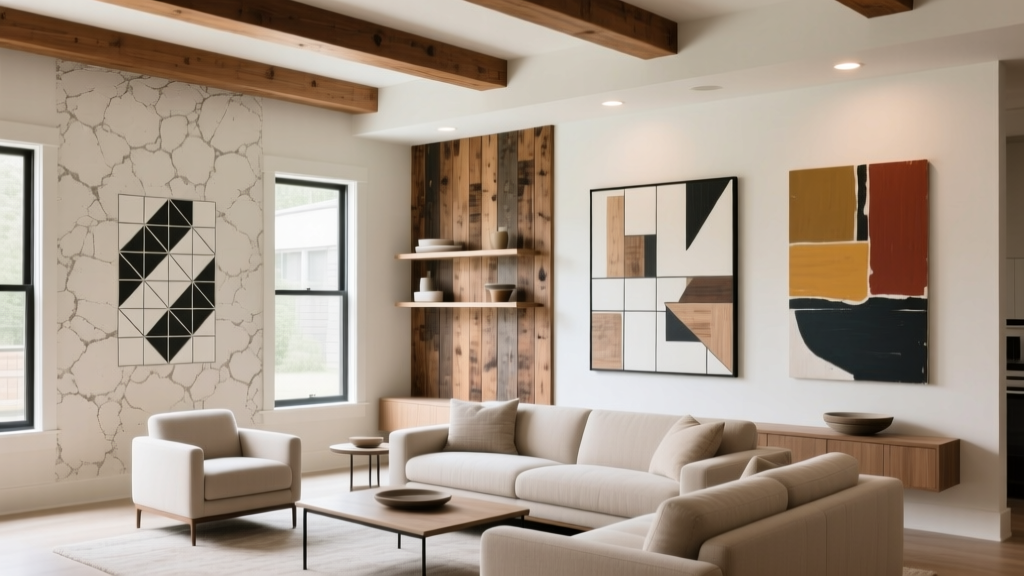
Best Accent Wall Treatments Under $500 - The Decor Mag
A living room can feel “almost there” even when the furniture is right and the rug is perfect. Often, what’s missing is a focal point—something that anchors the space and gives the room a clear sense of style. That’s where an accent wall comes in. Done well, it adds depth, contrast, and personality without requiring a full-room renovation.
The good news: you don’t need a designer budget to make a big impact. With thoughtful material choices and a plan, you can create a standout accent wall for under $500—whether you own your home or you’re renting and need a reversible option. This guide covers the best living room accent wall ideas, current design trends, timeless principles, practical measurements, and smart product picks so you can choose an approach that fits your space and your lifestyle.
You’ll also find step-by-step guidance, real-world scenarios, common mistakes to avoid, and a quick FAQ at the end—so you can move from inspiration to action with confidence.
Before You Start: Choose the Right Wall (and Measure It)
Accent walls work best when they reinforce the natural “star” of the room. In most living rooms, that’s one of these:
- The wall behind the sofa
- The TV/media wall (if you can keep visual clutter under control)
- A fireplace wall
- A wall with built-in shelving or a large window
Quick measurement checklist
- Wall width x height: Measure in inches and convert to square feet (width × height ÷ 144).
- Subtract openings: Doors and large windows reduce material needs (especially for wallpaper and paneling).
- Plan for waste: Add 10% for paint; 15% for wallpaper (more if it’s a large repeat pattern); 10–15% for slats/panels.
Budget tip: Your total under-$500 number should include the “boring” items: painter’s tape, spackle, sandpaper, adhesive, primer, roller covers, and a few extra blades. These can quietly add $40–$120 if you don’t plan for them.
1) Paint That Looks Custom (Total: $50–$200)
Paint remains the most cost-effective accent wall treatment—and it’s trending in a big way thanks to color-drenching, earthy tones, and high-contrast modern palettes. If you want maximum impact with minimal spend, start here.
Best paint accent wall ideas for living rooms
- Deep, grounded neutrals: Charcoal, warm black, mushroom, and chocolate brown create a cozy, high-end feel.
- Dusty color accents: Muted sage, clay, and slate blue pair well with modern and transitional decor.
- Two-tone or “painted shape”: A large arch behind the sofa, a half-wall band, or a color block that frames art.
Step-by-step: A crisp, modern painted accent wall
- Patch and sand: Fill nail holes and dents; lightly sand for a smooth finish.
- Prime if needed: Prime over stains, fresh drywall patches, or drastic color changes (especially if going from white to deep color).
- Cut in first: Use an angled brush along corners and ceiling lines.
- Roll in a “W” pattern: Keep a wet edge to avoid lap marks.
- Second coat: Most deep shades look best with two coats.
Product recommendations
- Paint finish: Matte or eggshell for most living rooms (matte hides wall imperfections; eggshell is slightly more wipeable).
- Roller nap: 3/8" nap for smooth walls; 1/2" for lightly textured walls.
- Painter’s tape: Use a quality tape for sharp geometric lines; remove tape while paint is slightly wet for cleaner edges.
Real-world scenario: A renter with beige walls paints one removable “panel” using a large framed canvas (48" x 72") leaned against the wall and painted off-site or on a protected floor. It reads like an accent wall, but moves with them.
2) Peel-and-Stick Wallpaper (Total: $120–$450)
Peel-and-stick wallpaper is one of the best renter-friendly accent wall options, and it’s more sophisticated than ever. Current living room wallpaper trends include soft geometrics, grasscloth-look prints, oversized botanicals, and subtle murals that add depth without overpowering the room.
How to estimate wallpaper needs
- Measure wall width and height.
- Check the roll coverage (often listed in square feet).
- Add 15% for waste and pattern matching (20% for large repeats).
Typical budget range: $30–$80 per roll. Many living room accent walls land around 3–6 rolls depending on size.
Installation tips that make it look pro
- Start in the least noticeable corner: Your final seam should be the one people see least.
- Use a plumb line: Don’t trust corners to be perfectly straight—mark a vertical guide.
- Smooth as you go: Use a plastic smoother to avoid bubbles; work from center outward.
- Trim with fresh blades: Change utility knife blades often for clean edges.
Real-world scenario: A small living room with a compact sofa uses a linen-texture peel-and-stick wallpaper on the wall behind the couch. With warm white curtains and a black floor lamp, the wall becomes the focal point while the rest stays calm and bright.
3) DIY Board-and-Batten or Picture Frame Molding (Total: $150–$450)
For a classic, architectural look that feels custom, board-and-batten and picture frame molding are timeless. They’re especially effective in living rooms that feel flat or builder-basic. Painted the same color as the wall (often a satin or eggshell), they add subtle shadow and dimension.
Material recommendations
- MDF: Budget-friendly, smooth, and easy to paint (best for dry areas).
- Pine/poplar: Stronger and more impact-resistant (costs more but holds up well).
- Adhesive + brad nails: Construction adhesive helps prevent warping; brads hold pieces in place while it cures.
Measurements that usually look right
- Common batten spacing: 12"–18" between vertical battens (adjust based on wall width).
- Chair-rail height: 32"–40" from the floor for a balanced look in most living rooms.
- Frame molding: Keep frames at least 3"–5" away from corners and outlets to avoid a cramped layout.
Budget breakdown example (8' x 12' wall)
- MDF trim boards: $80–$200
- Adhesive + nails: $20–$40
- Caulk + wood filler + sandpaper: $20–$40
- Paint + primer (if needed): $50–$150
Real-world scenario: A homeowner with a large TV wall adds simple picture frame molding around the TV zone and paints everything a deep greige. The TV blends in more, and the wall reads intentional—even with a basic media console.
4) Wood Slat Accent Wall (Total: $250–$500)
Vertical wood slats are everywhere in current living room design trends for a reason: they add warmth, height, and a modern architectural feel. This treatment is especially flattering in rooms with standard 8' ceilings because vertical lines draw the eye upward.
Best materials under $500
- Furring strips: Inexpensive and easy to find; sand well for a smoother look.
- 1x2 select pine: Cleaner edges, fewer knots, typically looks more refined.
- Black felt backing (optional): Creates contrast and hides wall imperfections; can also help with mild sound softening.
Spacing + layout tips
- Common slat width: 1.5" (nominal 1x2)
- Common gap: 1/2" to 1"
- Proportion trick: If your wall is narrow, tighter spacing looks more upscale; on wide walls, a slightly wider gap can keep the pattern from feeling too busy.
Simple installation approach
- Locate studs and mark them lightly in pencil.
- If using felt, apply it first with a staple gun or heavy-duty adhesive.
- Cut slats to height (typically 96" for an 8' wall, but measure your room).
- Apply construction adhesive to each slat and tack with brad nails into studs where possible.
- Fill nail holes and finish with stain or paint (matte black and light oak tones are popular and timeless).
Real-world scenario: A family living room with a lot of kids’ toys uses a black slat wall behind the TV. The darker backdrop visually “hides” the screen and cords, making the space feel calmer even when the room is active.
5) Oversized Art “Gallery Wall” (Total: $80–$500)
If you’re renting, nervous about DIY, or want a flexible upgrade, treat your accent wall as a curated display. A large-scale art moment can function like an accent wall without paint, wallpaper, or construction.
What works best in living rooms
- One oversized piece: 36" x 48" or larger for strong impact.
- Triptych sets: Three coordinated panels (often 16" x 24" each or larger).
- Frame-led gallery wall: Mix 8" x 10", 11" x 14", and 16" x 20" frames for a balanced layout.
Hanging guidelines (so it doesn’t float too high)
- Center height: Aim for the center of the arrangement around 57"–60" from the floor.
- Above a sofa: Keep the bottom edge 6"–10" above the sofa back.
- Overall width: Art should span about 2/3 the width of the sofa for proportion.
Budget tip: Use downloadable art prints + consistent frames for a high-end look. You’ll get more impact from cohesive framing than from random frame styles.
6) Paint + Lighting Combo (Total: $150–$500)
Want an accent wall that feels intentional at night as well as daytime? Pair a painted wall with simple plug-in sconces or a picture light. This is a designer trick that reads “custom” even in rentals (choose plug-in fixtures and avoid hardwiring).
How to plan the lighting
- Sconces beside a sofa: Mount 60"–66" from the floor (adjust based on ceiling height and lamp scale).
- Spacing: For two sconces, place them roughly 60"–72" apart depending on wall width and furniture placement.
- Bulb color temperature: 2700K for a warm, inviting living room glow.
Real-world scenario: A renter paints one wall a moody olive and adds two plug-in sconces flanking a large framed print. The wall becomes a cozy reading zone, and the room feels layered without major commitment.
Common Mistakes to Avoid (and What to Do Instead)
- Picking the wrong wall: Avoid accenting a wall with multiple doors or awkward angles. Choose the wall your eye naturally lands on when you enter.
- Going too busy in a small living room: If your space is tight, choose subtle texture (linen-look wallpaper, tonal paint) rather than high-contrast patterns.
- Ignoring undertones: Warm floors + cool gray walls can clash. Test swatches at different times of day and view them next to your sofa fabric and rug.
- Forgetting sheen and lighting: High-gloss can highlight wall flaws. Matte is forgiving, but in high-traffic homes, eggshell may be easier to clean.
- Skipping prep: A beautiful accent wall starts with a smooth surface. Fill holes, sand, and clean before you apply wallpaper or paint.
- Underestimating costs: Supplies add up. Set aside $50–$100 for tools, adhesives, and finishing materials.
FAQ: Accent Wall Treatments Under $500
What is the cheapest way to create an accent wall in a living room?
Paint is usually the most budget-friendly option. A single wall often costs $50–$200 including primer and supplies, depending on the paint brand and whether you need multiple coats.
Are peel-and-stick wallpapers safe for rentals?
Most are renter-friendly, but results depend on your wall paint and texture. They adhere best to smooth, clean, semi-matte or satin walls. Test a small section for 48 hours before installing the full wall.
How do I choose an accent wall color that won’t feel dated?
Look to timeless neutrals (warm whites, greige, charcoal) or nature-inspired tones (sage, clay, deep blue). Pair the accent with consistent metals and woods in your living room decor for longevity.
Can I do a wood slat accent wall without damaging the wall?
True slat walls typically require adhesive and some nail holes. If you need a reversible approach, consider mounting slats to a thin plywood backer panel and anchoring it with minimal fasteners, or use an oversized art approach instead.
What’s the best accent wall treatment for a TV wall?
Paint (especially deeper tones), wood slats, and subtle textured wallpaper work well because they reduce the “blank black rectangle” effect and help the TV blend in. Plan cord management so the wall looks intentional.
How long does a DIY accent wall project usually take?
Paint can be done in a day (plus drying time). Peel-and-stick wallpaper often takes 3–6 hours for a standard wall. Board-and-batten and slats usually take a weekend, especially if you’re cutting, filling, sanding, and painting.
Next Steps: Pick Your Style, Then Your Weekend
Start by choosing the wall you want to highlight, then match the treatment to your lifestyle: paint for speed, peel-and-stick wallpaper for renter-friendly impact, molding for classic architecture, slats for modern warmth, or art and lighting for flexibility. Keep your budget in check by measuring carefully, adding a waste factor, and pricing out the “extras” before you commit.
If you’re ready to plan, here’s a simple checklist:
- Measure the wall and calculate square footage
- Choose a style direction (modern, cozy, classic, minimal, bold)
- Decide: reversible or permanent
- Build a materials list with a 10–15% buffer
- Test paint/wallpaper samples in your room’s lighting
For more living room ideas, accent wall inspiration, and practical decor guides, explore the latest on thedecormag.com.
More Articles
 Coastal Living Room Decor Inspiration - The Decor Mag
 Pet-Friendly Living Room Furniture Picks - The Decor Mag
 Rug Size for Living Room: How to Choose (2026)
 Antique Living Room Decor: Modern Mix Ideas (2026)
 Living Room Symmetrical Design Principles - The Decor Mag
 Best Console Tables for Entry Living Rooms - The Decor Mag
 Bedroom FAQ: Science-Backed Design Advice
 Best Display Cabinets for Living Rooms (2026)
 Living Room Curtains: How to Choose (2026)
 Exposed Beams Living Room Decor (2026)