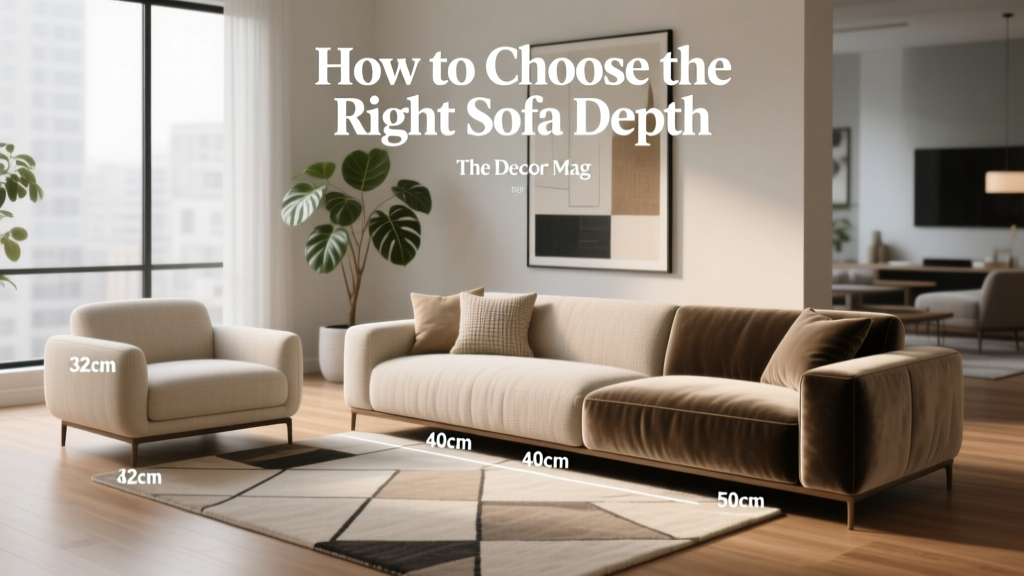
How to Choose the Right Sofa Depth - The Decor Mag
Your sofa is the most-used “piece of architecture” in a living room. It’s where you stretch out after work, host movie nights, read on weekends, and squeeze in extra seating when friends drop by. Yet many people buy a couch based on looks alone—then wonder why it never feels quite right. More often than not, the culprit is sofa depth.
Sofa depth affects comfort, posture, and how your living room functions day to day. The right depth can make a small apartment feel more spacious, help tall family members relax without slouching, and keep a formal sitting room looking polished instead of messy. The wrong depth can lead to dangling feet, stiff backs, and cushions that constantly slide out of place.
This guide breaks down how to choose the best sofa depth for your body, your lifestyle, and your space. You’ll learn practical measurements to look for, how seat depth differs from overall depth, what trends are shaping living room furniture right now, and the most common mistakes to avoid—plus a simple checklist to shop with confidence.
What “Sofa Depth” Really Means (and the Measurements That Matter)
Retailers use “depth” in a few ways, so it helps to clarify the terms before you shop.
Key depth terms to know
- Overall sofa depth: The front-to-back measurement of the entire sofa frame (often 34"–45"+). This impacts how much floor space it takes up.
- Seat depth: The usable depth from the front edge of the seat cushion to the back cushion (commonly 20"–24", sometimes 25"–30" for deep sofas). This is the comfort measurement.
- Seat height: The height from floor to top of the seat cushion (often 17"–19"). Height and depth work together for posture.
- Back height: How tall the back is from the seat or floor—important for head/neck support.
If a product page lists only “overall depth,” look for “seat depth” in the specifications or ask customer service. Two sofas can have the same overall depth but very different seat depths depending on back cushion thickness and frame design.
Quick measurement ranges (useful as a starting point)
- Standard seat depth: 20"–22" (great for upright sitting, conversation areas)
- Relaxed seat depth: 22"–24" (comfort-forward, still easy to get up from)
- Deep seat sofas: 24"–30" (lounging, movie nights, tall people, modern casual style)
Pick Your Comfort Goal First: Upright, Loungy, or “Both”
The best sofa depth isn’t “one-size-fits-all.” It’s about how you actually use your living room.
If you love hosting and conversation
Choose a sofa that supports an upright posture. A seat depth of 20"–22" makes it easier to sit with feet on the floor and maintain good back support.
- Best for: formal living rooms, small living rooms, open-plan spaces where the sofa faces a dining area
- Look for: firmer seat cushions, supportive back cushions, slightly higher seat height (around 18"–19")
If you want a lounge-first living room
If your ideal night involves blankets, streaming, and stretching out, a deep seat sofa can feel like a retreat. Aim for 24"–27" seat depth (or more if you’re tall).
- Best for: family rooms, media rooms, casual modern spaces
- Look for: deeper cushions, softer fills, wide arms, modular sectionals
If you need flexibility (most households do)
Many homeowners and renters want a sofa that works for both lounging and sitting upright. A smart compromise is 22"–24" seat depth plus a few styling tools:
- Add lumbar pillows for upright support when guests arrive
- Use a firmer seat cushion so the seat doesn’t feel overly deep
- Choose a sofa with adjustable back cushions (common on modern modular designs)
Match Sofa Depth to Your Body (Yes, Really)
The most beautiful living room design still has to feel good. Depth is personal—your height, leg length, and posture habits matter.
A simple fit test (useful in a showroom)
- Sit back as you normally would.
- Your lower back should feel supported without forcing a slouch.
- Your knees should bend comfortably with your feet on the floor (or close to it).
- There should be 2"–4" between the back of your knees and the sofa edge for comfortable circulation.
Rules of thumb by height
- Under 5'4": Often happiest with 19"–21" seat depth, or a deeper sofa paired with extra back pillows.
- 5'4"–5'11": Typically comfortable in 20"–24" depending on preference.
- 6'0"+: Often benefits from 23"–27" seat depth for true lounging comfort.
Real-world scenario: A couple shares a sofa—one is 5'2", the other is 6'1". Instead of choosing a shallow couch that feels cramped for the taller partner, they pick a 24" deep sofa and keep two 20" lumbar pillows in a basket. The shorter partner uses the pillows for back support; the taller partner removes them for movie night. Same sofa, two comfort settings.
Consider Your Room Size and Layout (Depth Changes Traffic Flow)
Sofa depth isn’t only about comfort; it’s also about how your living room functions. In small spaces, a few inches can decide whether the room feels airy or cramped.
Living room clearance guidelines
- Walkways: Keep 30"–36" of clear path in main traffic lanes.
- Coffee table distance: Aim for 14"–18" between sofa edge and table.
- TV viewing comfort: Your sofa depth influences how far you sit from the screen—plan your layout before committing.
Apartment-friendly depth choices
In a compact rental, you’ll often do best with:
- Overall sofa depth: around 34"–38"
- Seat depth: around 20"–23"
- Design details: slim arms or track arms (they save inches without sacrificing style)
Real-world scenario: A studio apartment living room doubles as a walkway to the balcony. A 44" overall depth sofa blocks the path and makes the room feel tight. Swapping to a 36" overall depth sofa with tailored arms keeps the space open while still offering comfortable seating.
Depth + Cushion Construction: Why Two 24" Sofas Can Feel Totally Different
Depth is only part of the comfort equation. Cushion fill, suspension, and upholstery material can make a deep sofa feel supportive—or like you’re sinking into a cloud.
Cushion fill recommendations
- High-resilience foam: Great for support, holds shape, ideal for everyday living rooms.
- Foam + down/feather wrap: Softer, “luxury lounge” feel; requires more fluffing.
- All down/feather: Very plush but high maintenance; not ideal for allergy-prone households.
Suspension basics
- Sinuous springs: Common, supportive, good mid-range option.
- Eight-way hand-tied springs: Premium support and longevity (often higher price point).
- Webbing: Can be comfortable in modern designs, but quality varies widely.
Upholstery materials that support your lifestyle
- Performance fabric: A top pick for family-friendly living room decor; resists spills and stains.
- Leather: Timeless, wipes clean, develops patina; can feel cooler initially.
- Bouclé: Trend-forward and cozy; choose performance bouclé for durability.
- Velvet: Glam texture; performance velvet works well for pet hair and everyday use.
Trend watch: Deep, modular sectionals in performance fabrics are dominating modern living room design—especially in warm neutrals (oat, taupe, camel) and textured weaves. The timeless counterbalance is a more tailored sofa silhouette with a medium seat depth, elevated by high-quality upholstery and classic proportions.
Step-by-Step: How to Choose the Right Sofa Depth When Shopping Online
Buying a sofa online can be convenient, but you need a plan to avoid “depth regret.” Use this quick method.
- Measure your room: Note wall length, coffee table placement, and walking paths.
- Tape it out: Use painter’s tape on the floor for overall depth and length. Add tape for coffee table clearance.
- Check seat depth AND seat height: These specs tell you how it will feel day to day.
- Read cushion details: Look for foam density, down wrap, and whether cushions are reversible.
- Plan for support: If you’re choosing a deeper sofa, budget for lumbar pillows or choose a style with supportive back cushions.
- Confirm delivery logistics: Deep sofas can be harder to maneuver in tight stairwells and hallways—measure doorways and turns.
Product Recommendations by Depth Style (and Budget Ranges)
Instead of chasing one “best sofa,” shop by the experience you want in your living room.
1) Standard depth sofas (seat depth 20"–22")
- Best for: small living rooms, conversation seating, renters who rearrange often
- Look for: tight back or structured cushions, track arms, supportive foam
- Budget range: $700–$2,000 for quality options; $2,000–$4,500 for premium frames and upholstery
2) Medium depth “everyday comfort” sofas (seat depth 22"–24")
- Best for: multipurpose living rooms, couples with different preferences
- Look for: a balance of firmness and softness, performance fabric options
- Budget range: $1,000–$3,500; $3,500–$7,000 for designer-level tailoring and construction
3) Deep seat sofas and modular sectionals (seat depth 24"–30")
- Best for: lounging, families, media rooms, modern casual decor
- Look for: modular pieces, washable covers (if available), durable performance textiles
- Budget range: $1,500–$5,000; $5,000–$12,000+ for larger modular configurations and premium upholstery
When comparing prices, prioritize the “hidden” quality: frame (kiln-dried hardwood), suspension, cushion construction, and upholstery durability. Those determine whether your sofa looks good five years from now—especially in high-traffic living rooms.
Real-World Living Room Examples: Choosing Depth Based on Lifestyle
Example A: The small rental living room
A renter has a narrow living room that also serves as the main hallway to the bedroom. They choose a sofa with a 36" overall depth, 21" seat depth, and slim track arms. Styling with a textured throw and two tailored pillows keeps it cozy without visually crowding the room.
Example B: The family-friendly media space
A family with kids picks a 26" seat depth sectional in a stain-resistant performance fabric. They keep a set of firmer lumbar pillows for adults and a large ottoman that doubles as a coffee table (with a tray). The result: a living room design that invites lounging while staying practical.
Example C: The “grown-up” entertaining space
Homeowners who host often choose a 22" seat depth sofa in a structured silhouette. A pair of accent chairs across from the sofa creates a balanced conversation layout, and the slightly shallower seat encourages guests to sit upright and engage.
Common Mistakes to Avoid
- Confusing overall depth with seat depth: Seat depth is the comfort metric—don’t skip it.
- Choosing a deep sofa without a support plan: If you’re shorter or sit upright often, you’ll likely need lumbar pillows or firmer cushions.
- Ignoring traffic flow: A too-deep sofa can choke walkways and make a living room feel smaller.
- Over-prioritizing “sink-in” softness: Ultra-plush cushions can lose shape faster and may feel unsupportive for daily use.
- Not measuring delivery paths: Depth and bulky arms can turn delivery into a nightmare—measure doorways, elevators, and tight turns.
- Forgetting your coffee table scale: A deeper sofa may require a larger coffee table or ottoman to keep proportions right.
FAQ: Sofa Depth and Living Room Comfort
What is a good seat depth for most people?
For most adults, 22"–24" is the sweet spot—comfortable for everyday use without feeling overly deep. If you prefer more upright seating, 20"–22" may feel better.
Is a deep seat sofa good for a small living room?
It can be, but it depends on overall depth and your layout. In a small living room, a deep seat paired with a bulky frame can overwhelm the space. Look for a deep seat with a streamlined frame (slim arms, tight back) and keep 30"–36" clear walkways.
How do I make a deep sofa comfortable if I’m short?
Use lumbar pillows (or a supportive back cushion insert) to bring the sitting position forward. A slightly higher seat height (around 18"–19") can also help keep feet closer to the floor.
What’s better: a deep sofa or a sectional?
For lounging, a sectional often wins because it offers a chaise-like experience and flexible seating zones. For smaller living rooms or more formal decor, a deep sofa (without a chaise) can provide comfort while keeping the layout more open.
Does cushion firmness change how deep a sofa feels?
Yes. Softer cushions compress more, effectively increasing the “sink” and making a sofa feel deeper and lower. Firmer cushions keep you more elevated and can make a deeper seat feel easier to use every day.
Next Steps: Choose Your Depth, Then Style the Room Around It
To choose the right sofa depth, start with how you live—hosting, lounging, or a mix—then match seat depth to your body and overall depth to your floor plan. If you’re shopping online, tape out the footprint, confirm seat depth, and pay attention to cushion construction and upholstery durability. A sofa that fits your space and your posture is the foundation of a comfortable, stylish living room.
Ready to pull the whole look together? Explore more living room ideas, furniture guides, and decor trends on thedecormag.com.
More Articles
 Science-Backed Room Design Principles for 2026
 Effortless Living Room Styling: Tips & Ideas
Living Room Color Schemes That Work Every Time
Effortless Living Room Styling: Tips & Ideas
Living Room Color Schemes That Work Every Time
 Hardwood vs Engineered vs Laminate Living Room Floors
 How to Create a Living Room Color Story - The Decor Mag
 Living Room Jewel Tone Inspiration - The Decor Mag
 Best Living Room Focal Point Ideas for 2026
 How to Layer Lighting in a Living Room - The Decor Mag
 Patterned Wallpaper Living Room Styling (2026)
 Living Room Design: Functional + Stylish Framework (2026)