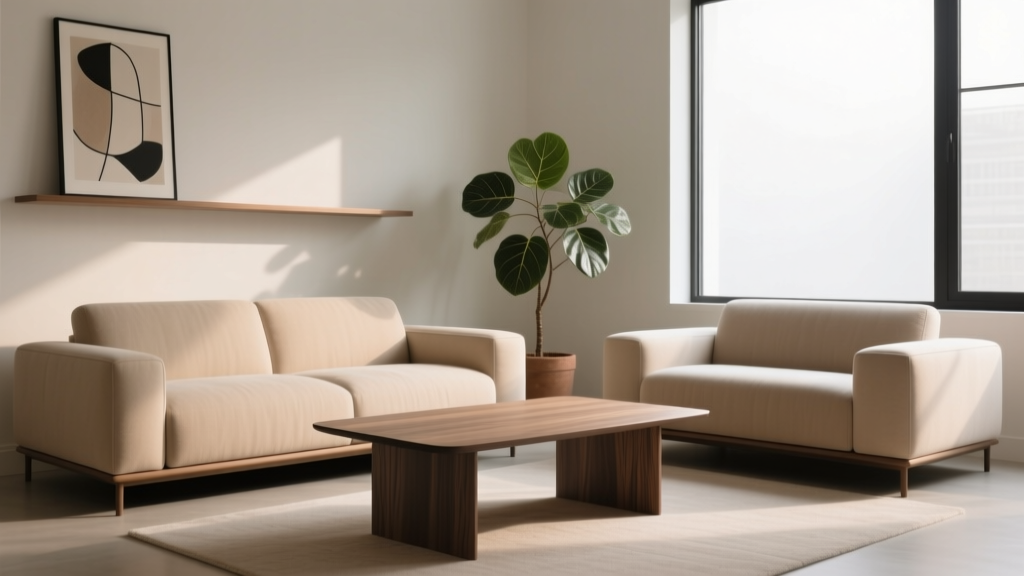
Coffee Table Height & Sofa Relationship (2026)
A coffee table seems like a simple purchase—until you’ve lived with one that’s too tall to comfortably reach over, too low to feel useful, or so far from the sofa that your drink becomes a full-body stretch. The relationship between your sofa and coffee table is one of those quiet living room decisions that shapes everything: comfort, flow, safety, and even how “finished” your space feels.
Get this pairing right and your living room becomes effortlessly functional: feet can kick up, snacks can land safely, and décor looks intentional instead of floating awkwardly. Get it wrong and you’ll notice it daily—bumped knees, cramped walkways, and a table that looks out of scale.
This guide breaks down the best coffee table height for your sofa, plus the ideal distance between them, how to choose the right size and shape for your layout, and real-world solutions for tricky spaces. You’ll also find common mistakes to avoid, budget-friendly product recommendations, and a quick FAQ to help you finalize your living room design with confidence.
The Golden Rules: Coffee Table Height and Distance from the Sofa
Rule #1: Coffee table height should be level with (or slightly lower than) your sofa seat
The most reliable guideline interior designers use: choose a coffee table that’s about the same height as your sofa’s seat cushion, or 1–2 inches lower. This keeps the table easy to reach and visually balanced.
- Ideal coffee table height: 16–18 inches for most standard sofas
- Best match: Coffee table height = sofa seat height (floor to top of compressed cushion) or up to 2 inches lower
- When slightly higher can work: Up to 1 inch higher if you regularly eat meals at the coffee table or use it as a laptop surface (but avoid anything that feels like a barrier in front of the sofa)
Quick measuring tip: Sit on your sofa and measure from the floor to the top of the cushion where you actually sit (it compresses). That number is your true “functional seat height.”
Rule #2: Keep 14–18 inches between the sofa and coffee table
Distance matters just as much as height. Too close and you’ll feel boxed in. Too far and the table stops being useful.
- Ideal gap: 14–18 inches from sofa edge to coffee table edge
- Small spaces: 12–14 inches can work if walkways are tight
- Large rooms/sectionals: 18–20 inches can be comfortable if the table is oversized and you have deep seating
This spacing supports good living room flow while keeping drinks, remotes, books, and décor within easy reach—an essential for everyday comfort and smart space planning.
How to Choose the Right Coffee Table Height for Different Sofa Styles
Standard sofas (most apartments and homes)
Most standard sofas have a seat height around 17–19 inches. That makes the best coffee table height typically 16–18 inches.
Works well with: classic rectangular coffee tables, round pedestal tables, lift-top styles (as long as the base height is correct).
Low-profile modern sofas
Modern, low-slung sofas often sit at 15–17 inches. A coffee table that’s too tall can look and feel awkward in these rooms.
- Best coffee table height: 14–16 inches
- Style match: slab wood tops, minimalist metal frames, stone or concrete-look finishes
Trend note: Low-profile seating paired with chunky, grounding coffee tables (think travertine-look or thick oak tops) is a current favorite in warm minimalist and “quiet luxury” living room design.
Deep, lounge-style sofas and sectionals
With deep seating, height matters—but so does reach. If your sofa is deep (or you use extra pillows), a table that’s technically the “right height” can still feel too far away.
- Best approach: Keep the coffee table slightly closer (around 14–16 inches away)
- Consider: a larger coffee table surface or a set of nesting tables you can pull closer
Sleeper sofas and multipurpose living rooms
If your living room doubles as a guest room, choose a coffee table that moves easily.
- Best options: lightweight round tables, nesting sets, upholstered ottomans with trays
- Target height: still around sofa seat height, but prioritize mobility and rounded corners
Coffee Table Size and Proportion: Getting the Scale Right
Length: aim for 1/2 to 2/3 of your sofa length
To keep your living room decor balanced, a coffee table should generally be about 50% to 66% the length of your sofa.
- 84-inch sofa: coffee table length around 42–56 inches
- 72-inch sofa: coffee table length around 36–48 inches
This ratio prevents a “tiny island” table that looks lost, or an oversized table that blocks movement.
Width and clearance: protect walkways
As you plan your living room layout, keep pathways comfortable:
- Main walkway clearance: 30–36 inches (if space allows)
- Tight apartments: 24–30 inches can work with careful placement
If your coffee table forces people to squeeze sideways, it’s either too large, too close to another piece, or the wrong shape.
Shape Matters: Rectangular vs. Round vs. Oval vs. Square
Rectangular coffee tables
These are the most common and pair naturally with standard sofas. They offer plenty of surface area for styling and everyday use.
- Best for: long sofas, narrow rooms, symmetrical layouts
- Watch for: sharp corners in homes with kids or tight circulation
Round coffee tables
Round tables are a favorite for improving flow. They soften a boxy room and reduce bruised shins.
- Best for: sectionals, small living rooms, homes with children
- Design win: easy movement around the table—great for open-concept spaces
Oval coffee tables
Oval tables offer the best of both worlds: more surface area than round, but gentler edges than rectangular.
- Best for: narrow spaces where you still want soft edges
Square coffee tables
Square works beautifully with large sectionals or seating arrangements where people sit on multiple sides.
- Best for: big rooms, U-shaped sectionals, conversation-focused layouts
- Tip: ensure there’s enough clearance on all sides so it doesn’t feel bulky
Step-by-Step: How to Measure for the Best Fit
- Measure sofa seat height (floor to top of compressed cushion). Target coffee table height within 0–2 inches lower.
- Measure your sofa length. Choose a coffee table length around 1/2 to 2/3 of that.
- Tape it out on the floor using painter’s tape. Mark the table footprint and confirm walkways feel natural.
- Sit and reach. Pretend to set down a drink and pick up a remote. If it’s a strain, adjust distance or consider nesting tables.
- Confirm room flow. Ensure 24–36 inches of clearance in key paths (entry to seating, seating to TV, etc.).
Materials and Finishes: What Works Best in Real Life
Beyond measurements, the right materials make your living room more durable and easier to maintain.
Wood (oak, walnut, mango wood)
- Best for: warmth, timeless appeal, most decor styles
- Great look: light oak for Scandinavian and airy modern; walnut for mid-century modern
- Real-life tip: choose a matte or satin finish to hide fingerprints and water spots
Glass
- Best for: small rooms—visually light and space-expanding
- Watch for: smudges and sharp edges; choose rounded corners and tempered glass
Stone and stone-look (travertine, marble, sintered stone)
- Best for: elevated, “designer” look; current trend in warm minimalism
- Practical pick: sintered stone is often more stain-resistant than natural marble
- Budget note: stone-look veneers can give the vibe for less
Upholstered ottoman as a coffee table
- Best for: cozy living rooms, family spaces, relaxed lounging
- How to make it functional: add a large tray for drinks and décor
- Comfort win: doubles as extra seating and a footrest
Product Recommendations and Budget Ranges
These ranges reflect typical retail pricing and what you can expect at each tier. Always confirm dimensions before buying—especially height and clearance under the top.
Budget-friendly ($100–$300)
- Best bets: round metal-frame tables with wood-look tops, simple rectangular laminate tables, compact nesting sets
- Ideal for: renters, first apartments, frequent re-stylers
- Look for: durable finishes, stable bases, and corner safety
Mid-range ($300–$900)
- Best bets: solid wood tops, quality veneers, lift-top coffee tables with hidden storage, upholstered ottomans in performance fabric
- Ideal for: family rooms and everyday heavy use
- Design tip: choose a table with a lower shelf if you need storage without visual clutter
Investment ($900–$2,500+)
- Best bets: solid hardwood statement pieces, premium stone, designer silhouettes, heirloom-quality craftsmanship
- Ideal for: long-term homes, high-end living room makeovers
- Worth paying for: better finishes, sturdier construction, and materials that age beautifully
Real-World Living Room Scenarios (and What Actually Works)
Scenario 1: Small apartment living room with a standard sofa
You have a 75-inch sofa, limited walking space, and need the room to feel open.
- Choose: a round coffee table, 16–17 inches tall, about 30–34 inches in diameter
- Place it: 12–14 inches from the sofa
- Why it works: round edges improve flow and reduce visual heaviness—key for small living room design
Scenario 2: Large sectional in an open-concept space
Your sectional is deep, and people sit along multiple sides during gatherings.
- Choose: a square table or a pair of nesting tables, 16–18 inches tall
- Size guide: aim for a larger footprint (often 36–48 inches square) depending on room scale
- Why it works: easier reach from different seats and better proportion against the sectional’s mass
Scenario 3: Family room with kids and a high-traffic layout
You want fewer bumps and more softness without giving up style.
- Choose: an upholstered ottoman (around 16–18 inches high) plus a sturdy tray
- Material: performance fabric or wipeable faux leather
- Why it works: safer edges and built-in comfort, while still functioning as a coffee table
Common Mistakes to Avoid
- Picking height based on looks only: a beautiful table that’s 4 inches taller than your sofa seat will feel awkward daily.
- Ignoring sofa cushion compression: measure while seated or press the cushion to mimic real use.
- Choosing a table that’s too small: underscaled tables make living rooms feel unfinished and less functional.
- Blocking pathways: if you constantly navigate around the coffee table, you’ll never love your layout.
- Over-styling the tabletop: décor should leave space for real life—drinks, snacks, books, and remotes.
- Not considering corner safety: sharp edges in tight rooms can be a daily annoyance (and a hazard with kids).
FAQ: Coffee Table Height and Sofa Pairing
What is the standard coffee table height?
Most coffee tables are 16–18 inches tall, which suits many standard sofas. The best choice depends on your sofa’s seat height and how you use the table.
Should a coffee table be lower than the sofa?
Usually, yes. A coffee table that’s 1–2 inches lower than the sofa seat height feels easiest to reach and looks proportional. Equal height can also work, especially with structured sofas.
How far should a coffee table be from the couch?
Aim for 14–18 inches. Go closer (around 12–14 inches) in small living rooms, and slightly farther (up to 20 inches) for very large spaces or oversized seating.
What if my sofa is very low?
Choose a lower-profile coffee table—often 14–16 inches. You can also use a thick-top, low table to keep a grounded, modern look while maintaining usability.
Is an ottoman the same height as a coffee table?
It can be. Many ottomans land around 16–18 inches, which works well. Add a tray to create a stable surface and keep styling contained.
What coffee table shape is best for a sectional?
Round, oval, or square tends to work best. Round and oval improve circulation, while square provides equal reach for multiple seats—ideal for conversation-focused living room layouts.
Next Steps: Make Your Living Room Feel Better Fast
If you want the quickest upgrade with the biggest daily payoff, do these three things this week:
- Measure your sofa seat height and target a coffee table within 0–2 inches lower.
- Set your spacing at 14–18 inches and adjust for comfort based on reach.
- Choose a shape that improves flow—round/oval for tight rooms, rectangular for classic layouts, square for large sectionals.
The right coffee table doesn’t just fill space—it supports how you live, relax, entertain, and move through your home. For more smart, stylish living room ideas—layout tips, decor trends, and furniture guides—explore the latest on thedecormag.com.
More Articles
 Outdoor Living Spaces: Design Principles That Work
 Best Accent Pillow Fill Inserts - The Decor Mag
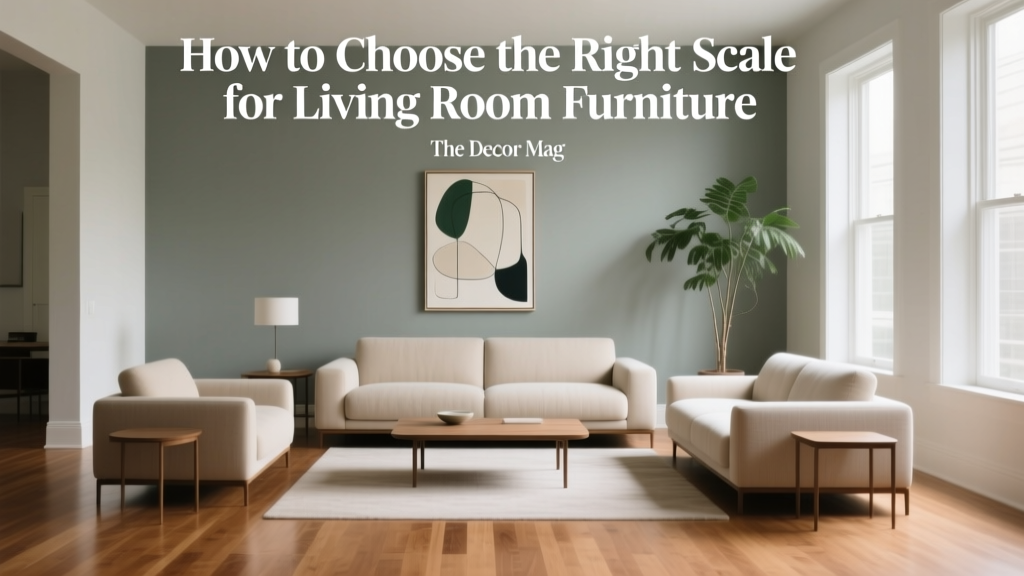 Living Room Furniture Scale: How to Choose Right (2026)
 Console Table Behind Sofa: Styling Ideas (2026)
 Living Room Earthy Organic Modern - The Decor Mag
 Best Color Palettes for Contemporary Living Rooms (2026)
 Living Room Bright Airy Design Tips - The Decor Mag
 Living Room Design: Functional + Stylish Framework (2026)
 Bathroom Essentials 2026: Fixtures & Smart Upgrades
 Pet-Proof Sofa Choices for Stylish Homes