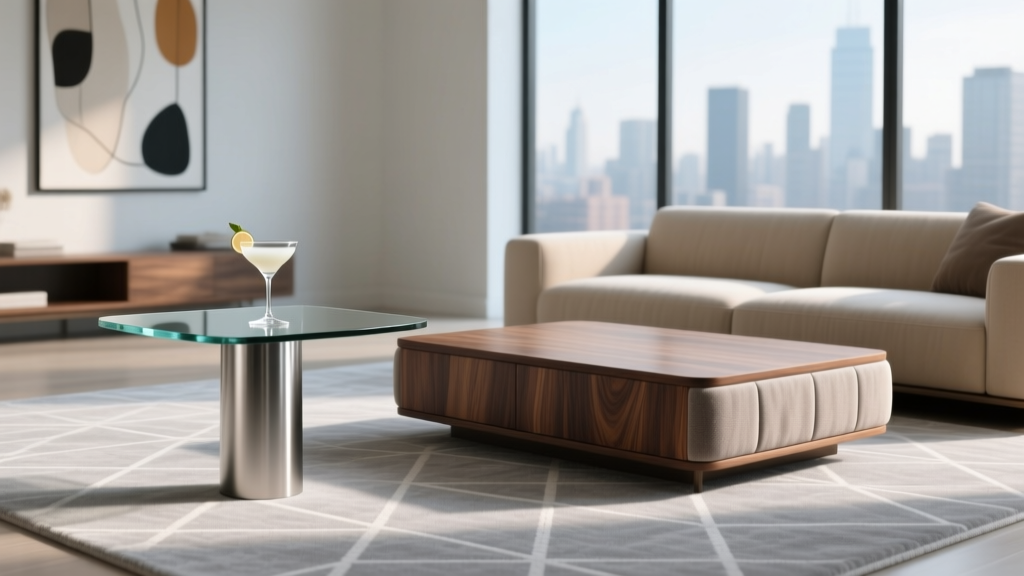
Cocktail Table vs Coffee Table: Key Differences (2026)
When you’re furnishing a living room, the table in front of the sofa seems like a small decision—until you realize it affects everything: how you walk through the space, where drinks land during movie night, how styled your room looks on an everyday Tuesday, and whether guests feel comfortable settling in. That’s where the “cocktail table vs coffee table” question comes in.
These terms are often used interchangeably, but in furniture design they can signal different shapes, proportions, and styling intentions. Knowing the difference helps you choose a table that actually fits your room size, your seating layout, and your lifestyle—whether you’re in a compact apartment, a family-friendly home, or a formal sitting area.
Here’s what you’ll learn: how cocktail tables and coffee tables differ, the best measurements to use, which materials hold up best, what’s trending now (without sacrificing timeless style), and exactly how to pick the right option for your living room design and decor.
Cocktail Table vs Coffee Table: What’s the Difference?
1) The meaning (and why the names got blurred)
Historically, a cocktail table was tied to entertaining—think low, often elegant tables used in conversation areas where guests set down drinks and small plates. A coffee table came from more casual daily living: coffee, books, newspapers, and relaxed lounging.
In modern retail, you’ll see “coffee table” used as the catch-all term, while “cocktail table” sometimes refers to a specific style (often rectangular, sometimes more formal, occasionally with glass or metal detailing). The key differences today are usually about proportion, vibe, and how the room functions.
2) Typical shapes and silhouettes
- Cocktail tables: commonly rectangular or oval, sometimes more refined silhouettes; frequently paired with formal sofas or symmetrical seating layouts.
- Coffee tables: any shape (round, square, rectangle, nesting sets); often more casual, family-friendly, and “everyday use” focused.
3) Use case: entertaining vs everyday living
- If your living room is used for hosting, a cocktail table often supports a polished, entertaining-forward setup.
- If your living room is used for lounging, homework, board games, or daily clutter control, a coffee table (often with storage) tends to be the practical winner.
Quick Comparison: Cocktail Table vs Coffee Table
- Best for: Cocktail table = entertaining and structured seating; Coffee table = everyday living and flexibility
- Common materials: Cocktail table = glass/metal/marble looks; Coffee table = wood, upholstered, mixed materials, storage options
- Style vibe: Cocktail table = polished, tailored; Coffee table = casual to curated, wide range
- Typical features: Cocktail table = clean top, minimal storage; Coffee table = shelves, drawers, lift-tops, nesting pieces
Size and Placement: The Measurements Designers Use
Most “wrong table” moments come down to proportion. Use these living room design guidelines to avoid a table that feels too tiny, too tall, or constantly in the way.
Ideal height
- Best rule: Table height should be within 1–2 inches of your sofa seat height.
- Typical range: 14–18 inches tall for most sofas.
- If you love a more elevated, tailored look (often associated with cocktail tables), you can go slightly taller—just keep it comfortable for reaching drinks.
Ideal length
- Target: about 1/2 to 2/3 the length of your sofa.
- Example: For an 84-inch sofa, aim for a table around 42–56 inches long.
Spacing around the table (walkways and reach)
- Between sofa and table: 14–18 inches (enough legroom, close enough to reach a mug).
- Main walkways: 30–36 inches if people pass through frequently.
- Small apartments: 24–30 inches walkways can work if traffic is light—choose rounded edges to prevent bruised shins.
Round vs rectangular for different layouts
- Sectional sofa: square or large round coffee table, or a nesting set for flexibility.
- Two sofas facing: rectangular cocktail table feels structured and balanced.
- Sofa + two accent chairs: oval or round table softens the layout and improves circulation.
Materials and Finishes: What Works Best in Real Homes
Choosing a material is about more than style—it’s also durability, maintenance, and how your living room decor holds up to real life.
Wood (timeless and forgiving)
- Best for: family rooms, cozy modern farmhouse, Scandinavian, traditional, transitional living rooms
- Pros: warm, hides fingerprints better than glass, easy to mix with other finishes
- Watch for: soft woods that dent; use coasters if you choose a stained top
Glass (lightens a room visually)
- Best for: small living rooms, modern spaces, homes where you want less visual bulk
- Pros: makes tight spaces feel larger, great with statement rugs
- Watch for: fingerprints, smudges, and sharp corners—choose rounded edges or an oval top if kids are around
Metal (sleek, often trend-forward)
- Best for: modern, industrial, glam, and contemporary living room design
- Pros: durable; thin frames can feel airy
- Watch for: scratches on high-gloss finishes; choose powder-coated or brushed finishes for everyday durability
Stone and marble (luxury look, high impact)
- Best for: elevated cocktail-table moments, minimal interiors, contemporary spaces
- Pros: weighty and sophisticated; pairs beautifully with bouclé, linen, and leather seating
- Watch for: etching and staining on real marble; consider marble-look quartz or sealed stone for easier care
Upholstered/ottoman-style coffee tables (soft and lounge-friendly)
- Best for: cozy family spaces, small living rooms where safety matters
- Pros: doubles as extra seating; safer edges
- Watch for: spills—choose performance fabric or a tray for drinks
Design Trends That Influence the Choice (and What Stays Timeless)
Current living room trends lean toward comfort, flexible layouts, and mixed materials—yet the best rooms still follow classic proportion and balance.
- Nesting coffee tables: Perfect for renters and entertainers—pull out the smaller table when guests arrive.
- Organic shapes: Rounded “pebble” silhouettes and oval tops soften modern rooms and make tight spaces easier to navigate.
- Mixed materials: Wood + stone, metal + glass, or woven elements add depth without needing more furniture.
- Storage-forward coffee tables: Shelves, drawers, and lift-tops are popular in real-life living rooms where clutter needs a home.
- Timeless principle: Choose a table that fits the seating group first; style and trend come second.
How to Choose: A Simple Step-by-Step Guide
- Measure your sofa seat height and aim for a table within 1–2 inches of that.
- Measure sofa length and target a table that’s 1/2 to 2/3 the length.
- Map your walkways: keep 14–18 inches from sofa to table, and 30–36 inches for major traffic paths.
- Match the shape to your layout:
- Need better flow? Choose round or oval.
- Want a tailored, structured look? Choose rectangular (often “cocktail table” territory).
- Choose material based on lifestyle:
- Kids/pets: wood, performance upholstery, rounded edges.
- Small space: glass or slim-leg designs.
- Entertaining: stone-look tops, larger surface area, nesting pieces.
- Plan styling: if you like decorative objects, pick a larger top; if you hate visual clutter, choose a simpler surface or built-in storage.
Real-World Scenarios: Which Table Wins?
Scenario 1: The small apartment living room
You have a 72-inch sofa, a narrow walkway to the kitchen, and you want the space to feel open. A round coffee table around 30–36 inches wide (or a glass-top table) keeps circulation smooth and visually light. If you’re constantly moving it to vacuum or host friends, a nesting set is a smart upgrade.
Scenario 2: The formal sitting room
You rarely sprawl out here—it’s more about conversation and entertaining. A rectangular cocktail table (think 48–54 inches long) centered between two sofas or a sofa and matching chairs feels polished. Add a tray for cocktails and a low arrangement for a finished look.
Scenario 3: The family-friendly media room
This room does everything: snacks, games, feet-up lounging. A storage coffee table with a shelf or drawers (or an upholstered ottoman with a large tray) is your best friend. Choose durable wood, rounded corners, and enough surface area for movie night.
Scenario 4: The sectional sofa layout that never feels “done”
Sectionals often need a larger footprint. A square coffee table (around 36–42 inches) or a pair of round nesting tables solves the “too much empty space” issue and keeps everything within reach.
Product Recommendations by Style and Budget
Prices vary by region and brand, but these ranges help you shop smart while planning your living room decor.
Budget-friendly ($100–$300)
- Nesting coffee tables in wood/metal combos for flexibility in small spaces
- Lift-top coffee tables for renters who need a dining/work surface in the living room
- Faux marble laminate tops for a cocktail-table look without the maintenance
Mid-range ($300–$900)
- Solid wood coffee tables (oak, acacia, mango wood) with shelves or drawers
- Tempered glass cocktail tables with rounded edges and slim frames
- Statement oval tables in mixed materials for an organic modern vibe
Investment ($900–$2,500+)
- Stone or marble-top cocktail tables with sculptural bases
- Designer-grade wood tables with heirloom joinery and premium finishes
- Custom upholstery ottoman tables in performance fabric, sized perfectly to your sofa
Styling Tips: Make Either Table Look Intentional
- Use the “3-layer” approach: a tray, a stack of books, and something organic (plant, branches, or a bowl of natural objects).
- Keep height low: aim for decor pieces under 10–12 inches so sightlines across the living room stay open.
- Match your metals: if your room has warm brass lighting, echo it in a table base or accessories for a cohesive living room design.
- Balance hard and soft: if your table is stone or glass, soften with a textured tray, linen coasters, or a woven bowl.
- Leave landing space: keep at least 30–40% of the tabletop clear for real life—drinks, remotes, snacks.
Common Mistakes to Avoid
- Choosing a table that’s too small: A tiny table floating in front of a large sofa looks disconnected. Size to 1/2–2/3 of sofa length.
- Ignoring seat height: If the table is much higher than the sofa cushion, it feels awkward and blocks the view.
- Forgetting traffic flow: Tight walkways make the living room feel cramped. Prioritize circulation, especially in apartments.
- Picking high-maintenance materials for a high-use room: Real marble is beautiful, but not ideal if spills are frequent and coasters are “optional.”
- Overstyling: A table that looks great but has nowhere to set a drink isn’t functioning as a living room essential.
FAQ: Cocktail Table vs Coffee Table
Are cocktail tables and coffee tables the same thing?
In many stores, yes—the terms are used interchangeably. Traditionally, cocktail tables lean slightly more formal and entertaining-focused, while coffee tables skew everyday casual and often include storage or flexible features.
What size coffee table should I get for a standard sofa?
For an 80–90 inch sofa, look for a table around 40–60 inches long, 14–18 inches high, and keep 14–18 inches between the sofa and table.
Is a round coffee table better for small living rooms?
Often, yes. Round and oval tables improve flow and reduce sharp corners—great for tight layouts, renters, and homes with kids or pets.
What’s the most durable coffee table material?
Solid wood and quality veneers with a protective finish are dependable for daily use. For extra durability, consider powder-coated metal bases and sealed stone or quartz-look tops.
Should I choose a storage coffee table or a minimalist cocktail table?
Choose storage if your living room doubles as a media room, playroom, or work zone. Go minimalist if you prefer a calm, styled space and have other storage nearby (like a media console or built-ins).
Can I use an ottoman instead of a coffee table?
Yes—especially for lounge-forward living room decor. Add a large tray (around 18–24 inches wide) to create a stable surface for drinks and accessories.
Your Next Steps: Pick the Right Table with Confidence
Start by measuring your sofa height and length, then decide whether your room needs an entertaining-ready cocktail table feel or the everyday function of a coffee table with storage or flexibility. If you’re stuck between two options, choose the one that improves circulation and fits your lifestyle—those are the decisions that make a living room feel effortless.
For more living room ideas, layout tips, and decor inspiration that fits real homes, explore our latest guides on thedecormag.com.
More Articles
 Living Room Symmetrical Design Principles - The Decor Mag
 Smart Studio Storage Ideas for 2026
 Living Room Ottoman and Pouf Styling Ideas - The Decor Mag
 Best Recliner Chairs That Look Stylish - The Decor Mag
 Living Room Window Treatment Trends - The Decor Mag
 Architectural Salvage Living Room Styling (2026)
 Mid-Century Modern Living Room Must-Haves - The Decor Mag
 Living Room Statement Piece Furniture Guide - The Decor Mag
 Budget-Friendly Smart Organization Ideas for 2026
 Best Affordable Living Space Solutions 2026