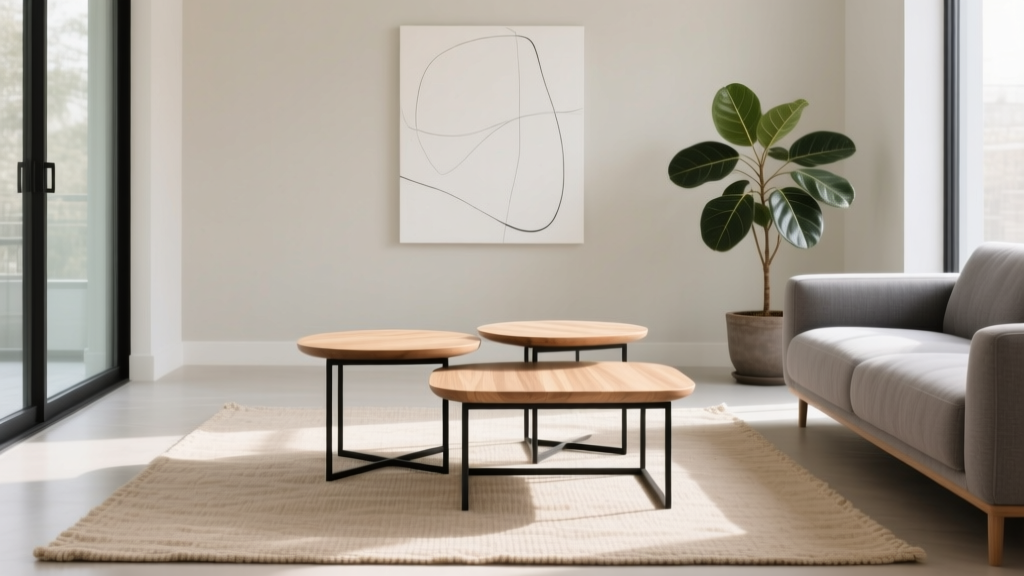
Best Nesting Table Arrangements - The Decor Mag
Nesting tables are one of those rare living room pieces that feel both practical and polished. They can act as a coffee table, side table, extra surface for entertaining, or even a compact display zone—without taking over your floor plan. For renters, they’re a smart solution for small spaces and flexible layouts; for homeowners, they’re an easy way to add layered style and functionality.
This guide breaks down the best nesting table arrangements for real living rooms—whether you’re styling a cozy apartment, a family-friendly den, or an open-plan great room. You’ll learn how to choose the right sizes and shapes, where to place nesting tables for everyday use, how to style them so they look intentional (not cluttered), and what common mistakes to avoid. Along the way, you’ll find current design trends, timeless principles, and realistic budget ranges so you can pull it all together confidently.
Why Nesting Tables Work So Well in Living Room Design
Nesting tables earn their keep because they adapt to how people actually live. They’re easy to move, they stack when you need more floor space, and they offer multiple “landing spots” for drinks, remotes, books, and decor. In living room design terms, nesting tables also help with:
- Visual layering: Multiple heights create depth and a designer look.
- Flexible seating arrangements: Pull one table closer to a chair or sectional chaise when you need it.
- Better circulation: They can replace bulky coffee tables in tight rooms.
- Balanced proportions: They’re easy to scale to sofas, sectionals, and accent chairs.
Choosing the Right Nesting Tables: Size, Shape, and Materials
Key Measurements to Get Right
Before you style anything, start with fit. The most beautiful arrangement won’t work if you’re constantly bumping your knees or reaching too far for your coffee mug.
- Height: Aim for nesting tables that are within 1–2 inches of your sofa seat height (usually 16–19 inches). If your sofa is tall, a 20–22 inch top table can still work, especially beside a sectional arm.
- Distance from seating: Keep tables 14–18 inches from the sofa edge for comfortable reach and good walking clearance.
- Clear pathways: Maintain 30–36 inches for main walkways in the living room when possible.
- Top surface size: For everyday use, the largest table should ideally have at least 16–22 inches of top width/diameter so it can hold a tray plus a drink.
Shape Guide: Round vs. Square vs. Organic
- Round nesting tables: Great for small living rooms, tight pathways, and kid-friendly spaces (fewer sharp corners). Perfect near sectionals and swivel chairs.
- Square/rectangular nesting tables: More surface area and a structured look. Best for modern living rooms and spaces with clean lines.
- Oval or organic shapes: A top trend that softens boxy furniture. Works especially well in contemporary and Scandinavian-inspired rooms.
Material Recommendations (With Real-Life Pros and Cons)
- Wood (oak, walnut, ash): Warm, timeless, easy to mix with other finishes. Choose sealed tops for stain resistance. Budget: $120–$600.
- Metal frames (black, brass, chrome): Sleek, durable, and visually light. Great for modern and industrial decor. Budget: $90–$450.
- Glass tops: Makes a small living room feel larger, but shows fingerprints and can feel cold. Best for adults-only spaces or low-traffic rooms. Budget: $100–$500.
- Stone (marble, travertine, faux marble): A luxury look and trending heavily right now (especially travertine). Real stone is heavy; faux is easier to move. Budget: $180–$1,200.
- Upholstered/ottoman-style nesting pieces: Cozy and functional, often doubles as extra seating. Make sure at least one surface is tray-friendly. Budget: $150–$900.
Best Nesting Table Arrangements (Room-by-Room Scenarios)
1) The “Coffee Table Alternative” Arrangement (Small Living Rooms)
If your living room is tight, nesting tables can replace a standard coffee table and instantly improve flow.
How to set it up:
- Place the largest nesting table centered in front of the sofa, about 16 inches away.
- Slide the smaller table partially underneath so about 1/3 to 1/2 of it is visible—this looks intentional and still accessible.
- Angle the set slightly toward your main seat (often the corner of a sectional or the center cushion of a sofa).
Real-world example: A renter in a 650 sq. ft. apartment swaps a bulky 48" coffee table for two round nesting tables (22" and 18"). Result: more walking space, easier vacuuming, and extra surfaces when friends come over.
Style tip: Use a low tray on the larger table to “anchor” small items and make the surface feel tidy.
2) The “Sectional Sidekick” Arrangement (Best for L-Shaped and U-Shaped Seating)
Sectionals are comfortable, but they often create awkward corners where a traditional end table doesn’t fit. Nesting tables solve that with flexible placement.
How to set it up:
- Place the taller/larger table at the inside corner of the sectional or at the chaise edge.
- Tuck the smaller table under it until you need extra surface area for snacks or a laptop.
- Keep the top table height close to the seat height (within 1–2 inches) for comfort.
Design win: This arrangement creates a “command center” for drinks, remotes, and lighting without adding bulk.
3) The “Conversation Pairing” Arrangement (Two Chairs + Nesting Tables)
If you have two accent chairs facing a sofa—or angled toward each other—nesting tables can act like a shared cocktail table.
How to set it up:
- Center the nesting set between the two chairs.
- Let the smaller table sit slightly offset to create a layered look.
- Ensure at least 12–14 inches of clearance from chair edges so legs and swivel bases don’t hit.
Real-world example: In a traditional living room with a fireplace, two upholstered chairs sit opposite the sofa. A brass-and-glass nesting set adds sparkle and keeps sightlines open, so the room feels airy rather than crowded.
4) The “Floating End Table” Arrangement (For Sofas Without Room for Side Tables)
No space for a full end table beside your sofa? Try nesting tables slightly forward of the arm. This is a favorite in narrow living rooms and open-plan layouts.
Placement:
- Set the nesting tables 4–8 inches forward of the sofa arm, aligned with the front edge of the sofa cushion.
- If you use a floor lamp, position the lamp base just behind the tables to create a cohesive vignette.
Pro styling move: Choose tables with an open metal base to keep the area from feeling boxed-in.
5) The “Entertaining Ready” Arrangement (Pull-Apart Placement for Guests)
This arrangement is all about flexibility. Keep nesting tables stacked day-to-day, then separate them when you host.
Hosting setup in under 60 seconds:
- Keep the largest table near the sofa as your main surface.
- Pull the second table to the side of an accent chair for a drink landing spot.
- Move the smallest table near a pouf or ottoman as an extra perch for snacks.
Best for: Open-plan living rooms where seating spreads out and guests naturally drift.
How to Style Nesting Tables Like a Designer (Without the Clutter)
Use the “One Functional + Two Decorative” Rule
A nesting table needs to look good and live well. A simple formula:
- One functional item: coaster set, small tray, or a lidded box for remotes
- Two decorative items: a small plant, candle, sculptural object, or a short stack of books
Height Variation Makes It Look Intentional
Think of your tabletop like a skyline. Aim for three height levels:
- Low: tray, book stack (1–2 books)
- Medium: candle, bowl, or small vase
- Tall: a bud vase with stems, a petite lamp, or a sculptural object
Color and Finish: Match, Complement, or Contrast
- Match: Choose tables in the same finish as your curtain rods or picture frames for a cohesive look.
- Complement: Pair warm wood with creamy upholstery and soft textiles for a timeless living room.
- Contrast: Add black metal nesting tables to a light, neutral space for definition (a popular modern trend).
Product Recommendations by Style and Budget
These are practical “what to look for” recommendations so you can shop confidently across many retailers.
Budget-Friendly ($80–$200)
- Black metal + wood-look top: Durable, easy to style, works with most living room decor.
- Compact round nesting set (18–22 inches): Great for apartments and small seating areas.
- Faux marble top with metal frame: A high-end look for less; use coasters to prevent scratches.
Mid-Range ($200–$600)
- Solid wood nesting tables (oak or walnut veneer): Warm, timeless, and sturdy enough for daily use.
- Travertine-look tops: On-trend with an organic, earthy feel—especially popular in contemporary spaces.
- Mixed-material sets: Wood + metal or stone + wood adds visual depth and designer character.
Investment ($600–$1,500+)
- Real marble or travertine: Heavy, substantial, and naturally unique veining.
- Designer organic silhouettes: Softer, sculptural shapes that look like functional art.
- Hand-finished wood: Especially beautiful in traditional or transitional living room design.
Common Mistakes to Avoid
- Choosing tables that are too tall: If the top is more than 2 inches above seat height, it can feel awkward for drinks and lounging.
- Going too small for your sofa: A tiny nesting set can look lost next to a large sectional. Consider a largest table at least 20–24 inches wide for big seating.
- Over-styling: Too many objects make the surface unusable. Leave at least 40–60% of the top surface clear.
- Ignoring stability: Lightweight tables can wobble on thick rugs. Look for wider bases or add rug pads to level the surface.
- Not planning for real life: If you regularly eat on the sofa, choose scratch-resistant finishes and use trays and coasters.
FAQ: Nesting Tables in the Living Room
Are nesting tables better than a coffee table?
For small living rooms and flexible seating, nesting tables often work better because you can adjust them as needed. If you prefer one large surface for games, big trays, or family movie nights, a coffee table may still be the better fit.
What size nesting tables should I get for a sectional?
For most sectionals, look for a largest table around 20–24 inches in diameter/width, with a second table 16–20 inches. Keep the height close to the seat height (typically 16–19 inches).
Do nesting tables need to match other furniture finishes?
No—matching is optional. Coordinating undertones matters more. Warm wood tends to pair well with brass and creamy neutrals; cooler tones pair well with chrome, black metal, and crisp whites.
Can I put nesting tables on a thick area rug?
Yes, but stability is key. Choose a set with a wider base, or place the legs so they sit evenly on the rug pile. If your rug is very plush, a firmer, low-pile rug pad can help reduce wobble.
How do I style nesting tables without making them look cluttered?
Use a tray to corral small items, keep decor to a few pieces, and vary heights. Leave enough open space for everyday essentials like a mug, a phone, or a book.
What’s the most timeless nesting table look?
A simple wood or wood-and-metal set in a classic silhouette (round or softly squared) is the easiest to live with long-term. It works across modern, transitional, Scandinavian, and traditional living room decor.
Your Next Steps: A Simple Plan for the Perfect Arrangement
- Measure your sofa seat height and the clearance you have around seating.
- Choose a shape that suits your layout: round for tight spaces, square for structure, organic for a softer trend-forward feel.
- Place the largest table first, then slide the smaller one underneath until the proportions look balanced.
- Style with purpose: one functional item, two decorative items, and plenty of breathing room.
- Test it for a week—pull the tables apart when you need them and notice what placement feels most natural.
If you’re ready for even more living room design and decor ideas—from coffee table styling to sectional layouts and rug sizing—explore more inspiration on thedecormag.com.
More Articles
 Best Small Precision Tools for Modern Living Spaces 2026
 Living Room Jewel Tone Inspiration - The Decor Mag
 Functional Bedroom Ideas 2026: Smart Layouts & Storage
 Conversation Areas in Large Living Rooms (2026)
 Non-Toxic Paint Guide: Safe Colors for Every Room
 Living Room Warm Minimalist Approach - The Decor Mag
 Open Concept Living Room Furniture Arrangement
 Art Scale for Living Rooms: How to Choose (2026)
 Living Room Polished Bohemian Style - The Decor Mag
 Living Room Lighting for Ambiance (2026)